
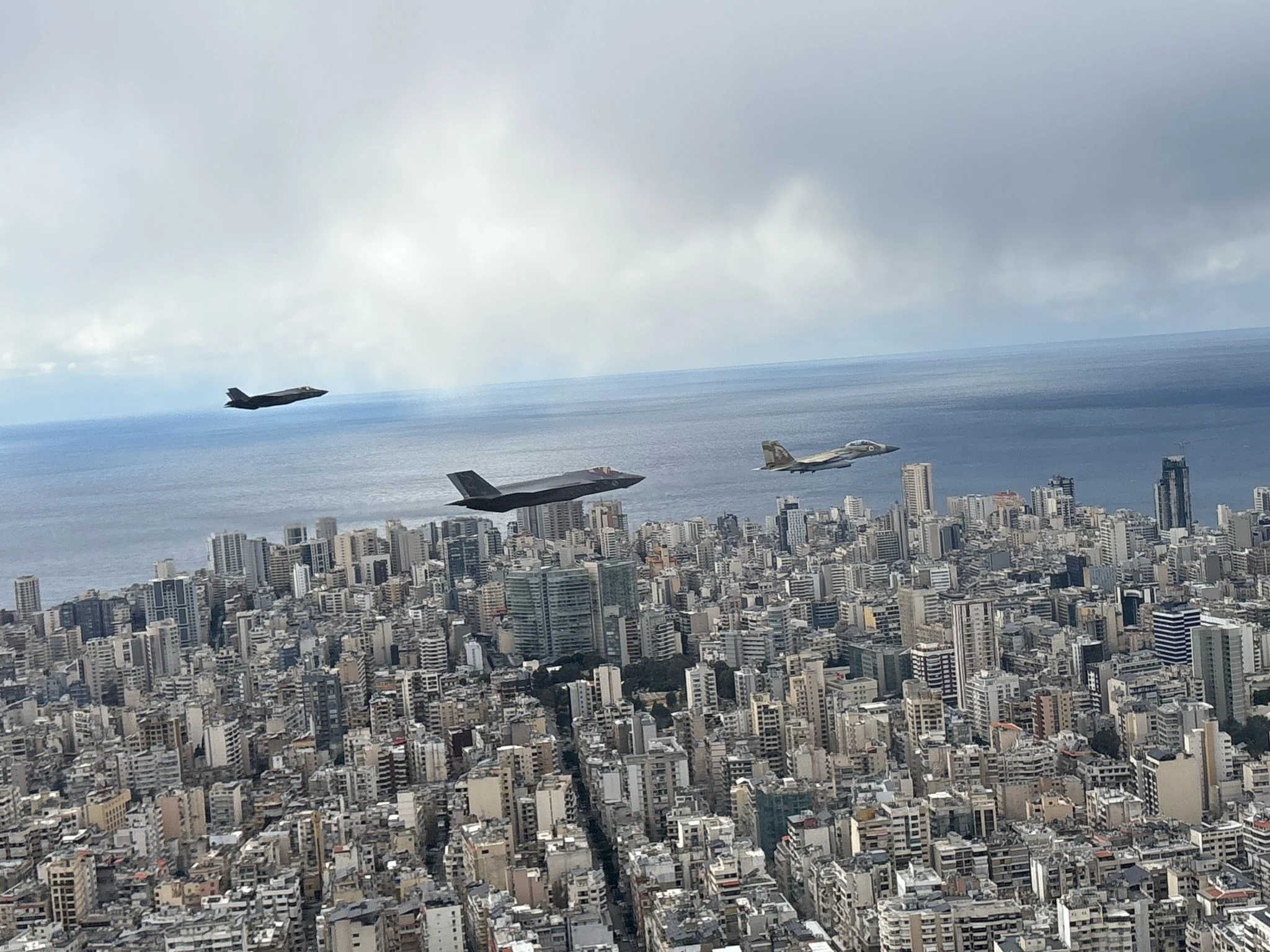
Israeli jets seen flying over Beirut as tens of thousands gathered to mourn Hezbollah leader Hassan Nasrallah, who was killed in an Israeli airstrike nearly five months ago. The funeral, held at the Camille Chamoun Sports City Stadium, was attended by a massive crowd of black-clad supporters.
Defense Minister Israel Katz later confirmed that the flyover was intended as a message to those who threaten Israel, emphasizing that Israel would continue to act against its enemies.
The funeral of Nasrallah and his chosen successor, Hashem Safieddine, unfolded amidst heightened security measures and a powerful display of Hezbollah’s support base.
Israeli Flyover Sends a Clear Message
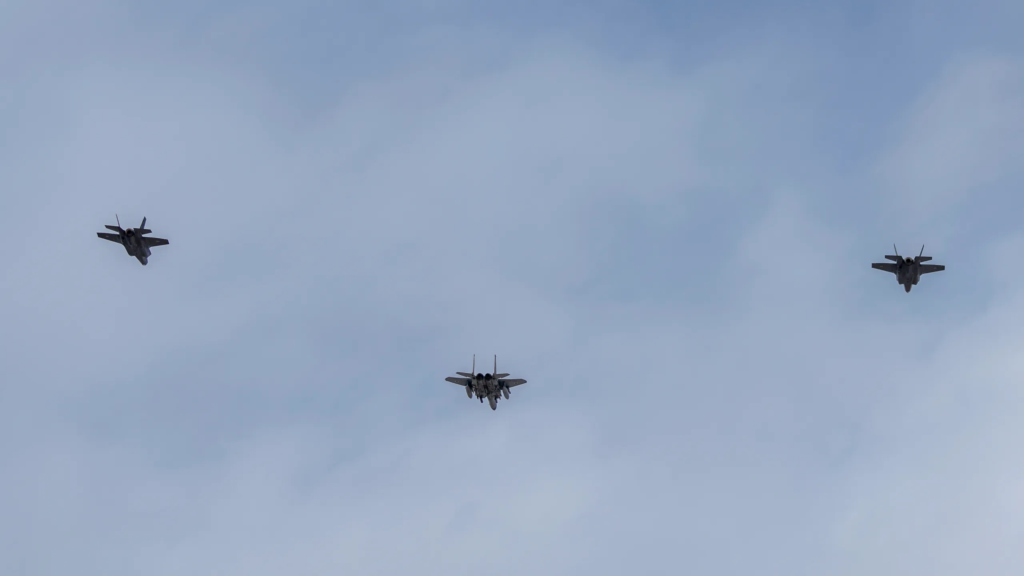
As the funeral ceremony for Hassan Nasrallah took place, Israeli warplanes were spotted flying at low altitude over Beirut. The move was swiftly confirmed by Israeli Defense Minister Israel Katz, who stated that the aerial maneuver was a deliberate message to Hezbollah and its supporters.
“Israeli Air Force aircraft currently flying over Beirut, over the funeral of Hassan Nasrallah, convey a clear message: Those who threaten to destroy Israel and attack Israel, it will be their end,” Katz declared in a statement.
The Israeli flyover was seen as a direct response to Hezbollah’s persistent hostility and ongoing threats against Israel. It also served as a symbolic assertion of Israel’s military presence and readiness in the region.
Read : Bizarre! Israeli Hostage Omer Shem Tov Seen Kissing Hamas Captors Before Release
The flyover was widely discussed in regional media, with many seeing it as a bold warning to Hezbollah that Israel remains vigilant and prepared to act against any perceived threats.
Hezbollah Supporters Gather in Mourning
Thousands of Hezbollah supporters flocked to the Camille Chamoun Sports City Stadium in Beirut for Nasrallah’s funeral, marking one of the largest public gatherings in Lebanon in recent years.
Israeli fighter jets flying at low altitude over Beirut. #Israel #Lebanon #Hezbollah #Nasrallah #Geopolitics #MiddleEastTensions pic.twitter.com/eT2mteMIRY
— Charles Martyn (@charlesBBM12) February 23, 2025
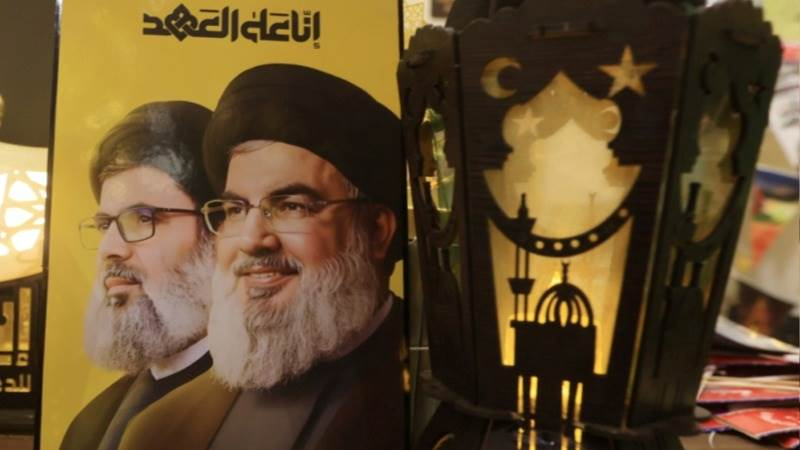
Mourners dressed in black waved Hezbollah’s yellow flags as they paid their respects to the fallen leader. Women wept as a truck carrying the coffins of Nasrallah and Safieddine moved slowly through the crowd, with both coffins draped in Hezbollah flags and topped with black turbans.
The September killing of Nasrallah, who had led Hezbollah for more than three decades, was seen as a significant blow to the Iran-backed group. Despite this, Hezbollah’s leadership vowed to continue Nasrallah’s legacy.
His successor, Naim Qassem, addressed the crowd in a televised speech, stating that Hezbollah would remain committed to its path of resistance. “The resistance is not over, the resistance is still present and ready,” he proclaimed. The funeral attendees responded with chants of loyalty to Nasrallah, expressing their unwavering commitment to Hezbollah’s cause.
Security was at its highest during the ceremony, with Hezbollah deploying 25,000 members for crowd control. A security source confirmed that 4,000 troops and personnel were on duty to ensure the safety of the attendees.
Given the security concerns, Beirut’s civil aviation authorities even temporarily shut down the airport for four hours. The scale of the security measures highlighted the importance of the event for Hezbollah and its supporters.
A Divided Lebanon Reacts
Nasrallah’s death and the subsequent funeral highlighted the deep divisions within Lebanon regarding Hezbollah’s role in the country. While Hezbollah enjoys strong support among Lebanon’s Shiite Muslim community, many Lebanese citizens have long criticized the group for dragging Lebanon into conflicts, particularly against Israel.
Since its founding in 1982, Hezbollah has played a significant role in Lebanese politics and military affairs. Under Nasrallah’s leadership, Hezbollah forced Israel to withdraw from southern Lebanon in 2000 after a prolonged occupation.
However, Hezbollah has also been accused of engaging in activities that have destabilized Lebanon, including its involvement in Syria’s civil war and conflicts with Israel.
As Nasrallah was laid to rest, Lebanon’s political and social divisions remained apparent. Supporters of Hezbollah hailed him as a hero who defended Lebanon from Israeli aggression, while opponents viewed his leadership as a source of Lebanon’s ongoing instability.
The presence of Israeli fighter jets over Beirut during the funeral further intensified these divisions, symbolizing the ever-present tensions between Hezbollah and Israel.
Nasrallah was buried near the airport highway in Beirut, while Hashem Safieddine was laid to rest in his hometown of Deir Qanun al-Nahr in southern Lebanon. The funerals marked the end of an era for Hezbollah, but the group’s leadership vowed to continue its resistance against Israel.
Whether Nasrallah’s successor, Naim Qassem, can maintain Hezbollah’s influence and rally the same level of support remains to be seen. However, the events surrounding the funeral, including Israel’s show of military power, signaled that tensions in the region remain as volatile as ever.