
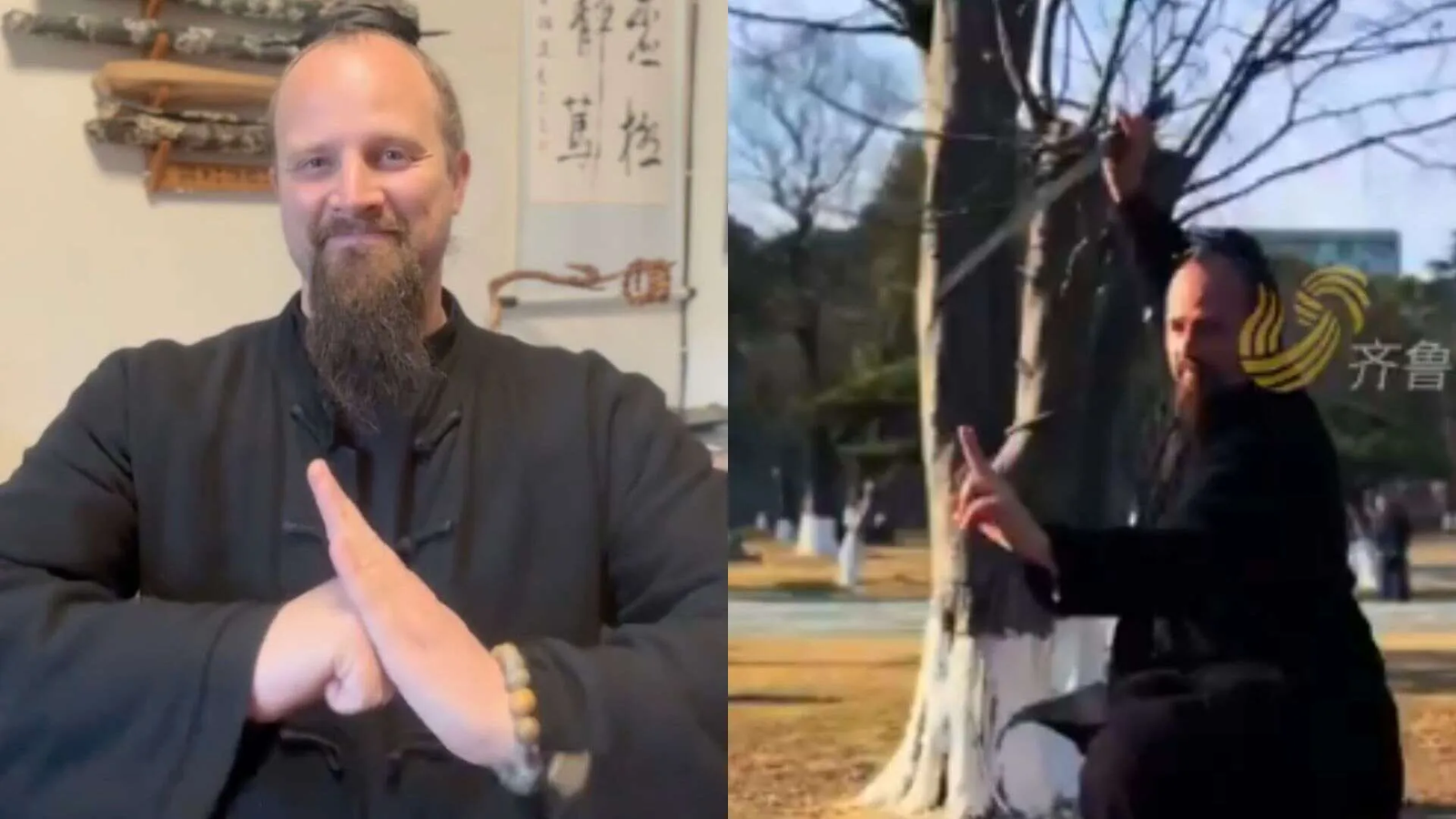
In a rare and heartwarming acknowledgment of cross-cultural dedication, Jake Pinnick, a 34-year-old American from Kewanee, Illinois, has been granted permanent residency in China. This decision comes after he spent over 15 years immersed in traditional Chinese martial arts and Taoist philosophy, training atop the mystical Wudang Mountain.
What began as a personal quest for physical and spiritual growth has blossomed into a life profoundly transformed by Chinese culture, culminating in recognition few foreigners achieve—a Foreign Permanent Resident ID Card, colloquially known as the “five-star card.”
Wudang Mountain, nestled in Hubei province, is more than just a scenic destination. It is one of the most sacred sites in Taoism and the legendary birthplace of tai chi. It was here that Jake Pinnick embarked on a path that would eventually transform him into Li Zigen—a 16th-generation disciple of the Wudang Sanfeng martial arts lineage.
His story is one of perseverance, humility, cultural reverence, and a deep commitment to sharing the values he has absorbed with people around the world.
From Illinois to Wudang: The Beginning of a Journey
Jake Pinnick first arrived in China in 2010, at the youthful age of 20, with a dream to study martial arts at its roots. While many martial arts enthusiasts travel to China for short stints or training camps, Pinnick’s commitment went far beyond the average student.
He settled on Wudang Mountain, fully immersing himself in the physically demanding and spiritually enlightening lifestyle of a Taoist disciple. Initially, Pinnick’s interest lay in improving his physical well-being. However, the rigorous training and monastic lifestyle soon unveiled deeper layers of meaning.
As he trained in traditional kung fu and studied ancient Taoist texts such as the Tao Te Ching and Zhuangzi, he discovered that martial arts could do far more than build physical strength. They became a medium for personal transformation—helping him manage stress, enhance self-discipline, and cultivate a deep sense of moral integrity.
Read : Chinese Teen’s Arm Amputated After Science Experiment at Home Resulted in a Blast
His progression was not without challenge. Learning a completely new language, adapting to unfamiliar cultural norms, and enduring the intense training regimen demanded extraordinary patience and resilience.
Read : Amsterdam to Remove Chinese-Made Cameras Over Espionage and Human Rights Concerns
Yet over time, Jake not only adapted but thrived. His teachers recognized his sincerity and dedication, and he was formally accepted as a disciple of the Wudang Sanfeng lineage, one of the most respected martial arts traditions in China.
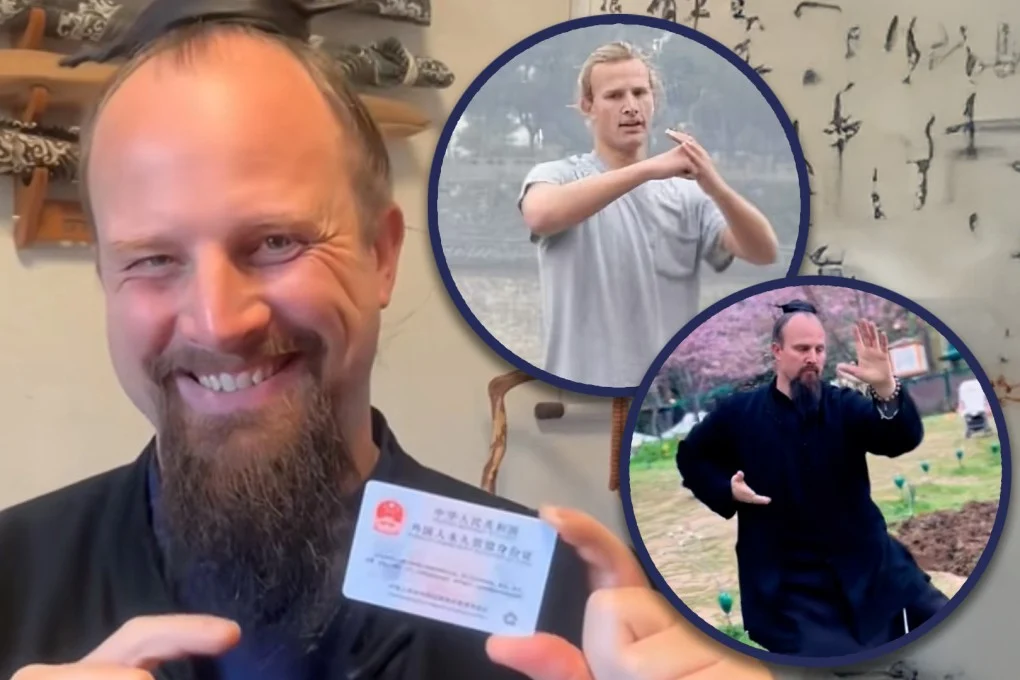
With his new name, Li Zigen—meaning “root of character”—he began to embody the philosophy he studied. The name “Li” was chosen for its phonetic similarity to his middle name, Lee, and also in homage to both Lao Tzu, the founder of Taoism, and Bruce Lee, the martial arts icon. It was a name that reflected his dual identity and his deepening bond with Chinese tradition.
Becoming a Bridge Between Cultures
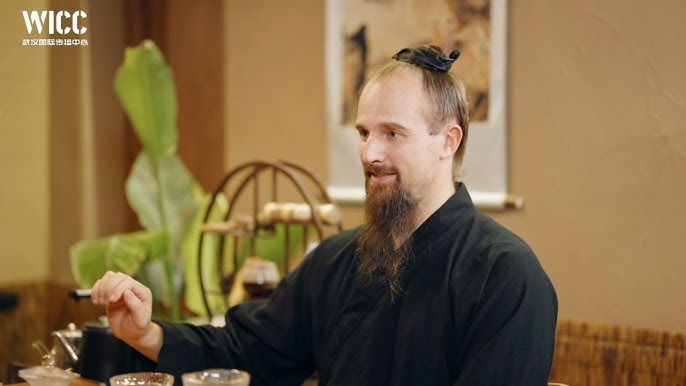
Over the years, Pinnick evolved from student to teacher, imparting his knowledge of martial arts and Taoism to both Chinese and international students. Teaching from the heart of Wudang Mountain, he provided his students with an authentic and immersive experience—one grounded in centuries-old wisdom yet delivered through the fresh lens of someone who had walked the path of discovery himself.
Pinnick often remarked on the unique perspective he brought to his teachings. “My advantage is probably the onlooker’s perspective,” he explained. This dual cultural vantage point allowed him to interpret Chinese philosophy and martial arts principles in a way that resonated deeply with both local and foreign audiences. His ability to contextualize traditional movements, rituals, and ideologies through modern sensibilities made him a compelling figure in the martial arts community.
His work has gained international attention, drawing not only students but also cultural enthusiasts, documentarians, and even diplomats. One of the most notable accolades came from Xie Feng, China’s ambassador to the United States.
In a heartfelt post on X (formerly Twitter), Ambassador Xie praised Pinnick’s journey and congratulated him on earning the Foreign Permanent Resident ID Card, calling him “a real master.”
This prestigious card is highly sought after and rarely granted to foreigners. It is a symbol of trust and appreciation, reflecting the Chinese government’s recognition of Pinnick’s contributions to preserving and promoting its cultural heritage. It is also a profound indicator of integration—signifying that Pinnick is no longer seen as an outsider but as someone who has become an integral part of the cultural fabric.
Life in China: A New Chapter of Legacy
Today, Jake Pinnick—Li Zigen—lives a life deeply rooted in the traditions he once came to study. He is married to a Chinese woman, with whom he shares a young daughter, and continues to teach at Wudang. His daily life is a blend of family, instruction, meditation, and spiritual reflection.
The transformation is not just cultural but also physical and spiritual. His appearance, now distinctly Chinese in demeanor and presence, has even led online users to speculate about his hair color. Jake Pinnick humorously addressed this curiosity, explaining that his hair had naturally darkened due to years of practice and his holistic lifestyle.

His commitment now extends beyond personal practice. He feels a responsibility to share Chinese culture with the world in a genuine and respectful way. “I think I have the responsibility to spread Chinese culture to more people, and I am willing to take the role of telling China stories to the world,” he declared. It’s a mission that reflects the spirit of Taoism—living harmoniously, honoring tradition, and spreading wisdom without force or pride.
Jake Pinnick’s teachings emphasize the holistic nature of Wudang martial arts, which blend body, mind, and spirit. Unlike the often competitive and aggressive depictions of martial arts in Western media, his training focuses on balance, inner peace, and moral development. His students learn not only how to move but why they move—a rare and profound element in the modern world of martial arts.
By staying in China and establishing a family there, Jake Pinnick has not only embraced the culture but also contributed to its evolution. He stands as a rare bridge between East and West, between the ancient and the contemporary, and between discipline and devotion. His story illustrates that cultural immersion, when pursued with humility and respect, can transcend borders and build meaningful human connections.
In the face of rising global tensions and cultural misunderstandings, Jake Pinnick’s journey offers a powerful narrative of mutual respect, transformation, and the universal search for meaning. While he may have once been a foreigner on a distant mountain, today he is a teacher, a father, and a bearer of tradition—no longer just studying Chinese culture, but living it.