
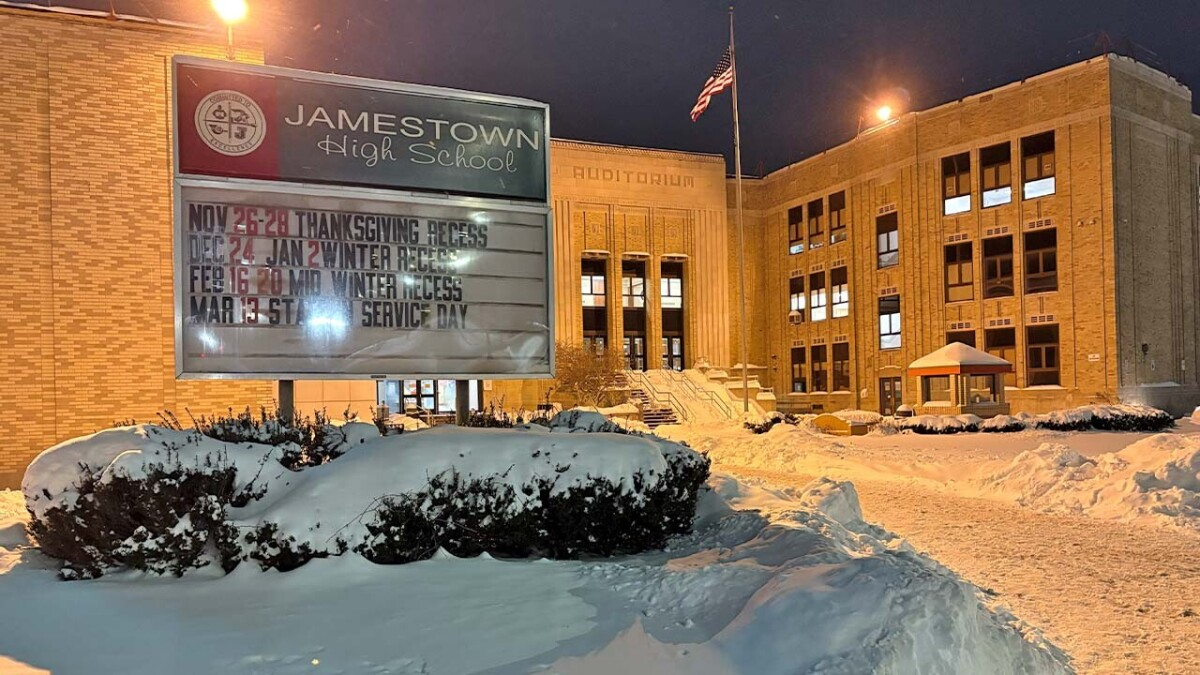
The arrest of an 18-year-old student at Jamestown High School after a loaded handgun was found in his backpack has intensified concerns about school safety, communication with families, and the broader response to gun-related incidents in educational settings. Jamestown police confirmed that Narade Gumbs Jr., a high school student, was taken into custody on Friday following an internal investigation by school administrators.
The discovery occurred during a routine response to a reported vaping incident, but it quickly escalated into a serious criminal matter involving multiple felony charges. Officials emphasized that the student was removed without incident and that no injuries were reported, yet the situation has left parents, students, and staff grappling with lingering anxiety and questions about prevention and accountability.
Discovery of the Weapon and Immediate Response
According to Jamestown police, the incident unfolded around 11 a.m. on Friday when administrators at Jamestown High School began investigating a report that a student had been vaping in a bathroom. As part of that inquiry, school officials searched the student’s backpack and discovered a loaded handgun. Law enforcement was contacted immediately, and officers responded to the school on East Second Street. The student, later identified as Narade Gumbs Jr., was removed from the building without resistance or further disturbance.
Authorities stated that the firearm was secured and that there was no immediate threat once the student was in custody. Nevertheless, the presence of a loaded gun on school grounds prompted a swift criminal investigation. Gumbs Jr., who is 18, was arrested and held pending arraignment. Because of his age, the case is being handled within the adult criminal justice system rather than juvenile court.
The charges he faces are significant. Prosecutors listed third-degree criminal possession of a weapon, second-degree criminal possession of a weapon, and criminal possession of a weapon on school grounds. These are felony offenses under New York law, and at least one is classified as a violent felony. Chautauqua County District Attorney Jason Schmidt explained that a conviction on a Class C violent felony can carry a potential sentence of up to 15 years in state prison, though alternative outcomes may be considered depending on circumstances and prior history.
Read : 19-Year-Old Ohio Influencer Noah Thomas Charged After Jumping Into Pittsburgh Zoo Elephant Enclosure
District Attorney Schmidt stressed that the discovery of the weapon before any harm occurred was a critical factor. He characterized the situation as one where vigilance paid off, noting that the presence of the gun came to light because administrators took a report seriously and followed established procedures. In his view, the outcome underscored the importance of consistent enforcement of school rules and immediate cooperation with law enforcement when serious violations are suspected.
Legal Implications and Prosecutorial Perspective
Because Gumbs Jr. is legally an adult, the case raises complex legal and procedural issues that differ from incidents involving younger students. District Attorney Schmidt emphasized that adult charges reflect both the seriousness of the offense and the statutory framework governing weapons possession. He indicated that prosecutors would carefully review the facts to determine the most appropriate course of action, including whether any mitigating factors might apply.
Read : Fremont High School Student Hit by SUV During Anti-ICE Protest
Schmidt described gun violence as the top public safety concern in the county, adding that his office has taken an aggressive stance in prosecuting weapons-related offenses. He explained that such prosecutions are intended not only to address individual conduct but also to serve a broader deterrent purpose. By pursuing substantial penalties, prosecutors aim to send a message that bringing firearms into schools or other sensitive locations will result in severe consequences.

A preliminary hearing could be scheduled within days, possibly by Tuesday or Wednesday following the arrest, according to Schmidt. That hearing would determine whether there is sufficient evidence to proceed to a grand jury or trial. In the meantime, the defendant remains in custody pending arraignment, where bail conditions and other procedural matters will be addressed.
The case has also prompted discussion about how the legal system balances punishment with prevention. Schmidt noted that while the law allows for significant prison sentences, there are also mechanisms that can be considered in appropriate cases to avoid incarceration, such as alternative sentencing or treatment programs. Any such determinations, he said, would depend on a thorough assessment of the individual involved, the circumstances of the offense, and the risk to public safety.
Legal analysts often point out that cases involving weapons on school grounds tend to attract heightened scrutiny because of the potential for mass harm. Even when no violence occurs, the presence of a firearm in a school setting can be enough to trigger the most serious charges available under state law. This reflects a legislative intent to prioritize prevention and to treat schools as particularly protected environments.
Community Reaction, Communication Concerns, and School Safety Measures
Reaction from parents and community members has been marked by a mix of relief and frustration. Many expressed gratitude that the weapon was discovered before anyone was injured, while others questioned whether existing safety protocols were sufficient. Jose Sanchez, a parent at Jamestown High School, voiced concern about both the incident itself and the timing of communication to families. He said that although the event occurred around 11 a.m., parents were not informed until approximately 3:30 p.m., a delay that he found troubling.
Read : Tuscarora High School Student Trent Lasher Arrested in Connection With Leesburg Manhole Explosion
Sanchez and other parents argued that timely notification is essential, even if administrators are concerned about causing panic or congestion at the school. For families, the delay reinforced a sense of vulnerability and a belief that transparency should take precedence when student safety is at stake. Some parents said they have felt uneasy sending their children to school in the years following high-profile school shootings nationwide, and this incident intensified those fears.
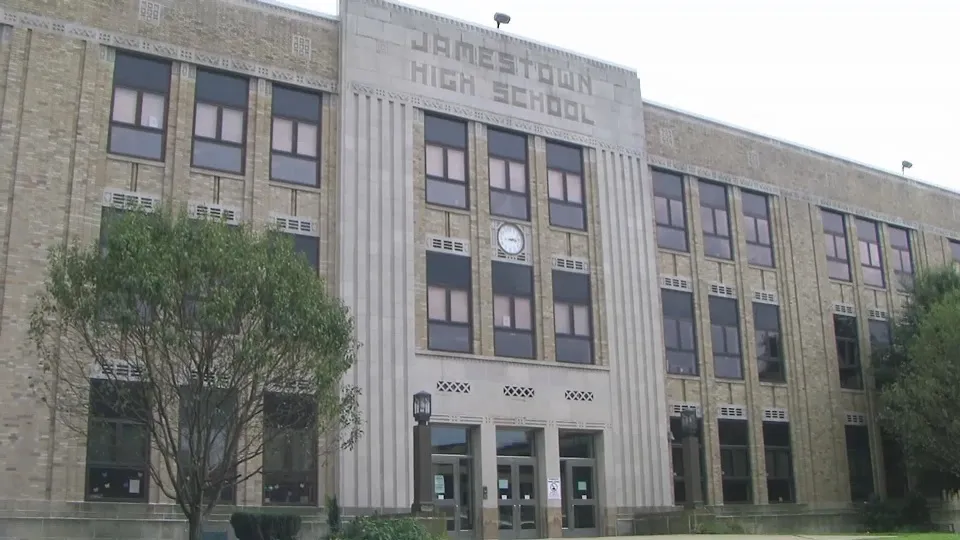
School officials acknowledged that the situation was unsettling for the community. Superintendent Kevin Whitaker issued a statement to families, recognizing the anxiety caused by the discovery of a firearm on campus. He assured parents that the district would take every possible step to restore a sense of safety and community, and that the individual responsible would be held accountable under the law.
In response to the incident, the Jamestown School District announced several immediate measures. Weapons detection systems are scheduled to be implemented at the high school starting Monday, a move that had been discussed in the community prior to the arrest. Counseling services will also be made available to students and staff who may be experiencing stress or fear related to the event. Administrators indicated that these services are intended to support mental health and to help students process the incident in a constructive way.
For some parents, these steps represent progress that should have happened earlier. Sanchez and others noted that calls for enhanced security measures had been made for years, and they questioned why it took an incident of this magnitude to prompt action. They argued that proactive investment in safety infrastructure could help prevent similar situations in the future and provide reassurance to families.
The district’s response has also reignited broader debates about school safety strategies, including the role of detection technology, staff training, and student support systems. Advocates for detection systems argue that they can act as a deterrent and provide an additional layer of protection, while critics caution that technology alone cannot address the root causes of weapons being brought to schools. Counseling, early intervention, and clear communication channels are often cited as complementary components of a comprehensive approach.
As investigators continue to review the circumstances surrounding the arrest, officials have indicated that additional information may be released in the coming days. For now, the focus remains on the legal process, the implementation of new safety measures, and the effort to reassure a community shaken by the realization of how close a routine school day came to a potentially far more serious outcome.