
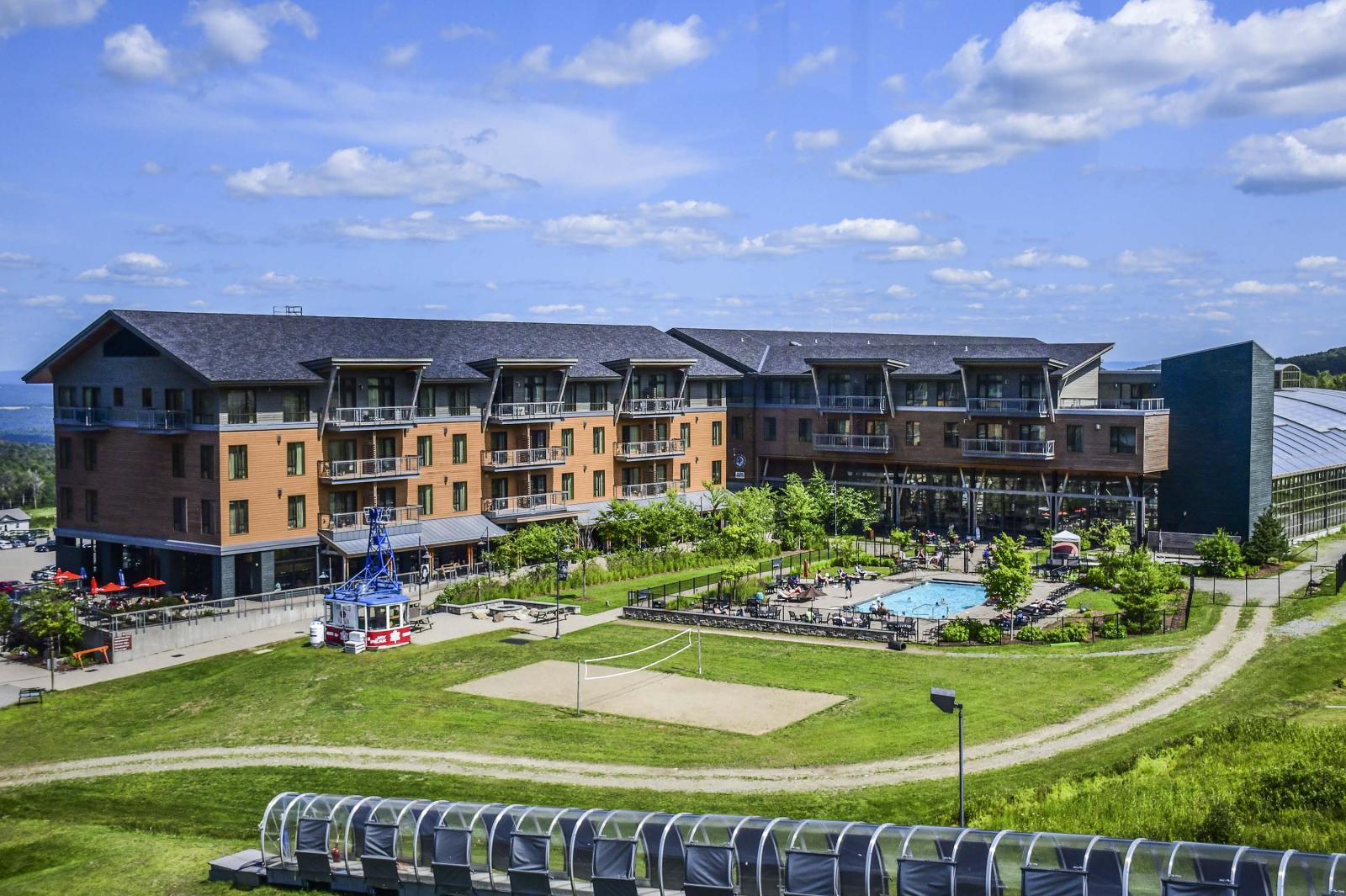
Jay Peak Resort in northern Vermont has introduced an innovative approach to trail maintenance by deploying approximately 150 goats and sheep to graze overgrown vegetation on its ski slopes. This pilot program, launched in early September 2025, marks the resort’s first use of livestock for landscaping purposes. The animals, sourced from Cloud Brook Grazing in Barnet, Vermont, are targeting invasive plants, weeds, and dense brush that accumulate during the off-season.
Resort officials estimate the herd will clear around 25 acres over a five-week period, contributing to the annual upkeep of roughly 300 acres of ski and Nordic trails. This eco-friendly method replaces traditional gas-powered mowers and weed whackers, aligning with broader sustainability goals in the ski industry. As the project enters its final weeks, it has drawn attention from environmental advocates and fellow resorts seeking greener alternatives.
Launching the Herd: Logistics and Technology Behind the Graze
The initiative kicked off on September 1, 2025, with the arrival of the mixed herd of goats and sheep at Jay Peak Resort, located near the Canadian border in Jay, Vermont. Owned by Adam Ricci of Cloud Brook Grazing, the animals were transported from their home farm and immediately set to work on select trails. Goats, known for their agility in tackling steep terrain and thorny undergrowth, lead the effort alongside sheep that efficiently crop grasses and low-lying vegetation.
The resort selected 130 acres of ski and Nordic paths for the grazing rotation, focusing on areas where overgrowth could impede snowmaking operations or create uneven skiing surfaces come winter. To manage the herd’s movements, each animal wears a GPS-enabled radio collar integrated with a geofencing system. Powered by cellular technology, the collars create virtual boundaries via an iPhone app monitored by handlers. If an animal approaches the fence line, the collar emits an audible warning; crossing it triggers a mild corrective shock.
This setup allows the herd to graze two acres at a time, rotating every few days to prevent overgrazing and ensure even coverage. Data from the collars is transmitted in real-time to Ricci, enabling adjustments based on weather, terrain challenges, or unexpected herd behavior. A guard dog patrols at night to deter predators like coyotes, adding a layer of security in the remote mountain setting. The project is facilitated by the Agritech Institute for Small Farms at the University of Vermont, which provided technical support for the collar system as part of a broader research effort into precision grazing.
Goatscaping At Jay Peak: Agritech Institute For Small Farms
— Jay Peak Resort (@jaypeakresort) October 1, 2025
While goats and sheep graze under the mountain's gaze, we talk with Dan Smith from Agritech Institute about how they're supporting small farms and green initiatives across Vermont.https://t.co/AFgl2U5YDt pic.twitter.com/TkE9aOD9dH
This collaboration underscores the program’s experimental nature, with Jay Peak serving as a test case for utilities, ski areas, and other land managers. Crews of seasonal workers, typically numbering around 10, have scaled back their use of heavy machinery, focusing instead on finishing touches where the animals cannot reach. The resort anticipates wrapping up the grazing phase by early October, ahead of its planned ski opening the Friday after Thanksgiving. Early observations indicate the herd is on pace to devour targeted vegetation, including tough species like poison ivy, sumac, and invasive weeds that resist mechanical cutting.
Environmental Gains and Cost Comparisons in Sustainable Land Management
At its core, the goat-and-sheep program addresses pressing environmental concerns in resort operations. Traditional mowing with gas-powered equipment contributes significantly to carbon emissions, noise pollution, and soil disturbance—issues amplified on Vermont’s fragile alpine ecosystems. By contrast, the livestock approach is entirely chemical-free and organic, minimizing erosion while enhancing soil health through natural fertilization.
As the animals graze, their waste enriches the ground, promoting microbial activity and water retention in an area prone to runoff during heavy rains. Resort environmental manager Lisa Chen noted that this method could reduce the site’s overall carbon footprint by up to 20% for trail maintenance alone, based on preliminary calculations. The benefits extend beyond emissions. Goats and sheep excel at consuming plants that mechanical tools often leave behind, such as root systems and seed heads that perpetuate invasive growth.
This targeted foraging helps restore native flora over time, supporting biodiversity on the slopes. In Vermont, where ski resorts face regulatory pressure to curb herbicide use, such innovations provide a compliant pathway to compliance. The program also conserves fuel—estimated at thousands of gallons annually for mower operations—and lowers operational noise, creating a quieter environment for wildlife and summer visitors hiking the trails. Economically, the initiative holds its own against conventional methods.

Jay Peak reports costs per acre comparable to hiring landscaping crews, around $500 to $700 depending on terrain. While the animals work more slowly—covering about five acres per week versus a mower’s 20—the upfront investment in collars (roughly $50 per unit) pays off through reduced equipment maintenance and fuel expenses. Supporting local farmers like Ricci injects funds into Vermont’s agricultural economy, with Cloud Brook Grazing earning fees for herd rental and transport. For a mid-sized resort like Jay Peak, which hosts over 100,000 skier visits annually, these efficiencies could translate to long-term savings as the program scales. Critics point to potential drawbacks, such as the need for supplemental mowing in hard-to-reach spots, but proponents argue the holistic gains outweigh these.
Community Impact and Prospects for Wider Adoption
The arrival of the herd has sparked enthusiasm among Jay Peak’s staff, guests, and local community. Summer passholders and early fall hikers have reported sightings of the animals from trail viewpoints, turning routine maintenance into a novel attraction. Social media buzz from resort employees highlights the “adorable workforce,” with photos of goats perched on rocky outcrops going viral among Vermont outdoor enthusiasts. Local farmers in the Northeast Kingdom region, including those in nearby Orleans County, view the project as a boon for agritourism, potentially opening doors for similar contracts at other venues.
Environmentally conscious skiers, a growing demographic, applaud the move as a step toward resilient resort operations amid climate change. Jay Peak’s parent company, Vail Resorts, has expressed interest in evaluating the pilot for replication across its portfolio, which includes 40+ North American properties. The Agritech Institute plans to compile data on grazing efficacy, animal health, and ecological outcomes by year’s end, with findings shared at industry conferences. If successful, expansion to all 340 acres of mowable terrain could occur in 2026, fully phasing out mowers in accessible zones.
Challenges remain, including weather dependencies—prolonged rain could slow grazing—and the logistics of herd relocation. Yet, the program’s success to date positions Jay Peak as a leader in sustainable winter sports. As CEO John Imbruce stated, “This isn’t just about clearing brush; it’s about stewarding our mountain for generations.” With the herd’s work nearing completion, the resort eyes a cleaner, greener launch to the 2025-26 season, setting a precedent for eco-innovation in the Green Mountains.