

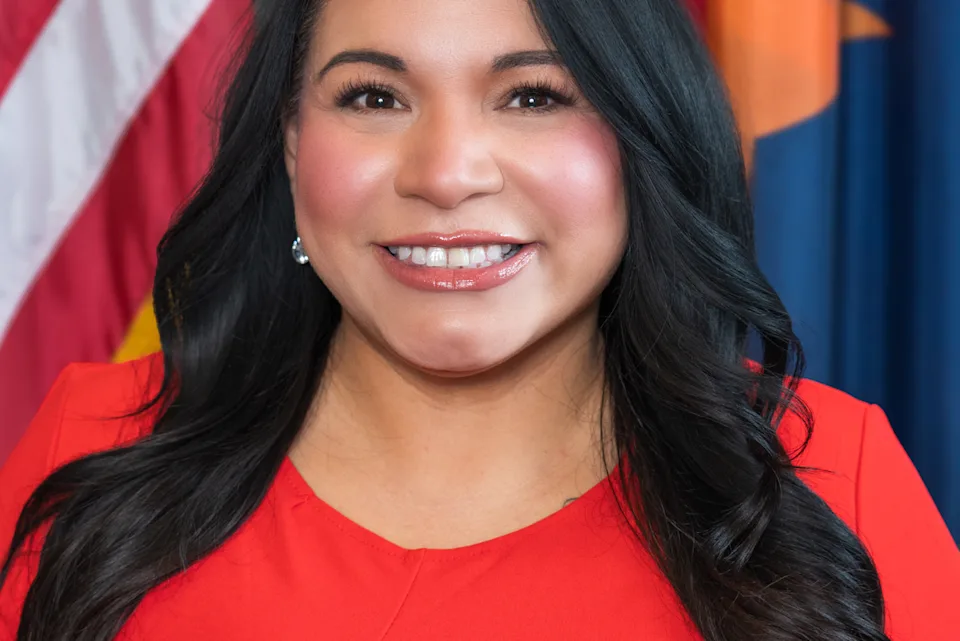
A recent civil lawsuit filed in Maricopa County Superior Court has brought serious allegations against Jeannette Garcia, an Avondale City Councilwoman and Turning Point USA manager. The complaint, brought forward by an employee identified only as “John Doe,” accuses Garcia of sexually harassing him during a post-election celebration and subsequently taking his teenage daughter without permission after he attempted to remove himself from the situation.
Jeannette Garcia has publicly denied all wrongdoing, but the claims have sparked substantial concern over workplace conduct, misuse of authority, and the role played by law enforcement in the incident. The unfolding case raises questions about the internal culture at Turning Point USA, the protections available to employees who report misconduct, and the broader implications for political organizations where professional boundaries and political loyalties often intersect.
Allegations of Sexual Harassment at an Election-Night Event
According to the filing, the alleged misconduct took place in November during a Turning Point USA election-night gathering held at a restaurant in the Phoenix area. Jeannette Garcia, who supervised Doe in his role promoting TPUSA-backed candidates, was described as heavily intoxicated during the event. The lawsuit claims she propositioned him for sex in exchange for career opportunities within the organization, suggesting she could offer him a job if he agreed to her demands.
Doe reportedly rejected the propositions multiple times, but the complaint states that her advances grew “more aggressive and explicit” as the night progressed and her level of intoxication increased. Feeling uncomfortable and seeking to remove himself from the situation, Doe left the event shortly after midnight. He then drove home, arriving approximately 45 minutes later, only to discover that his 14-year-old daughter was missing.
Before heading to the event earlier in the evening, Doe had left his daughter with family friends. After finding she was not where he expected her to be and receiving no immediate explanation, he began searching for her at a nearby friend’s house without success. Around this time, the lawsuit alleges that the situation took a troubling turn involving local law enforcement. When he returned to his residence, Doe encountered Maricopa County Sheriff’s Office deputies who informed him his daughter was “safe” and in the company of Jeannette Garcia.
Message to the Sedition 6
— Jeannette Garcia (@Jnet_margarita) November 25, 2025
Please stop spreading fear mongering propaganda lies, fear and division into our military and our country. pic.twitter.com/XxfY2THDNe
The complaint asserts that Doe was never asked for consent to release his daughter to another adult, nor was he provided a credible explanation as to why a political colleague—particularly one who was allegedly intoxicated—had taken custody of her. Instead, it claims that Jeannette Garcia and two unidentified adults manipulated the teenager into leaving with them by telling her they feared her father had been drinking and might become violent. The filing describes this as a deliberate fabrication meant to justify removing the girl from her home without parental permission.
Conflicting Accounts and the Role of Law Enforcement
The lawsuit presents a sequence of events that raises significant questions about the actions of the sheriff’s deputies involved. According to Doe, when he attempted to reach both his daughter and Jeannette Garcia after learning she had taken the teenager, he received no immediate response. It was not until approximately 2:20 a.m. that Garcia confirmed by phone that the girl was indeed with her. The complaint characterizes Garcia as “extremely intoxicated” at the time, asserting that she should not have been driving or caring for a minor in that condition.
The teen was not brought home that night. Instead, she remained with Jeannette Garcia until the following day, when Doe’s mother—using an unfamiliar phone number—contacted Garcia and arranged a meeting at a restaurant to retrieve the girl. The lawsuit states that since the incident, the teenager has experienced anxiety, fear of leaving her bedroom, difficulty sleeping, and declining performance in school and extracurricular activities.
From Doe’s perspective, the conduct of the deputies contributed directly to the gravity of the situation. The lawsuit accuses them of complicity, stating they accepted Garcia’s version of events without speaking directly to Doe before allowing her to leave with the girl. If true, this raises concerns about whether standard procedures were followed regarding minors, parental rights, and the verification of claims made by bystanders during late-night welfare checks.
No criminal charges were filed against Jeannette Garcia in connection with the incident, and it remains unclear whether internal investigations were conducted within the sheriff’s office regarding the deputies’ involvement. However, the civil suit seeks damages based on claims of harassment, emotional distress, and negligence.
Jeannette Garcia, for her part, has responded strongly to the allegations. In a statement to local media outlet AzFamily.com, she called the claims “outrageous and false,” asserting that she has “never kidnapped anyone” or “solicited anything inappropriate.” She contends that the situation involved her assisting a teenager she believed needed support and accuses the plaintiff of twisting her actions for malicious purposes. She has also suggested she may pursue legal action against those she believes are responsible for damaging her reputation.
Her denial adds a layer of complexity to the case, as the situation now hinges on sharply diverging narratives: one involving alleged harassment, misuse of power, and improper involvement by law enforcement; the other portraying Jeannette Garcia as a political figure targeted by unfounded accusations.
Context of Previous Controversies and Public Response
The lawsuit is not the first time Garcia has been the subject of public scrutiny. Earlier this year, she was formally censured by the Avondale City Council after a post on X in which she referred to actor Tom Hanks as a “pedo.” The comment drew immediate backlash, prompting Garcia to later claim she meant the Spanish word for “fart,” rather than an accusation of pedophilia. Even with the explanation, the council ruled that her conduct had violated standards expected of public officials.
Read : Pair Guilty of Jewellery Shop Robbery That Led to 27-Year-Old Manager Oliver White’s Suicide
While unrelated to the current case, the earlier controversy contributes to a broader discussion about Garcia’s judgment and the challenges faced by public officials navigating personal beliefs, social media usage, and public scrutiny. For opponents, the pattern may be seen as evidence of erratic or inappropriate behavior. For her supporters, it may represent nothing more than politically motivated attempts to undermine a conservative figure.

Turning Point USA itself, a prominent conservative youth organization, has not publicly commented on the allegations involving one of its managers. The group has built a national profile focused on campus activism, ideological training, and political campaigning, often defending conservative students and staff from what it views as hostile academic or media environments. The lawsuit, however, shifts attention inward, raising questions about workplace policies, supervisory behavior, and employee protections within the organization.
For political groups operating in high-stakes environments, formal structures for reporting misconduct are essential. Allegations of harassment or coercion within any professional organization warrant scrutiny, but they can carry additional complications when the accused is also an elected official or politically influential figure. The power dynamics described in the lawsuit, particularly the claims that Garcia linked job opportunities to sexual compliance, underscore the importance of clear boundaries and robust accountability mechanisms.
The incident also highlights how political activity, social events, and professional responsibilities can sometimes blend in ways that create risk. Election-night gatherings are often celebratory, high-energy environments where alcohol is present, and hierarchies within political organizations may make it difficult for subordinates to push back against inappropriate behavior. Allegations like those in Doe’s lawsuit, even if ultimately unproven, serve as a reminder of the need for safeguards designed to protect employees and ensure that misconduct can be reported without fear of retaliation.
As the case moves forward, more information may emerge about the interactions between Garcia, the deputies, and the teenager on the night of the incident. Civil lawsuits often prompt additional inquiry or internal reviews, particularly when public officials are involved. Whether the situation will lead to changes in Turning Point USA’s internal policies or prompt further examination by local authorities remains to be seen.
For now, the complaint provides a detailed and unsettling account of events that have left a family shaken, raised questions about official conduct, and put a prominent local political figure at the center of a serious legal dispute. The resolution of the case will depend on the evidence presented in court, the testimony of those involved, and the ability of investigators and legal authorities to determine what occurred during the late-night hours following the election-night celebration.
Was after some decent odds for the weekend’s matches and bet88keo seemed to have the best around. Had a little win, so can’t grumble! Get your odds here: bet88keo
**mitolyn**
Mitolyn is a carefully developed, plant-based formula created to help support metabolic efficiency and encourage healthy, lasting weight management.
188v – Trang Chủ Đăng Ký & Link Vào 188Bet Mobile Mới Nhất 2024 thường xuyên tổ chức các sự kiện đặc biệt và tri ân hội viên VIP với những phần quà có giá trị cao, khẳng định sự trân trọng đối với mọi thành viên. TONY03-04