

Predictions about the future have always captured public imagination, especially when they appear to align with unfolding events. In an age of social media and viral videos, such forecasts can travel across the world within hours, sparking curiosity, debate, and sometimes concern. Recently, a relatively little-known academic has found himself at the center of global online discussions after a series of geopolitical predictions resurfaced and began circulating widely.
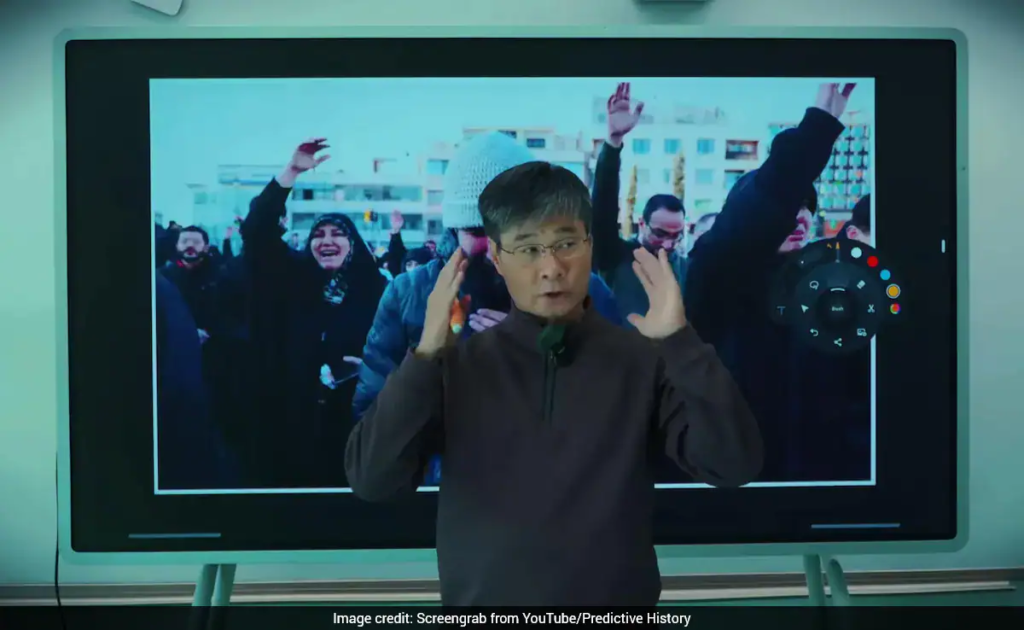
Jiang Xueqin, a philosophy professor with a background in historical analysis and political theory, has been dubbed by many internet users as the “Chinese Nostradamus” after two of his major forecasts seemed to align with real-world developments. The renewed attention surrounding Jiang stems from an old lecture delivered in May 2024 that has suddenly gained traction online. In that lecture, he outlined three bold predictions about global politics and the trajectory of American foreign policy.
According to online discussions, the first two predictions appear to have matched subsequent political developments, which has led many viewers to revisit the third and most controversial forecast. Jiang suggested that a renewed period of American leadership under Donald Trump would eventually lead to a major confrontation with Iran and that such a conflict could end unfavorably for the United States. This sequence of predictions has triggered intense debate across social media platforms and geopolitical forums.
Supporters argue that Jiang’s ideas are not mystical or speculative but instead based on analytical models, historical patterns, and strategic incentives among nations. Critics, however, caution that the interpretation of predictions after events occur can often be misleading and that international politics rarely follows neat historical patterns. Regardless of which side people take, the viral discussion has propelled Jiang from relative academic obscurity into global public conversation.
The Academic Background of Jiang Xueqin
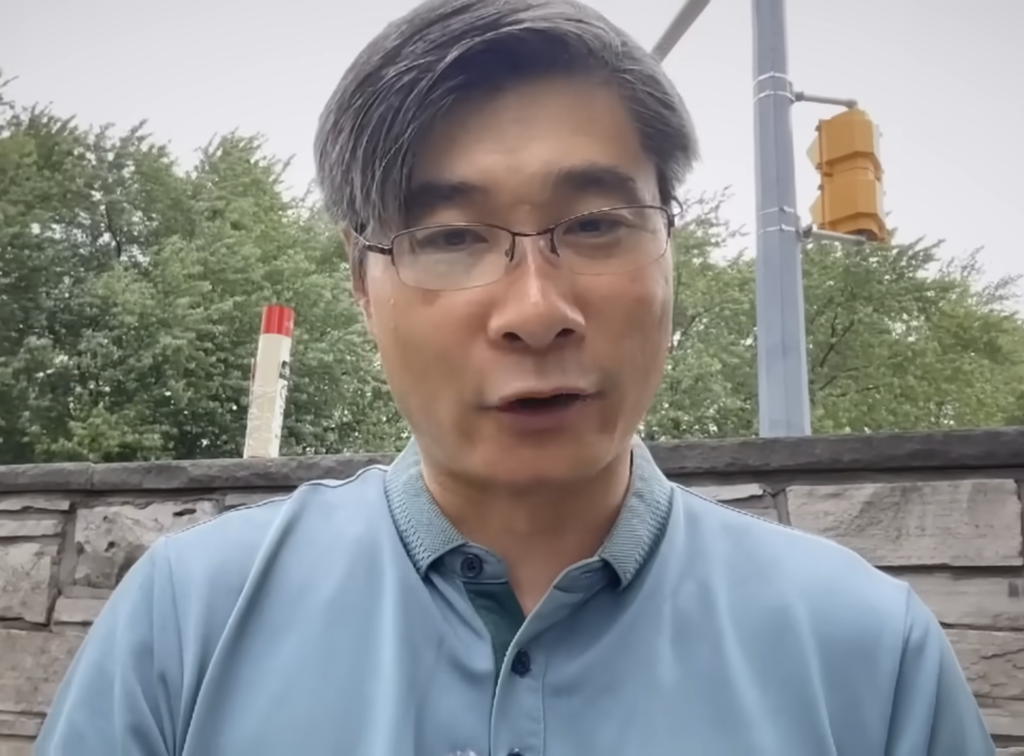
Jiang Xueqin is not a traditional fortune teller or mystic figure often associated with dramatic predictions about world events. Instead, he comes from an academic background rooted in philosophy, history, and political thought. Educated at Yale University, Jiang later became a Chinese-Canadian scholar who teaches history and philosophy at a university in Beijing. His academic interests revolve around the study of civilizations, political systems, and the patterns that emerge when societies experience cycles of rise, stability, and conflict.
Unlike famous prophetic figures who rely on visions, astrology, or spiritual claims, Jiang approaches forecasting through intellectual frameworks drawn from history and social science. His work attempts to analyze long-term patterns in geopolitics by examining incentives, power dynamics, and recurring strategic behaviors among nations. In his lectures and writings, he often emphasizes that human societies tend to follow patterns shaped by economic pressures, demographic changes, and political competition.
One of the key influences on Jiang’s thinking is the concept of “psychohistory,” a fictional discipline introduced by science fiction author Isaac Asimov. In Asimov’s stories, psychohistory combines mathematics, sociology, and history to predict large-scale societal trends. While the concept itself belongs to the realm of science fiction, Jiang has suggested that elements of this idea can be applied metaphorically to real-world historical analysis.
By examining repeated patterns in global history and combining them with game theory and strategic modeling, he believes it is possible to anticipate potential geopolitical outcomes. Jiang’s approach has attracted a growing online audience through his “Predictive History” YouTube channel. Over time, the channel quietly gained a substantial following, with viewers drawn to his calm, analytical breakdowns of global trends.
🚨🇮🇷🇸🇦 ALERTE – Le Professeur Jiang Xueqin (historien canadien connu pour avoir prédit la victoire de Trump, la guerre contre l’Iran et sa défaite US) lâche une bombe dans son interview récente (Breaking Points / Predictive History) :
— Camille Moscow 🇷🇺 🌿 ☦️ (@camille_moscow) March 4, 2026
« Si l’Iran soutient ses attaques, les pays… pic.twitter.com/0YYOvU8H2N
Rather than sensational predictions, his content often focuses on explaining why certain political events may become more likely based on structural pressures within international relations. The channel eventually amassed more than a million subscribers, though it remained relatively niche until recent events brought widespread attention to his earlier lecture.
The sudden viral interest in Jiang highlights a broader trend in modern media culture. Experts who once spoke primarily to academic audiences can now reach millions through digital platforms, and their ideas can quickly gain traction when they appear to connect with unfolding events. In Jiang’s case, the intersection of academic analysis, historical pattern recognition, and geopolitical speculation created a narrative that captured public curiosity.
The Three Predictions That Went Viral
The surge of online attention surrounding Jiang Xueqin is largely tied to a lecture he delivered in May 2024. In that talk, he outlined three major predictions about global politics, each building upon the previous one. At the time, the lecture attracted modest attention among followers of his channel. However, once political developments seemed to align with parts of his forecast, clips from the talk began spreading widely across the internet.
The first prediction involved the political comeback of Donald Trump. Jiang suggested that political polarization in the United States and dissatisfaction with existing leadership could create the conditions for a return to power by Trump. His reasoning focused on structural forces within American politics rather than individual personalities. According to his analysis, large segments of the electorate were seeking disruptive leadership that promised decisive action in both domestic and foreign policy.
The second prediction followed from the first. Jiang argued that if Trump returned to power, tensions with Iran could escalate into a major confrontation. In his analysis, long-standing strategic rivalry, ideological hostility, and regional power competition in the Middle East created a situation where conflict could become increasingly likely under certain political conditions. He suggested that American pressure campaigns and Iran’s own strategic calculations could push both sides toward confrontation if diplomatic channels weakened.
These two predictions gained attention when observers noted that elements of them appeared to align with subsequent political developments. As discussions about geopolitical tensions increased, viewers began sharing Jiang’s lecture across social media platforms. The perception that the first two forecasts had materialized made the third prediction the most widely debated part of his analysis.
The final and most controversial forecast in Jiang’s lecture concerns the possible outcome of a prolonged conflict involving the United States and Iran. According to his argument, the United States could face serious strategic challenges if it became deeply involved in a long-term war on Iranian territory. His reasoning does not claim that the American military lacks capability but instead focuses on geographic, demographic, and political factors that historically complicate foreign invasions.
Jiang points to Iran’s mountainous terrain, its large population, and its strong internal resistance to foreign intervention as factors that would make any extended military occupation extremely difficult. Throughout history, countries attempting to control vast and rugged territories often encountered prolonged resistance movements and logistical challenges. In his view, these structural obstacles could make such a conflict costly and unpredictable for any external power.
The viral nature of Jiang’s predictions illustrates how narratives about foresight can quickly gain traction online. When people perceive that an analyst has successfully anticipated major events, interest in their future forecasts grows rapidly. Whether the predictions ultimately prove accurate or not, the discussion itself demonstrates how global audiences increasingly seek explanations for complex geopolitical developments.
Why His Iran War Prediction Is Triggering Global Debate
Jiang Xueqin’s prediction that the United States could lose a prolonged war with Iran has become the most controversial element of his analysis. The idea has sparked debate among analysts, political commentators, and internet users who are attempting to assess whether such a scenario is realistic. Some view his argument as a thought-provoking examination of strategic limitations, while others dismiss it as overly speculative.
Supporters of Jiang’s analysis point out that history contains many examples of powerful nations struggling in prolonged conflicts far from home. Large armies with advanced technology have sometimes faced unexpected resistance when operating in difficult terrain or against highly motivated local populations. From this perspective, Jiang’s argument is less about predicting defeat and more about highlighting structural risks that could complicate any long-term military campaign.
Another factor driving discussion is the broader geopolitical context. Tensions in the Middle East have long involved a complex network of alliances, rivalries, and regional power struggles. Any major conflict involving Iran could potentially draw in multiple countries, expanding the scope and consequences of the confrontation. Analysts often note that modern warfare is rarely limited to direct battlefield engagements and can include economic pressure, cyber operations, proxy conflicts, and political instability.
Critics of Jiang’s prediction, however, argue that forecasting the outcome of hypothetical wars is extremely difficult. Military capabilities, technological developments, diplomatic interventions, and shifting alliances can dramatically alter the course of a conflict. They caution that drawing conclusions from historical patterns alone may oversimplify the unpredictable nature of modern geopolitics.
The debate surrounding Jiang’s ideas also reflects a deeper fascination with individuals who claim to anticipate world events. Throughout history, figures labeled as prophets or visionaries have captured public attention when their predictions appeared to align with reality. In the digital era, this phenomenon has intensified as social media amplifies dramatic narratives and spreads them across global audiences almost instantly.
Another reason Jiang’s prediction resonates with many observers is that it challenges widely held assumptions about global power dynamics. The United States is often viewed as possessing unmatched military strength and global influence. Suggesting that such a power could face defeat in a particular scenario invites discussions about the limits of military dominance and the complexities of modern warfare.
Ultimately, the widespread attention surrounding Jiang Xueqin highlights how public discourse about geopolitics is evolving. Analysts, academics, and commentators now operate in an environment where ideas can quickly move from specialized discussions into viral global debates. Whether Jiang’s predictions eventually prove accurate or not, the conversation they sparked demonstrates the enduring human fascination with understanding where the world might be headed and how historical patterns may shape the future.