
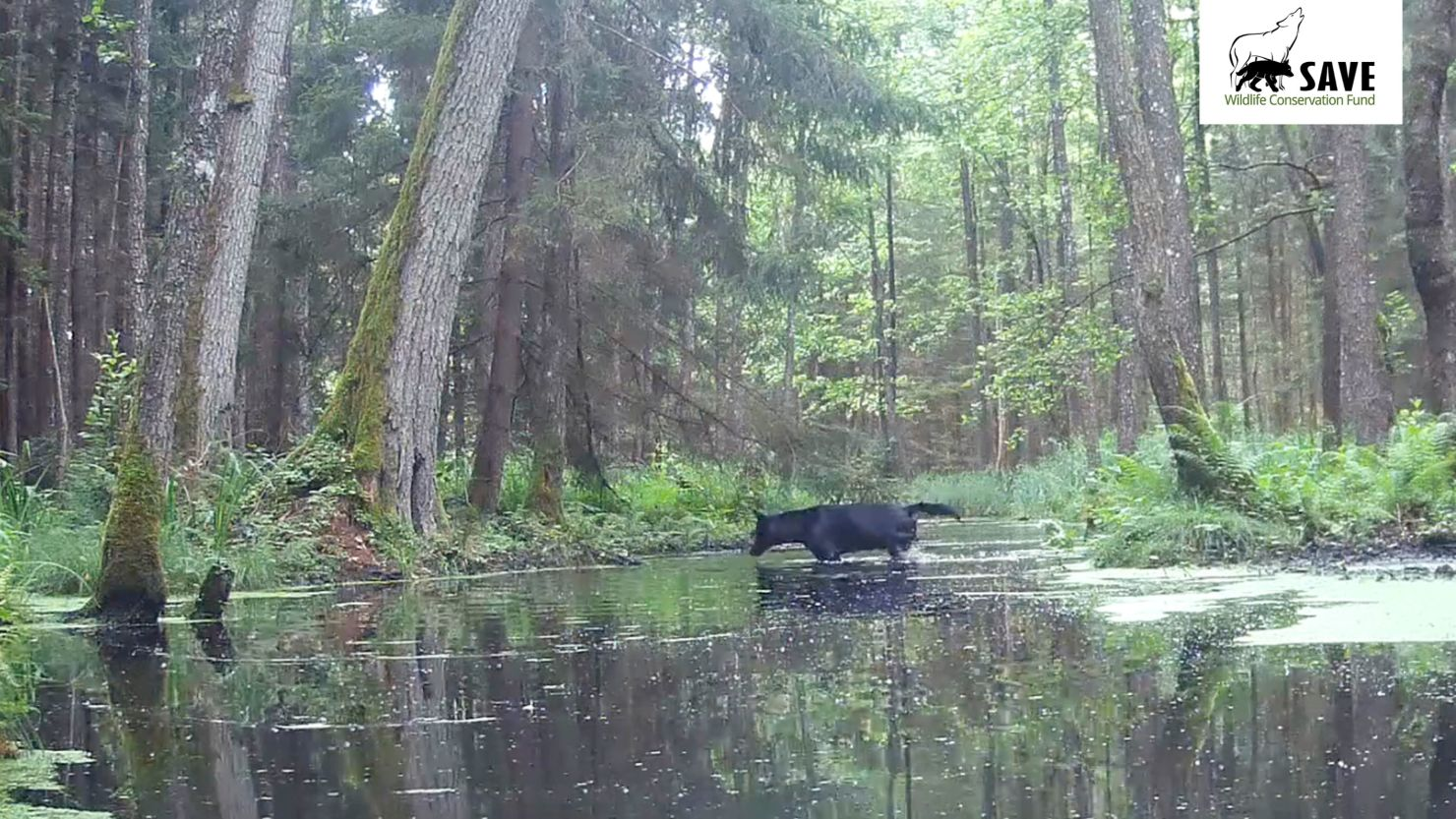
Joanna Toczydłowska, a wildlife researcher and project coordinator for SAVE Wildlife Conservation Fund Poland, made an extraordinary find when she captured footage of two rare black wolves in a Polish forest.
Poland’s forests have long been home to a diverse array of wildlife, but a recent discovery has captured the attention of conservationists and nature enthusiasts alike.
The sighting, which took place last year, has sparked scientific curiosity and conservation efforts to better understand the genetic origins and ecological significance of these remarkable animals.
The Rare Sight of Black Wolves in Poland
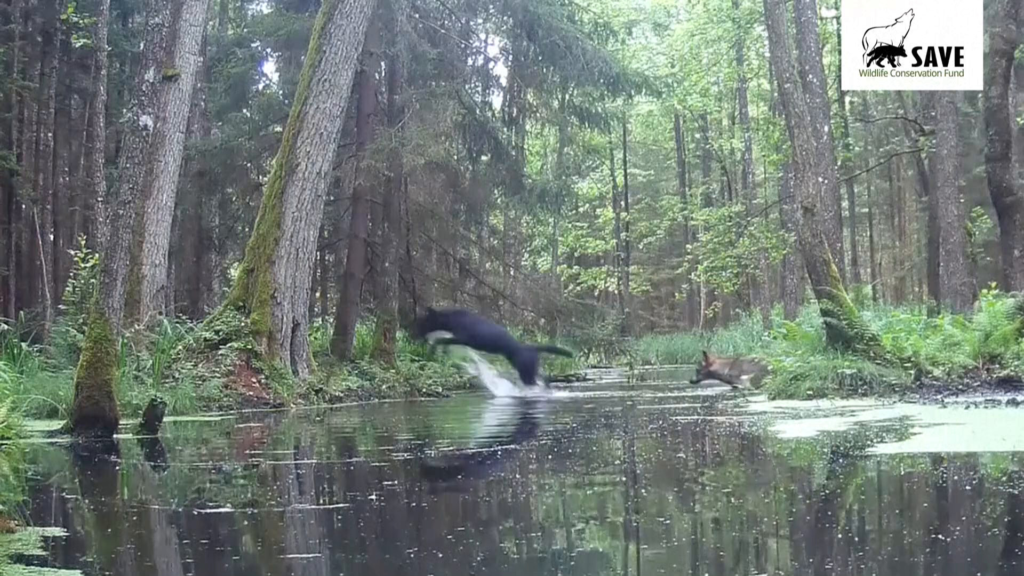
Most wolves in Poland have gray fur with hints of red or black, making the presence of black wolves an unusual phenomenon. These two black wolves, likely siblings around a year old, were filmed crossing a stream alongside a gray wolf.
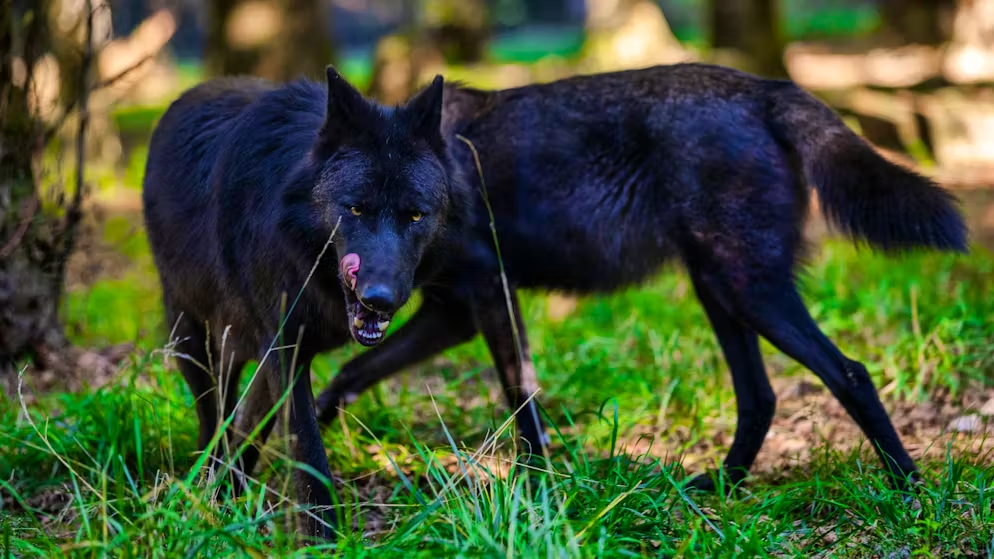
Black wolves are uncommon in Europe due to reduced genetic diversity, but they are more prevalent in North America, particularly in Yellowstone National Park, where nearly half the population carries the black-fur mutation.
Toczydłowska had originally placed her camera in the forest to study beavers. However, when she noticed wolves appearing in her footage, she decided to keep the camera in place. After weeks of monitoring, she successfully recorded the rare black wolves moving through the area.
In one clip, a black wolf and a gray wolf cautiously wade through the water before leaping onto the bank. Another video from the previous fall shows two black wolves and a gray wolf crossing the same stream, offering valuable insight into their movement patterns and behavior.
Read : North Korea’s ‘Noise Bombing’ is Making Life Miserable for Dangsan Village in the South
The significance of this discovery goes beyond its visual appeal. Scientists believe that the black coat in wolves originated from a genetic mutation that was first introduced through domesticated dogs thousands of years ago.
Two extremely rare black wolves have been caught on camera in Poland.
— Notes from Poland 🇵🇱 (@notesfrompoland) February 9, 2025
The animals – which are grey wolves with a genetic mutation changing the colour of their fur – are relatively common in North America but little seen in Europe pic.twitter.com/AUJHJomYNz
Over time, this trait spread to wild wolf populations, although it remains rare in Europe. The presence of black wolves in Poland suggests that the local wolf population may be experiencing genetic changes or an increase in diversity, which is an exciting prospect for researchers studying wildlife genetics.
Conservation Efforts and the Role of SAVE Wildlife Conservation Fund
The SAVE Wildlife Conservation Fund has been monitoring Poland’s wolf population for over a decade, gathering critical data on their movements, behavior, and genetic makeup.
Toczydłowska and her team are now collecting wolf scat from the forest to analyze the genetic background of these black wolves. By doing so, they hope to determine how this mutation appeared in Poland and whether it is becoming more common in the region.
Wolf conservation in Poland has come a long way since the 1950s when the species was nearly extinct due to hunting and habitat loss.
However, conservation efforts in the early 2000s led to a resurgence of the wolf population, which now numbers between 2,500 and 3,000 individuals. The black wolves’ presence is a testament to this successful recovery, but it also raises new questions about their adaptation and genetic heritage.
The organization has chosen not to disclose the exact location of the black wolves to protect them from poaching and prevent the spread of misinformation about their presence.
Wolves often face negative perceptions, with some people fearing them as dangerous predators. In reality, wolves play a crucial role in maintaining ecological balance by controlling prey populations and supporting biodiversity.
SAVE Wildlife Conservation Fund is also focused on educating the public about how to coexist with wolves safely. Many communities in Poland are unfamiliar with living alongside these animals, making education a vital part of conservation efforts.
By raising awareness and promoting responsible behavior, Toczydłowska and her colleagues aim to ensure that both humans and wolves can thrive in their shared environment.
The Future of Black Wolves in Poland
The discovery of black wolves in Poland raises important questions about their future in the region. Are they a rare anomaly, or could this genetic trait become more common over time? Understanding the genetic basis of their black fur could provide insights into how wolf populations evolve and adapt to changing environments.
Genetic studies on wolves in North America have shown that black-furred wolves may have advantages in certain habitats. In Yellowstone, for example, black wolves tend to be more resistant to canine distemper virus, a disease that has impacted wolf populations in the past. If similar benefits exist for black wolves in Poland, it could have significant implications for their survival and long-term conservation.
Toczydłowska and the SAVE Wildlife Conservation Fund are now seeking financial support to conduct detailed genetic testing on the black wolves.
This research could help determine how frequently the black-fur mutation occurs in Poland’s wolf population and whether it is increasing. Such studies are crucial for conservation planning and ensuring the continued protection of wolves in the country.
The resurgence of wolves in Poland is a conservation success story, but challenges remain. Habitat loss, human-wildlife conflicts, and misinformation continue to threaten these animals. By studying black wolves and their genetic diversity, researchers hope to gain a deeper understanding of Poland’s wolf population and contribute to global conservation efforts.
Joanna Toczydłowska’s footage of these rare black wolves serves as a reminder of the beauty and mystery of the natural world. It highlights the importance of continued research, conservation, and education in preserving wildlife.
As scientists analyze the genetic makeup of these wolves and track their movements, we may uncover new insights into the evolution of wolf populations and the role of black-furred wolves in Europe’s ecosystems.