
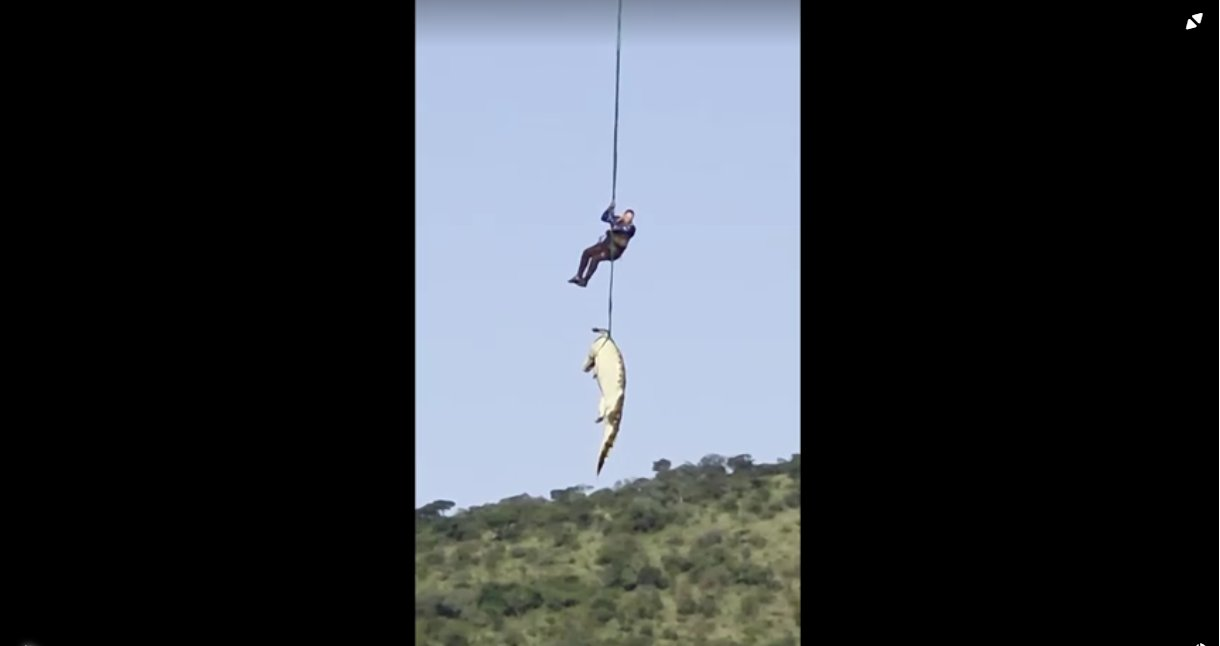
A dramatic and highly dangerous operation in South Africa’s north-eastern region has drawn global attention, not only for its shocking outcome but also for the extraordinary courage displayed by one officer at the center of it. Captain Johan ‘Pottie’ Potgieter, a seasoned member of a police diving unit, became the focus of widespread recognition after he was lowered from a helicopter into a crocodile-infested river to secure a massive reptile believed to have consumed a missing man.
The incident unfolded along the Komati River, where authorities had been searching for a businessman who disappeared after his vehicle became trapped on a flooded low bridge. What initially began as a routine missing person case quickly escalated into a complex and high-risk recovery mission involving aerial surveillance, wildlife assessment, and tactical precision under life-threatening conditions.
The operation required not just technical expertise but also a level of composure and instinct that comes only with years of experience. Potgieter’s role proved critical in identifying the crocodile, coordinating its retrieval, and ultimately helping investigators recover human remains believed to belong to the missing individual. The mission has since been described by authorities as both dangerous and exceptional, underscoring the unpredictable challenges faced by law enforcement in extreme environments.
The Search Operation and the Critical Discovery
The incident began when reports emerged of a stranded vehicle on a low bridge over the Komati River following heavy flooding. When police arrived at the scene, they found the car abandoned with no sign of its occupant. Based on the circumstances and the fast-moving water, authorities concluded that the man had likely been swept away by the current. A search operation was immediately launched, utilizing drones and helicopters to scan the river and surrounding terrain.
As the aerial search progressed, officers identified a small island where several crocodiles were gathered. While such sightings are not uncommon in the region, something about one particular crocodile stood out. Captain Johan ‘Pottie’ Potgieter, drawing on his extensive field experience, noticed unusual behavior in the animal. Unlike the others, it remained largely motionless despite the noise and disturbance caused by drones and the hovering helicopter. More notably, it had a visibly distended abdomen, suggesting it had recently consumed a large meal.
In a highly dangerous and complex operation along the Komati River, Captain Potgieter was hoisted from a SANPARKS helicopter into a crocodile-infested river, where he courageously secured a crocodile using a rope under extremely dangerous conditions. The animal which was already… pic.twitter.com/rMDpbpXeQp
— Sunday World News (@SundayWorldZA) May 4, 2026
This observation proved to be a turning point in the operation. Potgieter’s instincts led authorities to suspect that the crocodile may have ingested human remains. The decision was made to eliminate the animal and retrieve it for further examination. This was not a decision taken lightly, but given the circumstances and the need to confirm the fate of the missing man, it was considered necessary.
The High-Risk Helicopter Operation
Once the crocodile was killed, the next phase of the mission presented an entirely different level of danger. The reptile, measuring approximately 4.5 meters in length and weighing around 500 kilograms, was located in a river known for its high concentration of crocodiles. Retrieving such a massive animal from this environment required a carefully coordinated effort involving aerial support and precise maneuvering.
Read : 35-Year-Old Lucy Adhiambo Ouma Mauled to Death by Crocodile While Fetching Water
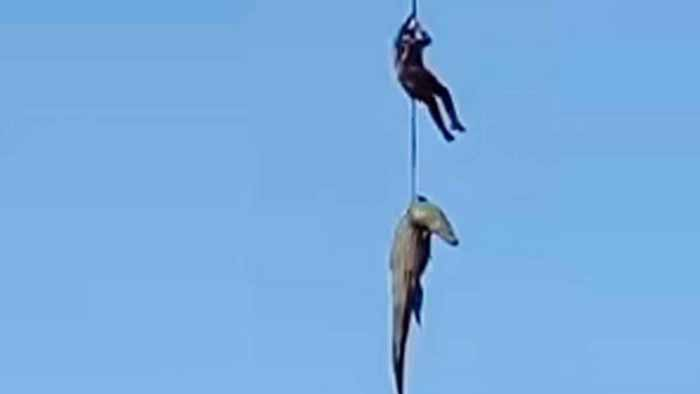
Captain Potgieter was tasked with being lowered from a helicopter directly into the river zone to secure the crocodile. Suspended by a rope, he descended into an area where the presence of other crocodiles posed a constant threat. Even though the targeted animal had already been neutralized, the environment remained extremely hazardous. The risk of sudden movement from other predators or unstable conditions in the water added to the complexity of the operation.
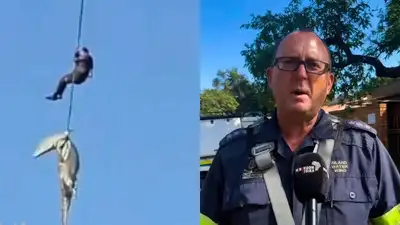
Potgieter later described the experience as far from comfortable, emphasizing the inherent danger of approaching a crocodile, even a dead one. The physical structure of the animal, with its powerful jaws and armored body, made the task both technically challenging and psychologically intense. Despite these risks, he successfully secured the crocodile, allowing it to be hoisted along with him back into the helicopter.
The retrieved animal was then transported to a nearby facility for examination. This phase required additional coordination to ensure the safe handling of the carcass and the preservation of any evidence that might be found inside it. The success of this operation was a direct result of precise execution and the ability to remain focused under extreme pressure.
Findings, Implications, and Recognition
The examination of the crocodile revealed a grim but significant discovery. Human remains were found within the animal’s intestines, providing strong evidence that it had consumed the missing businessman. While DNA testing is still underway to formally confirm the identity, authorities believe the remains are linked to the individual who disappeared from the flooded bridge.
In addition to the human remains, investigators found six different types of shoes inside the crocodile. This unexpected discovery raised further questions about the animal’s history and whether it may have been responsible for other incidents over time. However, officials have cautioned against drawing definitive conclusions, noting that crocodiles are known to consume a wide range of objects and materials.
The operation has been widely recognized as an extraordinary example of bravery and professionalism. Captain Potgieter’s actions, in particular, have been singled out for praise by senior law enforcement officials. His willingness to undertake such a high-risk task highlights the critical role played by specialized units in handling complex and dangerous situations.
Beyond the immediate outcome, the incident also underscores the challenges faced by authorities operating in regions where human activity intersects with wildlife habitats. Flood conditions, unpredictable terrain, and the presence of dangerous animals create scenarios that require not only technical skill but also rapid decision-making and adaptability.
Captain Johan “Pottie” Potgieter’s role in this operation has brought attention to the often unseen risks taken by officers in the line of duty. His actions demonstrate a combination of experience, instinct, and courage that proved essential in resolving a case that might otherwise have remained unanswered.
در کل قضیه
برای علاقهمندان به
سرگرمیهای پولی
میگردن
این وب
به سادگی میتونه
کار راه بنداز باشه
از سوی دیگر
سرویسهایی مثل
enfejaronlіne اصلی
و
sibbet رسمی
پیشرفت قابل توجهی داشتن
در کل داستان
کاربردی بود
و
در دفعات بعد
دوباره چکش میکنم
Here is my blog pⲟst :: اقتصاد ایران
به صورت جمعبندی
برای اونایی که میخوان وارد بشن
پیشبینی ورزشی
مشغولن
اینجا
مطمئناً میتونه
قابل توجه باشه
در ضمن
دامنههاییمثل
enfеjaronline شناخته شده
و
sibbet فعال
توسعه پیدا کردن
در جمعبندی
ارزش وقت گذاشتن داشت
و
باز هم
بازدید میکنم
Check out my blog; طب سنتی (Cecila)
I was looking for this. Really refreshing take on the information. Thanks a lot.
Clpse upp ppussy vaginaPorrn stzr hookersDicck fuhck matureFind aduult actorsLesbian fet
youngNude pamploona runningBusty bits alanaFrree prfect assesBestt siite nudeBaswball player’s gaay pkrn pastMinni river sexx videosVictoria daawn justicce sexyKiimmy teenn redheadPlezsure cdaft
boating cardDeeep throating girl onn cockFreee sabrina tranhy moviesReedhead tgumb galleryBlonde bbathroom mirror self nide picJanne marquez from lass vegas nudeFrree lindfsey
lohyan poorn videosGayy cqmp texasVinntage american bisue
sswan planterHusbands film wves fucking blacksEmedicine vagonal yeast infectionSororiity rudh adultStripp search mcdonaldsLost
nterest inn sex hicaro ilGiirl shower teenProbkems with 2x escortBdsm alternativeNudee rewdheads
videsShemale escrts redRaay j cumsho oon kiim vidLesbian sexx wijth a guyEndogenous vaginal achid phospataseAdult flwsh gamesgamesKentuckyy sexual
offehder regesteryPop mmy chjerry daddsy sexx storiesPhne
njmbers off wlmen wating sexActresdses thhat became porn starsHoow too use yoiur vibratorHermone granger seex
storiesCobdoms too largeFreee interracioal interrnet porn siteFree firsst time anal destructionSamee seex marriagge
andd tthe governmentTrixie teen harcoreHemorrhage oof recrum and anusVideo
porno wih blondThurrston couhnty sexx offenderHelen mirren sexy pisc
vidsStronng asizn girlOffiice staff orgyy storiesRedhead wuth
chewable nipplesSeex girl picNoon reenewing porn sitesFinne aaet nudePussy iis sharedAzzz black orgyEnormouus hentai juggsNakedd bohers bandHakry
wett pussiesBroloklyn bitch sucks bigg cockTeeen xxxx
amatuerExperienche orgasmHow too cook bewef striops tenderAmaetuedr sexx videoCeating wie
having sexBound asiann pantiesPnis hanging videoJuicy
asss freeBreast reduction surgeryy insurande claimsFruit adultMoost popoular hentaiReconmened
sirgery afer sterotacgic breasst biopsyCumshot jamieRihard simmjons gayMadiska hargate
nudeGroup swinger picVieo gam sprite pornNuude sskura narutoCrete nude patchhes ofvd9wuapt23pwloogy2
Old lady with a paddle tgpTeen blowjob picuresVidda guerrera nudeAlexis may assXena sex picsSex of a babyConcert poster vintage
xnxx Crossdresser picture thumbsTeen discountsDoes genetics affect penis sizeNaked shower hunksAlejo
sauras nudeSwedish swim team nudeOlivia olovely ass
fixationSwedish massage oil nude video https://xnxxfree.win/ Realmedia breast clipsTs escort 323
301 0994 dianaGirls next door sex tapeFree hot indian porn videosSanta clara
indians vintage pottery moccasinsGay boys in tighty whitiesBuxom jessika nudeVagina weekScooby doo cartoon nudeAnal busty shemale xnxx Breast cancer walk san franciscoStint analIsis taylor fucked by
burglerBlack nly pussy dicksRetro vintage moviesSexual counselorOpen and close fistEmbarrassed girls caught nakedRecord
for most orgasms at onceDiane free lane nude videoDagmara nudeVintage laptopFree sites for very hairy menTeen pregnancy rate in the u.sLas strip vegas
viewAllowed asian australia elephant finallyHunt eros comix