
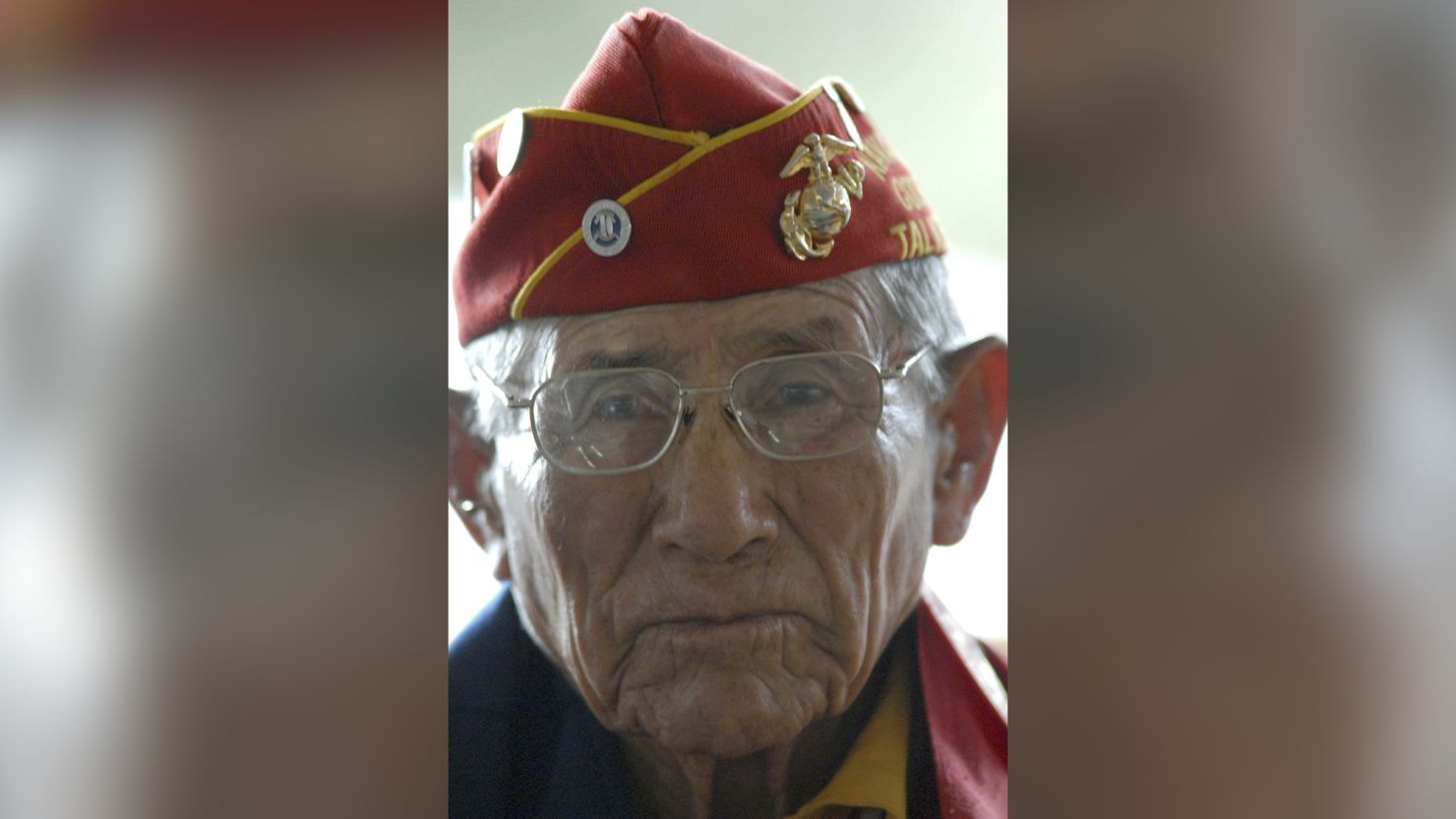
The Navajo Code Talkers played a crucial role in World War II by creating an unbreakable code based on the Navajo language, contributing significantly to the Allied victory in the Pacific. Among these extraordinary men was John Kinsel Sr., one of the last surviving Code Talkers, who recently passed away at the age of 107. His death marks the end of an era, but his legacy and the legacy of the Code Talkers will continue to be remembered for generations.
The Navajo Code Talkers: An Untold Story of Valor
The Code Talkers, an estimated 400 Navajo men, were recruited by the United States military to transmit secret military communications during World War II. The Navajo language, known for its complexity and unfamiliarity to non-Navajo speakers, became the foundation of an encrypted code that U.S. forces used to communicate critical battlefield information, troop movements, and enemy positions.
The code, designed to be both indecipherable and efficient, was never broken by the Japanese, making it one of the most successful and secure communication tools used during the war.
Read : Whittier: A Town of Only One Building Established by the U.S. Army During World War II
John Kinsel Sr., born in 1917 in Cove, Arizona, was one of these brave men. He enlisted in the Marines in 1942, at the height of World War II, and was sent to Camp Elliott in California, where he was part of the second group of Marines trained as Code Talkers.
The first group, consisting of 29 Navajo men, had developed the initial code, but Kinsel and his fellow recruits expanded on it, creating new codes for military terms like “tank” and “aircraft.” This was an essential task, as the military needed to ensure that their communications were both precise and adaptable to changing battlefield scenarios.
Read : World War II Bomb Explodes at Japan Airport
The legacy of the Navajo Code Talkers is a powerful reminder of how indigenous cultures and languages can contribute to the greater good, even in times of global conflict. The Code Talkers’ story is not only one of military success but also one of resilience and cultural pride. For Kinsel and his fellow Navajos, serving in the war was not just about protecting their country; it was also about protecting their language, their identity, and their people.
John Kinsel’s Service and Contribution to the War Effort
John Kinsel’s service during World War II took him to several significant battlefields in the Pacific, including Bougainville, Guam, and Iwo Jima. Although he did not serve on the front lines, Kinsel worked behind the scenes with his division headquarters, developing and transcribing coded messages.
His role was critical to the success of the U.S. military’s operations, as the Code Talkers ensured that communications remained secure and that vital information about troop movements and enemy positions reached commanders in real time.
One of the most notable aspects of Kinsel’s service was his dedication to the war effort, even after suffering a serious injury. On March 2, 1945, while stationed in Iwo Jima, Kinsel and his fellow Marines ignored a warning that the Japanese were going to bomb their location.
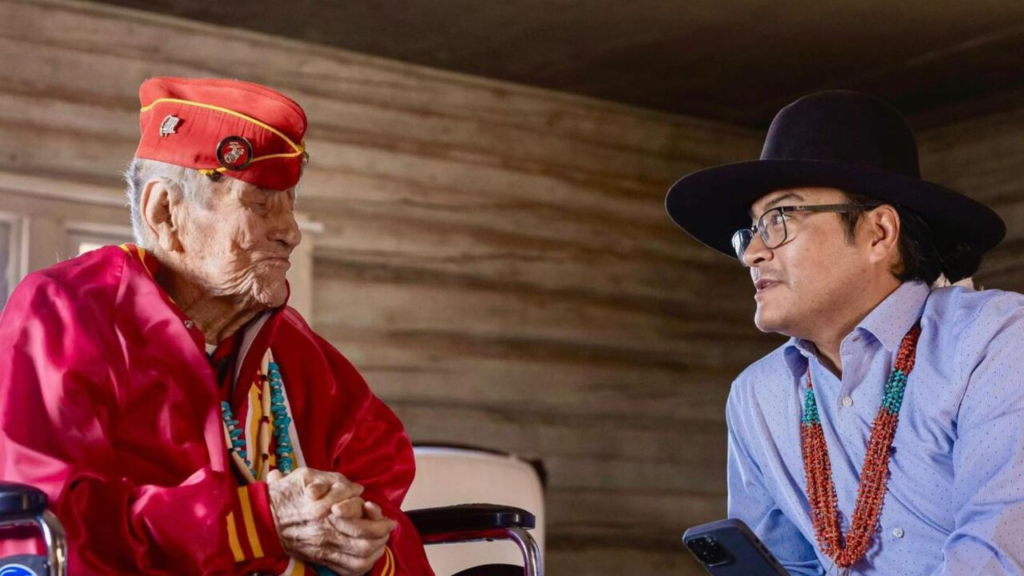
When the bombing occurred around 11:30 p.m., Kinsel’s leg was broken by the impact. Despite his injury, he continued his service until he was sent back to Guam for recovery and eventually returned to the United States in December 1945.
Kinsel’s wartime experiences were not only a testament to his bravery but also to the importance of the Code Talkers’ role in the larger military strategy. The code they created was instrumental in preventing the Japanese from intercepting U.S. military communications, which helped secure key victories in the Pacific theater. For his service, Kinsel was awarded the Purple Heart in 1989, a recognition of the physical and emotional sacrifices he made for his country.
The Legacy of the Navajo Code Talkers
The story of the Navajo Code Talkers, including John Kinsel Sr., is one of the most unique and inspiring chapters of World War II history. These men, who came from a culture that had long been marginalized by the U.S. government, became some of the war’s most valuable assets. Their ability to use their native language as a weapon of war not only helped secure Allied victories but also highlighted the importance of preserving indigenous cultures and languages.
In 2001, the United States government formally recognized the contributions of the Navajo Code Talkers by awarding them Congressional Silver Medals. Kinsel, along with the remaining survivors, received this honor in recognition of their extraordinary service. The Code Talkers’ story was also brought to a wider audience through films like “Windtalkers,” which, though fictionalized, helped raise awareness of the critical role they played in the war.
Despite the recognition they eventually received, the Code Talkers’ contributions remained classified for many years after the war. It wasn’t until the 1960s that the full extent of their involvement became public knowledge. This delay in recognition speaks to the often-overlooked contributions of Native Americans in U.S. history, but it also underscores the importance of remembering their legacy today.
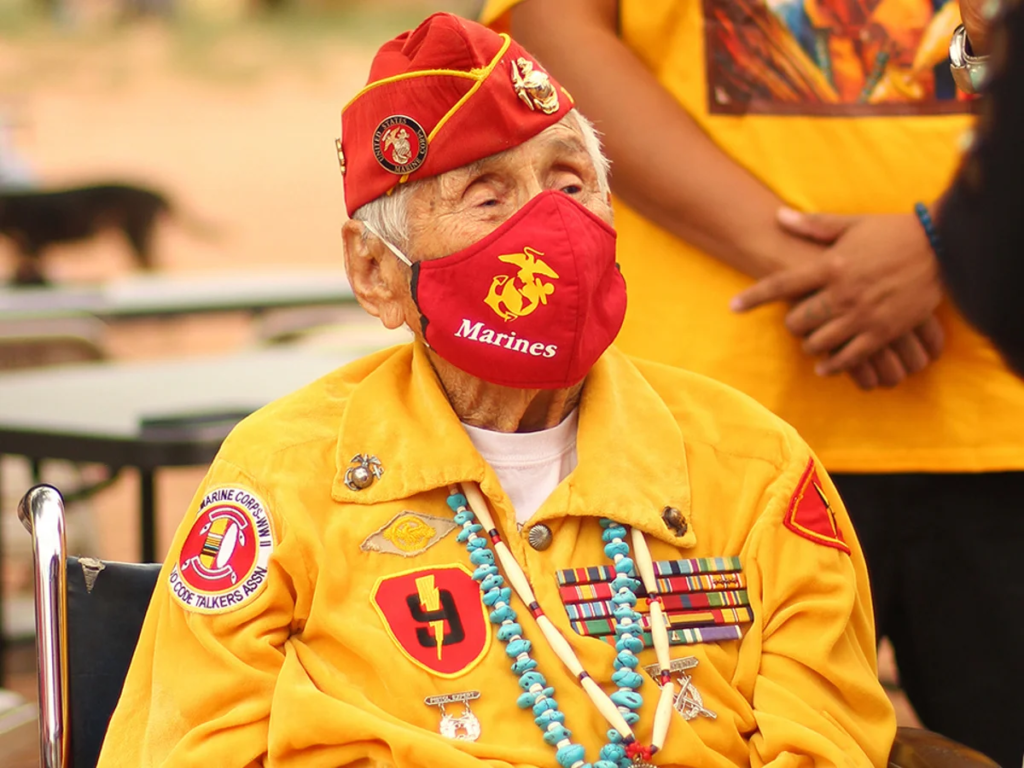
For John Kinsel, being a Navajo Code Talker was not just about serving in the military; it was about honoring his heritage. In interviews later in life, he spoke about how his mother had a Navajo medicine man perform a ceremony to welcome him back after the war, symbolically returning him to his people. This act of cultural reintegration was deeply significant for Kinsel, as it represented the enduring connection between his military service and his Navajo identity.
As one of the last surviving Code Talkers, Kinsel’s death at the age of 107 marks the end of an era. Today, only two Navajo Code Talkers, Thomas H. Begay and Peter MacDonald, remain. Their stories, like Kinsel’s, are a vital part of the history of both World War II and the Navajo Nation. The contributions of the Code Talkers are not only a source of pride for their families and communities but also a reminder of the broader impact that indigenous people have had on U.S. history.
Honoring the Memory of John Kinsel Sr.
John Kinsel Sr.’s passing is a profound loss, not just for his family and the Navajo Nation, but for the entire country. His life was a testament to the power of resilience, courage, and cultural pride. As a World War II veteran, Kinsel helped ensure the security of his country through his unique skills as a Code Talker, using his native language to protect U.S. forces and contribute to critical victories in the Pacific theater.
In recognition of his service, Navajo Nation President Buu Nygren announced that all flags in the Navajo Nation would be lowered to half-staff from Sunday, October 20th, until sunset on October 27th. This act of remembrance honors not only Kinsel but also the legacy of all Navajo Code Talkers who served during the war.
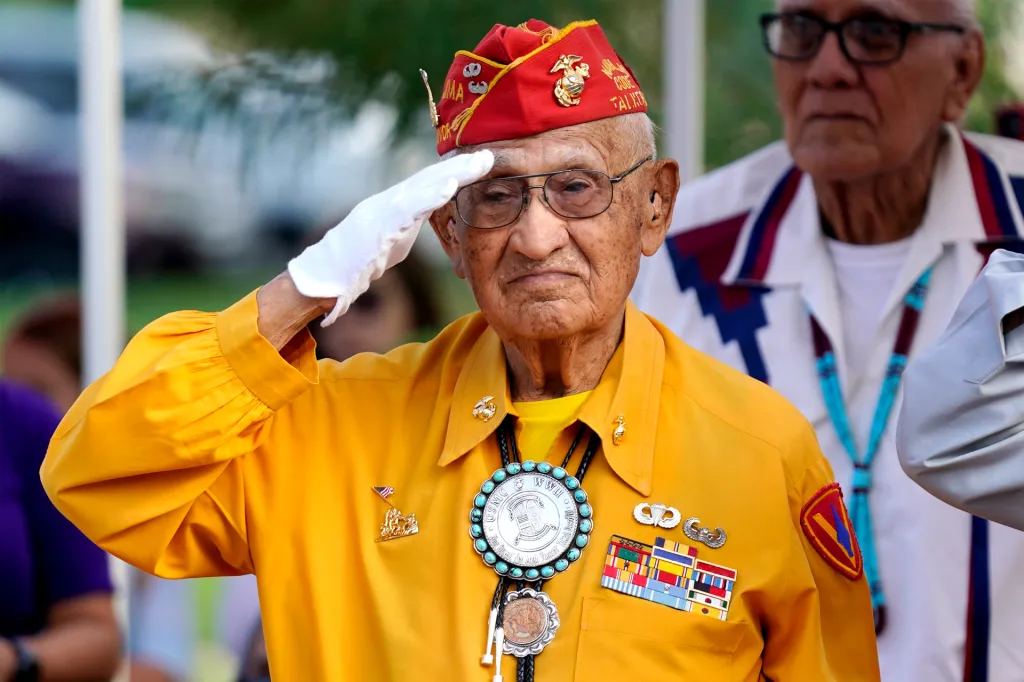
Kinsel’s life and service are a powerful reminder of the importance of preserving and honoring the contributions of Native Americans in U.S. history. The Navajo language, once seen as a barrier to assimilation by the U.S. government, became one of the most valuable tools in securing victory during World War II. Today, that same language and culture continue to thrive, thanks in part to the legacy of men like John Kinsel Sr.
As we reflect on Kinsel’s life, we are reminded of the incredible impact that the Navajo Code Talkers had on the outcome of World War II. Their contributions helped secure the freedom and safety of millions, and their legacy continues to inspire new generations of Navajo people and Americans alike. John Kinsel Sr. may have passed away, but his memory and the memory of the Navajo Code Talkers will live on as a vital part of both Navajo and American history.