

The long-running mystery surrounding the disappearance of Andrew, Alexander, and Tanner Skelton has taken a momentous turn with the filing of murder charges against their father, John Skelton, nearly fifteen years after the boys vanished. The case, which has distressed the small community of Morenci, Michigan, since Thanksgiving weekend in 2010, is now entering a new legal phase as prosecutors accuse John Skelton of killing his three sons and concealing their remains.
For years, the unanswered questions surrounding the boys’ disappearance have weighed heavily on their family, investigators, and the public. With the recent charges, attention has shifted to the evidence accumulated across the decade-and-a-half search and the profound impact the case continues to have on everyone connected to it.
A Timeline Marked by Disappearance and Unanswered Questions
The events of November 2010 form the foundation of a mystery that has never faded from public consciousness. Andrew, 9, Alexander, 7, and Tanner, 5, were last seen at their father’s home after spending the Thanksgiving holiday with him. At the time, John Skelton and their mother, Tanya Zuvers, were embroiled in a contentious divorce, with Zuvers holding sole custody. When she arrived the morning after the holiday expecting to bring the boys home, the house was empty. Neither the children nor Skelton were present, and what followed was a cascade of alarming developments.
John Skelton was soon hospitalized following what authorities described as an apparent suicide attempt. His explanations for the boys’ whereabouts shifted repeatedly over the ensuing hours and days. He initially claimed he had given the children to a woman to protect them from their mother, later stating they were with an underground group for their safety. Investigators quickly found no evidence that such a handoff had occurred, nor that any credible group was involved. His claims created confusion and frustration, forcing authorities to evaluate each statement while simultaneously organizing what would become a massive search effort.
Cellphone data ultimately offered a more concrete timeline of John Skelton’s movements. The tracking of his device contradicted several elements of his story and suggested that he traveled alone to rural areas in the hours surrounding the boys’ disappearance. Law enforcement spent years scouring fields, wooded properties, bodies of water, and remote stretches of land based on this data, yet no remains were ever found. These searches, though exhaustive, yielded only more questions, deepening the anguish of the boys’ family and the investigators dedicated to the case.
John Skelton has been charged with murder and tampering with evidence. Hopefully we learn where and what happened to Andrew, Alexander and Tanner. #truecrime #truecrimepodcast #crimenews #podcast pic.twitter.com/MaNkn2U1j2
— Captain (@truecrimegarage) November 14, 2025
Even as he maintained he had not harmed his children, John Skelton was arrested and later pleaded no contest to three counts of unlawful imprisonment. He was sentenced in 2011 to a term of ten to fifteen years. In the years since, he has remained incarcerated, offering no verifiable information on what happened to his sons. His eventual release date of November 29, 2025, had been approaching when prosecutors filed new charges, preventing what many feared would be the renewed disappearance of a man long suspected of hiding the truth.
The Decision to Declare the Boys Legally Dead
The emotional toll on the Skelton family, particularly Tanya Zuvers, has been immense. For more than a decade, the family balanced hope, grief, and uncertainty as searches continued and tips flowed in intermittently. Public vigils, community events, and reminders of the missing boys remained common in Morenci, where the case had become embedded in the town’s identity. A plaque honoring the brothers stands near Bean Creek, etched with their names and accompanied by the words “Faith, Hope, Love,” symbolizing the enduring commitment to remembering them.
Read : Father of Missing 7-Month-Old Emmanuel Haro Sentenced to 25 Years for Murder
Earlier this year, Zuvers took the difficult step of petitioning the Lenawee County Probate Court to have her sons declared legally dead. Her filing cited John Skelton’s decades of evasiveness and his refusal to provide any plausible explanation for the boys’ fate. The petition described his years-long pattern of misdirection, noting that in the immediate aftermath of their disappearance he had already begun giving conflicting accounts to both his wife and authorities. Investigators supported this assessment, emphasizing how Skelton’s narratives never aligned with the evidence recovered.

The judge presiding over the petition acknowledged the profound lack of resolution in the case but ultimately agreed to legally recognize the boys as deceased. However, the judge also noted that, despite the overwhelming suspicion surrounding John Skelton, there was not at that time “clear and convincing evidence” that he had murdered the children. The declaration offered the family a degree of closure, though it did not answer the central question of what truly happened in November 2010.
The decision was not merely procedural. It underscored the emotional pressure endured by the boys’ mother, who publicly reaffirmed her belief that John Skelton killed their sons. She has consistently maintained this position for years, often highlighting how he failed to support investigators and never provided information that could lead to their recovery. Her statements reflect the broader sentiment shared by many members of the community who remained invested in the case’s resolution.
New Charges and a Renewed Legal Path Forward
The recent charges filed in Lenawee County mark a pivotal shift in the trajectory of the case. On November 12, prosecutors charged John Skelton with three counts of open murder and three counts of tampering with evidence. “Open murder” allows the state to pursue a conviction at any level—first-degree, second-degree, or manslaughter—based on the evidence presented during trial. This flexibility indicates the breadth of scenarios prosecutors may be prepared to argue, depending on what evidence emerges in court.
The tampering with evidence charges suggest prosecutors believe Skelton not only killed the boys but also took deliberate action to conceal their bodies or destroy crucial materials related to the crime. This directly aligns with the narrative investigators have formed over the last fifteen years: that John Skelton intentionally misled authorities, hindered searches, and used fabricated explanations to cover up his actions during the critical hours after the boys disappeared.
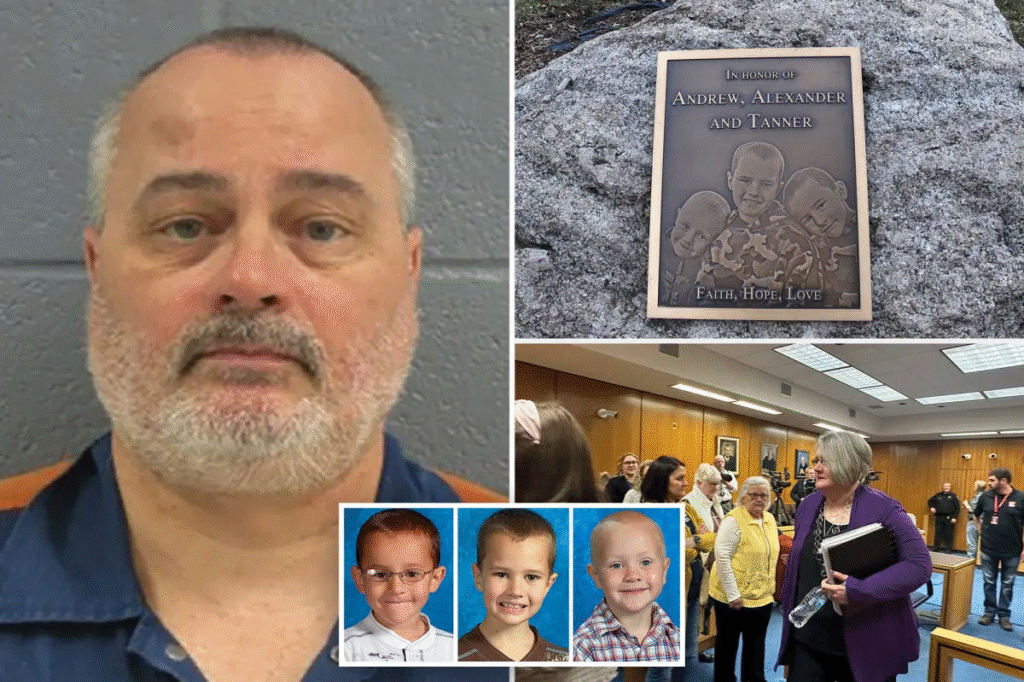
Authorities have not yet publicly disclosed what new evidence led to these charges, but the timing suggests two likely factors. First, John Skelton’s impending release may have compelled prosecutors to act to prevent him from leaving custody, particularly if they believed he remained a danger or was likely to flee. Second, the long-term accumulation of investigative material—from digital data to witness statements to forensic assessments—may have reached a threshold sufficient for prosecution. Cold cases are often dependent on small but significant breakthroughs, whether through technological advances, reinterviews, or the reexamination of previously collected evidence.
The community of Morenci has greeted the charges with a mix of relief and solemnity. Though the filing does not answer the lingering question of where the boys’ remains are, it signals a renewed attempt to bring accountability to a case long overshadowed by uncertainty. For residents who participated in search parties, donated time and resources, and kept the brothers’ memory alive, the movement toward trial may represent the beginning of a resolution that once seemed unreachable.
The charges also carry broader implications for how missing-child cases are handled over long periods of time. The Skelton case has often been cited in discussions about parental abductions, custodial disputes, and the challenges of investigating crimes in which the suspect offers misleading or contradictory statements. The persistence of investigators across multiple agencies—local police, state authorities, the FBI, and national missing-children organizations—highlights the extensive resources often required to pursue a case where physical evidence is scarce and the primary witness is also the prime suspect.
As Skelton returns to court to face these new accusations, the focus will shift to the evidence presented by prosecutors and the defense he mounts in response. Regardless of the eventual verdict, the trial is expected to revisit painful details and shed light on elements of the case that have remained undisclosed to the public. For Tanya Zuvers and the community that has supported her, the proceedings may offer long-awaited clarity after years defined by grief and unanswered questions.
The filing of murder charges does not bring the search to an end, nor does it restore what was lost. But it marks a significant development in a case that has haunted Michigan for nearly fifteen years. The hope remains that, through the upcoming legal process, the truth about what happened to Andrew, Alexander, and Tanner may finally begin to emerge.
Giao diện 888slot poker tối màu giúp bảo vệ mắt khi chơi lâu – chi tiết nhỏ nhưng thể hiện sự chăm sóc người dùng tận tâm. TONY03-18O