
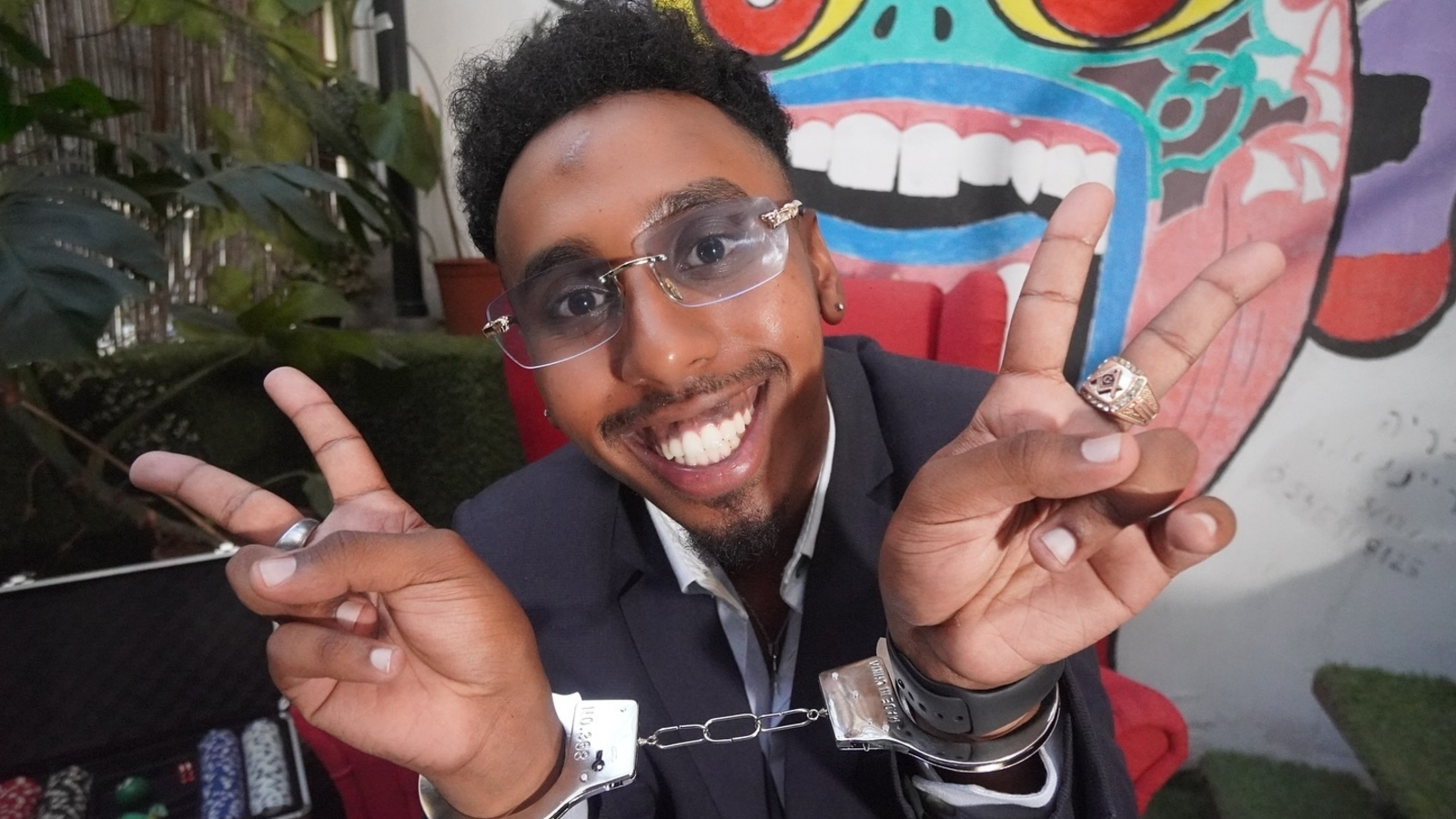
Johnny Somali, whose real name is Ramsey Khalid Ismael, has become infamous around the world for his controversial live streams that often involve harassment, provocation, and disruption in foreign countries.
While many online personalities push boundaries for content, Johnny Somali has crossed legal lines repeatedly, drawing intense backlash from authorities and the public alike. Now, the American streamer is facing the most serious legal consequences yet — in South Korea — where a new deepfake-related sex crime charge could result in up to 31 years behind bars if he is convicted on all counts.
His rise to notoriety has been fueled by calculated outrage. Wherever Johnny Somali goes, controversy follows. His content, often livestreamed in real time, includes harassing strangers in public, mocking cultural practices, and provoking confrontations with other creators.
He’s been banned from both Japan and Israel due to such behavior. However, South Korea has now become the latest country to initiate legal action against him, with charges that go far beyond nuisance or disrespect — delving into serious criminal offenses under South Korean law.
From Street Harassment to Serious Crimes
Johnny Somali’s time in South Korea began with antics similar to those that got him kicked out of previous countries. Reports from various Korean media sources confirm that he harassed locals, disrupted businesses, and provoked fights on the streets of Seoul.
One particular incident gained viral attention when he was knocked unconscious by a former Korean Navy SEAL, who had apparently reached his limit with the streamer’s antagonistic behavior. While the SEAL was fined for the assault, public sentiment largely sided with him, viewing his actions as a response to Somali’s deliberate harassment.
Yet what initially appeared to be more of Johnny Somali’s trademark provocations soon took a darker turn. The South Korean authorities began investigating the streamer for distributing a deepfake video depicting him kissing BongBong, a popular Korean streamer.
According to legal experts like those behind the Legal Mindset YouTube channel, this type of offense is taken extremely seriously in South Korea, where deepfake technology is now regulated under sex crime legislation. This law acknowledges the potential harm and violation of consent involved in digitally manipulated explicit content, even when no physical contact occurs.
Read : Austria’s Captivating Selfie Spots: Top Ten Destinations to Capture the Charm
The first deepfake charge alone carried a potential sentence of 10.5 years in prison. However, a second charge has now reportedly been filed against Somali, which could involve other prominent Korean figures he has clashed with online. If both deepfake charges result in convictions, he could face over 21 years in prison just from these offenses alone.
Legal Consequences Stack Up
The deepfake allegations are only part of the growing list of charges facing Johnny Somali. South Korean prosecutors are also pursuing two counts of “Obstruction of Business,” which refers to his deliberate interruptions of normal commercial operations during his disruptive livestreams.
He has already pleaded guilty to one of these charges, which carries a sentence of up to five years in prison. A second count was added shortly thereafter, compounding his legal exposure.

If convicted on both counts of Obstruction of Business, that alone could mean up to 10 years in prison. Combined with the deepfake charges, Johnny Somali now potentially faces a sentence totaling up to 31 years. For a man whose brand relies on confrontation and perceived invincibility, the reality of spending decades in prison may bring his chaotic rise to a sudden halt.
The South Korean government has shown increasing concern about digital crimes and online abuse in recent years. The country has passed several new laws to tackle issues like digital sexual exploitation, including the infamous “Nth Room” scandal.
Under these tightened regulations, distribution of sexually exploitative content using AI or synthetic media (like deepfakes) is treated as a form of digital sexual violence, with sentences reflecting the seriousness of the crime.
Allegations Still Under Investigation
In addition to the formal charges, Johnny Somali is being investigated for a range of other disturbing allegations. These include claims that he made threats to intentionally spread HIV, promoted North Korean propaganda in violation of national security laws, and possibly breached anti-terrorism statutes.
While these accusations have not yet resulted in criminal charges, they reflect the depth of concern that South Korean authorities now have regarding his activities. One particularly alarming incident involves Somali reportedly threatening to infect people with HIV — a statement he allegedly made during one of his livestreams.
Although it remains unclear whether he followed through on this threat, the mere articulation of such an intent could fall under public health and safety laws. South Korea’s justice system is currently examining whether these statements meet the threshold for additional prosecution.

Similarly, Johnny Somali’s occasional references to North Korea and his alleged promotion of its propaganda are being closely reviewed. South Korea maintains strict laws regarding anti-state activities and considers any promotion of the North Korean regime a serious offense. If evidence is found that he intentionally disseminated such messages or collaborated with pro-North Korean actors online, he could face further charges under national security provisions.
An Example for Digital Accountability
Johnny Somali’s case may serve as a watershed moment in how countries handle disruptive foreign influencers who use digital platforms to incite, harass, or manipulate others. While creators like Somali often operate under the banner of “free speech” or satire, legal systems around the world are increasingly unwilling to tolerate behavior that crosses into criminal territory.
South Korea’s decision to prosecute deepfake dissemination as a sex crime signals a growing global awareness about how technology can be weaponized to violate consent and dignity. The country has positioned itself at the forefront of digital rights protections, and Somali’s prosecution is likely to be closely watched by other nations grappling with similar challenges.
It also raises a broader question about the responsibility of streaming platforms and online services in enabling — or failing to curb — such content. While Somali’s antics may be shocking, they are also monetized and distributed through large tech companies that profit from viewership and engagement. Without systemic accountability at that level, individuals like Somali may continue to thrive until the legal system intervenes.
A Turning Point for the Streamer and the Industry
As Johnny Somali faces a potential 31-year sentence, his case stands as a dramatic warning to other content creators who confuse infamy with success. What began as street-level trolling has evolved into a complex web of legal jeopardy, driven by a toxic blend of provocation, technology, and lawlessness. He may have courted attention deliberately, but the consequences now appear far more serious than clicks or clout.
Whether he will be convicted on all charges remains to be seen, but the momentum is not in his favor. South Korean prosecutors are reportedly taking the case very seriously, and public opinion in the country is overwhelmingly against him. For many, Somali represents a type of outsider exploitation — a person who uses a nation as a backdrop for chaos, with no regard for local customs, laws, or decency.
If found guilty, Johnny Somali’s sentence could mark not only the end of his streaming career but also a major legal precedent in how nations deal with foreign content creators who abuse digital tools to harass, intimidate, or defame. It may finally send a message to other provocateurs: the internet is not a shield, and real-world laws have real-world consequences.