

In a chilling case that has horrified communities on both sides of the Atlantic, 25-year-old Jonathan Renteria stands accused of murdering his 37-year-old wife, June Bunyan, in their Los Angeles apartment. The alleged motive, rooted in a petty domestic dispute over Bunyan’s postpartum weight, escalated into a fatal confrontation that ended with Renteria strangling her in a rear-naked chokehold.
What began as an argument about body image spiraled into threats of separation, culminating in one of the most gruesome discoveries in recent Hollywood history: Bunyan’s dismembered and decomposing remains stuffed into trash bags inside their home. This tragedy not only underscores the dark undercurrents of intimate partner violence but also highlights the vulnerabilities faced by immigrants chasing the American dream. As details emerge from court documents and police affidavits, the story paints a portrait of a relationship marred by control and resentment, leaving behind a month-old daughter and a family shattered across continents.
The Fatal Argument: From Resentment to Rage
The sequence of events leading to June Bunyan’s death unfolded on September 4, 2025, in the couple’s modest apartment at 5330 Franklin Avenue in Hollywood. According to prosecutors’ filings in Los Angeles County Superior Court, Jonathan Renteria and Bunyan, who had been married for about a year, were embroiled in a heated exchange over her “failure to lose weight following her pregnancy.” Bunyan, who had given birth to their daughter, Regina, just a month earlier in August, was still navigating the physical and emotional toll of new motherhood.
The argument, captured in Renteria’s own recorded confession to police, quickly turned toxic. Bunyan reportedly began packing her belongings, signaling her intent to leave, and delivered a devastating ultimatum: she would ensure Renteria never saw their daughter again. This wasn’t an isolated flare-up, sources close to the investigation suggest. Neighbors and friends have since come forward with accounts of a marriage strained by Renteria’s controlling behavior. Arielle Miller, a resident in the same apartment building, told investigators that Bunyan had confided in her about the abusive dynamics in the relationship.
Miller recounted how Renteria frequently berated Bunyan about her appearance, even during her pregnancy. In one particularly callous remark, he allegedly implied that her changing body meant she was no longer his “muscle mama”—a nickname that once seemed affectionate but had twisted into a tool for belittlement. Bunyan, a vibrant and outgoing woman known for her popularity among neighbors, had moved to the U.S. from Scotland’s Isle of Arran just months earlier, leaving behind a supportive family to build a life with Renteria. Their meeting on social media—specifically Twitter—had blossomed into a whirlwind romance, but the reality of cohabitation exposed deeper incompatibilities.
Read : South Africa’s Constitutional Court Rules Husbands Can Take Wives’ Surnames
As the argument intensified, Jonathan Renteria’s rage boiled over. In his interview with Los Angeles Police Department detectives, he admitted to grabbing Bunyan and applying a rear-naked chokehold—a maneuver that exploits pressure on the neck’s carotid arteries to induce unconsciousness or, in this case, death. Bunyan, caught off guard in the vulnerability of postpartum recovery, had no chance to fight back effectively.
Read : Dubai Princess Launches ‘Divorce’ Perfume After Publicly Divorcing Husband
The chokehold lasted long enough to cause asphyxiation, ending her life in what prosecutors describe as a “heinous” act of domestic violence. Renteria’s confession, detailed in the affidavit supporting his $4 million bail, reveals a man who knew the gravity of his actions yet proceeded without remorse in the heat of the moment. The couple’s one-month-old daughter, mercifully unharmed, was present in the apartment during the altercation, adding an incomprehensible layer of trauma to the infant’s early days.
Discovery of the Crime: A Grisly Uncovering
The full horror of the murder came to light a week later, on September 11, when Ventura County Sheriff’s deputies responded to a welfare check at a seedy motel in Newbury Park, about 40 miles northwest of Los Angeles. There, in a bathtub filled with blood-tinged water, they found Jonathan Renteria with self-inflicted slashes to his forearms—a botched suicide attempt. Clutched nearby was a handwritten note, addressed to his siblings, in which Renteria confessed to killing his wife and expressed despair over his fractured family. The note mentioned his one-year-old child—likely a reference to the baby—and begged for forgiveness, providing the first breadcrumb leading back to the Franklin Avenue apartment.
Armed with this lead, LAPD West Bureau Homicide detectives descended on the Hollywood residence. What they encountered was a scene straight out of a nightmare. In the kitchen, officers discovered Bunyan’s torso, already in an advanced state of decomposition, wrapped in plastic and shoved into a corner. A further search of the bathroom yielded even more macabre evidence: a heavy-duty trash bag containing her severed arms and legs, hastily concealed behind a shower curtain.

The air was thick with the stench of decay, a grim testament to the days Renteria had spent covering his tracks. Missing were Bunyan’s head and other extremities, which investigators suspect were discarded elsewhere—possibly in the garbage bags Renteria was seen carrying toward the rear of the building on surveillance footage from September 5. That footage, pulled from the apartment complex’s security cameras, became pivotal in piecing together Renteria’s movements post-murder. On the night of September 4, after Bunyan’s death, he was spotted leaving the apartment in the dead of night, cradling the baby and heading to his parents’ home in a nearby suburb.
Hours later, around dawn on September 5, he returned alone, lugging several black trash bags stained with what appeared to be blood. Witnesses later recalled seeing him pacing anxiously, his demeanor erratic as he disposed of the bags in a dumpster behind the building. The child, dropped off safely with Renteria’s family, remained out of harm’s way, but the absence of any immediate alarm raised by Bunyan’s colleagues or friends allowed the body to languish undiscovered for a full week. By the time authorities breached the door on September 11, the remains were bloated and fly-ridden, underscoring the calculated cruelty of Renteria’s concealment efforts.
The discovery prompted a multi-agency response, with forensics teams combing the apartment for DNA traces and the coroner’s office confirming the cause of death as manual strangulation. Toxicology reports are pending, but early indications point to no involvement of drugs or alcohol in the fatal altercation. Jonathan Renteria, bandaged and barely coherent from his injuries, was transported to a hospital before being transferred to LAPD custody. His arrest on suspicion of murder was swift, followed by formal charges including mutilation of human remains, disinterment, and—shockingly—sexual contact with human remains, a charge that hints at further depravities in the aftermath of the killing.
Aftermath and Legal Reckoning: Justice for June
Jonathan Renteria’s arrest has set in motion a legal battle that promises to delve deep into the psyche of a man capable of such brutality. Booked into the Twin Towers Correctional Facility in downtown Los Angeles, he faces a potential life sentence if convicted on the murder charge alone. Bail was set at $4 million during his initial appearance, a figure prosecutors argued was necessary given the flight risk and the “predatory” nature of the crime. Jonathan Renteria has entered a plea of not guilty, with his next court date—a preliminary hearing—slated for November 18.
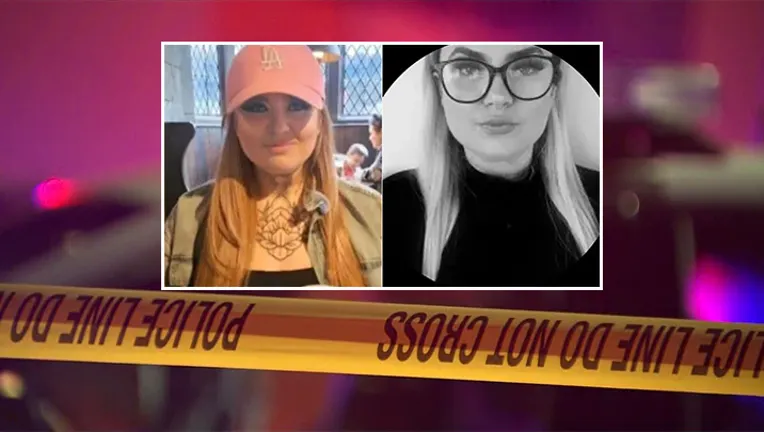
His defense team, yet to be fully assembled, may lean on arguments of temporary insanity or mutual combat, but the weight of his own admissions in the recorded interview and suicide note could prove insurmountable. For June Bunyan’s family, the road ahead is one of unimaginable grief. Hailing from the rugged beauty of Arran, Bunyan was the epitome of resilience: a graduate of Robert Gordon University with a law degree, she had uprooted her life to pursue her passion for criminal defense in the U.S. Friends and family describe her as possessing a “vibrant personality” and a “deeply compassionate heart,” traits that endeared her to everyone from apartment neighbors to aspiring legal peers.
She had recently passed the California bar exam and was on the cusp of a promising career, only to have it snuffed out by the very partner she trusted. A GoFundMe campaign launched by loved ones aims to repatriate her remains to Scotland for a proper burial, emphasizing the desire to lay her to rest “with the dignity and love she deserves, surrounded by family and friends.” Donations have poured in from across the globe, a small solace amid the outrage.
Renteria’s family, meanwhile, grapples with their own shock. His father, Julio Renteria, 44, revealed to investigators that he was unaware of his son’s marriage until after the arrest—a detail that speaks to the secretive underbelly of the relationship. The couple’s daughter, Regina, now in protective custody, faces an uncertain future, her first month marked by loss rather than lullabies. Child welfare services are involved, ensuring her safety while the investigation continues.
This case serves as a stark reminder of the perils lurking in seemingly ordinary relationships, particularly for women postpartum, when physical changes and hormonal shifts can amplify existing tensions. Domestic violence hotlines report a spike in calls related to body-shaming during this period, and Bunyan’s story amplifies the urgent need for awareness and intervention. As the legal gears turn, one thing is clear: June Bunyan’s light, though extinguished too soon, will not be forgotten. Her pursuit of justice—in life and now in death—demands nothing less than full accountability for the man who stole her future.