

Joseph Columbus, the Upper West Side resident at the center of a months-long legal battle involving two pit bulls linked to multiple violent dog attacks, has been taken into custody after repeatedly defying a court order to surrender the animals. Columbus, 40, was jailed following a Manhattan Supreme Court hearing after failing to comply with a June directive from Judge Phaedra Perry-Bond requiring him to turn over his dogs, Zooey and Rambo, to city authorities.
Court records show that Columbus now faces daily fines of $250 for each day he remains noncompliant, with his incarceration potentially extending until March 11 if the dogs are not surrendered. The case has drawn sustained attention on the Upper West Side, where residents and dog owners say they lived in fear after a series of brutal attacks attributed to Zooey and Rambo. According to court filings and victim accounts, the pit bulls were involved in at least four separate incidents, resulting in severe injuries to multiple dogs and the death of at least one.
Despite repeated summonses and court dates, Joseph Columbus allegedly avoided authorities for months, skipped hearings, and at one point fled from city sheriffs in a high-speed chase. His eventual arrest marked a turning point in a case that neighbors say highlighted serious gaps in enforcement and accountability.
City Sheriff Anthony Miranda confirmed that Joseph Columbus was taken into custody at Thursday’s hearing, ending what officials described as a prolonged effort to compel compliance with the court’s order. The judge ruled that Columbus’ continued refusal to surrender the dogs constituted contempt of court, justifying both incarceration and escalating financial penalties. While the legal proceedings regarding the ultimate disposition of Zooey and Rambo remain ongoing, the jailing of their owner has been viewed by many residents as a significant step toward resolution.
A Pattern of Attacks and Mounting Fear in the Neighborhood
The legal action against Joseph Columbus stems from a string of violent encounters involving his pit bulls, beginning earlier this year. In January, Zooey and Rambo attacked two Shih Tzu mixes, Grover and Chuckie, belonging to Upper West Side resident Lauren Block. The attack proved fatal for Grover, a 17-year-old dog who was left blind by the mauling and later died from his injuries. Chuckie survived but sustained serious wounds requiring extensive veterinary care. Block’s veterinary bills from that single incident approached $22,000, according to court filings.
Additional attacks followed in the months that came. In May, Zooey and Rambo were involved in another mauling that left Penny, a 16-pound Chihuahua owned by Lauren Claus, with multiple bite wounds. Penny survived but required intensive treatment, and her medical expenses reportedly climbed to approximately $12,000. Photographs from the aftermath showed Penny with shaved fur and visible bandaging, underscoring the severity of the injuries. Other residents reported further incidents, including an alleged March attack inside Joseph Columbus’ Columbus Avenue apartment building that was so alarming it caused victims to flee their homes.
Read : 52-Year-Old Jeffrey Vigil Arrested After Shooting Pit Bull That Bit His Leg During Domestic Dispute
These events prompted Block, Claus, and another dog owner, Devon Allen, to file a civil lawsuit against Joseph Columbus in May. The suit sought damages for veterinary expenses and asked the court to compel the surrender of Zooey and Rambo, citing the dogs’ history of aggression and the ongoing threat they posed to the community. Judge Perry-Bond ultimately granted the order requiring Columbus to turn the dogs over to city authorities, a step intended to prevent further harm while the legal process continued.
Read : Tennis: Krejcikova Wins Wimbledon for Second Grand Slam Singles Title
Despite the order, Columbus maintained that he did not have custody of the dogs. In court statements reported by local outlets, he claimed that Rambo was with a cousin and that Zooey belonged to an ex-girlfriend. “I’ve got no dog to give,” Columbus told the court, arguing that he was being unfairly targeted and treated “worse than a murderer or a pedophile.” The judge rejected those assertions, finding that Columbus had failed to provide credible proof that he no longer controlled the animals and that his explanations did not excuse noncompliance with the court’s directive.
Court Defiance, Arrest, and Legal Consequences
Columbus’ jailing followed months of what authorities described as deliberate evasion. Court records indicate that he repeatedly failed to appear for scheduled hearings related to the dog attacks and the surrender order. In one instance, city sheriffs attempting to serve him allegedly became involved in a high-speed chase after Columbus fled, further escalating the case and reinforcing the court’s view that stronger measures were necessary to secure compliance.
At the Thursday hearing in Manhattan Supreme Court, Judge Perry-Bond determined that incarceration was warranted due to Columbus’ continued defiance. Under the terms of the ruling, Columbus will remain in custody until he complies with the surrender order or until a specified date in March, whichever comes first. In addition, the judge imposed a daily fine of $250 for each day the dogs are not turned over. Those fines are designated as restitution, with proceeds directed to Lauren Block to help offset the substantial veterinary costs she incurred.

Block has stated publicly that any money she receives through the fines will be donated to an animal shelter. She described the decision as a way to honor Grover, calling him “the sweetest dog” she had ever known. Her remarks reflected a broader sentiment among some victims, who have emphasized that their pursuit of legal action was motivated not by revenge but by a desire to prevent further attacks and to ensure accountability.
Attorney Mollie Swears, who represents Block and Claus, characterized the court’s decision as the result of sustained legal effort. In a statement, she said the order and Joseph Columbus’ imprisonment marked “the culmination of months of hard work,” highlighting the challenges faced by victims seeking enforcement when an individual repeatedly ignores court mandates. The ruling, she suggested, sent a message that defiance of judicial authority would not be tolerated, particularly in cases involving public safety.
Community Reaction and Ongoing Uncertainty
Reaction across the Upper West Side has been largely supportive of the court’s action. Neighbors and local dog walkers have followed the case closely, with many expressing relief that Columbus was finally taken into custody. Karen Kramer, a neighborhood dog walker, said residents were pleased to see some form of conclusion after months of anxiety. At the same time, she and others stressed that true closure would only come once Zooey and Rambo are surrendered and no longer in Columbus’ possession.
Read : Raphael Woolfork Mauled to Death by 3 Pit Bulls While Walking Down Street
Accounts from neighbors paint a troubling picture of the dogs’ living conditions prior to the attacks. Residents told local publications that Columbus frequently yelled slurs at the animals and allegedly left them locked inside his apartment for extended periods. While these claims have not been fully adjudicated in court, they have contributed to public concern about the dogs’ welfare as well as the safety risks they posed. Animal welfare advocates have noted that such conditions can exacerbate aggressive behavior, though responsibility ultimately rests with the owner.
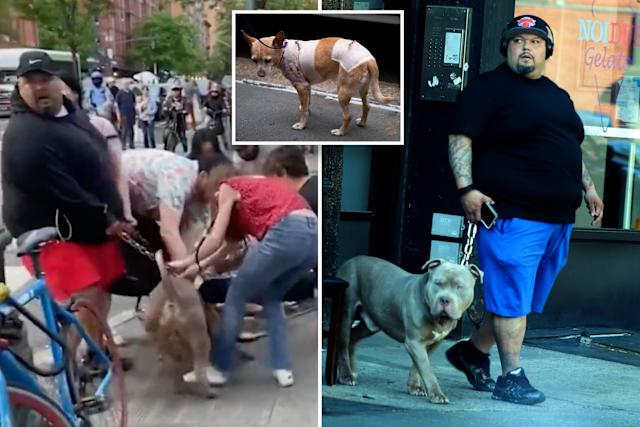
Complicating matters further is Columbus’ housing situation. He is currently facing eviction from his grandmother’s Columbus Avenue apartment, the same location where one of the alleged attacks occurred earlier this year. Court records indicate that complaints related to the dogs played a role in the eviction proceedings, adding another layer of legal jeopardy for Columbus even as he remains incarcerated.
As of now, the whereabouts of Zooey and Rambo remain uncertain. Columbus’ claims that the dogs are with relatives or an ex-girlfriend have yet to be substantiated to the court’s satisfaction, and authorities continue efforts to locate and secure the animals. City officials have emphasized that the surrender order remains in effect regardless of Columbus’ incarceration, and failure to comply will continue to result in fines and potential additional legal consequences.
The case has reignited broader discussions in New York City about dangerous dog enforcement, owner responsibility, and the mechanisms available to protect residents and their pets. While the law allows judges to order the surrender of animals deemed dangerous, critics argue that enforcement can be slow and inconsistent, particularly when owners evade authorities. Supporters of stricter measures say the Columbus case illustrates the need for more robust follow-up and clearer penalties for noncompliance.
For now, the jailing of Joseph Columbus represents a rare moment of accountability in a case that has deeply affected multiple families and unsettled a neighborhood. Victims continue to await the physical surrender of Zooey and Rambo, while residents hope the court’s actions will prevent further harm. As the legal process moves forward, the outcome may serve as a reference point for how similar cases are handled in the future, balancing animal welfare, public safety, and the authority of the courts.
Jljl55phlogin – time to get logged in and play! Hopefully the wins today are good ones. Keeping my fingers crossed for a good session!. jljl55phlogin