
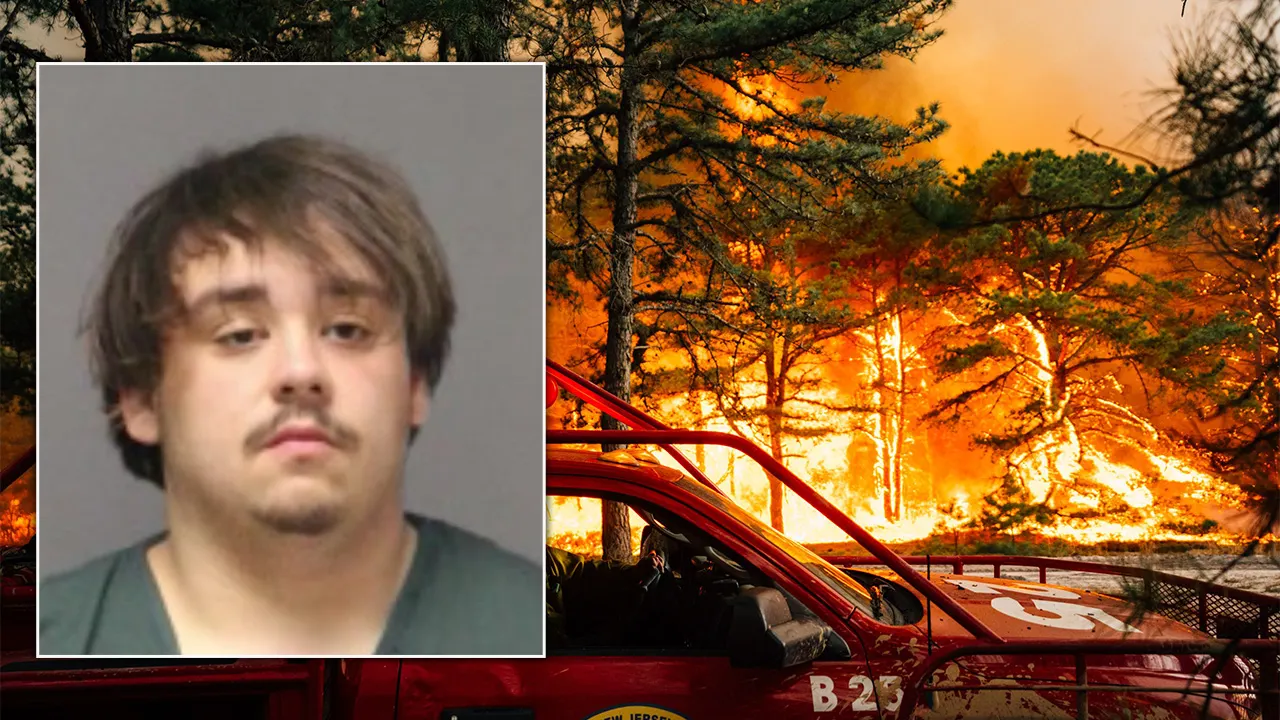
On April 22, 2025, plumes of smoke blanketed the skies over Lacey Township, New Jersey, as a massive wildfire erupted in the Greenwood Forest Wildfire Management Area. The blaze rapidly consumed thousands of acres, triggering emergency evacuations, shutting down key roads, and prompting statewide alerts.
Now, a 19-year-old resident of Ocean Township, Joseph Kling, has been arrested for allegedly starting the devastating Jones Road Wildfire, which has scorched 15,000 acres across Ocean County. The incident has raised pressing questions about personal responsibility, fire safety, and the growing threat of wildfires across the northeastern United States.
What Did Joseph Kling Do?
According to authorities, Joseph Kling lit a bonfire using wooden pallets—an action that, under normal circumstances, might not attract much attention. However, the timing and setting of the fire proved to be catastrophic.
The bonfire, left unattended and not properly extinguished, is believed to have ignited nearby dry brush. With ideal conditions for fire spread—high temperatures, dry vegetation, and gusty winds—the flames quickly grew out of control.
As the fire spread through the dense woodlands of the Greenwood Forest Wildfire Management Area, emergency services scrambled to respond. Initial efforts to contain the blaze were hampered by the fire’s intensity and the challenging terrain.
Firefighters from across New Jersey were deployed, and the Forest Fire Service worked tirelessly with aerial water drops and ground crews to slow the fire’s advance. Despite their efforts, by the morning of April 24, the fire had burned through 15,000 acres and was only 50% contained.
Investigators were quick to trace the origin of the fire back to the bonfire set by Kling. The wooden pallets, flammable and capable of creating intense heat, contributed significantly to the fire’s ignition. Kling’s failure to monitor and extinguish the flames is now at the center of the legal case against him.
Charges Against Joseph Kling
Joseph Kling was taken into custody on April 24 at the Ocean Township Police Department. He now faces serious legal consequences, having been formally charged with aggravated arson and arson. These are grave offenses under New Jersey law, particularly when the resulting damage affects public land, endangers lives, and disrupts communities.
Following his arrest, Kling was transported to the Ocean County Jail, where he remains pending a detention hearing. Authorities have not released additional information about Kling’s background or motives, and it is unclear whether he acted alone or in the company of others.
Regardless, prosecutors are expected to pursue the case aggressively, given the scale of the destruction and the public demand for accountability. Aggravated arson in New Jersey is a second-degree crime that carries a potential prison sentence of five to ten years.
Read : Nearly 700 Koalas Shot Dead From Helicopters to Save Them From Suffering After Massive Wildfire
The additional charge of arson may add to Kling’s legal jeopardy, especially if the prosecution can prove negligence and reckless disregard for public safety. Legal experts say the case could serve as a cautionary tale for others who underestimate the consequences of fire-related activities during high-risk conditions.
Latest on the New Jersey Wildfire and Community Impact
As of Thursday morning, the New Jersey Forest Fire Service announced that the fire was 50% contained. Despite significant progress, officials emphasized that the situation remained dangerous, with hotspots continuing to pose threats to surrounding areas. A large swath of the forest has been reduced to ash, and the effects are being felt well beyond the borders of Ocean County.
A drive down the Garden State Parkway at 2:30 AM, as the Jones Road wildfire rages on in Ocean County, NJ.
— The Lakewood Scoop (@LakewoodScoop) April 23, 2025
The Garden State Parkway and Route 9 are now open in both directions.
The fire continues to burn thousands of acres, and threaten over 1,300 structures. pic.twitter.com/K6Xqw9nVGf
Several road closures remain in place, including Rt. 532 (Wells Mills Road) between Rt. 72 and the Garden State Parkway, Bryant Road between Rt. 532 and Rt. 539, and Jones Road between Rt. 532 and Bryant Road. These closures are essential not only to ensure public safety but also to allow emergency crews unfettered access to firefighting zones.
The wildfire has had far-reaching environmental and health impacts. Air quality warnings were issued for New York City and Long Island, where smoke from the fire caused hazy skies and respiratory concerns. Authorities advised residents in affected areas to remain indoors, limit physical exertion, and use air purifiers if available. The alerts remained in effect until midnight on April 24.
In response to the escalating situation, Acting Governor Tahesha Way declared a state of emergency for Ocean County on Wednesday evening. Her statement, shared via X (formerly Twitter), acknowledged the seriousness of the wildfire while reassuring the public that no lives had been lost and no homes had been damaged. “If you live in the affected area, please listen to guidance from emergency management officials,” she urged.
The state of emergency declaration allows for a more coordinated and resource-intensive response to the wildfire, enabling state agencies to deploy equipment, personnel, and funding more quickly. It also serves as a formal recognition of the event’s impact on public safety and infrastructure.
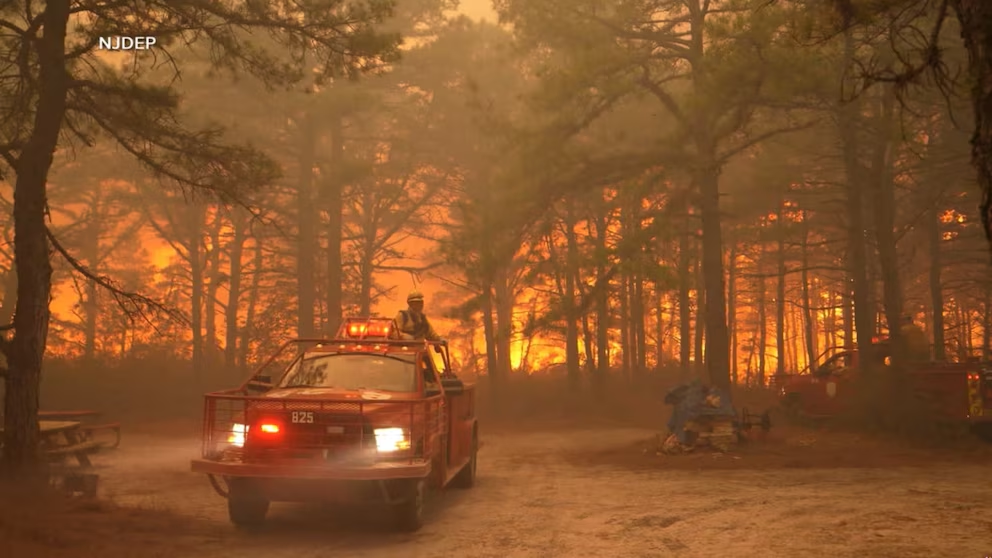
For the residents of Ocean County and nearby townships, the wildfire has been a traumatic experience. Entire communities were placed on alert, with some residents forced to evacuate as flames approached homes and properties. Although no homes have been destroyed, the psychological toll of the threat, the evacuation orders, and the lingering smoke in the air has left a deep mark on the region.
Wildlife in the Greenwood Forest Wildfire Management Area has also suffered. Conservationists and forest rangers have reported the loss of habitat and potential displacement of animals that inhabit the area. It may take years for the ecosystem to recover fully, and reforestation efforts will be necessary to restore balance to the land.
This incident is a sobering reminder of how quickly a small act—something as seemingly harmless as a bonfire—can spiral into a large-scale disaster. It underscores the need for public education about fire safety, especially among young people who may not fully grasp the consequences of their actions.
Fire officials have reiterated the importance of following burn bans and safety protocols, particularly during dry seasons. Public service announcements and school-based programs may help raise awareness and prevent similar incidents in the future.
As for Joseph Kling, his legal case is likely to proceed in the coming weeks, and the outcome may set a precedent for how such crimes are handled in New Jersey. Whether viewed as a tragic accident or a reckless act, his actions have left a lasting imprint on the landscape and the lives of those affected by the Jones Road Wildfire.