
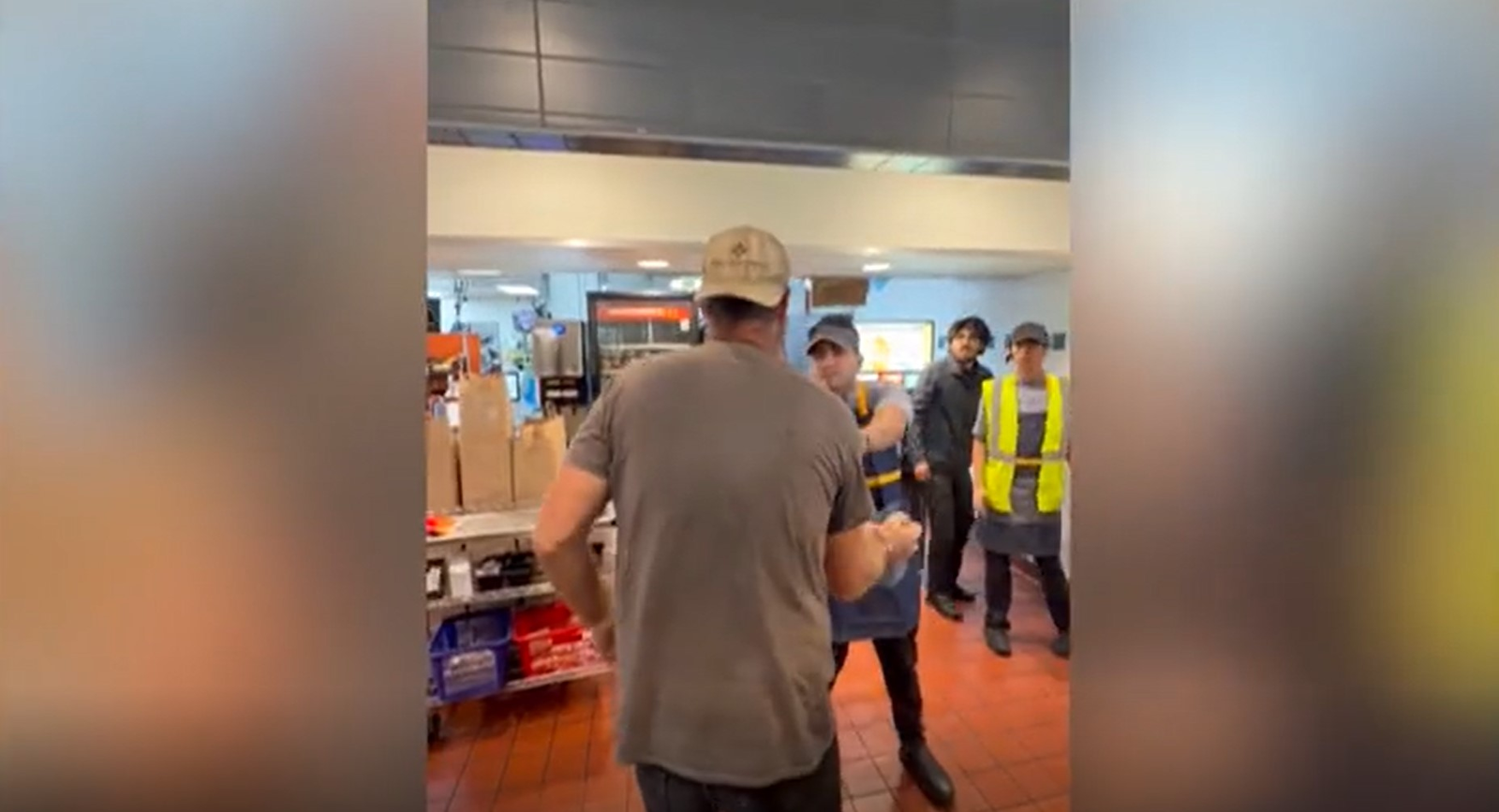
A violent confrontation inside a fast-food restaurant in San Diego’s University City area has drawn widespread attention after a man allegedly posed as a federal immigration officer and physically attacked a restaurant manager during business hours. The incident unfolded in the middle of the day at a busy McDonald’s location, turning an ordinary work shift into a chaotic and frightening experience for employees and customers alike. What began as a request to speak with the manager quickly escalated into a physical struggle that required multiple staff members to intervene.
The suspect, identified as Joshua Walter Cobb, was later arrested on suspicion of impersonating a law enforcement officer and committing battery. According to accounts from those present, Cobb claimed authority as a federal agent during the confrontation, asserting that he was making an arrest. Employees, however, immediately questioned the legitimacy of his claims. Their familiarity with him as a repeat visitor to the restaurant made them skeptical of his statements and contributed to their swift response when the situation turned violent.
The restaurant’s general manager, Daniel Martinez, became the central figure in the confrontation. He described being suddenly grabbed from behind and placed in a tight hold around the neck before coworkers rushed to intervene. Though the attack was brief, its intensity left a lasting impression on staff and witnesses. Martinez was not seriously injured, but the incident highlighted the unpredictable risks faced by employees working in public-facing environments where disputes can escalate without warning.
The episode has since raised broader concerns about workplace safety, the dangers of impersonating authority figures, and the challenges employees face when responding to aggressive or disruptive individuals. For those present, the event was more than just a disturbance — it was a moment that demanded quick thinking, collective action, and immediate prioritization of personal and team safety.
The confrontation inside the restaurant
The events leading to the physical altercation began with what appeared to be a routine request. According to witness accounts, Joshua Walter Cobb entered the restaurant and asked to speak directly with the manager. Nothing about the initial interaction suggested immediate violence, and employees followed standard practice by notifying Martinez.
As Martinez approached, the situation changed abruptly. Without warning, Cobb allegedly moved behind him and wrapped his arm tightly around his neck. The suddenness of the action left little time for reaction. Martinez later described the grip as forceful and alarming, creating an immediate sense of danger.
Staff members nearby quickly recognized that the encounter was no longer a verbal dispute but a physical assault. Several employees rushed toward the pair, attempting to separate Cobb from the manager. Their intervention forced him to release his hold, but the confrontation did not end there. According to Martinez and other witnesses, Cobb then struck him on the side, continuing the aggression even after being pulled away.
Read : Grandma’s Daycare Manager Alma Enriquez Garza Charged with Evidence Tampering
During the altercation, Cobb reportedly made statements suggesting he was acting in an official capacity. He claimed to be connected to federal immigration enforcement and spoke about making arrests. Employees did not accept those claims. Their familiarity with him as someone who had been in the restaurant many times before made them question his authority from the start.
Read : Alaska’s Top-Heavy Glaciers Are Melting, Approaching an Irreversible Tipping Point
A bystander captured part of the confrontation on video. The footage showed a tense scene in which employees moved quickly to control the situation while Cobb continued to make forceful statements. The recording documented both the physical struggle and the verbal claims of authority that accompanied it. Eventually, local law enforcement officers arrived at the scene after reports of a disturbance. Cobb was detained and later arrested. The restaurant returned to normal operations after the situation was brought under control, but the emotional impact on staff remained significant.
Employees’ response and the role of workplace awareness
One of the most notable aspects of the incident was the rapid response from employees. Rather than freezing or retreating, staff members acted collectively to stop the assault. Their actions likely prevented the situation from becoming more severe and limited the extent of injury to the manager.
Martinez later emphasized that his primary concern during the attack was not just his own safety but also the wellbeing of his team. As general manager, he viewed himself as responsible for everyone working under his supervision. Even in the midst of the confrontation, he remained focused on ensuring that the situation did not escalate into broader harm.
Employees described the atmosphere inside the restaurant as tense but controlled. While some customers moved away from the immediate area, workers concentrated on restraining Cobb and protecting one another. Their familiarity with him played an important role in how they interpreted the situation. Because he had visited the restaurant multiple times before, staff members were able to recognize that his claims of authority were inconsistent with their past experiences.
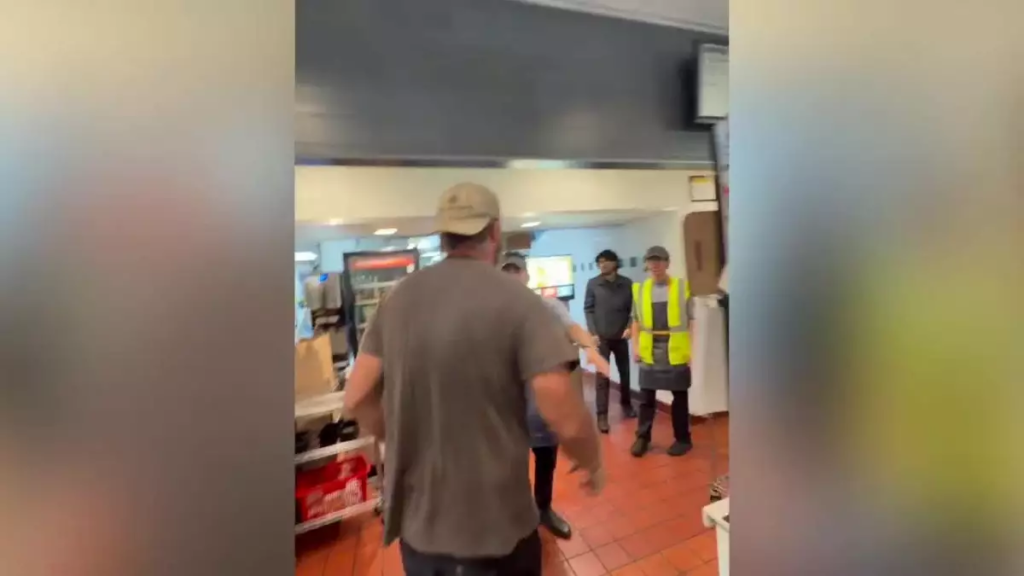
According to those who worked at the location, Cobb had previously caused disturbances. He had reportedly entered the restaurant frequently, sometimes helping himself to beverages and leaving behind messes. These prior interactions meant that employees did not see him as an unfamiliar authority figure but as someone whose behavior had been disruptive in the past.
This recognition contributed to their willingness to challenge his claims. Instead of deferring to what he said, they assessed his behavior based on their prior experiences. That awareness allowed them to respond decisively rather than hesitating out of uncertainty.
The incident also highlighted the importance of teamwork in high-stress situations. No single employee managed the confrontation alone. Instead, multiple workers acted together, demonstrating coordination that likely developed from routine workplace cooperation. Their shared understanding of responsibilities and their willingness to intervene for one another played a critical role in preventing further harm.
For many service industry workers, encounters with difficult or disruptive individuals are not uncommon. However, situations involving physical aggression and false claims of authority remain relatively rare. When they do occur, the ability to respond quickly and collectively becomes essential. In this case, employees demonstrated both awareness and action, responding to danger with immediate intervention rather than hesitation.
Legal implications and broader public safety concerns
The arrest of Cobb has drawn attention to the legal seriousness of impersonating a law enforcement officer. Claiming authority that one does not possess can create confusion, fear, and potential harm, especially when combined with aggressive behavior. In situations where individuals present themselves as officials, others may feel pressured to comply or may hesitate to challenge them, increasing the risk of escalation.
Read : Healthy Wellness Spa Manager Chun Xiang Cao Charged with Keeping House of Prostitution
In this case, employees did not accept the claim of authority, but the allegation itself remains significant. Impersonation of law enforcement is treated as a criminal offense because it undermines public trust and can be used to intimidate or manipulate others. When combined with physical violence, the consequences become even more severe.
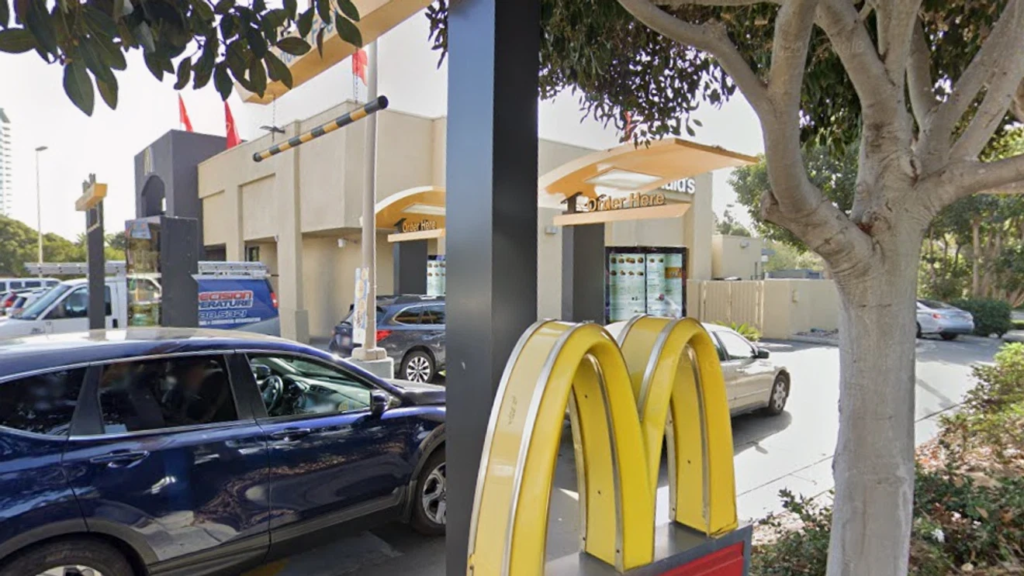
The incident also underscores broader concerns about safety in public-facing workplaces. Restaurants, retail stores, and similar environments are open to a wide range of individuals, making them vulnerable to unpredictable encounters. Employees are often expected to manage disputes, enforce policies, and maintain order while continuing regular operations. When a confrontation turns physical, their responsibilities expand instantly from customer service to personal safety.
Martinez’s experience reflects the realities faced by many managers who must balance operational duties with responsibility for employee wellbeing. His reaction — prioritizing the safety of his team — illustrates the leadership role expected in such moments. Protecting staff becomes the immediate focus, even when the situation involves personal risk.
Authorities confirmed that Martinez did not suffer serious injuries. However, the psychological impact of a sudden assault in the workplace can extend beyond physical harm. Events involving violence or threats can alter how employees perceive safety in their environment, influencing their sense of security long after the incident ends. The arrest of Cobb brought the immediate threat to an end, but the case remains an example of how quickly routine settings can become sites of confrontation.
It also highlights the importance of recognizing suspicious behavior, questioning claims of authority when appropriate, and responding decisively when safety is at risk. For workers and managers alike, the incident serves as a reminder that preparedness and awareness are essential components of workplace safety. While most interactions remain routine, the ability to respond effectively when something goes wrong can make the difference between containment and escalation.