
In a tragic and deeply unsettling turn of events, a Brazilian journalist Lenildo Frazao reporting live from the scene of a missing persons case unknowingly stepped on the body of the same girl he was reporting about. The incident occurred in Bacabal, a city in northeastern Brazil, and has since left the entire nation stunned, igniting conversations about the responsibilities of the media, the dangers of natural water bodies, and the fragile line between tragedy and journalism.
A Disturbing Discovery Caught on Camera
On June 30, the banks of the Mearim River in Bacabal became the focal point of intense media coverage as rescue teams and reporters gathered to investigate the disappearance of 13-year-old Raissa. The young girl had vanished while swimming with friends, a common activity in the region.
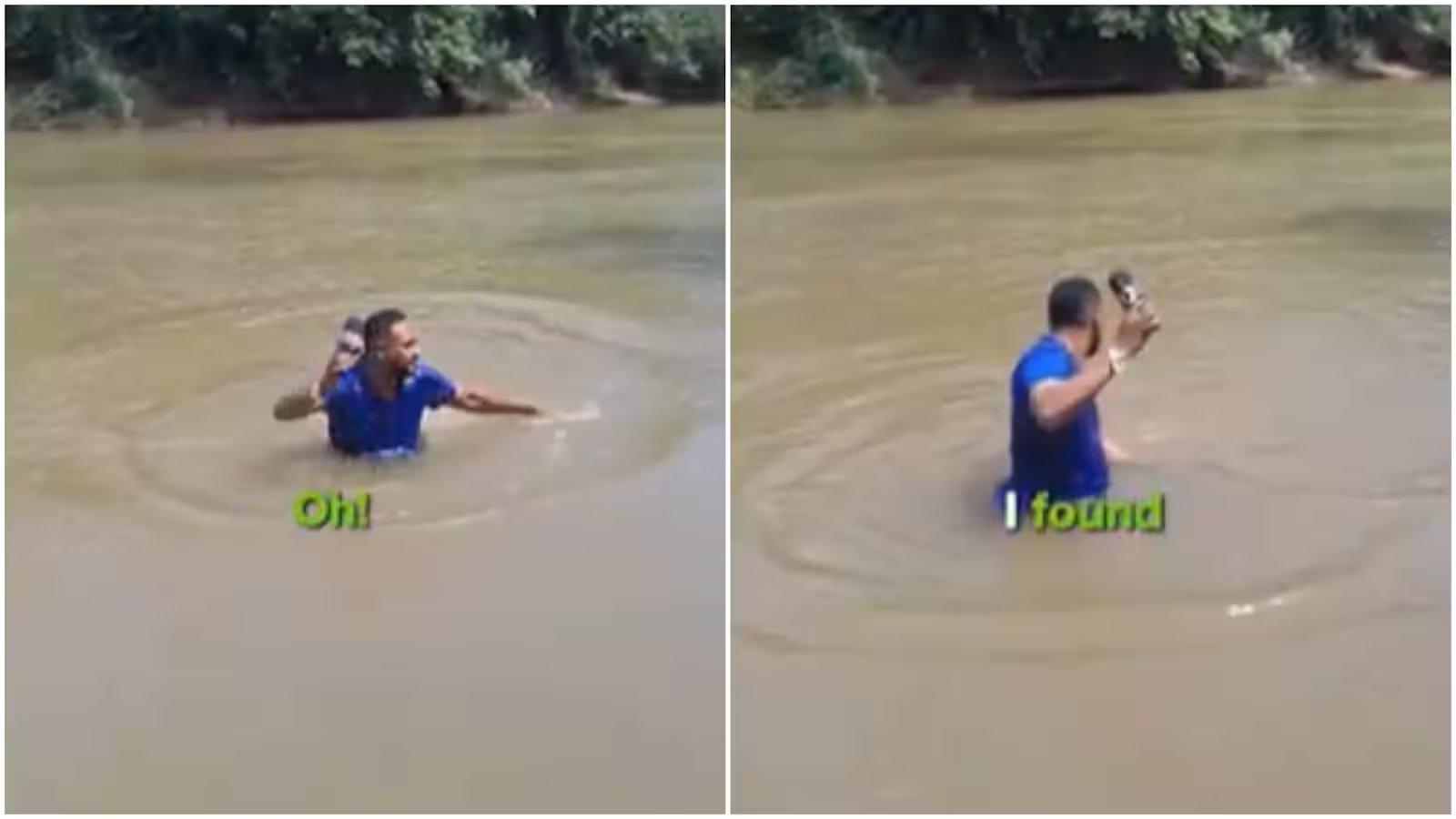
As part of a local news segment, journalist Lenildo Frazao entered the river to demonstrate the location and depth of the water where the teenager had last been seen. In an attempt to provide viewers with a better understanding of the treacherous river conditions, he waded into the murky water while cameras rolled.
However, what followed was something no one could have predicted. As the water reached his chest, Frazao visibly recoiled in shock, suddenly jumping back and alerting his team that he had felt something brush against him underwater. His demeanor shifted from composed to visibly shaken, as he backed away toward the shallows.
He confessed to his team, “I think there’s something down here at the bottom of the water,” before hesitating and adding, “No, I’m not going, I’m scared. It looked like an arm – could it be her? But it might be a fish, too. I don’t know.”
Macabro hallazgo: Periodista pisa accidentalmente el cuerpo de niña que estaba desaparecida >> https://t.co/sPzhB4BTR6 pic.twitter.com/uH2d5htK8U
— La Nueva Radio YA (@nuevaya) July 21, 2025
Unbeknownst to Frazao at that moment, the body he had encountered belonged to Raissa. Following his alarming report, the rescue team of divers and firefighters intensified their search efforts, eventually discovering the young girl’s body at the very spot where the journalist had stood just moments before. The confirmation left everyone – viewers, the journalist himself, and the community – horrified.
The Girl Behind the Headlines: A Community in Mourning
Raissa was a bright, cheerful teenager loved by her family, friends, and teachers. On the day she went missing, she had gone out with a group of schoolmates for a swim in the river, an activity not uncommon in Bacabal’s hot climate. Unfortunately, despite her being a good swimmer, the unpredictable nature of the river proved fatal.
The Mearim River is known for its strong currents and treacherous underwater holes, something Mr. Frazao had also highlighted in his report. Once her body was recovered, a post-mortem confirmed the cause of death as accidental drowning. There were no signs of foul play or physical trauma.
Read : Horror! Annabelle Doll Missing From Hotel Room Where Paranormal Investigator Dan Rivera Found Dead
As soon as news of her death broke, the local school announced three days of mourning in her memory. The entire town came together in a solemn candlelight vigil, praying and remembering Raissa for the joyful soul she had been. Her funeral, held later that evening, was attended by family members, classmates, and neighbors, all trying to make sense of the heartbreaking tragedy.

The town of Bacabal is no stranger to the unpredictable behavior of the Mearim River, yet Raissa’s death has brought renewed attention to the importance of water safety, especially for children and teenagers. Many have since criticized the lack of adequate signage and the apparent absence of adult supervision during recreational swims. Her tragic story may very well become a turning point in advocating for more robust safety measures around the area’s natural water bodies.
The Blurred Line Between Journalism and Tragedy
For Mr. Lenildo Frazao, what began as a professional assignment quickly became a traumatic personal experience. The reporter’s live segment, initially intended to inform viewers about the disappearance, turned into a horrifying moment that blurred the boundaries between news reporting and firsthand trauma. Although it remains unclear whether he directly stepped on Raissa’s body or merely brushed past it, the implications of the moment are profound.
Some viewers have since expressed sympathy for the journalist, who appeared deeply shaken by the incident. Others, however, raised concerns about how such an incident could have been avoided had there been greater coordination between the media and emergency responders. Critics argue that journalists entering active search sites can sometimes hinder rescue efforts or, as in this case, unwittingly become involved in a deeply distressing situation.
In post-incident discussions, Frazao reportedly said he was unaware that the body was lying so close to where he had entered the water. His intention was merely to help the public visualize the dangers of the river. His reaction on camera – one of genuine fear and uncertainty – reflects the ethical and emotional complexities journalists can face when covering real-life tragedies.

The event has since sparked debate within Brazil’s journalism community, with many calling for better training for field reporters who are sent to cover emotionally intense stories. Journalists often walk a fine line between being impartial observers and becoming unwilling participants in the narratives they cover. In this case, Frazao became both the messenger and an accidental discoverer of a tragic end, a duality that has sparked national introspection.
Some experts argue that this incident underlines the importance of psychological support systems for journalists, especially those working in crime, disaster, or investigative fields. Encountering death, especially in such a jarring way, can leave long-term mental and emotional scars. News agencies are now being urged to review their on-field safety protocols, not just for the protection of their staff, but also in respect to the sensitivity of unfolding events.
While no one blames Frazao for the incident – it’s evident that his actions were not intentional – it raises a larger question about the boundaries of media involvement during active search and rescue missions. Should there be stricter rules about where journalists can go? Should they wait for confirmation before stepping into a scene like a riverbed known to possibly contain a body? These are complex questions that Brazilian media institutions must grapple with in the aftermath.
The story of Raissa and the live discovery by journalist Lenildo Frazao is a stark reminder of the fragility of life, the unpredictability of nature, and the delicate responsibilities shouldered by those who tell the stories of others. What was meant to be a routine segment quickly transformed into a national moment of horror and sorrow.
As the town of Bacabal mourns the loss of a young life taken too soon, the media, the public, and local authorities must come together to learn from this tragedy. Better safety education, responsible journalism, and respect for rescue protocols could help prevent such incidents from recurring. For now, the memory of Raissa lives on in the hearts of her loved ones and in the haunting images that unintentionally captured her final resting place.