

More than a decade after the mysterious death of Georgia teenager Kendrick Johnson inside a rolled-up wrestling mat at his high school, a federal judge has dismissed a $1 billion lawsuit filed by his parents. The case has remained one of the most widely discussed and controversial school-related deaths in the United States, with persistent disagreements between investigators and the Johnson family about what truly happened.
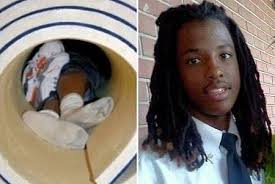
Kendrick Johnson was just 17 years old when his body was discovered on January 11, 2013, in the gymnasium of Lowndes High School in Valdosta, Georgia. Fellow students found him positioned upside down inside a vertically stored wrestling mat. Authorities concluded early in the investigation that the death was a tragic accident, suggesting that Johnson may have become trapped while attempting to retrieve a shoe that had fallen inside the mat.
Despite that official explanation, Johnson’s parents have spent years challenging the findings and arguing that their son’s death involved foul play. Their legal battle intensified in 2023 when they filed a $1 billion lawsuit accusing multiple law enforcement agencies and officials of covering up the circumstances surrounding their son’s death. However, the case has now encountered a major legal setback after a federal judge ruled that the lawsuit could not move forward.
The Discovery of Kendrick Johnson and the Initial Investigation
The discovery of Kendrick Johnson’s body inside a gym mat shocked students and staff at Lowndes High School and quickly drew national attention. According to early reports, the wrestling mats in the gym were stored upright against the wall, leaving narrow openings at the top. Investigators theorized that Johnson may have attempted to retrieve a shoe that had fallen into one of the mats, causing him to slide inside headfirst and become stuck.
Authorities concluded that Johnson likely suffocated after being unable to free himself. The official autopsy supported this explanation, describing the death as accidental positional asphyxia. Law enforcement agencies involved in the investigation maintained that the evidence at the scene pointed toward an unfortunate accident rather than a criminal act.
However, the unusual circumstances surrounding the discovery immediately raised questions for the Johnson family and some observers. Johnson’s body was found upside down, with his feet sticking out of the mat and his arms pinned alongside his body. Critics argued that the scenario seemed difficult to explain without additional factors.
Concerns also emerged about the initial handling of the investigation. The coroner who arrived at the scene later reported that the investigative environment was problematic and that cooperation from some officials was lacking. He also noted that Johnson’s body had been moved and that a sealed body bag had been opened before his examination, issues that would later become part of the family’s claims in court.
Read : Family Sues NASA for $80,000 After Space Debris Falls On Their Home in Florida
Over time, these irregularities contributed to growing skepticism from Johnson’s parents, Kenneth and Jacquelyn Johnson, who refused to accept the conclusion that their son’s death was accidental. They began pushing for further investigations and independent examinations of the evidence.
Years of Disputes, Independent Autopsy, and Renewed Investigation
In the years following Johnson’s death, the case continued to generate debate and controversy. The Johnson family arranged for an independent autopsy, which reportedly concluded that Kendrick Johnson died from unexplained non-accidental blunt force trauma. This finding directly contradicted the original ruling of accidental suffocation and intensified the family’s belief that their son had been killed.
The conflicting medical opinions deepened the divide between the family and law enforcement agencies involved in the case. While authorities maintained that there was no evidence of foul play, the Johnson family repeatedly called for additional investigations and accountability. The situation gained renewed attention in 2021 when Lowndes County Sheriff Ashley Paulk reopened the investigation. Paulk was not in office at the time of Johnson’s death and initiated the review after years of public pressure and ongoing questions about the case.
Read : Teen Pilot Niko Bray Forced to Make Emergency Landing on Busy Jupiter Road
During the reopened investigation, officials reexamined physical evidence, reviewed witness interviews, and analyzed previous grand jury testimony. After several months, the sheriff’s office released a detailed report stating that the available evidence did not support the claim that Kendrick Johnson’s death resulted from a criminal act. Sheriff Paulk stated that the investigation included input from multiple agencies and that the conclusion remained consistent with earlier findings.
According to the report, the physical evidence and witness statements did not indicate that anyone else was involved in Johnson’s death. The sheriff also rejected allegations of a cover-up. He argued that the number of investigators and agencies involved in the case would have made it virtually impossible to conceal evidence of a crime. From his perspective, the idea of a coordinated effort to hide the truth was unrealistic given the scope of the investigation.
Despite those conclusions, the Johnson family remained unconvinced. They continued to argue that important questions had not been answered and that inconsistencies in the investigation suggested wrongdoing.
In response, the family filed a massive $1 billion lawsuit in 2023 against several entities, including the Lowndes County Sheriff’s Office and the Georgia Bureau of Investigation. The lawsuit accused authorities of failing to properly investigate the death and intentionally covering up evidence that might have revealed the truth. The legal action represented one of the most dramatic steps in the family’s long campaign to challenge the official narrative surrounding Kendrick Johnson’s death.
Federal Judge Dismisses the Lawsuit but Raises Concerns
The lawsuit faced a critical test in federal court, where U.S. District Judge Sarah Geraghty ultimately ruled that the claims could not proceed. On Friday, the judge dismissed the case, effectively ending the lawsuit at the trial court level. Although the decision blocked the Johnson family’s legal claims, the judge’s ruling acknowledged that there were troubling aspects of the investigation. She noted that inconsistencies existed between various official reports and the allegations raised by the Johnson family.
Read : 60-Year-Old Julie Veress Killed After Collision with Teen on E-Bike
Among the issues highlighted in the ruling was a discrepancy involving the size of the opening in the wrestling mat compared with Kendrick Johnson’s shoulder width. According to the judge, a deputy had claimed that the opening was several inches smaller than Johnson’s shoulders, raising questions about how he could have entered the mat in the way investigators described. The judge also referenced statements from the coroner who examined the scene.

The coroner reportedly described the investigative conditions as extremely poor and said that law enforcement had not cooperated fully during the examination. Additional concerns included the handling of Johnson’s body and evidence at the scene. Reports indicated that the body had been moved and that the sealed body bag had been opened before the coroner completed his examination. These details contributed to the broader concerns about how the case was managed during the initial investigation.
Another issue mentioned in the court decision involved missing surveillance footage from inside the school. Video recordings published in 2013 had drawn attention because portions appeared to be absent. While this detail was considered significant to the family’s claims, the judge noted that it fell outside the legal time limits required for bringing such allegations. Ultimately, the judge concluded that the lawsuit could not proceed due to several legal barriers.
One of the key factors involved the immunity granted to the Georgia Bureau of Investigation under the Eleventh Amendment, which protects certain state agencies from being sued in federal court. Additionally, the court found that Lowndes County had not been properly served with the lawsuit within the required 90-day period after the complaint was filed. Because of these procedural issues, the judge determined that the case could not move forward even though concerns about the investigation remained.
For the Johnson family, the ruling represents another setback in their long effort to obtain what they believe is justice for their son. However, they have indicated that the legal fight is not over. Kenneth and Jacquelyn Johnson have stated that they intend to appeal the dismissal, continuing their pursuit of accountability for what they believe happened to Kendrick. The case of Kendrick Johnson has persisted for more than thirteen years as one of the most debated school-related deaths in recent American history.
While official investigations have repeatedly concluded that his death was an accident, the unresolved questions and conflicting interpretations of evidence have kept the case in the public eye. As the legal battle moves toward a potential appeal, the circumstances surrounding Johnson’s death remain a source of frustration for his family and a topic of ongoing discussion among those who have followed the case since the beginning.