
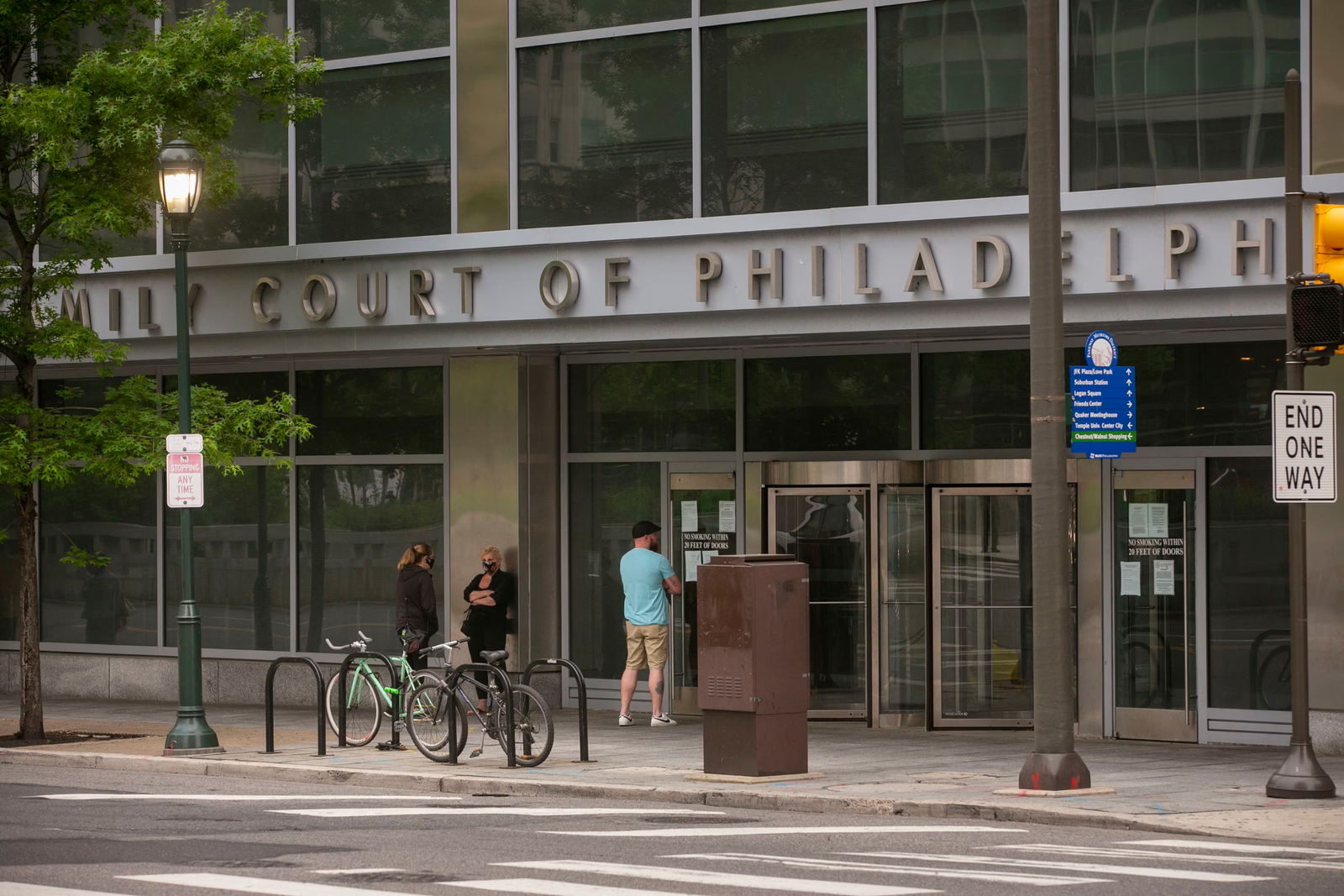
A long-serving family court judge in Philadelphia is facing serious criminal charges following allegations of domestic violence involving members of his own family. Michael Fanning, a judge on the Philadelphia Court of Common Pleas since 2014, was arrested after authorities say a violent incident occurred inside his home in the East Torresdale neighborhood. Prosecutors allege that the confrontation escalated into a physical attack against both his wife and his adult daughter, prompting law enforcement intervention and the filing of multiple felony charges.
The accusations have raised significant concern given Fanning’s position on the bench and his professional background, which includes handling sensitive family court matters and prosecuting child abuse cases earlier in his legal career. According to court documents and statements presented during an initial hearing, the alleged assault involved repeated acts of violence against his wife as well as an attack on his daughter during the same incident. While the case is still in its early stages, the charges and the details presented by prosecutors have drawn attention to the intersection of personal conduct and judicial responsibility.
Fanning, who has served more than a decade in the judiciary and recently secured another term after a retention election, now faces potential legal and professional consequences that could affect both his criminal liability and his judicial career. As the case proceeds through the court system, the allegations have become part of a broader conversation about accountability for members of the judiciary and the mechanisms in place to respond when judges themselves are accused of criminal misconduct.
Details of the Alleged Assault at the East Torresdale Home
The incident that led to Michael Fanning’s arrest reportedly occurred Monday night at the residence he shares with his wife in East Torresdale, a neighborhood in northeastern Philadelphia. Prosecutors allege that during the dispute, the judge repeatedly punched his wife in the face and at one point strangled her. The allegations describe a violent confrontation that escalated rapidly, leading to injuries and prompting authorities to intervene.
According to the charges filed in connection with the case, Fanning is accused not only of assaulting his wife but also of attacking his 30-year-old daughter when she became involved during the altercation. Prosecutors allege that he grabbed her by the hair and pulled her to the ground, which caused her to suffer a facial injury. The combination of alleged acts resulted in several criminal charges, including aggravated assault and strangulation, both of which are considered serious offenses under Pennsylvania law.
The allegations were outlined during a bail hearing held shortly after Fanning’s arrest. The judge appeared at the proceeding by video from a holding cell while accompanied by his attorney. He was reportedly dressed in a black tracksuit and had sunglasses resting on his head during the appearance. His lawyer stated that Fanning intends to plead not guilty to the charges and contest the allegations as the legal process continues.
During the hearing, bail magistrate Lauren Connor reviewed the charges and the circumstances described by prosecutors before deciding on the conditions of Fanning’s release. She ultimately approved an arrangement that allowed him to be released on $200,000 unsecured bail. This type of bail means the defendant does not need to pay money upfront but would be responsible for the amount if he fails to appear in court or violates the conditions of release.
Read : New Zealand Removes Burp Tax on Livestock After Backlash from Farmers
As part of the release conditions, the magistrate imposed strict restrictions designed to protect the alleged victims. An emergency protection-from-abuse order was issued the same day as the arrest, prohibiting Fanning from contacting either his wife or his daughter. The order also requires him to stay away from them entirely. The magistrate emphasized the seriousness of the restrictions and warned that any violation could lead to significantly higher bail in the future.
Judicial Career and Background of Michael Fanning
Before the allegations emerged, Michael Fanning had spent years building a career within Pennsylvania’s legal system. He was appointed to the Philadelphia Court of Common Pleas in 2014 by then-Governor Tom Corbett, a move that placed him on one of the state’s most prominent trial courts. The Court of Common Pleas handles a wide range of cases, including criminal matters, civil disputes, and family law proceedings.
Following his appointment, Fanning sought to remain on the bench through the electoral process. In 2015 he won a full ten-year term after voters approved his candidacy. More recently, he was retained by voters in a judicial retention election held in November, allowing him to continue serving for another term. Retention elections in Pennsylvania allow voters to decide whether a sitting judge should remain in office without facing an opponent on the ballot.
Read : Judge Dismisses $1B Lawsuit Over 17-Year-Old Kendrick Johnson Found Dead Rolled Up in School Gym Mat
Throughout his time on the bench, Fanning has served as a family court judge. Family court divisions handle cases involving divorce, child custody, domestic disputes, and other sensitive issues involving families and children. Judges in this division are often responsible for making decisions that can profoundly affect family relationships and the welfare of minors.

Fanning’s legal experience prior to becoming a judge included work both in private practice and in public prosecution. He is a graduate of Temple University’s law school and spent part of his early career as an assistant district attorney in Bucks County. During that time he prosecuted child abuse cases, a role that required handling complex investigations and presenting evidence in court against individuals accused of harming children.
This professional history has added an additional layer of attention to the current allegations. A judge who once prosecuted abuse cases and later presided over family disputes now faces accusations of violent conduct within his own household. While the charges have yet to be proven in court, the situation has drawn scrutiny because of the contrast between the responsibilities of his former roles and the claims made by prosecutors in the current case.
The Philadelphia court system has not immediately issued a public statement regarding the charges. A spokesperson for the courts did not respond to requests for comment following the arrest. As a result, there has been limited official response from the judiciary while the criminal case begins to unfold.
Potential Consequences for the Judge and the Philadelphia Judiciary
The criminal charges against Michael Fanning do not automatically remove him from his judicial position. Under Pennsylvania’s judicial oversight system, a judge accused of a crime may continue to hold office unless disciplinary authorities intervene. However, the Pennsylvania Supreme Court and the state’s judicial disciplinary bodies have the authority to suspend or remove judges under certain circumstances.
One potential outcome is temporary suspension while the case proceeds through the courts. Judicial suspensions are sometimes imposed when allegations are serious enough to raise concerns about a judge’s ability to perform their duties or maintain public confidence in the judiciary. Such suspensions can occur with or without pay depending on the circumstances and the decisions of disciplinary authorities.
Read : Indiana Judge Steven Meyer and Wife Kimberly Shot at Their Lafayette Home
Past incidents in Pennsylvania illustrate how judicial discipline can unfold. In 2013, several sitting traffic court judges in Philadelphia were swiftly suspended without pay after they were indicted in a ticket-fixing scandal. Those suspensions occurred shortly after criminal charges were announced, reflecting the judiciary’s efforts to address allegations that could undermine trust in the court system.

While Fanning’s case involves allegations of domestic violence rather than corruption, it still raises questions about how the judiciary will respond. Judicial conduct rules require judges to maintain behavior that upholds the integrity and impartiality of the legal system. Criminal allegations involving violence may trigger disciplinary review by the Judicial Conduct Board or action by the Pennsylvania Supreme Court.
The situation also emerges during a period in which other Philadelphia judges have faced disciplinary scrutiny, though not all cases involved criminal accusations. In recent years, several members of the local judiciary have been investigated or sanctioned for various forms of misconduct. These cases have contributed to ongoing discussions about accountability and oversight within the court system.
One example involves a judge who was suspended without pay amid allegations that he attempted to influence a colleague’s decision in a case connected to a well-known musician. Another case resulted in a judge being removed from the bench after continuing to post political statements on social media despite orders to stop. Although these incidents differ in nature from the criminal charges facing Fanning, they illustrate the range of disciplinary issues that have surfaced within the Philadelphia judiciary.
As Fanning’s case proceeds, the legal process will determine whether prosecutors can prove the allegations beyond a reasonable doubt. At the same time, the judiciary’s internal oversight mechanisms may assess whether the accusations alone warrant professional consequences while the criminal case is pending. The outcome could influence both Fanning’s future on the bench and the broader public perception of judicial accountability in Philadelphia.
**prostafense**
ProstAfense is a premium, doctor-crafted supplement formulated to maintain optimal prostate function, enhance urinary performance, and support overall male wellness.
**nervecalm**
NerveCalm is a high-quality nutritional supplement crafted to promote nerve wellness, ease chronic discomfort, and boost everyday vitality.
I think I will become a great follower.Just want to say your post is striking. The clarity in your post is simply striking and i can take for granted you are an expert on this subject.