
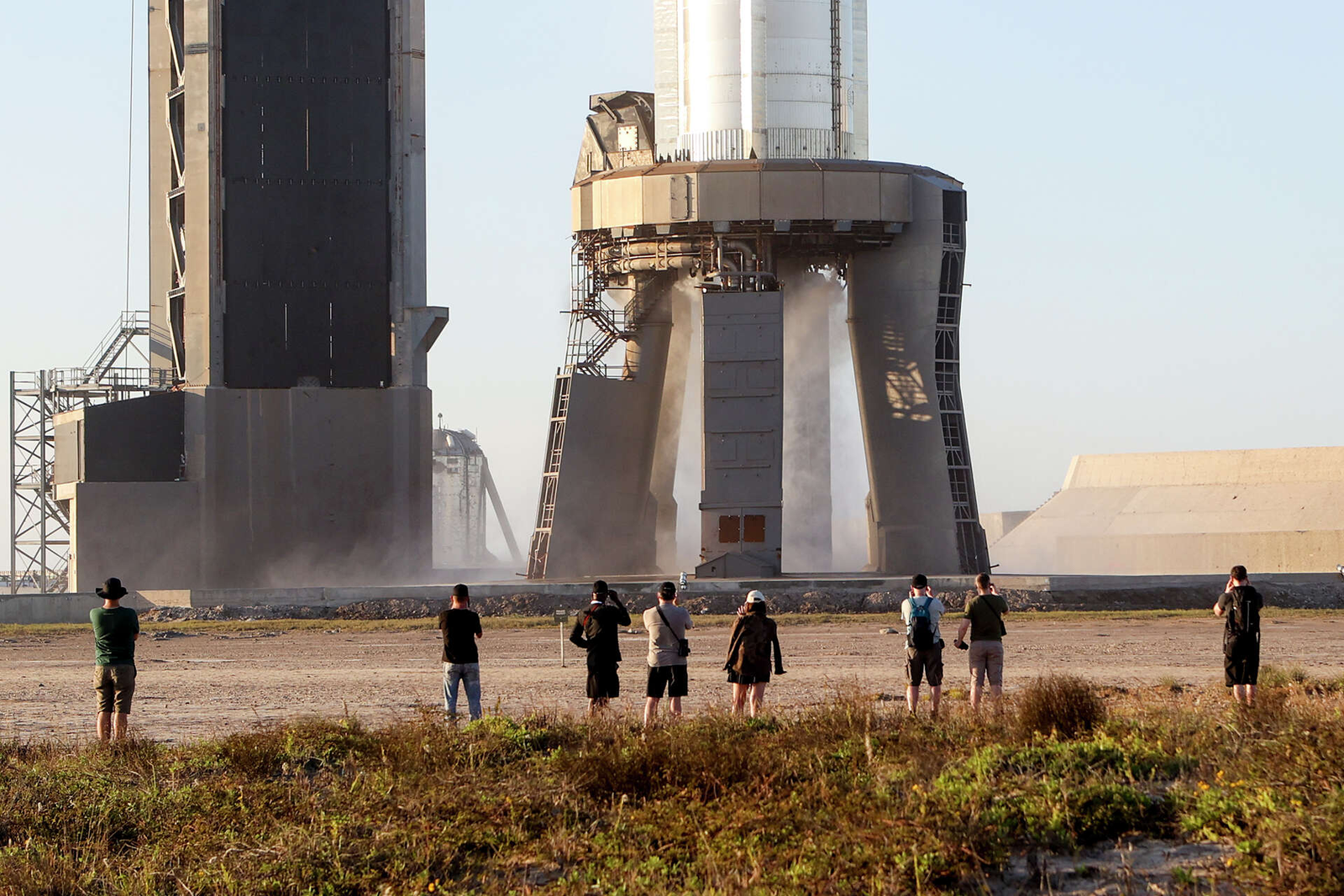
A new lawsuit filed in South Texas adds to a growing list of legal challenges surrounding safety conditions at SpaceX’s Starbase facility, the sprawling Starship rocket factory and test site near Brownsville. The case centers on Julian Escalante, a journeyman ironworker employed by subcontractor W&W Erectors LLC, who alleges that he suffered a serious workplace injury in November when a heavy bucket of industrial-sized bolts fell from a pallet while he was working on a Starship launch pad.
According to the petition filed in Cameron County, the incident resulted not only in physical harm but also in alleged pressure from supervisors to avoid reporting the injury or seeking immediate medical treatment. Escalante’s claims bring renewed scrutiny to the responsibilities of prime contractors and subcontractors on large industrial projects, particularly at high-profile sites operating under intense construction timelines and public attention. The lawsuit is notable both for the specific allegations it raises and for its timing.
It follows closely on the heels of another injury-related suit filed earlier this month by a different worker at Starbase and comes amid recent enforcement action by the Occupational Safety and Health Administration related to a separate incident at the site. Together, these developments highlight the legal, regulatory, and operational pressures facing SpaceX as it continues rapid development of its Starship program while relying on a large network of outside contractors and tradespeople.
Details of the November Incident and Alleged Injuries
According to the lawsuit, the incident occurred while Julian Escalante was performing his duties as a journeyman ironworker for W&W Erectors, one of the largest structural steel fabricators in the United States and one of dozens of subcontractors working at Starbase. The site, located roughly 20 miles east of Brownsville, has become a hub of round-the-clock construction activity as SpaceX builds and modifies launch infrastructure to support its next-generation Starship rocket system.
The petition alleges that Escalante was injured when a metal bucket containing industrial-sized bolts, weighing approximately 200 pounds, fell from the pallet on which it had been positioned. As the bucket dropped, Escalante’s right arm reportedly became “entangled and pinched,” pulling his arm downward along with the falling load. The downward force, according to the suit, yanked his right shoulder and caused him to fall as the bucket struck the ground.
The description suggests a sudden, uncontrolled movement of heavy materials in a work area where multiple trades and operations were likely occurring simultaneously. Escalante reported the incident to his supervisor, and the injury was documented, the lawsuit states. However, he alleges that he was not provided medical treatment at the time. Instead, his supervisor allegedly instructed him not to report the injury and told him to return to work.
When Escalante raised his concerns with his foreman, identified in the filing as Joe Pedroza, he was allegedly told to “just don’t tell anyone.” The petition further claims that when Escalante asked what management had said about his repeated requests for medical care, Pedroza relayed that the general foreman, identified only as “Wero,” told him to “be a man” and “stop crying.”
Read : Top Ten Most Beautiful Villages Nestled in the Lap of the Himalayas
These allegations form a central part of the lawsuit, as they go beyond the mechanics of the accident itself and address the handling of the aftermath. The petition suggests that Escalante’s injury was not only a result of unsafe conditions but was compounded by an alleged failure to respond appropriately once the incident occurred. Such claims are significant in workplace injury litigation, as they may influence determinations of liability, damages, and potential retaliation.
Claims Against SpaceX and W&W Erectors
Escalante’s attorneys argue that SpaceX bears responsibility for maintaining a safe job site and should be held liable for negligence related to the incident. The lawsuit names SpaceX and W&W Erectors LLC as defendants, assigning different but overlapping forms of responsibility to each.
With respect to SpaceX, the petition alleges that the company failed in several core duties associated with site safety. These include failing to inspect the work area for dangerous conditions, failing to ensure that heavy materials were properly and safely stored, and failing to establish or enforce adequate procedures and equipment for moving or handling heavy materials. The suit also claims that SpaceX did not sufficiently warn workers about the risks associated with the materials in the area, did not adequately supervise the work being performed, and did not take timely steps to correct hazardous conditions.
Such allegations are common in cases involving injuries on large construction or industrial sites, particularly where a property owner or primary contractor exercises a high degree of control over scheduling, logistics, and site layout. In these contexts, plaintiffs often argue that even if a worker is employed by a subcontractor, the primary operator of the site retains responsibility for overarching safety standards and coordination among multiple contractors.

The claims against W&W Erectors focus more directly on the conduct of supervisors following the injury. The lawsuit accuses the company of “workers’ compensation retaliation,” alleging that after Escalante reported the injury and requested medical attention, W&W, through its supervisors and agents, discouraged and impeded him from formally reporting the incident and from obtaining medical care. The petition states that this discouragement included directing him not to report the injury and pressuring him to continue working instead of seeking treatment.
Read : Ex-Employee of SpaceX Sues Company for Firing Him Over Bathroom Breaks
If proven, such conduct could carry legal consequences independent of the underlying injury itself. Laws protecting workers’ compensation rights are designed to ensure that employees can report injuries and seek medical care without fear of retaliation or coercion. Allegations that supervisors actively discouraged reporting or medical treatment are often scrutinized closely by courts and regulators.
Escalante is represented by Michael Darling of the Falcon Law Group and Luis Guerrero of the Warrior Law Firm, both based in San Antonio. Darling has stated that this is his firm’s first case against SpaceX, although the firm has previously pursued litigation against Tesla, another company associated with Elon Musk.
Neither SpaceX nor W&W Erectors has responded publicly to the lawsuit. When contacted by phone, a lawyer at W&W’s corporate headquarters in Oklahoma declined to comment on the case. As of the filing, the allegations remain unproven, and the defendants will have the opportunity to respond through the legal process.
Broader Context: Rising Legal and Regulatory Scrutiny at Starbase
The Escalante lawsuit is the second civil injury case filed against SpaceX in as many weeks, underscoring a period of heightened legal scrutiny at Starbase. Earlier this month, attorneys for Sergio Ortiz of Brownsville filed suit over a 2024 incident in which Ortiz was allegedly struck by falling debris while working in an elevator shaft at the same facility. That case similarly raises questions about falling objects, site coordination, and safety protocols in a complex construction environment.
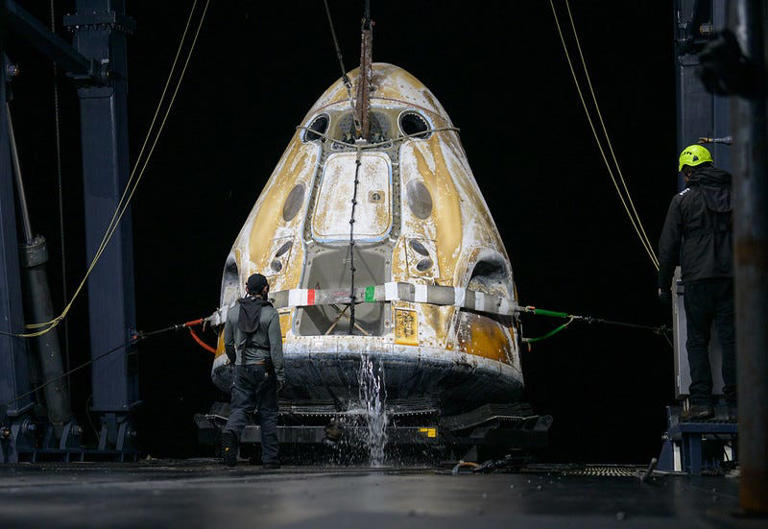
Beyond these recent filings, a state legal database shows that since 2020 there have been 21 civil lawsuits against SpaceX for injuries or damages, with 14 of those filed since March 2024. While large industrial operations often face litigation due to their scale and inherent risks, the concentration of recent cases may attract closer attention from regulators, labor advocates, and local authorities.
Regulatory action has already followed at least one incident at Starbase. Although the Occupational Safety and Health Administration does not appear to be investigating the bolt bucket incident involving Escalante, the agency recently cited SpaceX for safety violations related to a June crane collapse at the Massey test site, another Starbase location. On Tuesday, OSHA imposed a fine of $115,850 in connection with that collapse. While separate from Escalante’s claims, the enforcement action adds to a broader narrative of safety challenges at the site.
Starbase has become emblematic of SpaceX’s rapid development philosophy, characterized by fast iteration, frequent testing, and continuous construction. Supporters argue that this approach has enabled unprecedented progress in rocket development, while critics question whether speed and scale may sometimes come at the expense of worker safety. The legal system, through lawsuits like Escalante’s, serves as one forum for examining how these competing priorities are balanced in practice.
As the Escalante case moves forward, it is likely to draw attention not only to the specific facts of the November incident but also to the broader systems and procedures governing safety at one of the most closely watched aerospace projects in the world. The outcome could have implications for how SpaceX and its contractors manage risk, document injuries, and respond when accidents occur, particularly as construction and testing at Starbase continue at a rapid pace.