
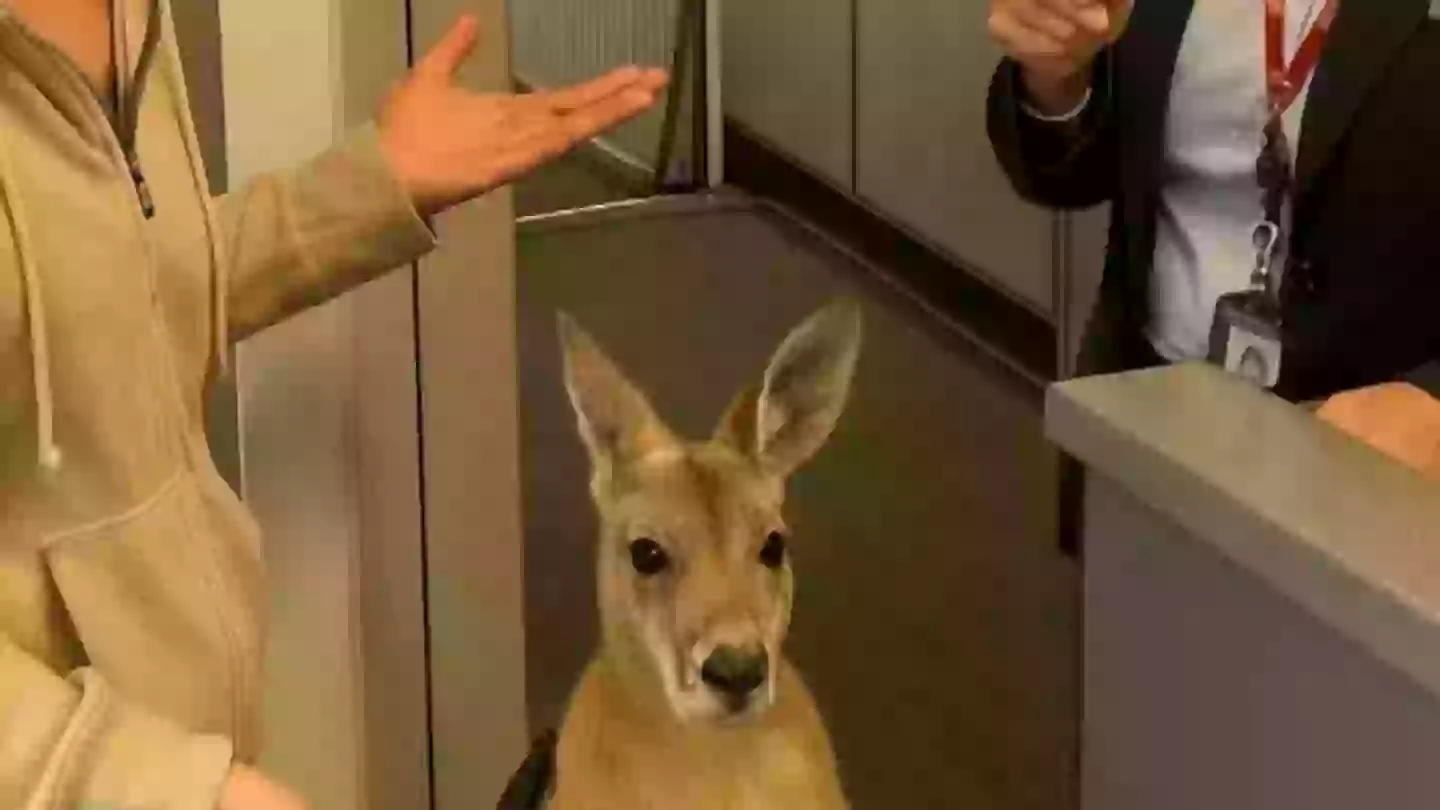
In an age of fast-moving digital content and ever-evolving artificial intelligence, the lines between fantasy and reality are increasingly blurred. The latest example of this phenomenon comes in the form of a viral video that took the internet by storm—showing a kangaroo, yes, a Kangaroo Patiently Waiting With Boarding Pass in hand, as if it were just another human passenger waiting for takeoff.
The animal’s gentle demeanor, expressive eyes, and oddly relatable posture caused a wave of reactions from millions of online users. The clip appeared to show a typical day at the airport—except for the surreal inclusion of a kangaroo seemingly ready to board a flight.
In the video, a woman can be seen arguing with a flight attendant, while the kangaroo remains silent and composed, clutching a boarding pass with what looks like great anticipation. The scenario was so convincingly ordinary that many believed it was real, and the charm of the marsupial’s behavior only helped to cement that illusion.
The Illusion of Reality: How an AI Video Fooled Millions
While many were enamored by what they thought was a heartwarming real-life moment, the truth behind the video is far more digital than organic. The kangaroo video was created using advanced AI and posted on an Instagram page named Infinite Unreality, a platform known for its creative and surreal animal content powered by artificial intelligence.
This account had already built a reputation for such AI-generated spectacles, including clips of a giraffe boarding a plane, a pig riding in a stroller, and even a hippopotamus strapped into an airplane seat. The kangaroo video followed this trend, and importantly, it was clearly labeled as AI-generated on the original post. The video’s caption on its repost on X included the mark “(AI)”, a clue to its artificial roots.
Yet, despite these cues, the striking realism of the visuals caused widespread confusion and amusement. With over 4 million views on X and more than 10 million on Instagram, the video spread like wildfire. Many social media users were enchanted. Comments praised the kangaroo’s well-mannered behavior, noting how it looked more composed than typical human travelers.
Airline staff is not allowing this cute kangaroo to board the airplane,
— Wholesome Side of 𝕏 (@itsme_urstruly) May 26, 2025
the way he is holding the boarding pass and waiting to be scanned 🥺
(ai) pic.twitter.com/EHoSFkEECF
One popular comment joked, “Bro looks better behaved than most adults that board planes.” Another highlighted the detail of the kangaroo “waiting to get his boarding pass scanned,” adding to the belief that this was more than just a clever digital trick.
Public Reactions: Humor, Confusion, and Digital Fatigue
As with many viral moments, the public response was a mixed bag of joy, disbelief, and growing concern over AI-generated content. Some found the clip hilarious and endearing, appreciating it as a playful piece of internet culture. Others were genuinely perplexed, struggling to reconcile the video’s realism with its absurdity.
Many users took to the comments to express their confusion, asking if the animal had cleared airport security or passed customs. One user wrote, “It looks like the kangaroo is the calmest one in this video,” while another sarcastically questioned, “Did he remember to pack his passport?” Still, others expressed annoyance, with remarks like, “These fake videos need to stop,” reflecting a rising weariness with being fooled online.
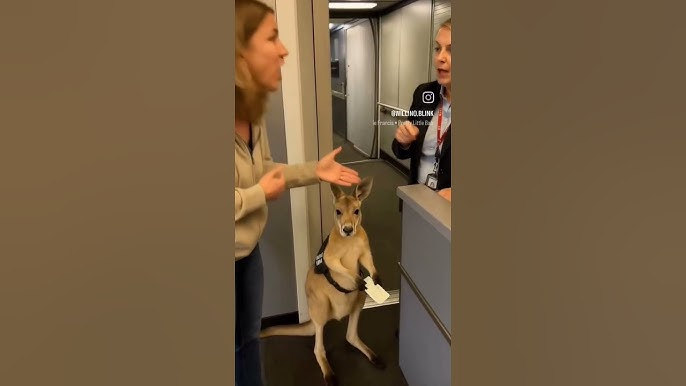
Interestingly, even AI tools got involved in the conversation. One user reportedly asked Grok, an AI assistant, to verify the authenticity of the video. Grok analyzed the clip, confirmed it was likely AI-generated, and cited the lack of any credible news reports supporting the idea of a kangaroo actually boarding a plane.
Read : 47-Year-Old Man Who Killed 100 Kangaroos in Australia Arrested
It also pointed out previous, real-world kangaroo sightings at airports—such as one in Melbourne in 2013 and another during a 2021 flight—but clarified that none ever involved such an orchestrated and human-like situation.
AI-Generated Media: A Double-Edged Sword
The rise of realistic AI-generated content is a marvel of technological progress, but it also presents real-world challenges. The kangaroo video illustrates just how sophisticated these tools have become—and how difficult it is to distinguish between what’s genuine and what’s fabricated.
Tools like generative AI, which create lifelike images and videos from text prompts or edited photos, have progressed to the point where they can produce near-perfect visual illusions. These tools are often used for fun and entertainment, as with the Infinite Unreality Instagram page. But when such content escapes the bounds of its original context—particularly when reposted without clear labels—it can contribute to a culture of misinformation.
This phenomenon raises questions not only about how we consume digital media, but also how we interpret it. It challenges our ability to critically assess content and forces us to consider whether we should now assume all viral content is fake until proven otherwise. That, in itself, signals a major shift in how we engage with the digital world.
Moreover, there are growing concerns about the ethical use of such technology. While some people celebrate AI-generated videos for their creativity and entertainment value, others worry about the potential for manipulation. In an environment where fake news already spreads faster than the truth, the emergence of hyper-realistic videos adds another layer of complexity to the battle for digital trust.
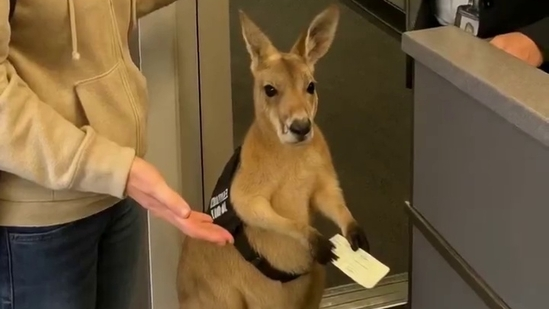
It also affects our emotional responses. The image of a gentle kangaroo, patiently waiting with a boarding pass, tugs at the heartstrings. Whether it’s amusement or awe, the emotional reactions are real—even if the source is not. This manipulation of sentiment can be harmless fun, but in other contexts, it could be used to spread political propaganda, fake endorsements, or even fake eyewitness accounts of major events.
In the case of the kangaroo, the stakes were low and the deception was relatively benign. But it still reveals how easily people can be fooled, especially when content is shared rapidly and without critical review. As AI continues to advance, the line between entertainment and misinformation is only going to get thinner.
The viral kangaroo video serves as a perfect example of our modern relationship with artificial intelligence and digital media. On one hand, it showcases the playful potential of AI to entertain, delight, and even inspire. On the other hand, it underscores how vulnerable we are to visual deception—especially when content is stripped of context and repackaged as authentic.
As AI-generated media becomes more mainstream, the public will need to sharpen its digital literacy. Labels like “(AI)” may help, but they can easily be overlooked or removed during reposts. Platforms may need stronger policies on content verification and clearer indications of artificial media.
Meanwhile, creators of AI content must consider the ethical implications of their work and the responsibility that comes with creating such convincing illusions. Ultimately, whether we view these AI creations as wonders or warnings depends on how we choose to engage with them.
The kangaroo, calm and composed with its boarding pass, may not have existed in the physical world—but the questions it raises are very real. If a digital marsupial can stir this much emotion and confusion, it’s worth considering what else the technology is capable of—and how prepared we are to handle it.