

A 67-year-old American tourist has launched legal action against one of the United Kingdom’s most iconic cultural landmarks, alleging that safety failures during a guided tour led to a serious and life-altering injury. Karla Walker Schindler, a visitor from Savannah, Georgia, is suing the Royal Albert Hall after she fell into a balcony box during an organised tour, breaking her hand and suffering ongoing physical complications.
The incident, which occurred during a family holiday to London in May last year, has had lasting consequences for Ms Schindler, who says she has been unable to return to work in the film industry since the accident. Her case has reignited debate around visitor safety, risk management, and duty of care at historic venues that welcome millions of tourists each year.
Karla Walker Schindler has instructed UK-based law firm Irwin Mitchell to pursue a claim for damages, alleging that the Royal Albert Hall failed to adequately assess risks, provide sufficient warnings, or ensure that tour routes were safe for visitors. The claim centres on an “inside out” guided tour of the world-famous concert venue, during which she says she was led unknowingly into a hazardous area with insufficient lighting, unmarked steps, and no handrail.
The Royal Albert Hall, a Grade I listed building that has hosted generations of performers and dignitaries, has not yet publicly commented on the claim. However, the case has drawn attention to the challenges faced by historic venues that must balance architectural preservation with modern safety standards, particularly when conducting guided tours through backstage or restricted areas.
The incident and its immediate aftermath
Karla Walker Schindler’s accident occurred while she was taking part in a guided tour designed to offer visitors behind-the-scenes access to the Royal Albert Hall. According to her account, the group was led through a curtain into one of the venue’s balcony boxes. She says she was positioned at the front of the group and was instructed by the tour guide to remain quiet while stepping through the curtain. However, she alleges that no warning was given about the presence of steps immediately beyond the curtain, nor was there any indication of reduced lighting or the absence of safety features such as a handrail.
The main auditorium was reportedly in darkness at the time, with the only illumination coming from the stage area below. Ms Schindler says she did not realise there were steps on the other side of the curtain and lost her footing as she entered the box. In an attempt to regain her balance, she grabbed hold of a nearby chair, only to discover that it was not fixed to the floor. She subsequently fell head-first into the balcony box, striking the ground with significant force.
Following the fall, Ms Schindler reports experiencing immediate pain and numbness in her face, along with severe discomfort in her left hand and arm. She says she became nauseous and vomited while trying to recover in a bathroom. Royal Albert Hall staff arranged for her to be taken by taxi to hospital, where X-rays confirmed a closed fracture of the fourth metacarpal bone in her left hand.
Read : 22-Year-Old Kashmiri Techie Earns Spot in NASA’s Hall of Fame
At the time of the incident, Ms Schindler was on holiday with her family and had anticipated a memorable and enjoyable visit to London. Instead, she describes the experience as deeply distressing, saying that what was meant to be a special trip was overshadowed by injury, pain, and uncertainty. She has since spoken publicly about the emotional impact of the fall, stating that the accident transformed her holiday into a “nightmare.”
Ongoing injuries and impact on her working life
While the initial diagnosis focused on the fracture to her hand, Karla Walker Schindler says the full extent of her injuries only became apparent after she returned to the United States. She reports ongoing swelling in her arm, prompting further medical investigations. Subsequent scans revealed that two of her vertebrae were pressing on nerves, causing persistent numbness and tingling that radiated down her arm and into her fingers.
Ms Schindler is left-handed, and the injury affected her dominant hand. She says she continues to struggle with reduced grip strength, an inability to make a tight fist, and difficulty holding objects securely. Everyday tasks such as writing with a pen, lifting items, or maintaining dexterity have become challenging. Despite undergoing treatment and rehabilitation, she says she still experiences pain more than 18 months after the fall.
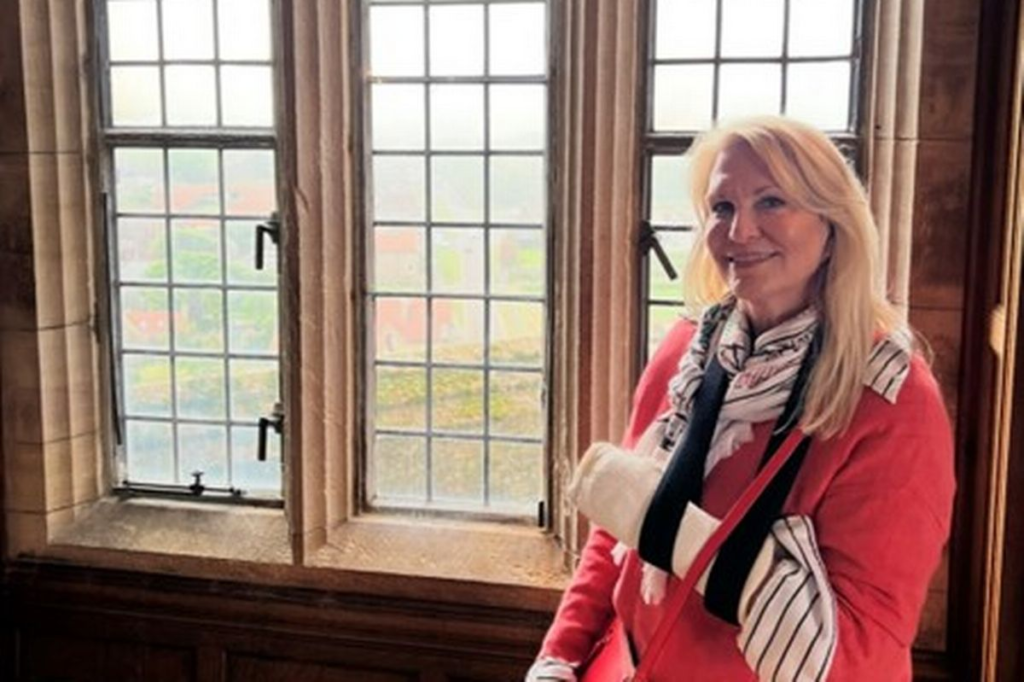
These physical limitations have had a profound effect on her professional life. Ms Schindler worked as a driver in the film industry, a role that requires strength, coordination, and the ability to handle equipment and vehicles safely. She says her injuries have prevented her from returning to work, resulting in financial strain as well as frustration and emotional distress.
In statements released through her lawyers, Ms Schindler has described the experience as upsetting and demoralising, noting that her love of travel and cultural exploration has been tempered by the fear and consequences of the accident. She has emphasised that the injury was not a minor or temporary setback but a significant disruption to her independence and livelihood.
She has also said that by pursuing legal action and speaking publicly about her experience, she hopes to encourage venues to review their safety procedures and prevent similar incidents from affecting other visitors. Her case, she argues, is not only about compensation but also about accountability and awareness.
Legal action and broader safety implications for historic venues
Ms Schindler’s legal team at Irwin Mitchell is preparing a claim alleging that the Royal Albert Hall failed in its duty of care to visitors participating in guided tours. The claim is expected to argue that there were shortcomings in risk assessments, staff training, and safety measures associated with the tour route. Specific allegations include inadequate warnings about steps, insufficient lighting, the absence of handrails, and the use of unsecured furniture in an area where visitors might instinctively reach for support.
Read : Outrageous! Mt. Blue Middle School Principal James Black Dressed as ICE Agent for Halloween
Christiana Onabolu, a specialist international serious injury lawyer at Irwin Mitchell, has said the case highlights the importance of public safety, particularly at world-renowned venues that attract visitors from around the globe. She has stressed that organisations hosting members of the public must take proactive steps to ensure their premises and activities are safe, regardless of a venue’s historic status or architectural constraints.
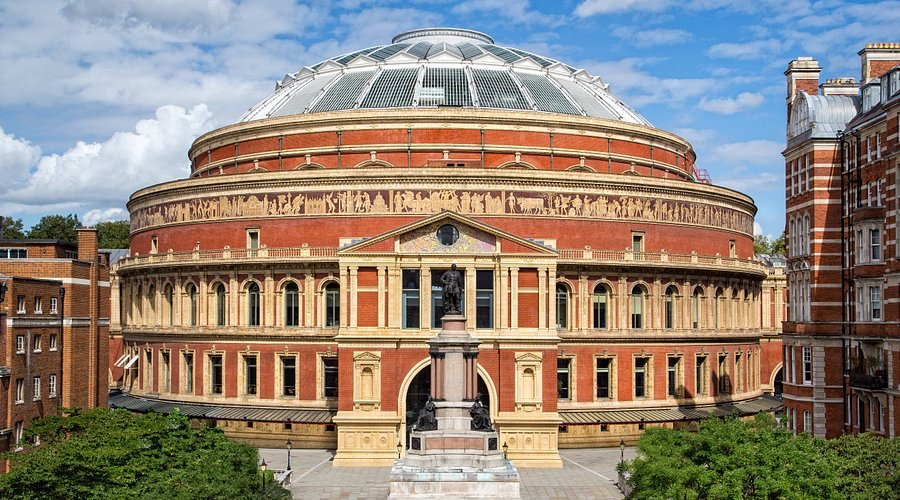
According to Ms Onabolu, the consequences of safety failings can be severe, as demonstrated by Ms Schindler’s ongoing injuries and inability to work. She has suggested that the case should serve as a prompt for all venues, especially popular landmarks in London and other major tourist destinations, to re-examine their safety procedures, training protocols, and risk assessments.
Historic venues often face unique challenges when adapting older structures to modern safety expectations. Features such as narrow staircases, uneven flooring, limited lighting, and restricted access points can pose hazards if not carefully managed. While preservation requirements may limit structural changes, legal experts note that venues still have a responsibility to mitigate risks through clear signage, adequate lighting, physical barriers, trained staff, and thorough visitor briefings.
The outcome of Ms Schindler’s claim could have implications beyond the Royal Albert Hall. If successful, it may reinforce legal expectations around visitor safety and influence how guided tours are designed and conducted at heritage sites. It may also encourage other visitors who have experienced injuries to seek legal redress, further increasing scrutiny on safety standards across the tourism and cultural sectors.
For now, the Royal Albert Hall has been contacted for comment but has not publicly responded to the allegations. As the legal process unfolds, the case underscores the delicate balance between offering immersive cultural experiences and ensuring that those experiences do not expose visitors to preventable harm.
Okay, I checked out phimsexnet88. It’s… uh… definitely got content. Not really my thing, but hey, if that’s what you’re into, go for it. Just be safe out there, folks! Check it out here: phimsexnet88