
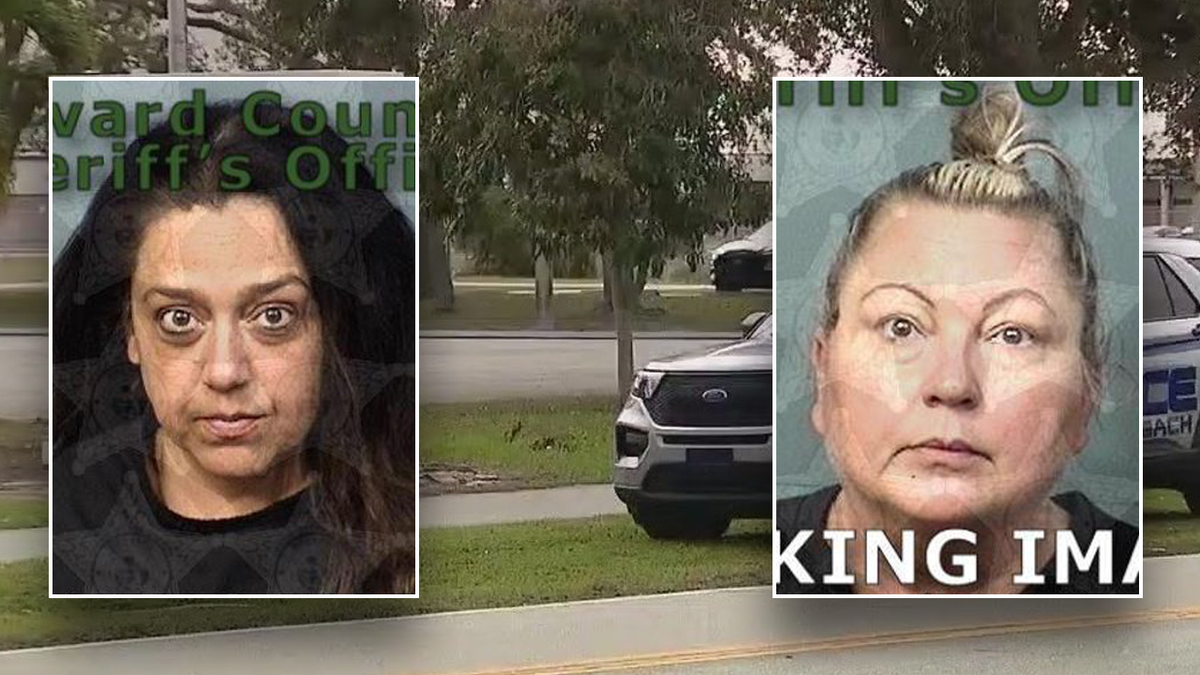
In Cocoa Beach, Florida, a storm of controversy has erupted at Saturn Elementary School, where parents have taken to the streets in protest over the district’s decision to hire Karly Anderson, a teacher previously arrested in connection with an underage house party.
The incident, which occurred in January 2025, involved over 100 teenagers, alcohol, marijuana, and a series of troubling events that led to Anderson’s arrest alongside former Roosevelt Elementary School principal Elizabeth Hill-Brodigan.
While Karly Anderson’s felony charges were dropped, her reassignment to Saturn Elementary has sparked outrage among parents who question the school district’s judgment and the safety of their children.
The Incident: A Party Gone Wrong
On January 19, 2025, Cocoa Beach police responded to multiple disturbance calls at the home of Elizabeth Hill-Brodigan, then-principal of Roosevelt Elementary School. What they encountered was a chaotic scene: a “white lie” party attended by over 100 teenagers, many wearing matching T-shirts, with alcohol freely available in coolers and marijuana use reported.
According to police reports, one teen suffered an alcohol-related medical episode, requiring treatment from Brevard County Fire Rescue, while another was arrested for driving under the influence as they attempted to leave the scene. A third juvenile was cited for marijuana possession, and reports later surfaced of fights and even a firearm at the event.
Karly Anderson, a third-grade teacher at Roosevelt Elementary at the time, was present at the party. Body camera footage released by the State Attorney’s Office shows Anderson, visibly intoxicated, arguing with officers and admitting she was aware of the underage drinking, stating, “I’ve already known.”
Despite her attorney’s claims that she was merely supporting Hill-Brodigan after returning from dinner and had no role in organizing the event, Karly Anderson was arrested and initially charged with child neglect and contributing to the delinquency of a minor. Hill-Brodigan faced additional charges, including hosting an open house party.
Both were placed on administrative leave following the arrests. By April 1, 2025, the State Attorney’s Office reduced Karly Anderson’s charges to two misdemeanors: disorderly conduct and disorderly intoxication.
The Department of Children and Family Services also cleared her, paving the way for her return to teaching. Hill-Brodigan, however, remains on unpaid leave, facing felony charges, including child neglect and multiple counts of contributing to the delinquency of a minor. The disparity in their outcomes has only fueled public discontent.
Parents are outraged a teacher is back in the classroom after this video was released, showing her interaction with @CocoaBeach_City police officers. Today marks day two for Karly Anderson in the classroom. Parents protested outside the school Tuesday morning. pic.twitter.com/92NRKMQi8S
— Esther Bower (@estherbower_tv) April 15, 2025
The incident has raised serious questions about the judgment of educators entrusted with shaping young minds. Parents and community members are particularly disturbed by reports from students that such parties were a regular occurrence, happening “once or twice a month” at Hill-Brodigan’s home, with no apparent intervention from the adults involved.
Community Outrage and Protests
The decision by Brevard Public Schools to reassign Anderson to Saturn Elementary School, effective April 2025, has ignited a firestorm of criticism. Parents, many of whom learned of Anderson’s hiring through social media rather than official district communication, feel blindsided and betrayed.
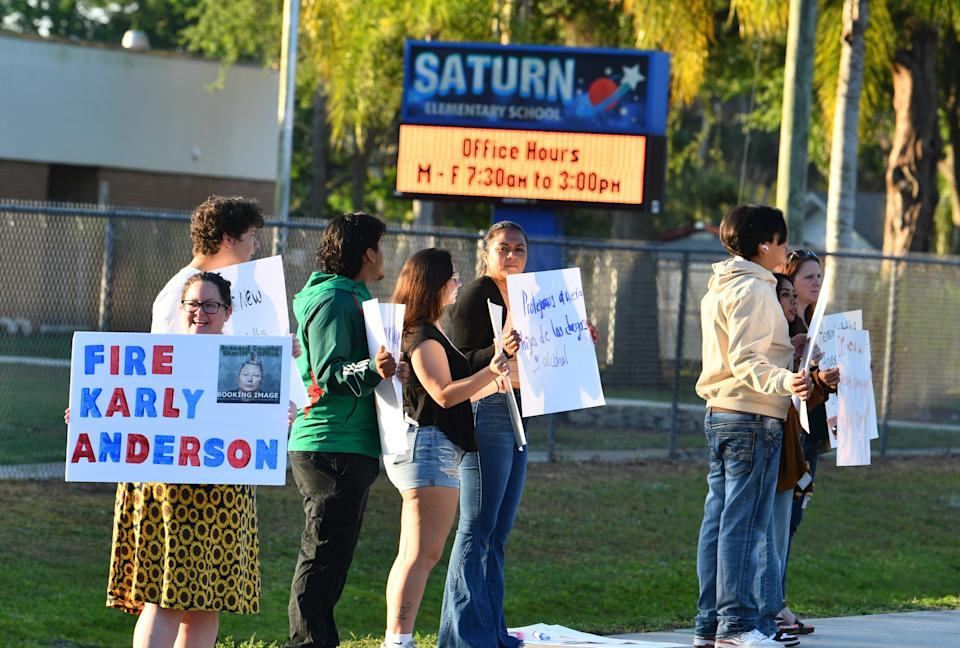
On April 14 and 15, a group of parents and students gathered outside Saturn Elementary, holding signs with messages like “Fire Karly Anderson” and “Protejamos nuestros hijos de las drogas y alcohol” (“Let’s protect our children from drugs and alcohol”).
Ashley Fernandez, a parent of a third-grader at Saturn, has been a vocal leader in the protests. “I was livid because honestly the woman still hasn’t gone to court,” Fernandez told Fox 35 Orlando. “This issue hasn’t been resolved at all, and so she has no place being inside of a school right now.”
Fernandez and others argue that Anderson’s presence in the classroom, even with reduced charges, undermines the trust parents place in educators to act as role models. The lack of transparency from the district has only deepened their frustration, with many parents unaware of Anderson’s reassignment until protests began.
The protests have also highlighted broader concerns about fairness and accountability within Brevard Public Schools. Parents have pointed to a recent case where another teacher’s contract was not renewed for using a student’s preferred name, an action prohibited by Florida law but not a criminal offense.
In contrast, Anderson’s return to teaching despite her involvement in a party with underage drinking has struck many as inconsistent. “Think of the woman who just lost her job for using a kid’s nickname, but then this woman can be accused of something like this and go right back to school,” Fernandez said. “That’s just ridiculous.”
Brevard Public Schools has defended its decision, stating that Anderson was cleared of felony charges and by the Department of Children and Family Services, and as a certified teacher, she is eligible to return to the classroom.
However, this explanation has done little to quell the anger of parents who believe the district is prioritizing bureaucratic protocol over student safety. Just two days after her reassignment, Anderson was placed on paid administrative leave again pending further investigations, a move that only intensified calls for her permanent removal.
Implications for Trust in Education
The Karly Anderson controversy is more than a local scandal; it raises critical questions about the standards to which educators are held and the mechanisms in place to ensure accountability. Schools are entrusted with the safety and moral development of children, and incidents like this erode the confidence that parents and communities have in the education system.
The fact that Anderson was reinstated before her misdemeanor charges were resolved has led many to question whether Brevard Public Schools is adequately prioritizing student welfare.
Moreover, the incident underscores the challenges of balancing due process with public perception. Anderson’s attorney, Kenneth Weaver, has maintained her innocence, arguing that she had no involvement in organizing the party and was unfairly targeted.
“I certainly know Mrs. Anderson didn’t supply any alcohol to any juveniles, didn’t drink with them, didn’t go to any party, didn’t have anything to do with it,” Weaver told FLORIDA TODAY. Yet, the body camera footage and Anderson’s own statements at the scene complicate this narrative, leaving parents skeptical of her suitability to teach.
The role of school leadership in addressing such controversies is also under scrutiny. School Board Chair Gene Trent’s dismissive comments, including his statement that “this isn’t anything new,” have drawn sharp criticism for downplaying the severity of the incident. Trent’s personal relationship with both Anderson and Hill-Brodigan has further fueled perceptions of bias within the district’s decision-making process.
This case also highlights the power of community activism in holding institutions accountable. The protests outside Saturn Elementary, though small in number, have amplified the voices of concerned parents and drawn media attention to the issue. S
Looking forward, the Anderson case could prompt Brevard Public Schools to reevaluate its policies on teacher reinstatement and communication with parents.
Greater transparency, such as proactively informing families about staff changes involving legal issues, could help rebuild trust. Additionally, the district may need to clarify its criteria for determining when a teacher’s conduct warrants permanent removal, especially in cases involving allegations of endangering minors.
The controversy surrounding Karly Anderson’s hiring at Saturn Elementary School is a stark reminder of the delicate balance between individual rights and collective responsibility in education. While Anderson may have been cleared of felony charges, the court of public opinion—particularly among parents—has not reached the same verdict.
As protests continue and Anderson’s legal proceedings loom, the Cocoa Beach community remains divided, grappling with questions of accountability, trust, and the safety of its children. The outcome of this case could set a precedent for how school districts nationwide handle similar incidents, making it a story worth watching.