
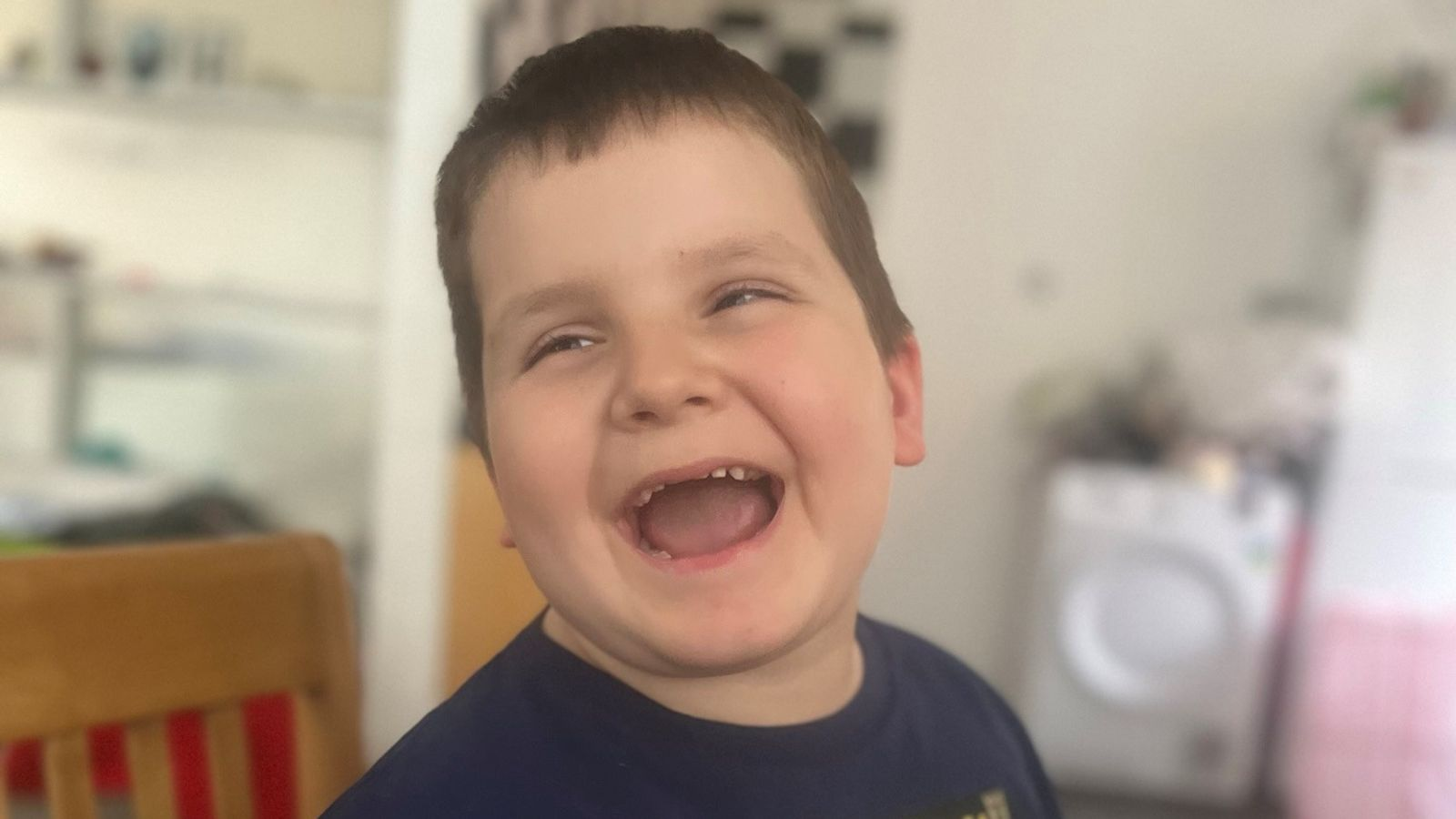
The tragic case of Karolina Zurawska and her six-year-old son, Alexander, has shaken the community of Swansea, Wales, and ignited a broader conversation about mental health, parental responsibilities, and the complexities of criminal justice when mental illness is involved.
What began as a tale of love, sacrifice, and resilience ended in unfathomable sorrow on a quiet August day in 2023. The events that unfolded on that day were not only heartbreaking but also a stark reminder of how deeply mental illness can penetrate even the most sacred of relationships — that between a mother and her child.
The devastating facts of this case came to light during court proceedings at Swansea Crown Court, where 42-year-old Karolina Zurawska was sentenced to an indefinite hospital order.
She had pleaded guilty to the manslaughter of her son Alexander by reason of diminished responsibility and to the attempted murder of her own father, Krzysztof Siwi, committed earlier the same day.
Her son, Alexander Zurawski, had been bravely battling the aftereffects of a brain tumour, requiring constant care and emotional support — care that Karolina Zurawska had provided with unwavering dedication until the very day she lost grip on reality.
A Mother’s Devotion and a Child’s Bravery
Before the tragedy, Karolina Zurawska was widely regarded as a devoted and loving mother. Described by friends and family as someone who had completely dedicated herself to her son’s well-being, Karolina was known to be Alexander’s primary caregiver.
The six-year-old, whose early life was marked by the trauma of a brain tumour, had undergone intensive treatment and was left partially sighted. He relied on a cane to walk and required constant supervision and assistance.
Despite these medical complications, Alexander was known as a bright, mature, and well-mannered child — a boy whose gentle nature and curiosity were evident in every interaction.
Alexander was described by his family as “very kind” and “clever beyond his years.” He had an impressive understanding of facts and could fluently speak both English and Polish. His ability to correct his parents’ English and his eagerness to help with chores like cooking and cleaning reflected his intelligence and emotional maturity.
Read : 23-Year-Old Alexander Valdez Murders His Own Mother As Part of Exorcism
Even in the face of adversity, Alexander’s positive spirit remained undimmed, serving as a testament to the nurturing environment his mother had created for him.
Read : Zambian Elephant Kills American Tourist During Safari Drive : Watch Video
Karolina Zurawska, despite facing immense pressure as a single parent, had never previously shown signs of harming her son. Her father, who survived the attempted murder, described her as “the best” mother — loving, protective, and utterly devoted. It is this loving image that makes the events of that fateful day so deeply incomprehensible and painful.
Psychosis, Delusions, and a Fatal Turn
The narrative shifted dramatically on a summer day in August 2023. On that day, Karolina Zurawska experienced what experts later identified as a full-blown psychotic episode. According to testimony and psychiatric evaluations, she was hearing voices and believed she was being instructed by demonic forces to commit horrific acts.
These hallucinations, deeply rooted in delusional thinking, robbed her of her grasp on reality and led her to commit acts entirely at odds with her character and history as a mother.
On the morning of the incident, Karolina Zurawska contacted her father, Krzysztof Siwi, who became concerned about her strange behavior. She was uncharacteristically quiet, sat on the hallway floor, and gave vague or incomplete responses. Despite these warning signs, nothing indicated the danger that was to come.
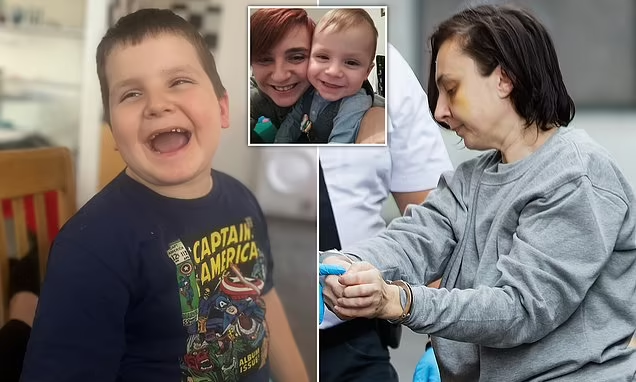
After briefly stepping into the garden for a cigarette, Karolina returned to the house and told her father that she needed to kill him. She then launched a knife attack, which her father managed to survive.
Krzysztof, shaken and bleeding, retreated to his car and contacted his other daughter in Poland. Fearing that involving the authorities would result in Alexander being taken from his mother, both daughters decided against reporting the attack. Tragically, neither believed that Karolina Zurawska posed any threat to Alexander.
But within a short time, Karolina Zurawska emerged from the house again, attempting a second and third attack on her father. Despite these alarming actions, she insisted Alexander remain with her. Her father left and called his daughter in Poland again, who convinced him to return and check on the situation.
But by the time he arrived, it was too late. Neighbors, alarmed by screams coming from the house, had called the police. Inside, officers found Alexander’s lifeless body next to his mother, who sat holding the saw she had used to end her son’s life.
Karolina was immediately taken into custody, and later, after psychological assessments, it became clear that she had not been in control of her actions. All three psychiatric experts who evaluated her agreed she had been in a state of psychosis so profound that she was incapable of understanding the nature or consequences of her actions.
Justice, Tragedy, and the Limits of Understanding
During sentencing, Judge Paul Thomas KC addressed the courtroom with deeply moving remarks, acknowledging the sheer horror and sorrow of the events. “The often-overused word ‘tragic’ does not begin to reflect the awfulness of what happened that day to Alex,” he said.
The judge expressed that Karolina’s relationship with her son had been a loving and tender one, and he made it clear that he did not believe she would ever have harmed her child had she not been suffering from severe mental illness.
He emphasized that the case was not one of a “wicked” or “evil” mother, but rather a catastrophic mental breakdown. Given the unanimous findings of the psychiatrists, the court issued an indefinite hospital order rather than a prison sentence.
This ruling reflects the UK’s legal principle that those who commit acts of violence while experiencing psychosis are not treated as criminals but as patients in need of treatment.
Yet, no verdict, however just, could restore what was lost. Alexander’s brief life — a life filled with love, courage, and resilience — was cut short in an act that defies explanation. His father and extended family, already burdened by years of medical struggles and caregiving, now face the unbearable grief of losing a child under such horrific circumstances.
The story leaves behind painful questions. Could anything have been done differently? Were there signs of Karolina’s mental decline that were overlooked? Did her devotion to Alexander prevent her from seeking help for herself? These are the questions that continue to haunt those close to the case and society at large.
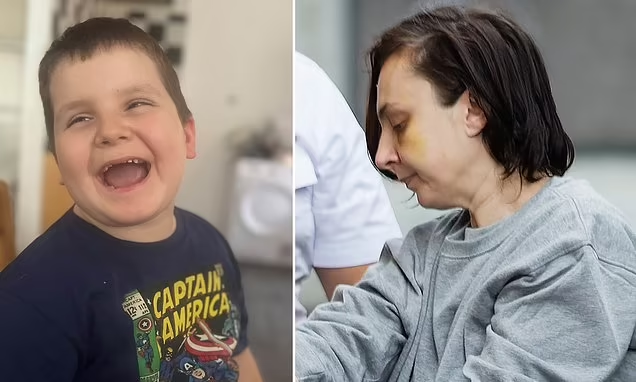
This tragic incident also underscores the need for better mental health support systems — especially for parents and caregivers facing extreme stress and isolation. Karolina Zurawska was a single mother carrying the weight of her son’s health challenges largely alone. In many similar cases, the combination of emotional strain, lack of resources, and untreated mental illness creates a dangerous and unpredictable environment.
Moreover, this case highlights the importance of taking early signs of psychosis seriously. Strange behavior, disorientation, or delusional speech should not be dismissed — especially when children are involved. Family members and friends, no matter how close, may not always see the full picture. It is a shared responsibility to ensure that mental health crises are addressed before they escalate into tragedies.
As the legal proceedings draw to a close, what remains is the memory of a child who had already overcome so much in his short life. Alexander Zurawski was, by every account, a remarkable little boy — loving, kind, and gifted beyond his years. His loss is a wound that will never fully heal for those who knew him.
And Karolina Zurawska— a mother who once represented unconditional love and sacrifice — will live with the knowledge of what happened on that day. Though the court has determined she bears diminished responsibility, the emotional burden she carries may be more severe than any legal penalty.
The case of Karolina Zurawska and Alexander is a heartbreaking testament to how mental illness can devastate lives when left untreated. It is also a reminder of the fragility of the human mind and the importance of compassion, vigilance, and support for those in distress.