
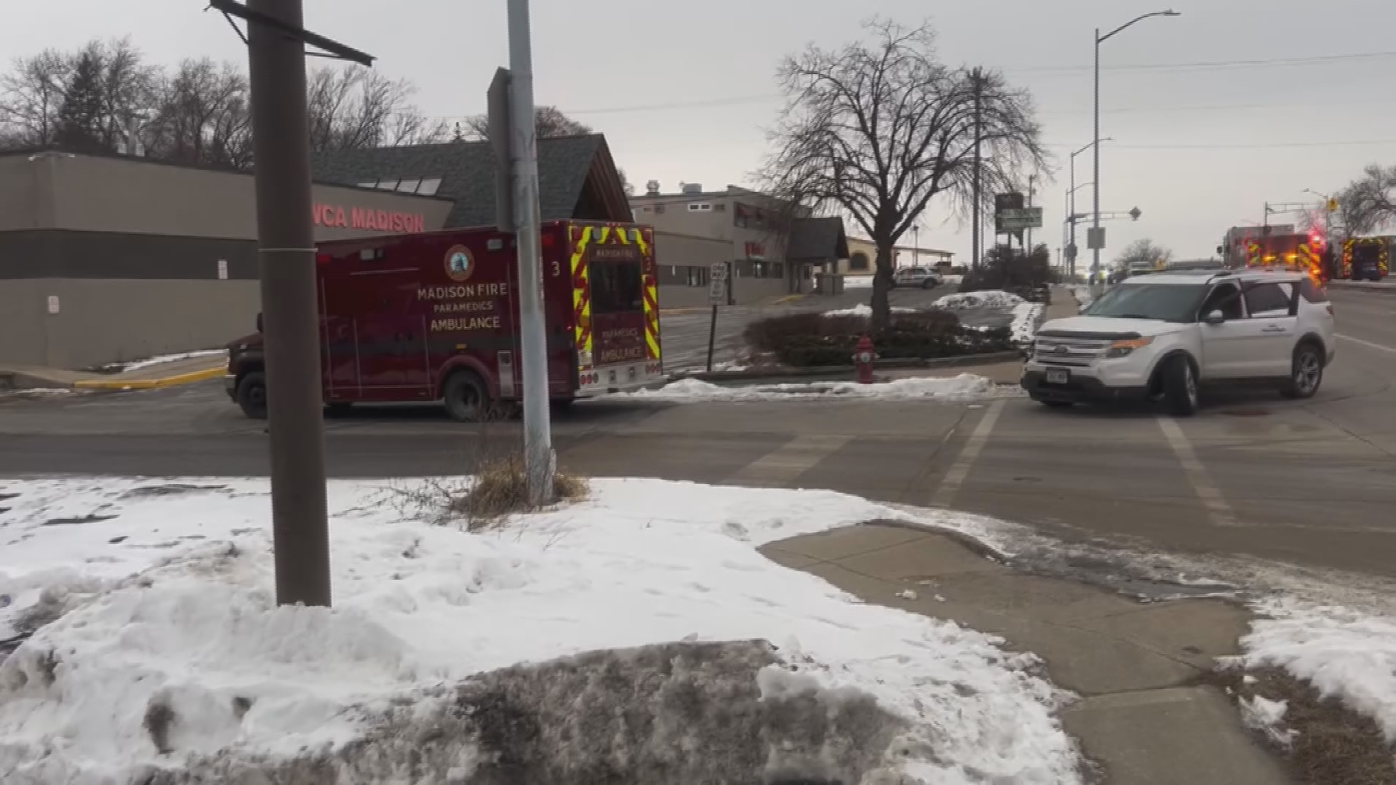
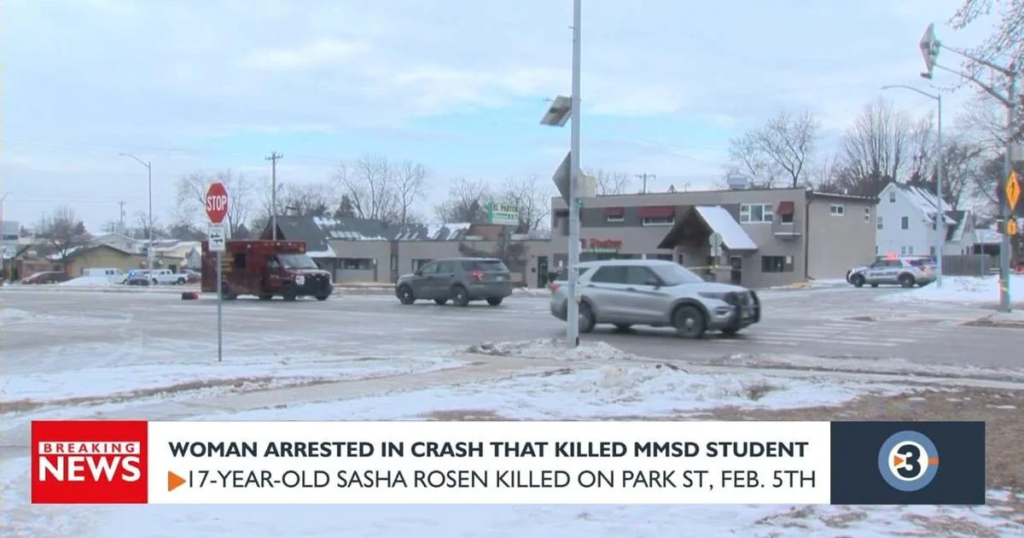
A fatal pedestrian crash in Madison, Wisconsin, has led to criminal charges against a 51-year-old driver following the death of a high school senior who was crossing the street on his way to school. Authorities say the incident occurred in early February and resulted in the death of 17-year-old Alexander “Sasha” Rosen, a student at Madison West High School.
Investigators examined video footage, reviewed witness accounts, and analyzed the circumstances surrounding the collision before filing a charge of homicide by negligent operation of a vehicle against Kathleen Borgwardt. The case has drawn significant attention within the community, both for the tragic loss of a young life and for the legal and safety questions raised by the circumstances of the crash. As the investigation continues and court proceedings move forward, the case reflects the serious consequences associated with roadway safety, driver responsibility, and pedestrian protection.
The Crash and Investigation
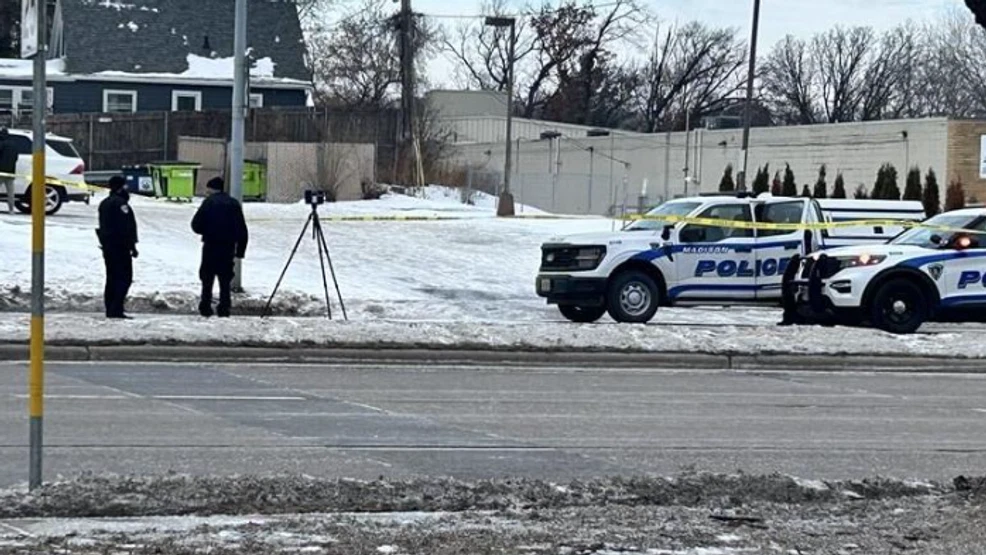
The crash occurred on the morning of February 5 on South Park Street, a busy roadway in Madison. Emergency responders were alerted after multiple individuals called 911 to report that a pedestrian had been struck by a vehicle. First responders arrived quickly and transported the injured teenager to receive urgent medical treatment. Despite these efforts, the injuries he sustained proved fatal.
Authorities later confirmed that the victim was Alexander “Sasha” Rosen, a 12th-grade student at Madison West High School. According to school district officials, he was on his way to school at the time of the collision. The timing and location of the crash — during the morning commute near an active pedestrian crossing — added to the seriousness of the incident and prompted a thorough investigation by the Madison Police Department.
Investigators gathered evidence from multiple sources to reconstruct what happened. Surveillance video from nearby businesses provided visual documentation of the roadway conditions and vehicle movement around the time of the collision. Police also collected statements from witnesses who observed the crash or were present nearby. Based on these sources, authorities determined that speed was a primary contributing factor.
Police reported that pedestrian warning lights at the crossing were activated and functioning when Rosen entered the crosswalk. This detail has been central to the investigation, as such signals are designed to alert drivers to pedestrian activity and reduce the risk of collisions. The presence of active warning lights suggests that visibility of the crossing and pedestrian right-of-way protections were in place at the time.
Read : Pilot Ron Timmermans and Wife Barbara Killed in Plane Crash While Dog Miraculously Survived
Officials also examined whether other common factors in serious crashes played a role. According to investigators, there was no immediate indication that cell phone use or driver impairment contributed to the incident. However, authorities are still awaiting results from a legally obtained blood draw, which could provide additional information relevant to the investigation.
Read : Over 34,000 Pieces of Debris Larger Than 10 Centimeters Are Orbiting the Earth
The combination of physical evidence, video footage, and witness testimony led police to conclude that negligent vehicle operation, specifically related to speed, was central to the crash. Following the review process, authorities moved forward with an arrest.
Legal Charges and Judicial Implications
Kathleen Borgwardt was arrested and booked into the Dane County Jail on a charge of homicide by negligent operation of a vehicle. This charge reflects the legal determination that a person’s driving behavior, while not necessarily intentional, was sufficiently negligent to result in another person’s death. Under Wisconsin law, such charges carry serious penalties if a conviction is obtained.
Prosecutors may pursue a sentence that includes imprisonment, financial penalties, or both. The maximum potential penalty includes up to 10 years in prison and a fine of up to $25,000. The severity of possible sentencing reflects the seriousness with which the legal system treats fatal incidents involving negligent driving.
In cases of this nature, legal proceedings often involve careful examination of evidence related to driver behavior, roadway conditions, and adherence to traffic safety laws. Prosecutors must demonstrate that the defendant’s actions constituted criminal negligence and directly caused the fatality. Defense arguments may focus on disputing the degree of negligence, questioning interpretations of evidence, or presenting alternative explanations regarding how the collision occurred.
Investigations involving fatal traffic incidents frequently rely on technical analysis. Video footage may be used to estimate vehicle speed, determine braking patterns, and assess driver reaction time. Witness accounts can provide context about traffic flow, visibility, and environmental conditions. Physical evidence from the crash scene — including vehicle damage, roadway markings, and pedestrian positioning — also plays a role in reconstructing events.
The pending results of the legal blood draw may become part of the evidentiary record, depending on their findings. Although authorities have indicated that impairment does not currently appear to be a factor, official test results can either confirm or complicate that assessment. Such information may influence legal arguments presented by both prosecution and defense.
Court proceedings in cases involving fatalities can be lengthy, as attorneys and investigators work to establish precise timelines and determine the extent of responsibility. The outcome ultimately depends on judicial review of the evidence and legal arguments presented during the trial process.
Community Impact and Road Safety Context
The death of a high school senior while crossing the street on the way to school has had a significant emotional impact on the Madison community. Fatal pedestrian crashes involving young individuals often draw heightened public attention because they raise concerns about safety in everyday environments such as school routes and neighborhood crossings.
School communities are particularly affected by sudden losses involving students. Administrators, classmates, teachers, and families must confront the emotional consequences while also addressing broader concerns about safety in areas where students walk or commute. When incidents occur in designated crosswalks with functioning warning systems, questions often arise about the effectiveness of existing safety measures and whether additional protections are needed.
Read : Samuel Salomon Carrizoza Charged After Girlfriend Celina Costa Dies in I-19 Crash
Pedestrian safety has become an increasing area of focus in many urban and suburban regions. Traffic planners and public safety officials frequently evaluate roadway design, traffic signal timing, visibility, and speed control measures in areas with significant foot traffic. Crosswalk warning lights, speed limits, signage, and enforcement strategies are commonly used to reduce risk, but fatal incidents continue to occur nationwide.
Speed is widely recognized as one of the most critical factors influencing both the likelihood and severity of pedestrian crashes. Higher vehicle speeds reduce driver reaction time and increase stopping distance. They also significantly increase the probability that a collision will result in severe or fatal injuries. For this reason, speed management is a central element of traffic safety policy, particularly in areas where pedestrians regularly cross busy roads.
The Madison crash underscores the vulnerability of pedestrians even when designated safety features are in place. The presence of functioning warning lights indicates that infrastructure alone cannot eliminate risk if drivers fail to respond appropriately to signals and roadway conditions. This reality often leads communities to consider broader approaches that combine engineering, enforcement, and public awareness.
Fatal incidents also highlight the importance of driver attentiveness and adherence to traffic laws. While investigations may focus on specific actions in individual cases, public response frequently extends to broader reflection on driving behavior, urban planning, and transportation policy. Communities may revisit safety campaigns, review traffic patterns near schools, or consider additional monitoring and enforcement strategies.
For families, classmates, and community members, the consequences of such crashes extend far beyond legal proceedings. The loss of a young life represents an enduring absence that shapes personal and collective experiences. In many cases, communities respond with memorials, gatherings, or advocacy efforts aimed at preventing future tragedies.
As the legal case moves forward, the broader discussion about roadway safety continues. Investigators, legal professionals, educators, and public officials each play distinct roles in addressing the aftermath of the crash and evaluating potential preventive measures. The circumstances surrounding the collision — including the presence of an active crosswalk signal and the determination that speed was a key factor — contribute to ongoing conversations about how to reduce risk for pedestrians and ensure that safety systems function effectively within real-world traffic conditions.
You actually make it seem so easy with your presentation but I find this matter to be actually something which I think I would never understand. It seems too complex and very broad for me. I am looking forward for your next post, I’ll try to get the hang of it!