
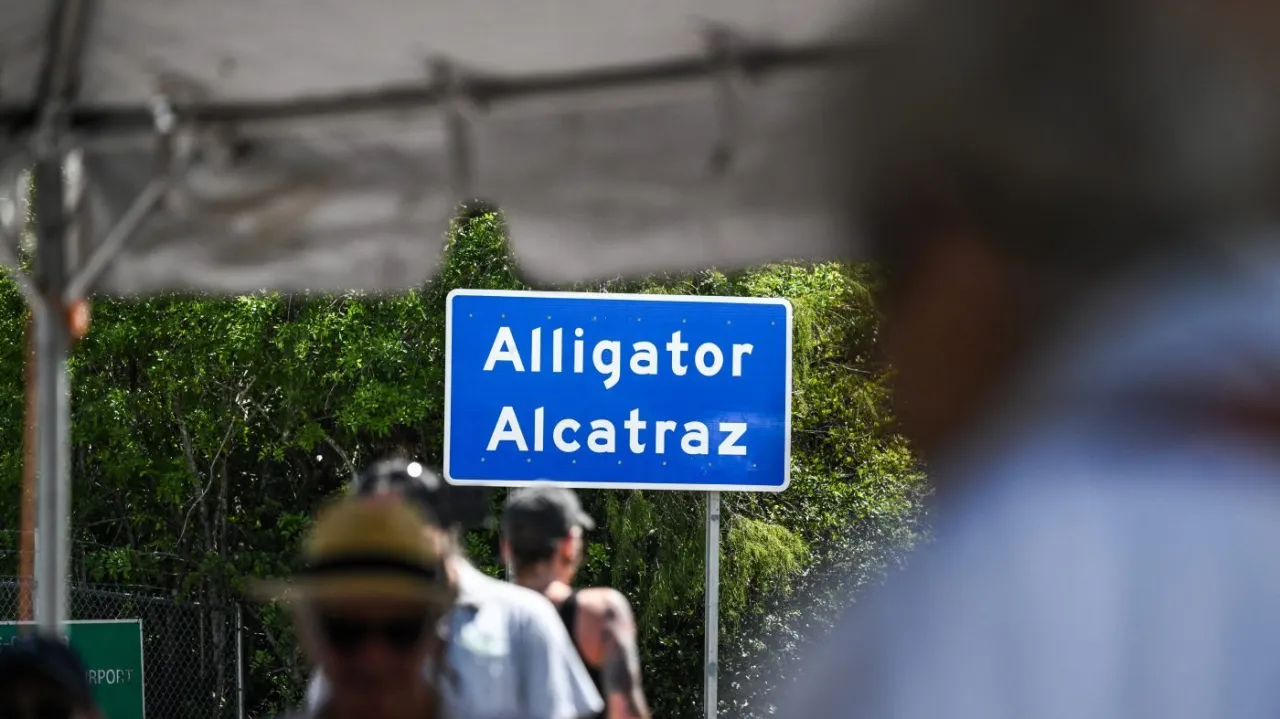
On August 22, 2025, U.S. District Judge Kathleen Williams issued a landmark ruling that has sent shockwaves through Florida’s political and environmental landscape. In an 82-page decision, she ordered the immediate cessation of new detainee transfers to the controversial Alligator Alcatraz immigration detention center, located in the heart of the Florida Everglades, and mandated that the facility begin dismantling operations within 60 days.
This ruling, rooted in environmental concerns, marks a significant victory for environmentalists and the Miccosukee Tribe, who argued that the facility’s construction violated federal environmental laws. The decision is a blow to the Trump administration and Florida Governor Ron DeSantis, who championed the facility as a model for immigration enforcement.
Background of Alligator Alcatraz and the Legal Battle
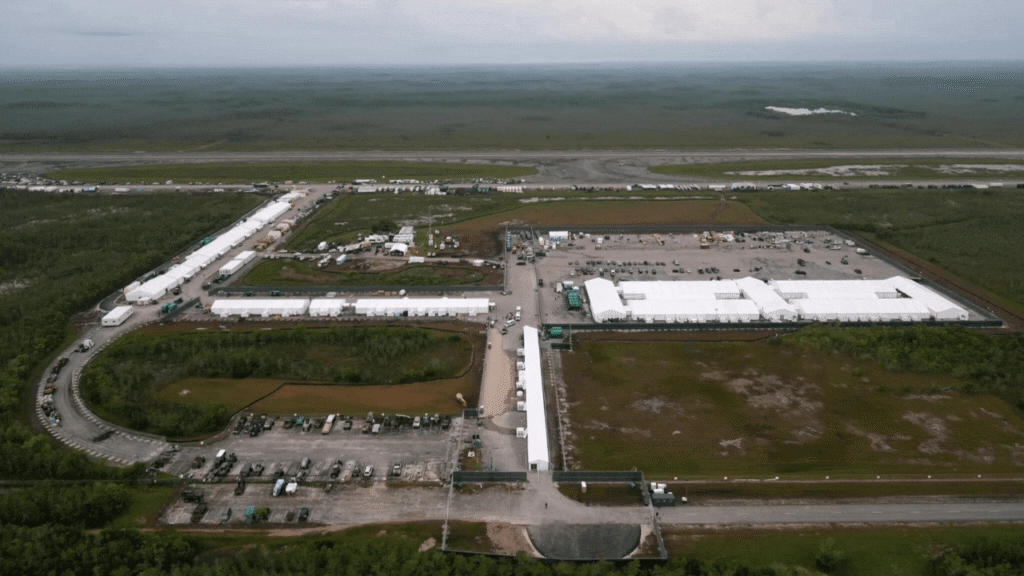
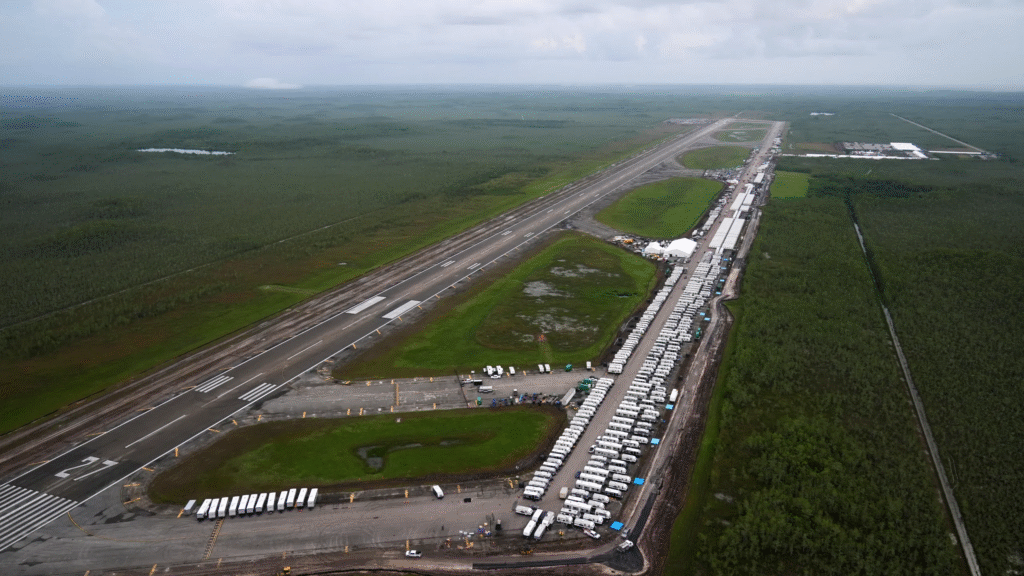
Alligator Alcatraz, a temporary immigration detention center, was constructed in late June 2025 at the Dade-Collier Training and Transition Airport, a largely abandoned airstrip situated within the Big Cypress National Preserve and near Everglades National Park. The facility, designed to hold up to 3,000 detainees with plans for expansion to 4,000, was built in just eight days, a speed that raised alarm among environmental groups and the Miccosukee Tribe.
Named for its remote location and intended as a deterrent to escape, the center was a joint effort between the state of Florida and federal authorities under agreements with U.S. Immigration and Customs Enforcement (ICE). It was touted by Governor DeSantis and former President Donald Trump, who visited the site on July 1, 2025, as a cornerstone of a broader immigration crackdown.
The legal challenge to Alligator Alcatraz was initiated by a coalition of plaintiffs, including Friends of the Everglades, the Center for Biological Diversity, and the Miccosukee Tribe of Indians of Florida. They filed a lawsuit in June 2025, alleging that the state and federal governments violated the National Environmental Policy Act (NEPA), which mandates a thorough environmental review for major federal projects.
The plaintiffs argued that no such review was conducted, nor were alternative locations considered or public input sought. The lawsuit highlighted the facility’s potential to cause “irreparable harm” to the Everglades’ delicate ecosystem, including its wetlands, endangered species, and the Miccosukee Tribe’s cultural and subsistence practices.
BREAKING – The Mayor of Miami-Dade County, Daniella Levine Cava, is now demanding that the order to shut down Alligator Alcatraz be enforced immediately.
— Right Angle News Network (@Rightanglenews) August 23, 2025
What’s your message to the Mayor? pic.twitter.com/vEh4M6Rapb
Judge Kathleen Williams, an appointee of former President Barack Obama, had already issued a temporary restraining order on August 7, 2025, halting further construction for 14 days while hearings proceeded. During these hearings, testimony revealed ongoing construction activities, including the addition of over 20 acres of asphalt paving, which exacerbated environmental concerns.
The state and federal governments argued that NEPA did not apply because the facility was state-run, despite holding federal detainees. However, Williams rejected this claim, noting that the facility operated under ICE standards and agreements, making it a federal project subject to NEPA. Her preliminary injunction on August 22 formalized the earlier halt and set a 60-day timeline for winding down operations, prohibiting new detainees and ordering the removal of infrastructure such as fencing, lighting, generators, and sewage systems.
Environmental and Cultural Impacts of Alligator Alcatraz
The Everglades, often described as an “irreplaceable primitive area” since President Harry Truman’s dedication of Everglades National Park in 1947, is a globally significant ecosystem. It is home to over 30 protected species, including the Florida panther, American crocodile, and Florida bonneted bat. The construction of Alligator Alcatraz, with its 800,000 square feet of new paving and plans for an additional million, has been criticized for disrupting this fragile environment.
Witnesses, including wetlands ecologist Christopher McVoy and geologist Dillon Reio, testified that the facility’s pavement increases runoff, spreading harmful chemicals and nutrients into surrounding wetlands. This runoff threatens to alter vegetation growth, cause fish kills, and disrupt the movement of wildlife and humans, particularly on Miccosukee tribal lands located just a quarter-mile from the facility.
The Miccosukee Tribe, a key plaintiff in the lawsuit, emphasized the cultural and environmental significance of the Everglades. Amy Castaneda, the tribe’s water resources director, testified that the facility’s nutrient runoff could flow into tribal lands, affecting traditional hunting, fishing, and plant-gathering practices enshrined in their constitution.
The tribe’s chairman, Talbert Cypress, underscored their unwavering commitment to protecting their homeland, stating, “We will always stand up for our culture, our sovereignty, and for the Everglades.” The facility’s industrial lighting, visible up to 30 miles away, was also cited as a threat to the Florida bonneted bat and the region’s dark sky designation, further disrupting the ecosystem.
Environmental groups echoed these concerns, noting that the facility’s rapid construction bypassed critical safeguards. Eve Samples, executive director of Friends of the Everglades, compared the victory to the defeat of a proposed jetport on the same site in 1969, which was abandoned due to environmental concerns.
The group’s testimony highlighted increased traffic, with two dead alligators observed on recent visits, and the potential for habitat loss to endanger species like the Florida panther. Judge Williams’ ruling acknowledged these risks, stating that the facility “creates irreparable harm in the form of habitat loss and increased mortality to endangered species in the area.” She emphasized that the state’s failure to consider alternative locations or conduct an environmental review was a clear violation of federal law.
Implications for the Everglades and Immigration Policy
The ruling is a significant setback for the Trump administration’s immigration agenda and Governor DeSantis’ efforts to position Florida as a leader in state-run immigration enforcement. Alligator Alcatraz, which housed up to 1,400 detainees at its peak, was intended as a model for similar facilities nationwide. President Trump’s visit and his suggestion that it could inspire future lockups underscored its political significance.
However, the court’s order to wind down operations within 60 days, coupled with the prohibition on new detainees, effectively halts these plans. Florida officials, including DeSantis’ administration, have already filed a notice of appeal to the Eleventh Circuit Court of Appeals, signaling a protracted legal battle. Kevin Guthrie, Florida’s emergency management director, has indicated that the state is prepared to challenge the ruling, while DeSantis has announced plans for a new detention center in North Florida.
For the Everglades, the decision is a “landmark victory,” as described by Eve Samples. It reinforces the importance of environmental laws like NEPA and sends a message that even high-profile political initiatives must comply with federal regulations.
The ruling aligns with decades of bipartisan support for Everglades conservation, as Williams noted, citing commitments from every Florida governor, senator, and numerous national leaders. By requiring the removal of infrastructure like generators and fencing, the court aims to mitigate ongoing harm to the ecosystem, though the case will continue to be litigated, and the state may seek to stay the ruling pending appeal.
The decision also has broader implications for immigration policy. Alligator Alcatraz faced criticism not only for its environmental impact but also for alleged inhumane conditions, including reports of worm-infested food, non-functional toilets, and limited access to legal representation. A separate lawsuit, partially dismissed by another federal judge, addressed these civil rights concerns, but the environmental ruling does not directly affect it.
However, the closure of Alligator Alcatraz may force the transfer of detainees to other facilities, such as the Krome North Processing Center or Broward Transitional Center, potentially straining existing infrastructure. Critics, including Miami-Dade Mayor Daniella Levine Cava and state Representative Anna Eskamani, have hailed the ruling as a step toward protecting both the environment and detainee welfare, with Eskamani calling the facility’s establishment a “political decision, not a policy one.”
In conclusion, Judge Kathleen Williams’ ruling to shut down Alligator Alcatraz within 60 days is a pivotal moment for the Everglades and a rebuke of the hasty construction of a politically charged detention center. By prioritizing environmental law and the rights of the Miccosukee Tribe, the decision underscores the enduring value of the Everglades as a national treasure.
While Florida’s appeal may prolong the legal saga, the ruling sets a precedent for holding state and federal authorities accountable for environmental stewardship. As the Everglades face ongoing threats from development and climate change, this victory offers hope for their preservation while raising questions about the future of immigration enforcement in environmentally sensitive areas.