
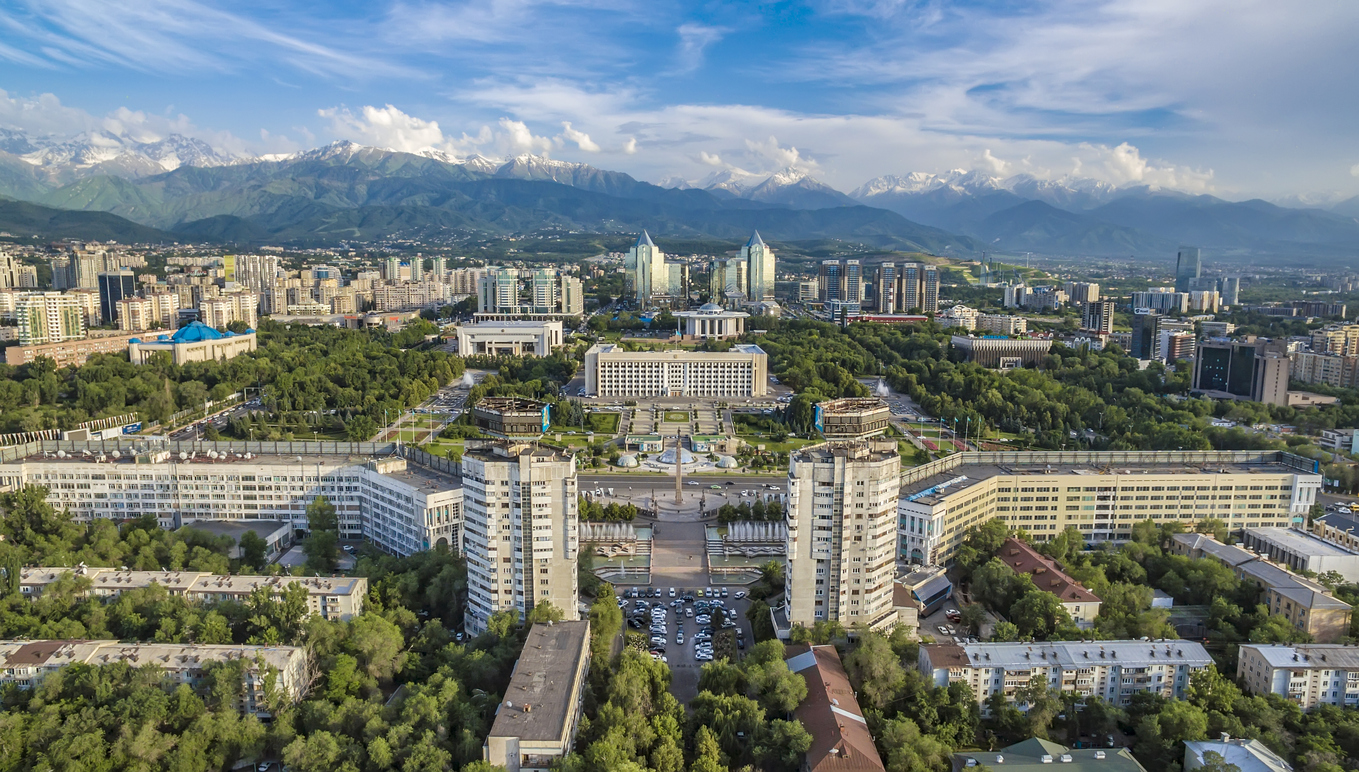
Kazakhstan, a land of vast steppes, majestic mountains, and rich cultural heritage, stands as the largest landlocked country in the world and the ninth largest by land area. Situated in Central Asia, it serves as a bridge between Europe and Asia, offering a unique blend of traditions, landscapes, and modernity.
Table of Contents
Geography
Kazakhstan’s geography is as diverse as its culture. It stretches from the Caspian Sea in the west to the Altai Mountains in the east, and from the Siberian plains in the north to the deserts of the south. The country is characterized by its expansive steppes, which cover a significant portion of its territory. The Tien Shan and Altai mountain ranges provide dramatic contrasts to the flat steppes, with their towering peaks and deep valleys.
States of Kazakhstan
Kazakhstan is divided into 14 regions (also called “oblasts”) and 3 cities of republican significance, which are also considered separate administrative units. The regions are:
| No. | Region Name |
|---|---|
| 1 | Akmolinsk Region |
| 2 | Aktobe Region |
| 3 | Almaty Region |
| 4 | Atyrau Region |
| 5 | East Kazakhstan Region |
| 6 | Karaganda Region |
| 7 | Kostanay Region |
| 8 | Kyzylorda Region |
| 9 | Mangystau Region |
| 10 | Pavlodar Region |
| 11 | North Kazakhstan Region |
| 12 | Turkestan Region |
| 13 | Zhambyl Region |
| 14 | Almaty City |
| 15 | Nur-Sultan City |
| 16 | Shymkent City |
| 17 | Baikonur City |
History and Culture
The history of Kazakhstan is a tapestry woven with the threads of various civilizations and empires. From the ancient Scythians and Sarmatians to the Mongol Empire and the Silk Road, Kazakhstan has been a crossroads of cultures and trade for centuries. The region was historically inhabited by nomadic tribes, whose lifestyle and traditions have left a lasting imprint on Kazakh culture.
The Kazakh Khanate emerged in the 15th century, uniting various tribes under a single political entity. This period saw the flourishing of Kazakh culture, including the development of unique music, dance, and craftsmanship. The Kazakh people are known for their hospitality and rich traditions, which include the famous art of horsemanship, eagle hunting, and intricate yurt construction.
Modern Kazakhstan
In 1991, Kazakhstan declared its independence from the Soviet Union, marking the beginning of a new era. The capital was moved from Almaty to Astana (now Nur-Sultan) in 1997, symbolizing the country’s aspirations for modernization and growth. Today, Kazakhstan is a rapidly developing nation with a growing economy, driven by its vast natural resources, including oil, gas, and minerals.
Nur-Sultan, with its futuristic skyline and ambitious architectural projects, represents the vision of a modern and prosperous Kazakhstan. The city is home to iconic structures such as the Bayterek Tower, the Khan Shatyr Entertainment Center, and the Palace of Peace and Reconciliation. Almaty, the former capital, remains the cultural and economic heart of the country, known for its vibrant arts scene, cafes, and stunning natural surroundings.
Natural Wonders
Kazakhstan is blessed with a wealth of natural wonders, making it a paradise for nature enthusiasts. The Charyn Canyon, often referred to as the “Grand Canyon of Central Asia,” is a breathtaking sight with its towering rock formations and deep gorges. The Kolsai Lakes, nestled in the Tien Shan mountains, offer serene beauty and opportunities for hiking, fishing, and camping.
The Altai Mountains, shared with Russia, China, and Mongolia, are a haven for trekkers and adventure seekers. These mountains are home to diverse flora and fauna, including the elusive snow leopard. In the west, the Caspian Sea coast offers a unique landscape of beaches, cliffs, and desert terrain, providing a stark contrast to the mountainous regions.
Cultural Heritage and Traditions
Kazakhstan’s cultural heritage is deeply rooted in its nomadic past. Traditional Kazakh music, played with instruments like the dombra and kobyz, tells stories of love, heroism, and the beauty of nature. The country celebrates numerous festivals, such as Nauryz, which marks the spring equinox and is a time for family gatherings, feasting, and traditional games.
Eagle hunting, a practice that dates back thousands of years, remains a significant cultural tradition. Kazakh eagle hunters, known as berkutchi, train golden eagles to hunt game, showcasing a deep bond between humans and nature. Yurt-making, the construction of portable, round tents used by nomads, is another enduring tradition, symbolizing the ingenuity and adaptability of the Kazakh people.
Top Ten Must-Visit Places in Kazakhstan
Kazakhstan, with its vast landscapes and rich cultural heritage, offers a myriad of attractions that cater to all kinds of travelers. From natural wonders to historical sites, here are the top ten must-visit places in this fascinating country:
1. Charyn Canyon – Almaty

Charyn Canyon, often referred to as the “Grand Canyon of Central Asia,” is located about 200 kilometers east of Almaty. This natural wonder features stunning rock formations and deep gorges, offering breathtaking views and excellent hiking opportunities.
2. Bayterek Tower – Nur-Sultan

The Bayterek Tower, a symbol of Nur-Sultan, offers panoramic views of the city from its observation deck. This futuristic structure represents a folktale about a mythical tree of life and a magic bird of happiness.
3. Mausoleum of Khoja Ahmed Yasawi – Turkestan

Located in Turkestan, the Mausoleum of Khoja Ahmed Yasawi is a UNESCO World Heritage Site. It is an impressive example of Timurid architecture and an important pilgrimage site, reflecting the spiritual heritage of Central Asia.
4. Altyn-Emel National Park – Almaty Region

Altyn-Emel National Park, located in the Almaty Region, is known for its diverse landscapes, including the Singing Dunes and the Aktau Mountains. The park is home to unique wildlife and offers excellent opportunities for hiking and wildlife watching.
5. Medeu Skating Rink – Almaty

Medeu Skating Rink, situated in the mountains near Almaty, is the highest ice skating rink in the world. It is a popular destination for winter sports enthusiasts and offers beautiful views of the surrounding peaks.
6. Kolsai Lakes – Almaty

The Kolsai Lakes, located in the Tien Shan Mountains, are a series of three stunning alpine lakes. Known for their clear blue waters and picturesque surroundings, they are perfect for hiking, fishing, and camping.
7. Shymbulak Ski Resort – Almaty

Shymbulak Ski Resort, nestled in the mountains near Almaty, is the largest ski resort in Central Asia. It offers excellent skiing and snowboarding conditions, modern facilities, and breathtaking views of the Tien Shan range.
8. Mausoleum of Jochi Khan – Karaganda Region

The Mausoleum of Jochi Khan, located in the Karaganda Region, is a historic site believed to be the burial place of Genghis Khan’s eldest son. It is an important cultural and archaeological site, offering insights into the Mongol Empire’s history.
9. Kaindy Lake – Almaty Region

Kaindy Lake, located in the Almaty Region, is famous for its submerged forest. The lake was formed by an earthquake, and its crystal-clear waters reveal the sunken trees, creating an otherworldly and enchanting landscape.
10. Baikonur Cosmodrome – Baikonur

The Baikonur Cosmodrome, located in the town of Baikonur, is the world’s first and largest space launch facility. It has been the launch site for numerous historic space missions and offers guided tours for space enthusiasts.
Kazakhstan’s diverse attractions, from natural wonders to cultural and historical landmarks, make it a fascinating destination for travelers seeking adventure and discovery.
Cuisine
Kazakh cuisine reflects the nomadic heritage of the region, with a focus on meat, dairy, and grains. Beshbarmak, the national dish, consists of boiled meat (usually lamb or beef) served with wide noodles and onion sauce. It is traditionally eaten with the hands, symbolizing the communal aspect of Kazakh meals.
Kumis, a fermented mare’s milk, is a popular traditional beverage believed to have numerous health benefits. Other staple foods include baursaks (fried dough), shashlik (grilled meat skewers), and laghman (noodle soup). Kazakh cuisine is hearty and flavorful, offering a unique taste of the country’s cultural heritage.
Economy and Development
Kazakhstan’s economy is one of the largest in Central Asia, driven by its abundant natural resources. The country is a major producer of oil, natural gas, and minerals, attracting significant foreign investment. The energy sector plays a crucial role in the economy, with vast reserves located in the Tengiz and Kashagan fields.
Agriculture also remains an important sector, with wheat, barley, and livestock being the primary products. Kazakhstan is one of the world’s leading grain exporters, and its fertile steppes provide ideal conditions for farming. In recent years, the government has focused on diversifying the economy, promoting industries such as manufacturing, technology, and tourism.
Education and Science
Kazakhstan places a strong emphasis on education and scientific research. The country has a well-developed educational system, with numerous universities and research institutions. The Nazarbayev University in Nur-Sultan is a leading center for higher education and research, attracting students and scholars from around the world.
Kazakhstan is also actively involved in space exploration, with the Baikonur Cosmodrome being one of the oldest and largest space launch facilities globally. The country has ambitious plans to develop its space industry further, contributing to scientific advancements and international collaboration.
Top Eight Most Famous Food Of Kazakhstan


Tourism and Attractions
Kazakhstan’s tourism industry is growing, offering visitors a wide range of attractions and experiences. The ancient city of Turkestan, with its stunning mausoleums and historical sites, provides a glimpse into the country’s rich history. The Altyn-Emel National Park, known for its Singing Dunes and unique wildlife, is a must-visit destination for nature lovers.
The city of Almaty, surrounded by the Zailiyskiy Alatau mountains, offers a blend of modernity and tradition. Visitors can explore the bustling Green Bazaar, visit the Central State Museum, or take a cable car ride to the Kok-Tobe Hill for panoramic views of the city. Shymkent, another major city, is known for its vibrant bazaars, historic landmarks, and proximity to the UNESCO-listed Mausoleum of Khoja Ahmed Yasawi.
Challenges and Future Prospects
Despite its rapid development, Kazakhstan faces several challenges. Economic diversification remains a priority to reduce dependency on natural resources and ensure sustainable growth. The government is also addressing issues related to environmental conservation, water management, and social inequality.
Kazakhstan’s strategic location and rich cultural heritage offer immense potential for tourism, trade, and international cooperation. The country’s vision for the future includes becoming a hub for innovation, education, and sustainable development, while preserving its unique cultural identity and natural beauty.
Conclusion
Kazakhstan is a land of contrasts and diversity, where ancient traditions blend seamlessly with modern aspirations. Its vast steppes, majestic mountains, and rich cultural heritage make it a fascinating destination for travelers and a dynamic player on the global stage. As Kazakhstan continues to evolve and grow, it remains a testament to the resilience and spirit of its people, standing proudly at the heart of Eurasia.