
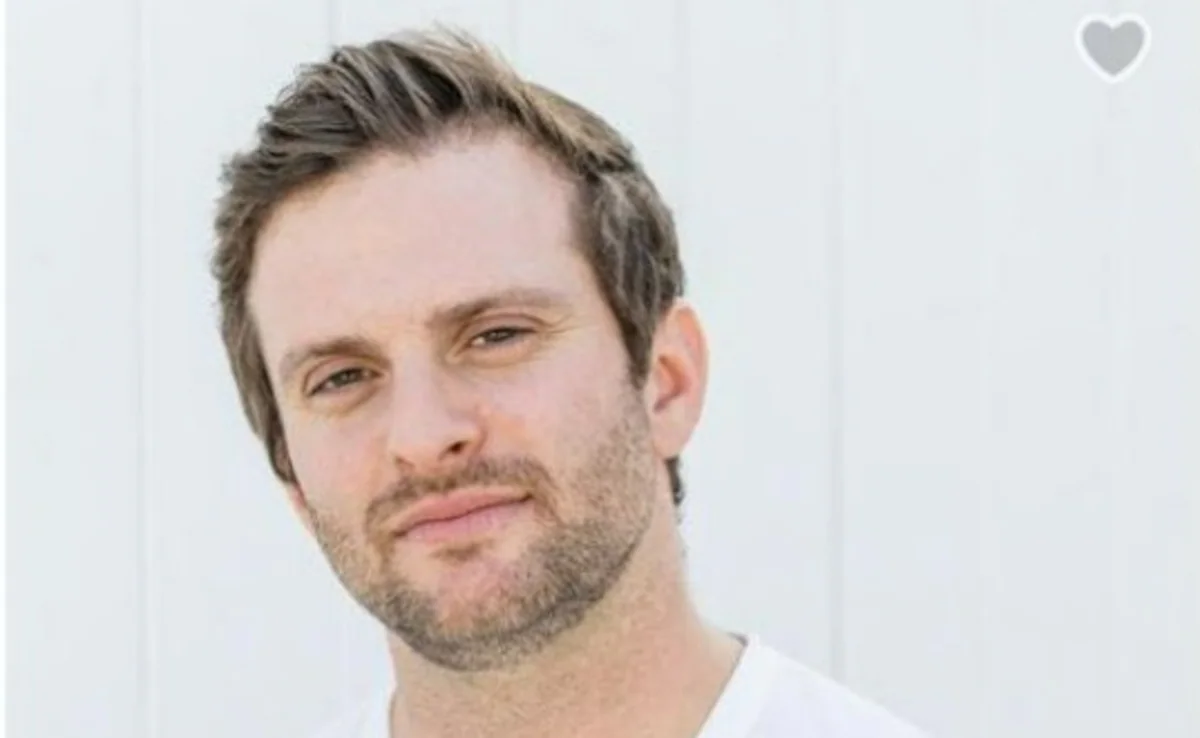
Keith Wasserman, a millionaire CEO and co-founder of Gelt Venture Partners, found himself at the center of controversy for his “tone-deaf” plea to hire private firefighters to protect his mansion during the recent Pacific Palisades wildfire in Los Angeles.
Wildfires are a devastating natural phenomenon that has increasingly plagued regions like California, causing widespread destruction and threatening lives. Amidst such tragedies, the actions and words of influential individuals are often scrutinized, as they can either inspire solidarity or spark outrage.
The Controversial Post That Ignited Outrage
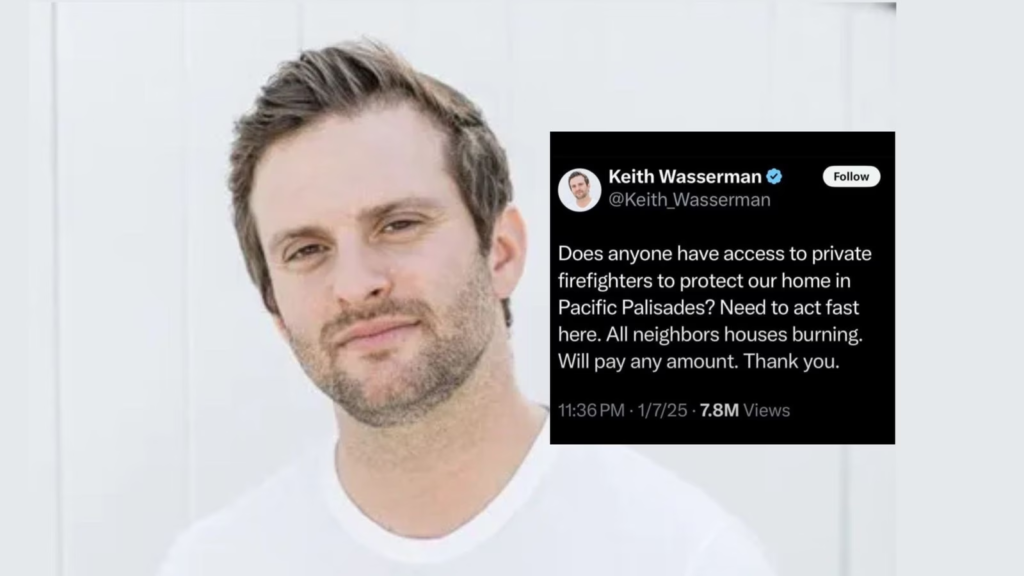
Keith Wasserman’s message, posted on the social media platform X (formerly Twitter), read:
“Does anyone have access to private firefighters to protect our home in Pacific Palisades? Need to act fast here. All neighbours houses burning. Will pay any amount. Thank you.”
The post quickly gained traction, amassing over a million views before Wasserman decided to delete it. His request, which highlighted his willingness to pay “any amount” to safeguard his mansion, sparked an immediate backlash.
Social media users criticized the insensitivity of his plea, especially at a time when emergency services were stretched thin, struggling to protect lives and homes across the region.
One user pointed out the disparity between Wasserman’s concerns and the broader crisis, stating, “Incredible Nerve. His family is evacuated and he’s trying to hire private firefighters to risk their lives to save a home he most certainly has insured. Incredibly tone deaf.”
Read : This Is What Biden Is Leaving for Me: Trump on California Wildfires
Another user questioned the moral implications of Wasserman’s actions: “If you find yourself tweeting for private firefighters to protect your property, you should probably question what you have become as a human being.”
Read : Mandatory Evacuations Underway as 900-Acre Wildfire Rages Near Yosemite National Park in California
The outrage underscored a growing frustration with the perceived self-interest of wealthy individuals during public crises. Critics accused Wasserman of prioritizing his property over the well-being of firefighters and other residents facing the same threats.
The Broader Context of the Pacific Palisades Wildfire
The wildfire ravaging Pacific Palisades was one of the most severe in recent years, with flames visible from space and hurricane-force winds exacerbating the crisis.
Over 100,000 residents were forced to evacuate as firefighters struggled to contain the blaze. Tragically, at least five people lost their lives in the disaster.
The fire destroyed homes, including those of celebrities and affluent individuals, and threatened iconic landmarks in Los Angeles. The scale of destruction brought the city to its knees, with resources stretched to their limits.
Los Angeles Mayor Karen Bass, who cut short her official trip to Ghana to address the emergency, described the wildfire as “the big one” during a press conference.
In such a dire situation, the idea of diverting resources, even private ones, to save a single mansion drew widespread criticism. Many viewed Wasserman’s plea as emblematic of a larger issue: the disconnect between the wealthy elite and the struggles of ordinary citizens during emergencies.
The Debate Over Privilege and Responsibility
Wasserman’s post reignited a long-standing debate about privilege and responsibility, particularly in the context of climate disasters. While it is not uncommon for affluent individuals to employ private firefighters to protect their properties during wildfires, the public nature of Wasserman’s request struck a nerve.
Critics argued that his actions exemplified the disparities in how different socioeconomic groups experience and respond to crises. For the wealthy, access to private resources such as firefighters, security teams, and evacuation plans can mitigate the risks and impacts of disasters.
In contrast, middle- and lower-income families often rely solely on public resources, which may be insufficient during large-scale emergencies.

One social media user encapsulated this frustration, commenting, “So you’re suggesting that potentially lifesaving resources (even if ‘private’) should be diverted to save your house because you’re rich while tens of thousands of people try to evacuate?”
This sentiment highlights the ethical dilemma of using private resources in situations where public safety is at stake. While hiring private firefighters is not illegal, many view it as a moral failure when public resources are overwhelmed, and countless lives are at risk.
Supporters of Wasserman, however, argued that he was merely trying to protect his property, a natural response during a crisis. They pointed out that private firefighting services exist precisely for such scenarios and that his willingness to pay “any amount” could have supported additional firefighting efforts.
Nonetheless, the public perception of privilege overshadowed these arguments, painting Wasserman as out of touch with the broader suffering caused by the wildfire.
Lessons and Reflections
The backlash against Keith Wasserman serves as a stark reminder of the responsibilities that come with wealth and influence. During crises, public figures and affluent individuals are often held to higher standards, as their actions can set a precedent or shape public discourse.
Wasserman’s experience underscores the importance of sensitivity and awareness when addressing personal needs in the context of a larger public emergency.
While his intent may have been to safeguard his home, the manner in which he expressed his concerns alienated many and sparked a broader conversation about privilege, equity, and social responsibility.
The incident also highlights the need for systemic solutions to address the growing threat of wildfires in California and beyond. As climate change continues to intensify natural disasters, reliance on private resources will only deepen existing inequalities.
Investing in robust public firefighting infrastructure, implementing preventive measures, and fostering community resilience are critical steps toward mitigating future crises.
Ultimately, the story of Keith Wasserman and the Pacific Palisades wildfire is a microcosm of larger societal challenges. It forces us to grapple with difficult questions about privilege, responsibility, and the role of wealth in addressing shared threats.
By learning from such incidents, society can work toward more equitable and effective responses to the challenges posed by climate change and other emergencies.