
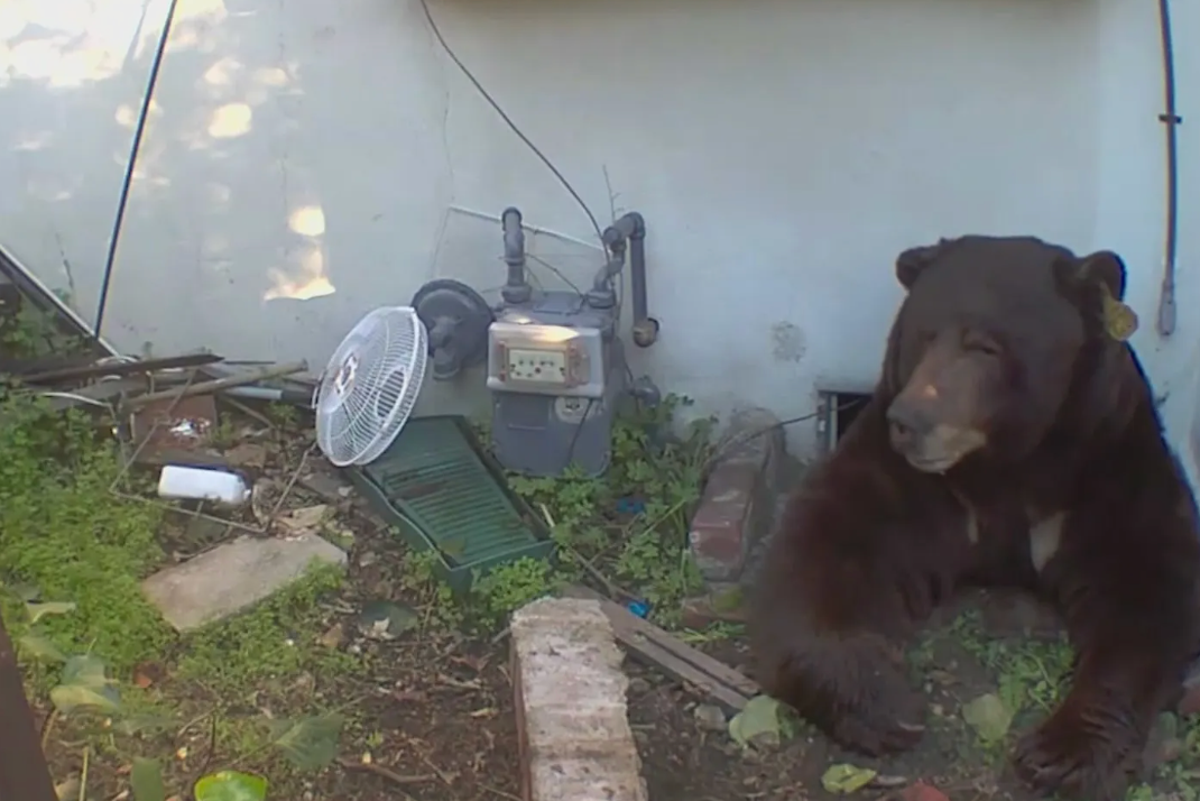
For more than a month, Ken Johnson’s home in Altadena, California, has been shared with an uninvited and unwelcome occupant: a 500-pound black bear living beneath his house. What began as an alarming wildlife encounter has escalated into a prolonged ordeal involving property damage, sleepless nights, and growing frustration with state authorities. Johnson now says the situation has reached a breaking point, prompting him to prepare a lawsuit against the California Department of Fish and Wildlife after the agency allegedly stopped assisting with efforts to remove the animal.
His case has drawn attention not only because of its unusual circumstances, but also because it highlights broader questions about public safety, government responsibility, and how human communities should respond when wildlife intrudes into residential spaces. The bear, identified as a tagged animal known to authorities, has been moving in and out of a crawl space beneath Johnson’s home since before Thanksgiving.
Despite early intervention by state wildlife officials, the bear remains, continuing to damage the property and disrupt daily life. Johnson says the emotional and financial toll has become overwhelming, leaving him feeling abandoned by the very agency tasked with managing wildlife conflicts. As he prepares to take legal action, his experience is being closely watched as a potential test of how far state responsibility extends when wildlife poses an ongoing threat to homeowners.
A Month-Long Standoff Between Homeowner and Bear
Ken Johnson’s ordeal began when he realized that a large black bear had taken up residence beneath his house, using the crawl space as a shelter. According to his account, the animal has been entering and exiting the space regularly, causing extensive damage underneath the structure. Surveillance cameras installed around the property have captured footage of the bear bulldozing through plastic barriers and other materials, leaving what Johnson describes as a “mess” below the home.
The presence of the bear has not been limited to hidden damage. Johnson says the animal has also rummaged through trash in the yard, leaving debris scattered outside. Inside the house, the sounds have been constant and unsettling. He reports hearing plastic shredding and movement beneath the floors at night, making it difficult to sleep and forcing him to remain on alert at all hours.
The situation escalated further on Christmas Eve, when Johnson’s cameras recorded a pipe being broken under the house. Out of concern for safety, he shut off his gas supply, leaving himself without hot water. Since then, he says he has been unable to take a hot shower, a daily reminder of the ongoing problem. The cumulative effect of these disruptions has been profound, turning what should be a place of refuge into a source of stress and anxiety.
Initially, the California Department of Fish and Wildlife intervened. Officials attempted to trap the bear, but the effort resulted in the capture of a different, smaller animal. After removing the wrong bear, wildlife experts tried alternative methods, including using air horns in an attempt to flush the larger bear out of the crawl space. Johnson believed these measures were finally making progress, offering hope that the ordeal might soon end.
Man to SUE to remove BEAR from house
— RT (@RT_com) December 29, 2025
Ken Johnson says a bear moved under his home before Thanksgiving and has not left
The California Department of Fish and Wildlife set up traps that caught the wrong bear
Now they will no longer help pic.twitter.com/4VWWmPo2xO
That optimism, however, was short-lived. Johnson says the agency abruptly told him to stand down, informing him that they would no longer assist with the removal. He was also reportedly instructed that he could not use bait to lure the bear out, leaving him with no practical options. From his perspective, the state’s withdrawal marked a turning point, transforming a difficult situation into one he felt completely unequipped to handle on his own.
State Wildlife Policy and the Decision to Step Back
The California Department of Fish and Wildlife has not publicly commented on Johnson’s case, but the decision to halt assistance has raised questions about how the agency applies its policies in situations involving dangerous wildlife and private property. According to legal analyst Alison Triessl, the department maintains a detailed policy framework, spanning 19 pages, that outlines how conflicts between humans and wildlife should be addressed. These policies emphasize taking all reasonable steps to remedy situations where animals pose a threat to safety or cause significant damage.
Triessl notes that nowhere in the policy does it suggest that the agency should simply withdraw and leave homeowners to cope alone. In her view, Johnson’s case appears to meet several criteria outlined in the policy, including documented property damage and a potential risk to personal safety. The bear’s size, familiarity with the area, and history of repeated intrusion could strengthen the argument that state intervention remains necessary.
Read : 89-Year-Old Mitsuo Kato Mauled to Death by Bear Caught in His Wild Boar Trap
Wildlife management agencies often face complex challenges, balancing conservation goals with public safety. Black bears are protected animals in California, and officials typically prefer non-lethal methods of management whenever possible. Relocation, deterrence, and habitat modification are often prioritized over euthanasia. However, critics argue that these approaches can fall short when an individual animal becomes habituated to human environments.

In Johnson’s case, the bear is tagged, indicating prior encounters with wildlife authorities. Johnson has pointed out that the animal has been dealt with before and was not euthanized, a decision he believes has contributed to the current situation. From his perspective, the bear’s return demonstrates a pattern that non-lethal measures have failed to break, leaving homeowners to bear the consequences.
The agency’s reported instruction that Johnson stop using bait has further complicated matters. While baiting can attract bears and potentially increase risks if done improperly, Johnson argues that prohibiting it without offering an alternative effectively leaves him powerless. The expectation, he says, that he should monitor his phone at night or sleep in the kitchen listening for the bear underscores how untenable the situation has become.
Legal Action, Emotional Toll, and Broader Implications
Johnson now plans to sue the California Department of Fish and Wildlife, alleging negligence and emotional distress. His claim centers on the argument that the agency had a duty to protect him from a known public safety threat and failed to do so by withdrawing assistance. Legal analysts suggest that if Johnson can demonstrate ongoing damage and a credible risk to his safety, he may have grounds to take the case to court.
Triessl has indicated that a successful lawsuit could result in a court order requiring the removal of the bear. Such an outcome would not only resolve Johnson’s immediate problem but could also set a precedent for how similar cases are handled in the future. A ruling in his favor might compel the agency to more consistently follow its own policies when dealing with persistent wildlife intrusions.

Beyond the legal arguments, Johnson has spoken candidly about the emotional exhaustion he has experienced. Living with the constant awareness of a large wild animal beneath his home has taken a toll on his mental well-being. He describes moments of distraction quickly overtaken by the realization that basic comforts, such as hot water, are unavailable and that the situation requires constant vigilance.
His frustration is perhaps best captured by a remark he has repeated more than once: “If I kept track of everything I tried, it would be Bear 14, Homeowner 0.” The comment reflects a sense of defeat and imbalance, with the scales tipped heavily in favor of an animal he feels the state should have managed more effectively.
The case also highlights a growing issue in parts of California, where expanding human development intersects with wildlife habitats. As bears and other animals venture into residential areas in search of food and shelter, conflicts are becoming more frequent. How authorities respond to these encounters can influence public trust in wildlife management institutions.
For Johnson, the issue is no longer abstract or theoretical. It is measured in sleepless nights, mounting repair costs, and the feeling of being left alone to confront a dangerous situation. As his lawsuit moves forward, it will likely draw attention from homeowners, conservationists, and policymakers alike, each with a stake in how responsibility is defined when wildlife and human lives collide.
Whether the courts ultimately side with Johnson remains to be seen. What is clear is that his experience has exposed tensions between wildlife protection and individual safety, raising difficult questions about where the burden should fall when those priorities clash.
Hi there just wanted to give you a quick heads up. The words in your content seem to be running off the screen in Internet explorer. I’m not sure if this is a format issue or something to do with web browser compatibility but I thought I’d post to let you know. The design look great though! Hope you get the problem resolved soon. Cheers
I haven’t checked in here for some time as I thought it was getting boring, but the last several posts are good quality so I guess I’ll add you back to my everyday bloglist. You deserve it my friend 🙂