
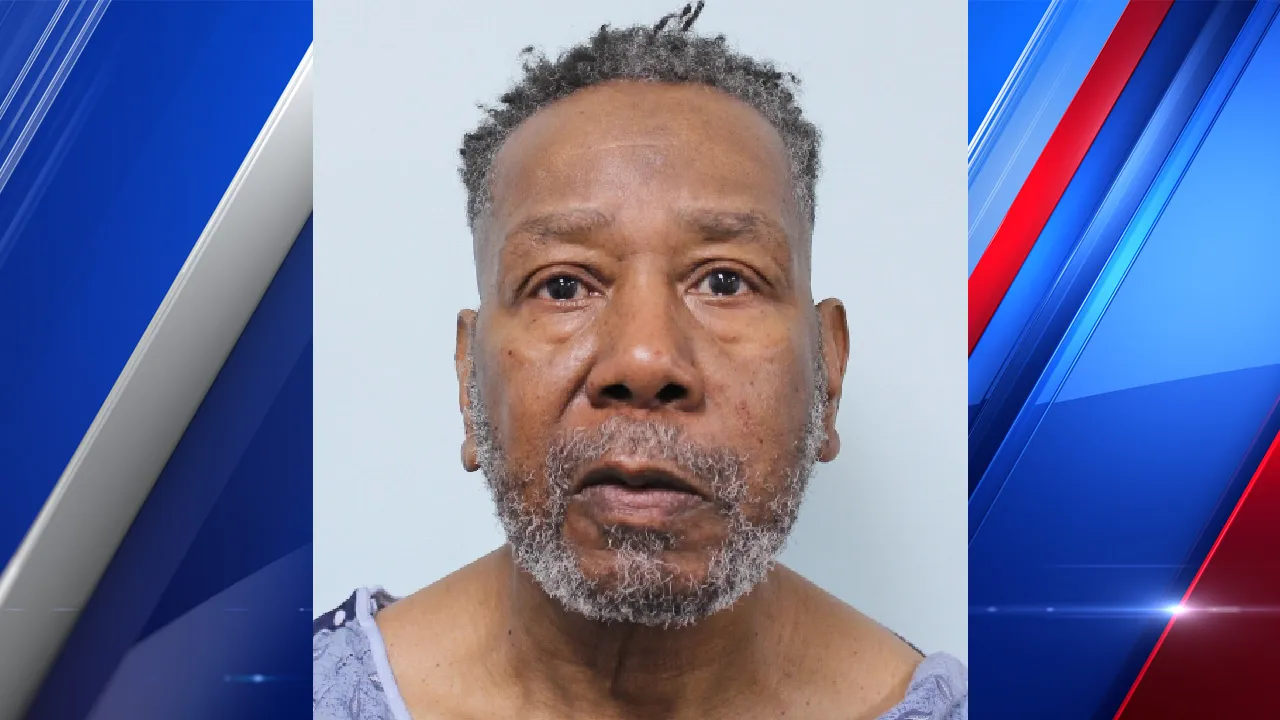
In a courtroom reckoning that spanned four decades of violence, 68-year-old Kenneth Robson of Springfield was sentenced Tuesday to 25 years to life in state prison for the second-degree murder of his wife, Quitiza Holmes. The sentencing, handed down in Hampden Superior Court, came after Robson pleaded guilty to the brutal 2024 hammer attack that left Holmes with fatal head injuries. This marks the second time Robson has been convicted of killing a spouse, reigniting debates over parole decisions and the long shadow of domestic violence in Massachusetts.
The case has drawn widespread attention not just for its savagery but for its chilling parallel to Robson’s past. In 1984, he was convicted of murdering his first wife, Joan Cusson, serving a 10-to-20-year sentence before his release in 1995. Hampden District Attorney Anthony D. Gulluni described the Holmes killing as “brutal and senseless,” emphasizing the collaborative effort of the Springfield Police Department and prosecutors to secure justice. As Robson faces the prospect of dying behind bars, the families of both victims grapple with unresolved grief and questions about systemic failures.
The Hammer Attack: Details of the 2024 Murder
The events of April 30, 2024, unfolded in the early morning hours at a residence on the 100 block of Federal Street in Springfield. At approximately 4:52 a.m., Kenneth Robson dialed 911, his voice steady as he confessed: “I hit my wife with a hammer and she might be dead.” Responding officers arrived to a horrific scene: Quitiza Holmes, 45, lay face down in a pool of her own blood, her body marked by catastrophic head trauma and defensive wounds on her arms and hands. A blood-stained hammer rested nearby, serving as stark evidence of the weapon used in the assault.
Holmes, a Springfield resident known to her community for her quiet resilience, was rushed to Baystate Medical Center. She clung to life for more than two weeks, enduring surgeries and intensive care before succumbing to her injuries on May 16, 2024. An autopsy confirmed the cause of death as blunt force trauma to the head, consistent with repeated blows from the hammer. Prosecutors later revealed that Holmes had suffered at least a dozen strikes, each one compounding the irreversible damage.
Kenneth Robson, arrested at the scene, initially faced charges of armed assault with intent to murder. Those were upgraded to second-degree murder following Holmes’ death. During police interviews, Robson attempted to deflect responsibility, claiming he had ingested a batch of drugs that “weren’t what he expected.” He alleged an adverse reaction fueled his rage, though investigators found no evidence of substance use at the time of the call. Toxicology reports from the scene corroborated the absence of intoxicants, undermining his defense.
The investigation moved swiftly. Springfield detectives processed the crime scene meticulously, collecting forensic evidence including DNA traces on the hammer and blood spatter patterns that aligned with Robson’s account. Witnesses in the low-income housing complex recalled hearing muffled cries and thuds around the time of the 911 call, though no one intervened until police arrived. By June 2024, Robson was formally indicted by a Hampden County grand jury on the murder charge.
Throughout the pretrial phase, Kenneth Robson’s legal team explored an insanity plea, citing his history of mental health issues documented during his earlier incarceration. However, after consultations with forensic psychologists, they pivoted to a guilty plea on September 22, 2025, avoiding a full trial. This decision spared Holmes’ family the ordeal of reliving the violence in open court but left some observers questioning whether a trial might have exposed deeper flaws in Robson’s post-release supervision.
Read : Yemen’s Houthis Fire Palestine named Ballistic Missile Towards Israel’s Eilat
District Attorney Gulluni praised the guilty plea as a step toward accountability, noting in a post-sentencing statement that it ensured Robson “will never again have the opportunity to harm another loved one.” The maximum sentence of life without parole reflects Massachusetts’ stringent penalties for second-degree murder, particularly in cases involving domestic partners. Robson’s age—nearing 69—means he is unlikely to see freedom again, a point prosecutors highlighted during the hearing.
Shadows of 1984: Robson’s First Conviction and Parole
Kenneth Robson’s criminal history traces back to 1984, when he was convicted of murdering his then-wife, Joan Cusson, in a case that shocked Springfield’s close-knit neighborhoods. Cusson, a 32-year-old mother and office worker, was found stabbed multiple times in the couple’s apartment on Boston Road. The attack, carried out in a fit of jealousy-fueled rage, left her with 17 stab wounds to her torso and neck. Robson, then 27, claimed the killing stemmed from a domestic dispute over infidelity allegations, but prosecutors painted a picture of premeditated brutality.
The trial, held in Hampden Superior Court, lasted just three weeks. Key evidence included a bloody kitchen knife traced to the home and Robson’s own admissions to friends hours before the murder, where he expressed violent intentions. A jury deliberated for less than two hours before returning a guilty verdict on second-degree murder charges. Judge John J. McDonald Jr. imposed a sentence of 10 to 20 years, citing Robson’s lack of prior record but emphasizing the “cowardly and vicious” nature of the crime.
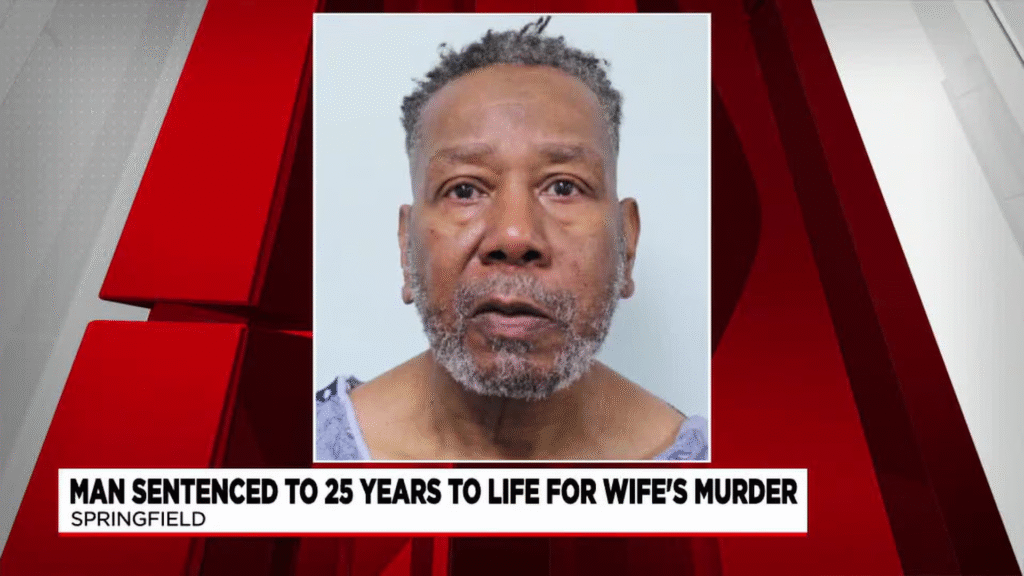
Kenneth Robson entered the Massachusetts Department of Corrections that fall, serving his minimum term at the North Central Correctional Institution in Gardner. Prison records, later unsealed for the Holmes case, show he participated in anger management programs and earned a GED, factors that influenced his parole board review. Despite opposition from Cusson’s family—who submitted letters warning of his “uncontrollable temper”—the Massachusetts Parole Board granted release on May 15, 1995, after 11 years served. Conditions included mandatory counseling and a restraining order barring contact with Cusson’s relatives.
Post-release, Robson rebuilt a semblance of normalcy. He worked odd jobs in construction and retail, eventually meeting Quitiza Holmes in 2018 through mutual friends at a local church group. The couple married in 2020, settling into the Federal Street apartment. Neighbors described Robson as “quiet but intense,” with occasional reports of heated arguments audible through thin walls. Holmes’ friends later told investigators she had confided concerns about his jealousy, echoing patterns from his past relationship. Yet, no formal complaints were filed, and Robson’s parole officer noted compliance with check-ins until the 2024 incident.
The parole decision has come under intense scrutiny in the wake of the Holmes murder. Victim advocates argue that Massachusetts’ parole system, which releases about 60% of eligible inmates, failed to account for Robson’s high-risk profile. A 2023 state audit highlighted gaps in post-release monitoring for violent offenders, recommending enhanced risk assessments—a reform too late for Holmes. Cusson’s brother, speaking anonymously to local media, called the 1995 release “a death sentence for someone else,” underscoring the intergenerational trauma inflicted by Robson’s actions.
Justice Delayed, Pain Enduring: Family Reactions and Broader Implications
Tuesday’s sentencing provided a measure of closure, but for the families involved, the wounds remain raw. Members of Joan Cusson’s family, including her niece and nephew, attended every proceeding in the Holmes case—a silent vigil spanning 18 months. In a rare public statement read in court, Cusson’s sister described the dual losses as “a nightmare that never ends.” She recounted the 1984 murder’s devastation: holidays shattered, children growing up without a mother, and a lingering fear that justice was incomplete. Their presence, prosecutors said, was a testament to resilience and a demand for permanence in Robson’s punishment.
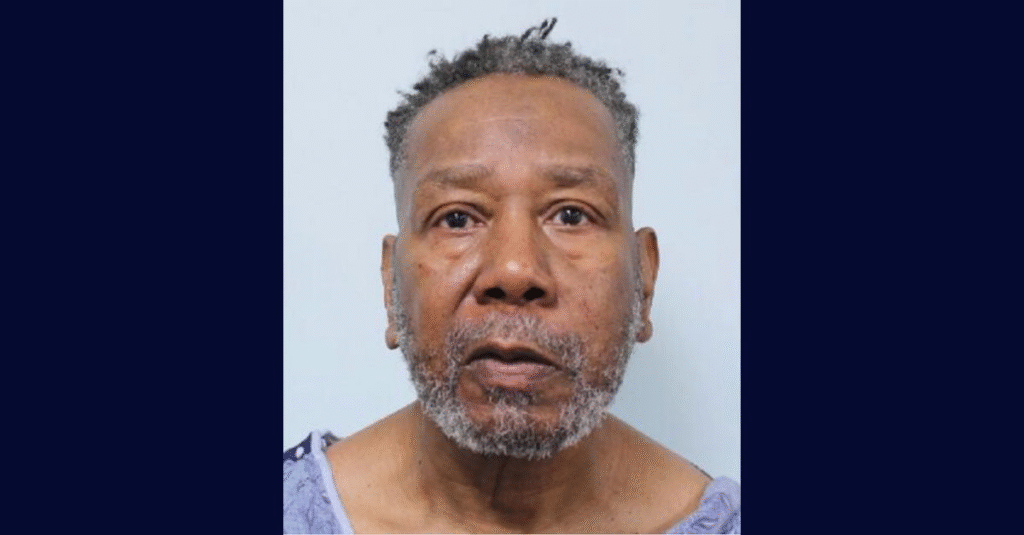
Holmes’ loved ones, meanwhile, mourned a woman they remembered as fiercely independent. A 45-year-old native of Puerto Rico, Holmes had overcome personal hardships to build a life in Springfield, working as a home health aide and volunteering at community centers. Her obituary highlighted her love for salsa dancing and family barbecues, traits that endeared her to colleagues. At the sentencing, Holmes’ daughter, aged 22, addressed Robson directly: “You took my mother from me, just like you took someone else’s years ago. No apology can fix that.” Robson, shackled and expressionless, offered no response, his head bowed as the judge’s gavel fell.
District Attorney Gulluni used the occasion to renew calls for stronger domestic violence protocols. In Massachusetts, where intimate partner homicides account for nearly 15% of all murders, the Robson case exposes vulnerabilities in tracking repeat offenders. Gulluni commended the Springfield Police for their rapid response and thanked Assistant District Attorney Michael Goggins, who led the prosecution. “This sentence honors Quitiza Holmes and Joan Cusson,” he said. “It sends a clear message: violence against women will not be tolerated, no matter how many chances are given.”
As Kenneth Robson is transferred to a state facility—likely MCI-Norfolk, given his age—the case prompts reflection on prevention. Advocacy groups like Jane Doe Inc. have cited it in pushes for expanded batterer intervention programs and better data-sharing between parole boards and local law enforcement. For now, two families find solace in finality, even as they navigate the void left by Robson’s rage. In Springfield, a city scarred by too many such tragedies, the hope is that this sentencing marks not just an end, but a turning point.