

On a seemingly calm Wednesday night in Chicago’s Lincoln Park neighborhood, the unthinkable occurred. A 28-year-old man, Kevin Patel, was gunned down, sparking shock and fear across the local community.
The incident, which took place in the 800-block of West Lill Avenue, has left residents grappling with the harsh reality of violence in an area traditionally known for its tranquility.
This tragic event not only resulted in the loss of a young life but also raised serious questions about the safety of the community and the escalating violence that is affecting cities across the United States.
The Shooting Incident
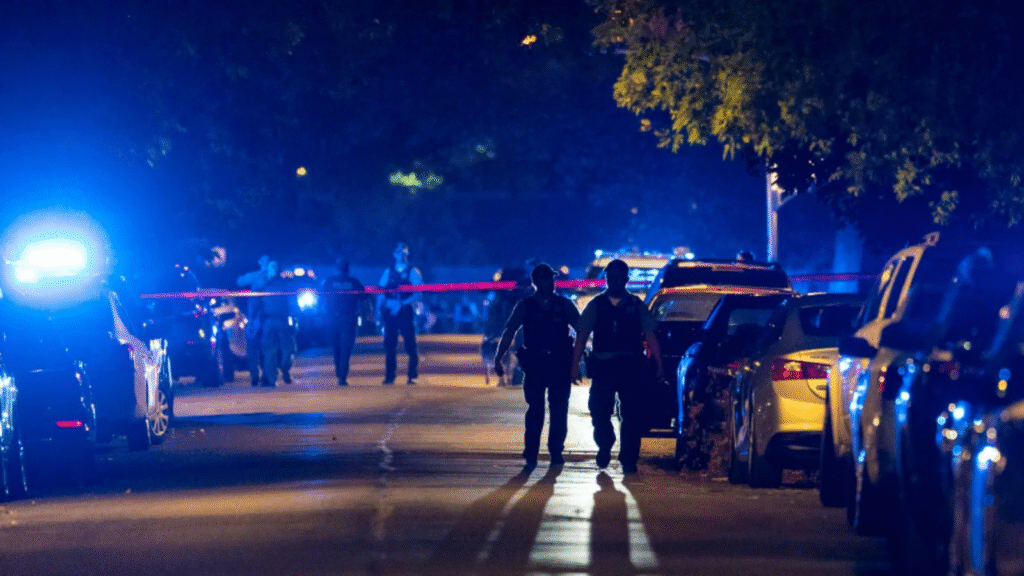
The incident unfolded late on a Wednesday evening when local authorities received reports of a shooting. Upon their arrival, they found a 28-year-old man, later identified as Kevin Patel, lying on the sidewalk with a gunshot wound to his chest.
Emergency responders rushed to Patel’s aid, attempting to stabilize him before transporting him to the Illinois Masonic Medical Center. Despite their efforts, Patel was declared dead upon arrival.
The shooting occurred at around 9:20 PM in the heart of Lincoln Park, a neighborhood typically regarded as one of Chicago’s more peaceful and upscale areas. Patel’s death marks yet another grim chapter in the ongoing wave of gun violence sweeping through urban neighborhoods in the United States.
Patel’s tragic end has sent shockwaves throughout the community, as residents who once felt safe in the area are now grappling with a sense of vulnerability.
Read : “You Cannot Become a CEO in America If You Are Not Indian”: US Envoy Eric Garcetti
The police have not yet made any arrests, though they are actively investigating the case. Witnesses have reported seeing a man and a woman fleeing the scene, adding to the mystery surrounding the circumstances of Patel’s death.
The Attempted Rescue: A Neighbor’s Heroic Actions
In the aftermath of the shooting, bystanders rushed to Patel’s aid, doing what they could to help him during his final moments. Garrett Moores, a local resident, was one of the first to respond.
Moores and his neighbor acted quickly when they noticed Patel lying injured on the sidewalk. Without hesitation, Moores grabbed towels to help control the bleeding and called 911 for assistance.
Moores, who had never before had to respond to a shooting incident, spoke emotionally about his experience. He described how he was guided through the process of helping Patel, including applying pressure to the wound and trying to keep him conscious.
“Trying to give them all the hope you can, trying to calm them down… You almost build a personal relationship with a person in a way, and it was pretty devastating to see that news,” Moores said, reflecting on the harrowing experience.
Though the police and medical teams arrived soon after, it was too late to save Patel. The fact that a neighbor, in a moment of crisis, stepped up to assist speaks to the sense of community that still exists in neighborhoods like Lincoln Park, even as they face the painful realities of violent crime.
The Impact on the Community
The shooting has left the entire Lincoln Park neighborhood in a state of shock and distress. Residents, many of whom have lived in the area for years, are struggling to come to terms with the violence that has shattered their sense of security.
For many, this is the first time they have experienced such a close encounter with death, and it has left them reflecting on their own safety and the fragility of life.
Sophia Matheson, a local resident, described the incident as a “devastating” and “existential” moment. She shared her feelings with ABC7 Chicago, saying, “It’s the closest physically I’ve ever been to a death, so a little bit of an existential crisis, just a realization of how quickly it can be taken away from you.”
Matheson, like many others in the community, expressed concern for Patel’s family, knowing that they would soon receive the unimaginable news of their loved one’s death. For Christopher, another resident of Lincoln Park, the shooting was a complete shock.
“Definitely a little bit of system shock,” he said. “We think generally this is a safe and nice neighborhood… But then to see all the reports of what’s happening in real time, and a window alarming for us.” His words reflect the growing sense of unease in what was once considered a “safe” neighborhood.
The incident is a stark reminder that violence can strike anywhere, even in places where it is least expected. Chicago’s Lincoln Park, with its tree-lined streets, upscale restaurants, and proximity to the city’s famed cultural landmarks, has long been considered one of the more secure neighborhoods in the city. However, this tragic event highlights the persistent gun violence that continues to affect not only the city of Chicago but also many urban areas across the United States.
The Broader Problem of Gun Violence in Chicago
The fatal shooting of Kevin Patel is part of a much larger and deeply troubling trend in Chicago, which has long struggled with gun violence. Despite efforts by local officials and law enforcement to curb the spread of illegal firearms, the city has seen a consistent rise in violent crime in recent years.
Chicago, like many major cities, faces significant challenges in addressing the root causes of gun violence, including poverty, systemic inequality, and the easy availability of firearms. According to recent data from the Chicago Police Department, the city has seen a surge in shootings and homicides in the past few years.

While efforts such as increased police patrols, community-based intervention programs, and stricter gun laws have been implemented, they have yet to fully address the issue. The tragic death of Kevin Patel underscores the need for more comprehensive solutions to combat the growing threat of gun violence in Chicago.
Alderman Timmy Knudsen, representing the 43rd Ward, has called for increased patrols and resources to address the ongoing problem. In a statement following the shooting, Knudsen urged residents to come forward with any information that could help authorities in their investigation.
He also acknowledged the need for more resources to tackle violence in the city, saying, “This is yet another reminder of the work we have to do as a City to combat violence.” The city’s response to the rising tide of violence has been met with mixed reactions.
While some feel that more police presence is the answer, others argue that addressing the root causes of violence through social programs, economic investment, and community-based initiatives is essential. The debate over the best approach to reducing gun violence in Chicago is ongoing, but it is clear that more must be done to prevent further tragedies like the one that claimed Kevin Patel’s life.
A Call for Justice and Change
As the investigation into Kevin Patel’s death continues, the community remains in mourning. Local residents and city officials are calling for justice for Patel and for greater efforts to address the epidemic of gun violence that has plagued Chicago for years. While no arrests have been made at the time of writing, the authorities are urging anyone with information about the incident to come forward.
In the face of this tragedy, the people of Lincoln Park and the city of Chicago are grappling with a hard truth: the violence that has long plagued other parts of the city is now reaching the more affluent neighborhoods.
The shooting of Kevin Patel serves as a stark reminder that no community is immune from the scourge of gun violence. It also highlights the need for urgent action to address the systemic issues that contribute to such incidents.
As the city mourns the loss of a young life, the hope is that the tragedy of Kevin Patel’s death will spur meaningful change. The community, local officials, and activists alike are calling for stronger efforts to combat gun violence, better support for victims and their families, and a broader societal shift toward ensuring safety and justice for all citizens.
The fight to end gun violence in Chicago is far from over, but the memory of Kevin Patel serves as a painful reminder of the work that remains.