
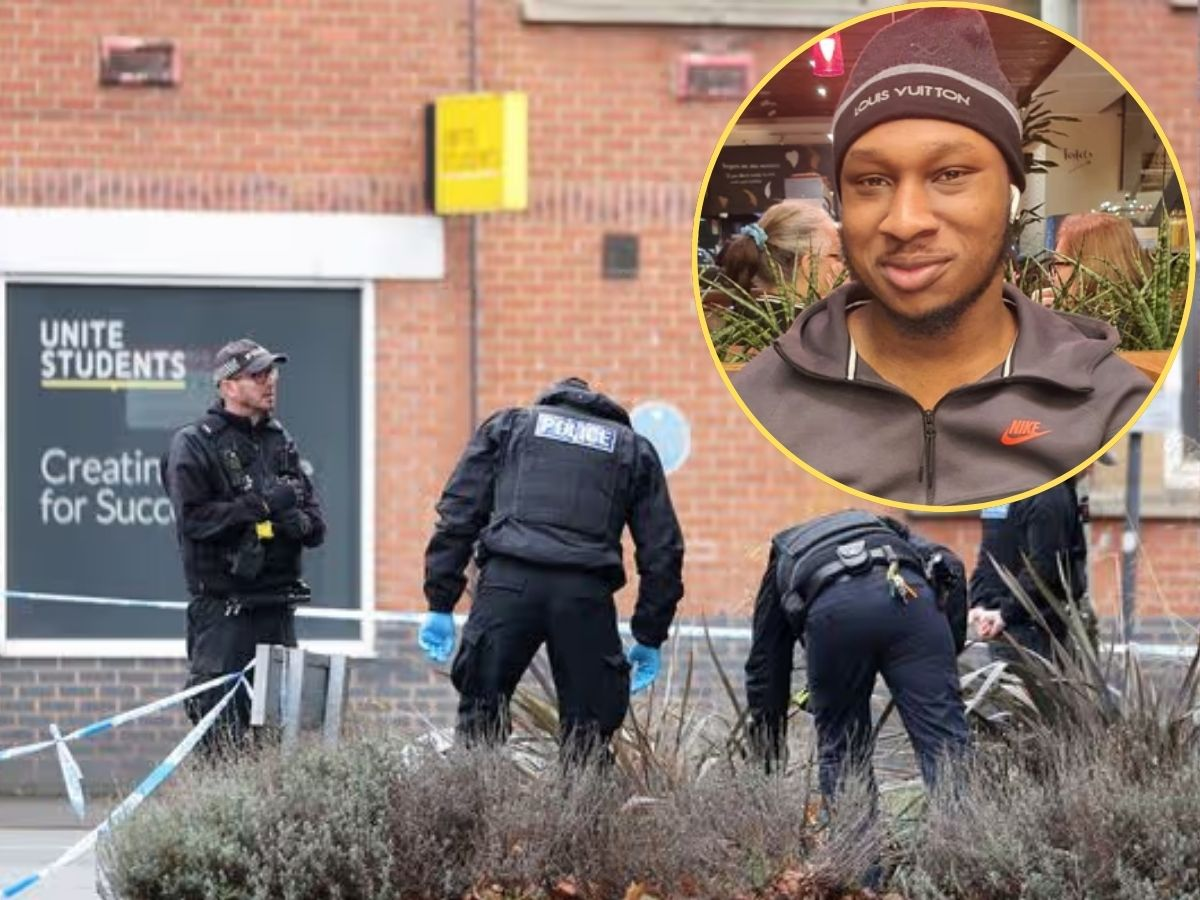
The fatal stabbing of Khaleed Oladipo, a 20-year-old student at De Montfort University in Leicester, has sent shockwaves through the local community, the university campus, and far beyond. The incident, which occurred near the university precinct on a weekday evening, has raised renewed concerns about violent crime affecting young people and students in urban areas.
As police continue their investigation into the circumstances surrounding his death, tributes from family members, university officials, and members of the public have painted a picture of a young man whose life was defined by ambition, family bonds, and ordinary routines abruptly cut short. Understanding who Khaleed Oladipo was, what is known about the attack, and how institutions and authorities are responding provides important context to a case that has deeply affected Leicester and the wider academic community.
Khaleed Oladipo: His Background, Studies, and Life as a Student
Khaleed Oladipo was a second-year student at De Montfort University, one of the United Kingdom’s major modern universities, located in the heart of Leicester. Originally from London, he had moved to the city to pursue higher education and was studying cyber-security, a demanding and increasingly significant field in a world shaped by digital threats and technological dependence. His choice of subject suggested both academic focus and a forward-looking mindset, as cyber-security has become one of the most critical disciplines within computing and information technology.
According to his family, Khaleed was deeply devoted to those closest to him. In a statement released following his death, relatives described him as “a good boy who loved his family,” a simple but powerful reflection of how he was known within his personal circle. Such tributes indicate a young man grounded in family relationships, whose life away from home as a student did not weaken his ties to those he cared about.
Beyond his studies, Khaleed was passionate about football. He was an Arsenal supporter, and this interest formed part of his everyday routine and social identity. On the evening he was stabbed, his family believes he was on his way home to watch a football match later that night. This detail has resonated strongly with many, as it underscores the ordinariness of his final moments. He was not engaged in risky or unusual activity but was simply returning home, anticipating a familiar and comforting pastime.
BREAKING: Leicestershire Police say an 18-year-old man has been charged with the murder of university student Khaleed Oladipo.https://t.co/VSmzSlLMff
— Sky News (@SkyNews) February 6, 2026
📺 Sky 501, Virgin 602, Freeview 233 and YouTube pic.twitter.com/Gs31N8SkSy
At De Montfort University, Khaleed was part of a diverse student population drawn from across the UK and internationally. Universities often represent spaces of aspiration and growth, particularly for young people who relocate from their home cities. Khaleed’s move from London to Leicester to study cyber-security reflects this broader pattern, where students invest in education as a pathway to stability and professional opportunity. His death has therefore been felt not only as a personal tragedy but also as a profound disruption of the promise associated with student life.
The Fatal Stabbing Near De Montfort University Campus
The attack that led to Khaleed Oladipo’s death occurred on Tuesday evening in Oxford Street, Leicester, close to the junction with Bonners Lane. Leicestershire Police said officers were called just after 17:00 GMT following reports that a man had collapsed in the street. Emergency services responded quickly, and Khaleed was taken to hospital, where he later died from his injuries.
A post-mortem examination confirmed that Khaleed died as a result of a stab wound to the chest. Police have stated that an 18-year-old man was arrested on suspicion of murder and remains in custody while extensive inquiries continue. No further details about the suspect or the motive have been released publicly, as the investigation remains ongoing. The location of the stabbing has drawn particular attention.
Read : Student Stabbed by Another Student on Campus at Grand Oaks High School
Oxford Street lies close to De Montfort University’s campus and is a well-used route for students and residents alike. In the immediate aftermath of the incident, several roads were closed, including Infirmary Road, Oxford Street, Infirmary Square, Carlton Street, York Road, Lower Brown Street, The Gateway, and Gosling Street. These closures reflected both the seriousness of the incident and the scale of the police response, as forensic teams carried out examinations and officers conducted door-to-door inquiries.

Members of the public who were nearby at the time of the stabbing attempted to help Khaleed before emergency services arrived. His family later expressed gratitude to those individuals, acknowledging their efforts to assist in a moment of crisis. They also paid tribute to ambulance crews and hospital staff, stating that they “did all they could to try and save him.” Such acknowledgments highlight the collective response of bystanders and professionals in the face of sudden violence, even when the outcome is tragically fatal.
The investigation has prompted renewed discussion about safety in areas surrounding university campuses. While police have not indicated that the attack was targeted at students generally, the proximity to the campus and the age of the victim have intensified concern among students and parents alike. Leicestershire Police have emphasized that inquiries are extensive and ongoing, with the stated aim of ensuring that the person responsible is brought to justice.
Family Tributes, University Response, and Community Impact
In the days following Khaleed Oladipo’s death, tributes and statements have reflected both deep grief and a search for understanding. His family’s words conveyed sorrow and disbelief, stating that they were “struggling to understand why anyone would do this.” They also emphasized their determination to see justice served, acknowledging that accountability cannot undo their loss but remains essential.
The family’s tribute humanized Khaleed beyond the circumstances of his death, reminding the public that he was a son, a student, and a young man with interests and plans. Their decision to publicly thank members of the public, emergency responders, and police officers also underscored a sense of shared humanity amid tragedy.
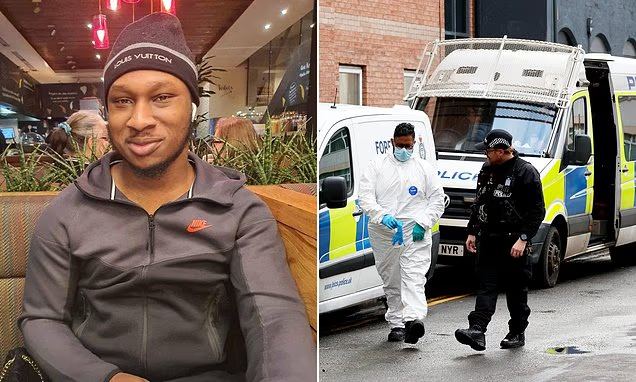
De Montfort University responded swiftly to the news of the stabbing. Professor Katie Normington, the university’s vice-chancellor, said she was “devastated” by Khaleed’s death. She confirmed that direct support was being offered to students, staff, and the Oladipo family. Universities often play a crucial role in providing counseling and pastoral care following traumatic incidents, particularly when they involve the loss of a student in violent circumstances.
The impact on the wider Leicester community has also been significant. The visible police presence, road closures, and media coverage brought the reality of the incident into sharp focus for local residents. Such events can challenge perceptions of safety and contribute to a sense of collective vulnerability, especially when they occur in familiar streets during early evening hours.
At a broader level, Khaleed Oladipo’s death has become part of an ongoing national conversation about knife crime and youth violence in the UK. While each case has unique circumstances, fatal stabbings involving young people continue to attract scrutiny from policymakers, law enforcement agencies, and educational institutions. The loss of a university student near campus adds another dimension to these concerns, highlighting the intersection between urban safety and student welfare.
As the investigation continues, many questions remain unanswered. Police have not yet outlined the sequence of events leading up to the stabbing or clarified whether Khaleed and the suspect knew each other. What is clear, however, is that a promising young life was lost, leaving behind grieving family members, friends, classmates, and educators.
Khaleed Oladipo is remembered as a dedicated student, a football enthusiast, and a young man deeply loved by his family. His death has prompted grief, reflection, and calls for justice, while also reinforcing the profound impact that sudden violence can have on individuals and communities alike.
Some really marvellous work on behalf of the owner of this web site, dead outstanding content.
Super-Duper blog! I am loving it!! Will come back again. I am taking your feeds also