
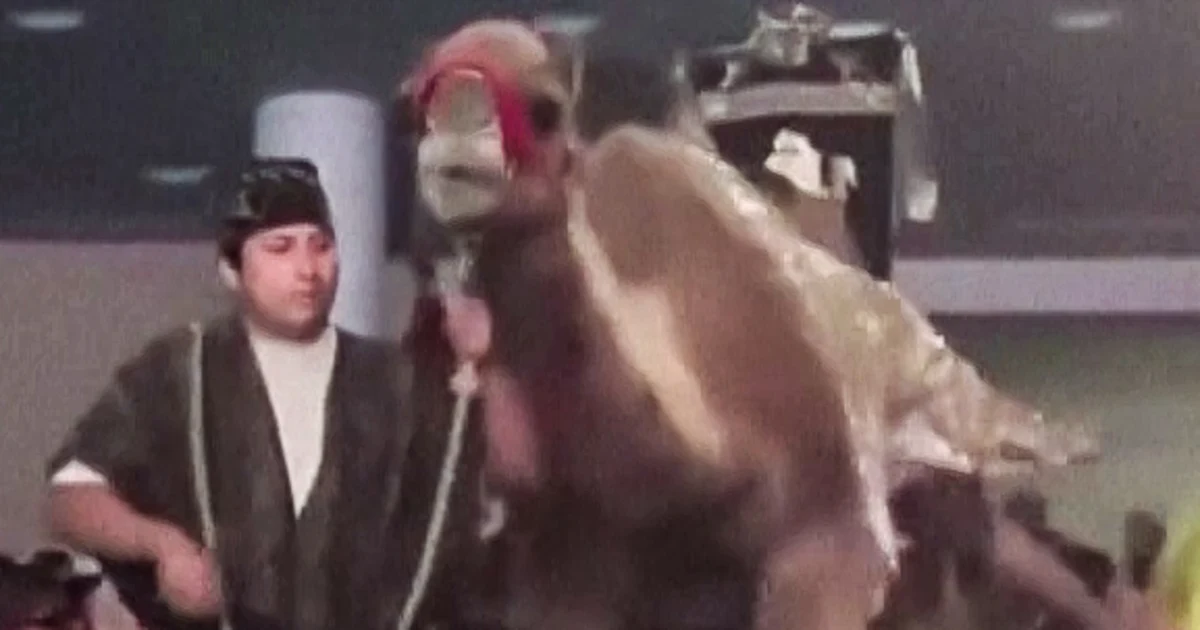
A live Christmas production at a Houston-area megachurch took a troubling turn after a woman was hospitalized when a camel used in the performance kicked her in the face, prompting renewed debate about safety, spectacle, and the use of animals in large-scale religious events. The incident occurred during Champion Forest Baptist Church’s annual “Christmas Spectacular,” a highly produced holiday presentation that combines Broadway-style staging, music, and live animals to depict the nativity story. While church officials expressed regret and emphasized their immediate response, video of the moment circulated widely online, drawing both sympathy for the injured woman and criticism of the church’s production choices.
The church, which attracts thousands of worshippers weekly and tens of thousands of attendees during its holiday shows, has built a reputation for elaborate seasonal programming. However, the camel incident has raised broader questions about risk management in crowded venues and the balance between tradition, entertainment, and congregational safety. As social media reactions poured in, the event became a flashpoint for discussions extending well beyond a single performance.
The Incident During the Live Nativity Performance
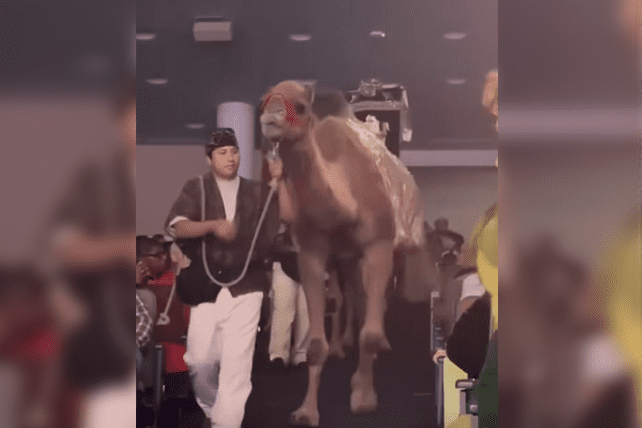
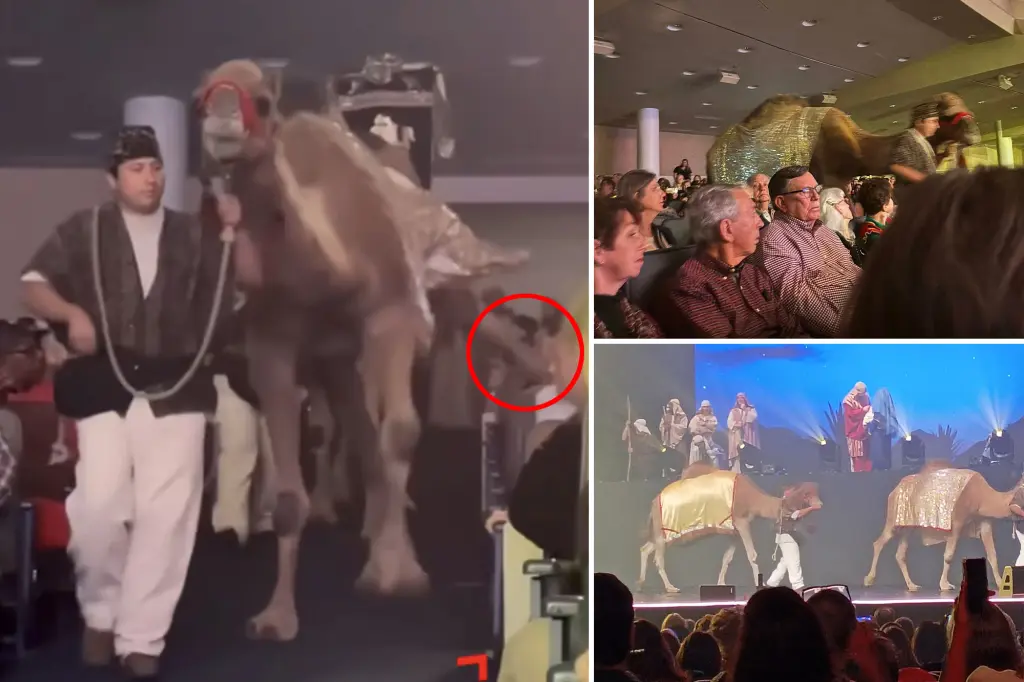
The incident took place during a Saturday showing of the “Christmas Spectacular,” a six-day production staged at Champion Forest Baptist Church in the Houston area. As part of the nativity reenactment, live animals, including camels, were incorporated into the presentation and led through the aisles of the church. Video footage later shared by Grizzy’s Hood News shows a camel being guided down an aisle by a handler when it suddenly lashed out with a powerful hind kick, striking a woman seated nearby in the face.
The force of the kick immediately drew alarm from audience members, and the performance was interrupted as church staff and emergency responders attended to the injured woman. According to updates shared online, she was transported to a hospital for treatment and later released. While the church confirmed that she was recovering, officials did not publicly disclose the nature or severity of her injuries. The lack of specific medical details has not diminished public concern, particularly given the visible strength of the animal involved and the proximity of audience members during the performance.
Church officials issued a statement expressing regret over what they described as an “unexpected incident.” They emphasized that their team responded immediately and that emergency services were engaged without delay. In the aftermath, the church made the decision to stop allowing animals to move through audience seating for the remainder of the show’s run, a measure intended to prevent further incidents. Representatives also stated that they had remained in contact with the woman’s family following her hospitalization.
During a megachurch's live nativity scene, a camel gets spooked and kicks a woman in the face, knocking her out.
— Protestia (@Protestia) December 19, 2025
From Champion Forest Baptist Church in Houston, TX.pic.twitter.com/s5tSj26QZ8
The video footage, however, continued to circulate widely on social media platforms, amplifying the impact of the event. Grizzy’s Hood News, which shared the clip on Facebook, described the incident as potentially fatal, a sentiment echoed by many viewers who commented on the apparent danger posed by a startled or stressed animal in a crowded indoor environment. For some, the visual evidence alone was enough to question whether such risks should ever have been taken in the first place.
Church Response and Safety Measures
Champion Forest Baptist Church positioned its response as swift and responsible, stressing that safety adjustments were implemented immediately following the incident. By halting the movement of animals through seating areas, the church acknowledged that the production element in question posed an unacceptable risk under the circumstances. This decision, while welcomed by some observers, also underscored the inherent unpredictability of using live animals in environments filled with noise, bright lights, and large crowds.
The church’s spokesperson reiterated that the “Christmas Spectacular” is designed to be a meaningful retelling of the birth of Jesus Christ and that live animals have long been part of the production’s immersive approach. Yet the incident highlighted the challenges of reconciling that ambition with modern expectations of safety and liability. In venues accommodating thousands of people, even a single miscalculation can have serious consequences, as demonstrated by the camel’s sudden reaction.
Read : South Korean Singer HyunA Collapses During Performance at Waterbomb 2025 Festival
Emergency response protocols appeared to function effectively in the immediate aftermath, with first responders attending to the injured woman and ensuring she received hospital care. Nevertheless, critics argued that prevention, rather than response, should be the primary focus when planning such events. Questions were raised about risk assessments, handler training, animal welfare considerations, and whether sufficient barriers or distancing measures were in place to protect attendees.
The church’s statement did not address whether additional reviews of safety policies would be conducted for future productions or whether the use of live animals might be reconsidered altogether. This silence left room for speculation and criticism, particularly from those who believe that the risks associated with live animals outweigh their symbolic or aesthetic value in a staged performance. While the production concluded as scheduled on Sunday, the controversy surrounding the incident continued to grow.
Champion Forest’s stature as a multi-site megachurch with approximately 7,000 weekly attendees has further intensified scrutiny. Large congregations often operate under public expectations similar to those applied to major entertainment venues, including adherence to rigorous safety standards. The camel incident has therefore been viewed not only as an unfortunate accident but also as a test case for how religious institutions manage large-scale events that blur the line between worship and spectacle.
Public Reaction and Broader Debate Over Mega-Church Productions
Public reaction to the incident was sharply divided, reflecting broader debates about the role of extravagance in religious practice. On social media and in comment sections of news articles, some expressed sympathy for the injured woman while defending the church and its long-standing Christmas tradition. Supporters described the “Christmas Spectacular” as a cherished event that brings families together and conveys the nativity story in a memorable way. They emphasized that accidents can happen anywhere and praised the church for its quick response and apparent concern for the victim’s well-being.
Read : YouTuber Tyler Oliveira Slammed For Mocking Gorehabba Festival
Others, however, were far more critical. Many questioned the wisdom of parading large animals through aisles packed with people, particularly in an indoor setting. For these critics, the incident served as evidence of poor judgment and unnecessary risk-taking. Comments frequently pointed out that camels are powerful, unpredictable animals and that even well-trained handlers cannot guarantee their behavior in stressful environments.
Beyond safety concerns, the incident reignited longstanding criticism of the financial and stylistic choices made by megachurches. Detractors argued that the resources required to stage such elaborate productions could be better spent on charitable efforts, such as feeding the needy or supporting community programs during the holiday season. Some commenters framed the spectacle as inconsistent with the teachings of Jesus, who emphasized humility and service to the poor.
The comparison to other Texas megachurches, such as Prestonwood Baptist Church in Plano, further contextualized the debate. These institutions are known for large-scale holiday shows featuring acrobatics, elaborate staging, and live animals, often drawing crowds comparable to major entertainment events. While these productions attract praise for their professionalism and creativity, they also attract criticism for being overly flashy or commercialized.
Animal welfare advocates also weighed in, highlighting the stress that such environments can place on animals. Bright lights, loud music, and dense crowds can be disorienting, increasing the likelihood of defensive or startled reactions. From this perspective, the camel’s kick was not merely an unfortunate anomaly but a predictable outcome of placing an animal in an unnatural and high-stimulation setting.
The camel incident has thus become emblematic of a broader conversation about modern worship practices and the boundaries between reverence, entertainment, and safety. While Champion Forest Baptist Church has not indicated whether it will fundamentally alter its approach to future productions, the public discourse suggests that expectations are shifting. For many observers, the event underscored the need for religious institutions to reassess not only how they tell familiar stories, but also how they protect the people who come to hear them.