
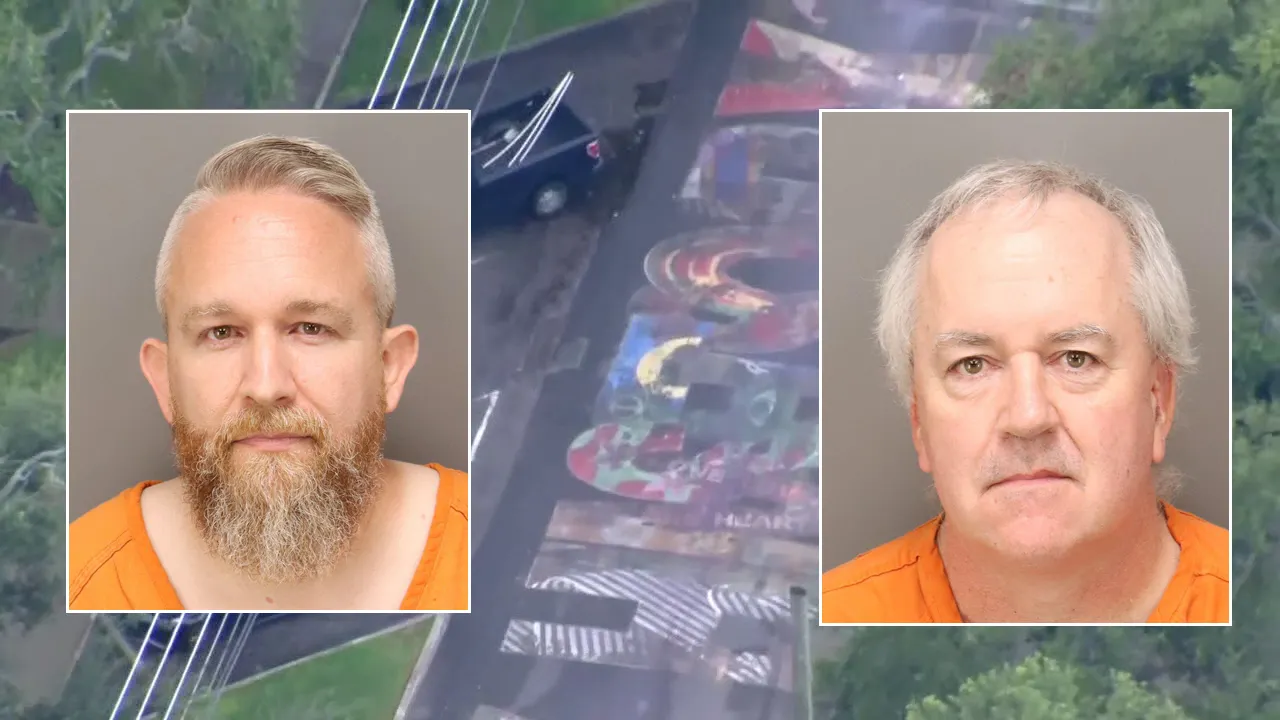
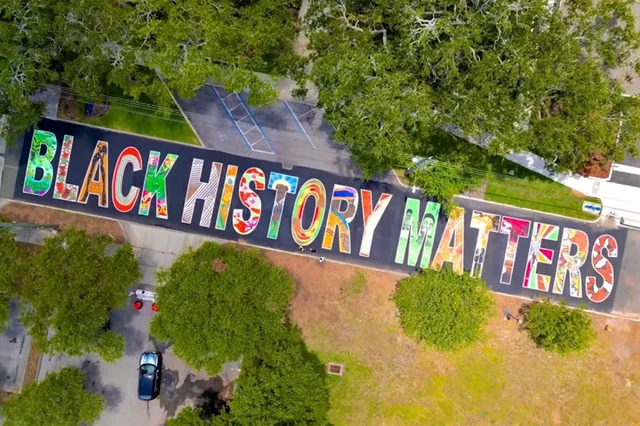
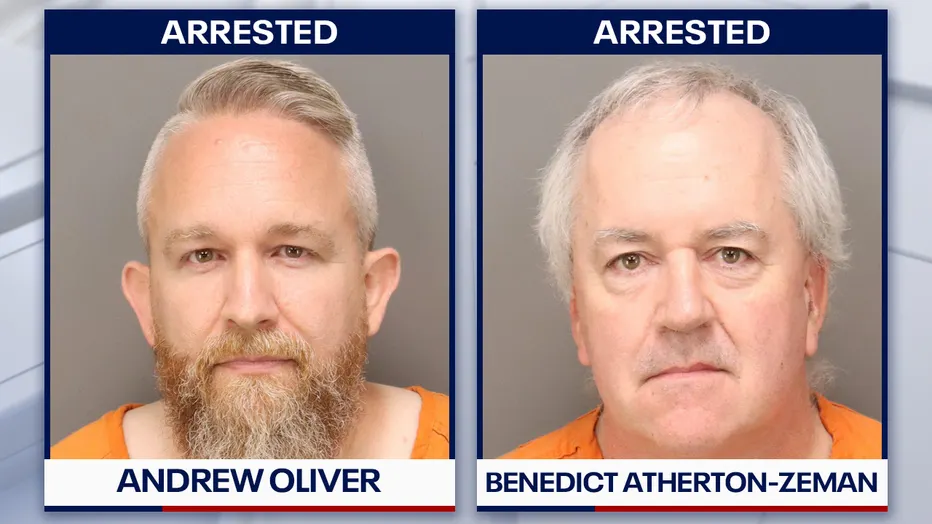
On the evening of August 29, 2025, two St. Petersburg, Florida, pastors were arrested after kneeling in prayer on a “Black History Matters” mural to protest its removal by state authorities. Reverend Andrew “Andy” Oliver, 45, of Allendale United Methodist Church, and Minister Benedict Atherton-Zeman, 59, of the Unitarian Universalist Church of St. Petersburg, took a stand against the Florida Department of Transportation’s (FDOT) efforts to paint over the mural, located outside the Dr. Carter G. Woodson African American Museum of Florida. The mural, created in 2023, was targeted for removal as part of a broader state mandate to eliminate “non-standard” road art, sparking outrage among local activists and community members.
The Incident: A Peaceful Protest Met with Arrests
The events unfolded around 8 p.m. on Friday, August 29, 2025, when FDOT crews arrived at 9th Avenue South, near 22nd Street, to paint over the “Black History Matters” mural. The mural, a vibrant display celebrating African American history and culture, was situated on a low-traffic, dead-end street in front of the Woodson Museum. It had been a symbol of pride for the community since its creation, initially painted in 2020 as a “Black Lives Matter” mural and later modified in 2023 to its current form.
Reverend Oliver and Minister Atherton-Zeman, upon learning of the planned removal, arrived at the site and positioned themselves on the mural, kneeling in prayer. Videos and photos from the scene show the pastors with their eyes closed, hands clasped, and voices raised in prayer, as they sought to protect the artwork from being covered with black paint. According to police reports, St. Petersburg officers repeatedly asked the pastors to move, warning them that their actions were obstructing FDOT machinery. Both men refused, citing their moral and spiritual convictions.
“I said I’m just going to stay here and pray until my prayers are answered,” Atherton-Zeman told the Tampa Bay Times. Oliver echoed this sentiment, stating, “For me, living out my faith, resisting tyranny and fascism and white supremacy was the most important thing last night. I had to do what I had to do.” Their act of civil disobedience led to their arrests on misdemeanor charges of resisting an officer without violence and obstructing or hindering traffic as pedestrians. The pastors were booked into Pinellas County Jail, where they spent the night before being released on a $500 bond each the following morning.
St. Petersburg police arrested two pastors for allegedly trying to block FDOT crews from painting over the “Black History Matters” mural on Friday night. https://t.co/id97hpmM3i pic.twitter.com/WGhn6o9XuQ
— Spectrum Bay News 9 (@BN9) August 30, 2025
Despite their efforts, the mural was painted over with black paint by FDOT crews after the arrests. The incident drew significant attention, with images shared by Terri Lipsey Scott, the executive director of the Woodson Museum, going viral on social media. In a Facebook post, Scott expressed gratitude to the pastors, writing, “Rev. Andy and Rev. Ben, words will never be able to describe the debt of gratitude I owe you for STANDING while KNEELING!”
The State’s Mandate: Erasing Art in the Name of Safety?
The removal of the “Black History Matters” mural is part of a broader initiative driven by Florida Governor Ron DeSantis and supported by the Trump administration’s transportation policies. In June 2025, DeSantis signed Senate Bill 1662, which empowers the FDOT to enforce the removal of “non-standard surface markings” on public roads. The state argues that such markings, including murals and crosswalks with political or cultural messages, pose safety risks by distracting drivers and pedestrians.
FDOT Secretary Jared Perdue described the bill as an effort to keep transportation facilities “free and clear of political ideologies.” However, critics, including local leaders and activists, argue that the policy is less about safety and more about erasing symbols of diversity and inclusion. The “Black History Matters” mural was one of five street murals in St. Petersburg targeted for removal by September 4, 2025.
Read : Pastor Myron Chorbajian and Wife Facing Charges in Child Sex Abuse Case
Others include a University of South Florida-themed crosswalk, a geometric design in the Childs Park neighborhood, and a “Common Ground” mural on Central Avenue, which data showed reduced traffic accidents by 70%. The fifth, a progressive Pride mural, remained untouched as of August 30, 2025, but is also slated for removal. The city of St. Petersburg, led by Mayor Ken Welch, requested exemptions for several murals, including the “Black History Matters” mural, citing crash data that demonstrated the artworks did not pose significant safety risks.
However, FDOT denied the request, threatening to withhold millions in state funding if the city did not comply. Welch, in a press conference on August 25, 2025, urged residents to protest “peacefully and lawfully,” warning that blocking roadways was illegal and could jeopardize critical infrastructure investments. “As the mayor of our city, I will not risk these essential investments in a fight I don’t believe we can win,” Welch said, emphasizing a strategic rather than reactionary response.
The pastors’ arrests highlight the tension between state mandates and local values. Delray Beach Vice-Mayor Rob Long, commenting on similar removals, called the policy a “war on culture and inclusion,” targeting symbols of Black and LGBTQ+ communities. The removal of a rainbow mural in Orlando, created in memory of the 49 victims of the 2016 Pulse nightclub shooting, further fueled accusations of political motivations. Atherton-Zeman, in an interview with Fox 13 News, dismissed the safety argument, stating, “There is science to prove that it is not really a safety hazard, and I think that’s an excuse. I think the real goal is erasure, and I won’t have it.”
Community Response and the Fight for Cultural Preservation
The arrests of Oliver and Atherton-Zeman sparked widespread outrage and mobilized community action. On August 31, 2025, the pastors returned to the site of the former mural, sharing a photo on social media that captured traces of the words “Black History Matters” still visible beneath the black paint. Quoting Carter G. Woodson, the historian for whom the museum is named, Oliver wrote, “Let us banish fear… I am a radical. I am ready to act, if I can find brave [people] to help me.” Both pastors urged the public to support the Woodson Museum financially and to continue sharing stories of Black history.
The Woodson Museum, in a Facebook statement, expressed deep disappointment over the mural’s removal but reaffirmed its commitment to its mission. “Just because the mural has disappeared, it doesn’t mean The Woodson’s mission has ended,” the statement read. “We continue to preserve, present, interpret, celebrate, and educate others about African American art, history, and culture throughout Florida and beyond.” The museum’s executive director, Terri Lipsey Scott, called for donations to sustain its work, emphasizing the importance of community support in the face of such erasures.
Local activists organized a “Stand Up St. Pete” event on Sunday, August 31, 2025, from 12 p.m. to 3 p.m., encouraging residents to create chalk art on Central Avenue and wear clothing with messages of diversity, pride, and Black history. The event aimed to preserve the spirit of the murals and resist what many see as an attempt to suppress cultural expression. Meanwhile, the pastors’ attorney announced plans to negotiate with prosecutors to drop the charges, arguing that the non-violent protest caused no harm.
The broader context of the mural removals points to a contentious cultural and political climate in Florida. The state’s actions align with a federal push by Trump’s Transportation Secretary Sean Duffy, who in July 2025 launched a “nationwide road safety initiative” targeting “political messages” and “distractions” like rainbow crosswalks.
Critics argue that these policies disproportionately affect marginalized communities, erasing symbols of inclusion under the guise of public safety. The removal of a “Back the Blue” mural in Tampa and other artworks across the state suggests a blanket approach, but the targeting of Black and LGBTQ+ themed murals has drawn particular scrutiny.
The arrests of Reverend Oliver and Minister Atherton-Zeman underscore the power of peaceful protest in the face of perceived injustice. Their act of kneeling in prayer was both a spiritual and political statement, rooted in their faith and commitment to resisting what they see as systemic erasure.
As St. Petersburg grapples with the loss of its murals, the community’s response—through donations, protests, and public discourse—signals a determination to keep the message of “Black History Matters” alive. The Woodson Museum, named after the founder of Black History Month, remains a beacon of resilience, and the pastors’ actions have galvanized support for its mission. While the mural may be gone, the fight for cultural preservation and justice continues, with the community vowing to “build back stronger” in the face of adversity.