
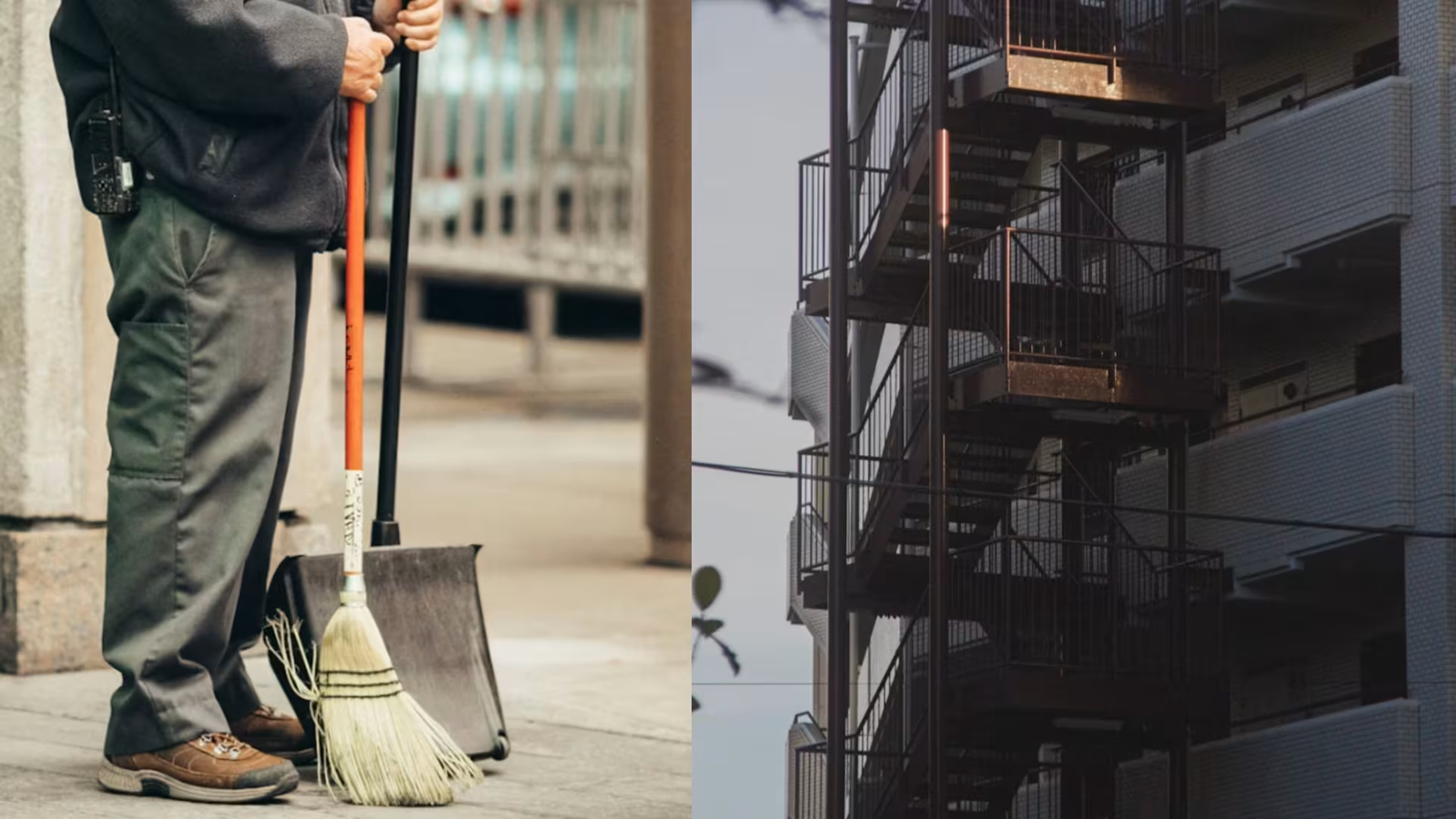
In a city where the grind of daily life often overshadows dreams of financial freedom, one Tokyo resident has turned conventional retirement wisdom on its head. Koichi Matsubara, 56, pulls in more than 30 million yen each year from a portfolio of rental properties and savvy investments—enough to live comfortably without lifting a finger. Yet, five days a week, he dons his janitor’s uniform and sweeps floors at a local facility. This isn’t a tale of misfortune or necessity; it’s a deliberate choice rooted in a philosophy that prioritizes health over leisure. As Matsubara’s story gains traction across Japan, it prompts a broader conversation about the true cost of idleness in an aging society.
Matsubara’s routine defies the stereotype of the wealthy retiree lounging in luxury. His annual income, equivalent to roughly 200,000 U.S. dollars, stems from passive sources that afford him financial security many can only aspire to. But rather than retreating to a life of golf courses or extended vacations, he clocks in for four-hour shifts, mopping and tidying with quiet efficiency. “It keeps me moving,” he explained in a recent interview, his voice steady and unassuming. This juxtaposition of wealth and manual labor has captivated onlookers, highlighting a man who views work not as a burden, but as a vital elixir for well-being.
From Single-Parent Struggles to Self-Made Security
Koichi Matsubara’s path to prosperity began in the unpolished corners of postwar Japan, where survival demanded resourcefulness. Born into a single-parent household in Tokyo, he grew up watching his mother juggle multiple jobs to make ends meet. Chores were non-negotiable; young Koichi learned early the rhythm of scrubbing floors and organizing spaces, tasks that instilled a lifelong appreciation for simplicity and diligence. “We didn’t have much, but we had routine,” Matsubara recalls. Those formative years, marked by financial tightness and familial responsibility, planted the seeds of his frugal mindset.
By his early twenties, Matsubara had entered the workforce in entry-level roles, but his eyes were always on the horizon. He resisted the temptations of consumer culture that ensnared many peers—flashy gadgets, dining out, unnecessary splurges. Instead, he funneled every spare yen into savings. Over a decade of disciplined scrimping, he amassed three million yen, a sum that seemed monumental in the 1990s economic landscape. With that nest egg, he took his first bold step into real estate, purchasing a modest apartment building in a working-class neighborhood on Tokyo’s outskirts.
That initial investment was no gamble; it was calculated persistence. Matsubara meticulously researched markets, opting for properties with steady tenant demand over high-risk flips. Rental income trickled in, covering mortgages and yielding modest profits that he reinvested. As Japan’s urban boom accelerated in the 2000s, his portfolio expanded. Today, he owns several multi-unit buildings scattered across the capital, generating reliable cash flow from long-term residents—families, young professionals, and retirees seeking affordable housing. “Location and maintenance are key,” he advises matter-of-factly. “Treat tenants like partners, and the returns follow.”
His investment strategy extended beyond bricks and mortar. Diversifying into low-risk stocks and bonds, Matsubara benefited from Japan’s gradual economic rebound and global market upswings. Compound interest worked its quiet magic; what started as a trickle ballooned into the 30-million-yen annual windfall. By age 50, he had achieved what financial planners term “financial independence”—the point where passive income exceeds living expenses. Yet, unlike many who chase this milestone for early retirement, Matsubara saw it as a foundation, not a finish line. His net worth, while not flaunted, positions him among Japan’s quiet millionaires, those who build wealth through patience rather than spectacle.
Read : 100 Dead Cats Found in Home of Japanese Woman Working for Animal Assist Senju
This ascent wasn’t without hurdles. The 2008 global financial crisis tested his resolve, dipping property values and tightening credit. Matsubara weathered it by slashing personal costs further—cooking simple meals, using public transport, forgoing luxuries like air-conditioned taxis. “Crisis reveals character,” he notes. Emerging stronger, he doubled down on acquisitions during the recovery, snapping up undervalued assets. Today, his holdings reflect a portfolio optimized for stability: 70% in real estate, 20% in equities, and 10% in cash reserves for emergencies. Tax strategies, such as depreciation deductions and reinvestment credits, have minimized liabilities, allowing more capital to circulate back into growth.
Read : China Calls Worldwide Scientists to Study the Sample of Lunar Soil: Restricted Only US
Matsubara’s story underscores a demographic shift in Japan, where an aging population grapples with retirement sustainability. With the world’s oldest society—over 29% of citizens aged 65 or older—many face pension shortfalls amid rising longevity. Matsubara, however, models an alternative: proactive wealth-building from modest origins. His approach resonates in a nation where “satori generation” youth often delay financial milestones due to job instability. For Matsubara, the lesson is clear: Start small, stay consistent, and let time amplify effort.
The Mechanics of a Million-Yen Machine
Delving deeper into Matsubara’s financial engine reveals a blueprint of understated efficiency. His rental empire, now comprising eight properties, yields an average occupancy rate above 95%. Monthly rents, pegged at market rates for mid-tier units—around 100,000 yen per two-bedroom apartment—aggregate to over 2.5 million yen in gross income. After deducting maintenance, property taxes, and management fees (which he handles personally to cut costs), net proceeds hover at 2 million yen monthly, or 24 million annually from real estate alone.
Investments supplement this backbone. Allocated primarily to Japanese blue-chip stocks like Toyota and SoftBank, plus a smattering of international ETFs, his portfolio has averaged 6-8% annual returns post-inflation. Dividends reinvested quarterly compound steadily, adding another 6 million yen yearly. No exotic derivatives or day-trading frenzies here; Matsubara favors index funds for their predictability, echoing Warren Buffett’s “boring but effective” ethos adapted to Japanese markets. He monitors holdings via a basic spreadsheet, reviewing quarterly rather than daily to avoid emotional pitfalls.
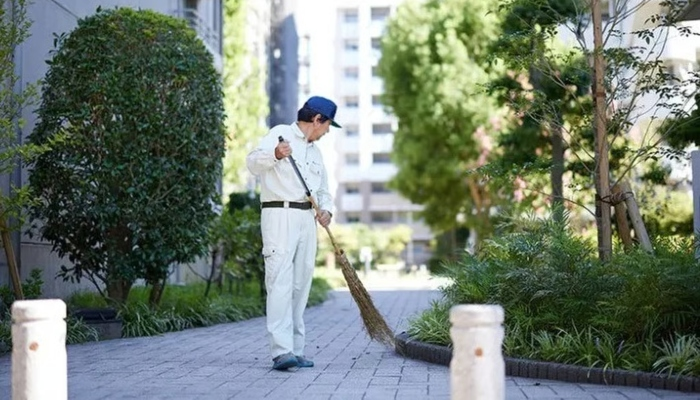
Living expenses? A fraction of his intake. Matsubara’s monthly outlay totals under 200,000 yen: rent for his own modest one-room apartment (he doesn’t live in his properties), groceries focused on rice, fish, and vegetables, and utility bills kept low through energy-conscious habits. No car, no subscriptions beyond essentials, no overseas holidays. This austerity isn’t deprivation; it’s intentional. “Wealth is what you keep, not what you spend,” he says, echoing proverbs from his upbringing. Surplus funds cycle back into debt reduction or opportunistic buys, ensuring his machine hums without overheating.
Japan’s tax code aids this cycle. Rental income qualifies for deductions on repairs and interest, while long-term capital gains from stocks face a flat 20% levy—manageable with strategic timing. Matsubara consults a part-time accountant annually, not for loopholes, but for compliance. His model proves accessible: Anyone with discipline could replicate it, starting with a high-yield savings account and scaling to property via government-backed loans for first-time buyers.
Critics might label this obsessive, but data backs its viability. Japan’s National Tax Agency reports over 1.5 million individuals with assets exceeding 100 million yen, many from similar self-made paths. Matsubara’s edge? Early action. At 56, he’s decades ahead of the curve, his wealth a buffer against healthcare costs that plague Japan’s elderly—national health spending hit 45 trillion yen last year.
Choosing the Broom for Vitality Over Vacancy
So why persist with janitorial work when freedom beckons? The answer lies not in altruism or penance, but in a profound commitment to physical and mental health. Matsubara views idleness as the real thief—of vigor, purpose, and longevity. “Sitting around invites stiffness and sadness,” he states plainly. His four-hour shifts, involving walking, bending, and light lifting, clock 10,000 steps daily, aligning with WHO guidelines for cardiovascular health. Medical checkups confirm the payoff: Optimal blood pressure, no chronic issues, a body tuned like a well-oiled engine.
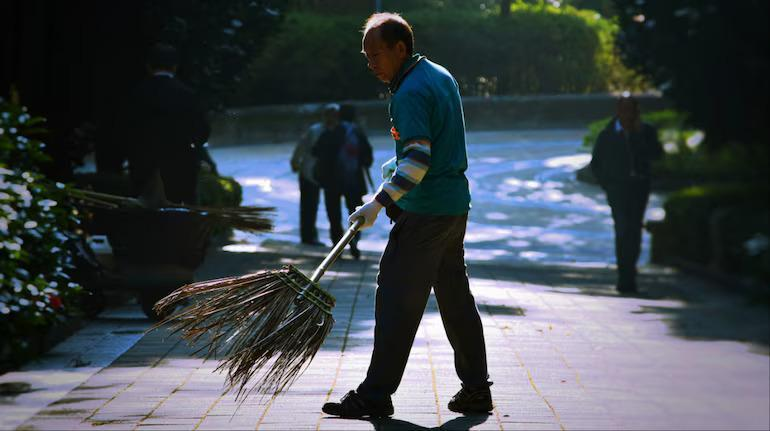
This isn’t whimsy; it’s informed by observation. Matsubara watched peers retire early only to succumb to isolation and ailments—Japan’s “retirement syndrome,” where sudden inactivity spikes depression rates by 30%, per health ministry stats. He counters with structure: Mornings for property oversight, afternoons for cleaning, evenings for reading or light exercise. The job, paying a nominal 1,000 yen hourly, is secondary; camaraderie with colleagues—fellow part-timers sharing laughs over tea—adds social ballast in a loneliness epidemic claiming 30,000 lives yearly.
Psychologically, the role grounds him. Sweeping floors echoes childhood chores, fostering gratitude amid abundance. “It reminds me wealth doesn’t define worth,” he reflects. In a society idolizing hustle culture, Matsubara flips the script: Work for wellness, not wages. His routine includes weekly market visits for fresh produce, ensuring a diet low in processed foods, and annual health retreats—modest onsen soaks, not lavish spas.
As word spreads, Matsubara fields queries from admirers seeking his “secret.” He demurs, insisting it’s no formula, just balance. Yet his example challenges Japan’s karoshi—overwork death—narrative, advocating purposeful labor over burnout. At 56, with decades ahead, he embodies resilience: A millionaire who mops, proving fulfillment blooms from motion, not money alone.