
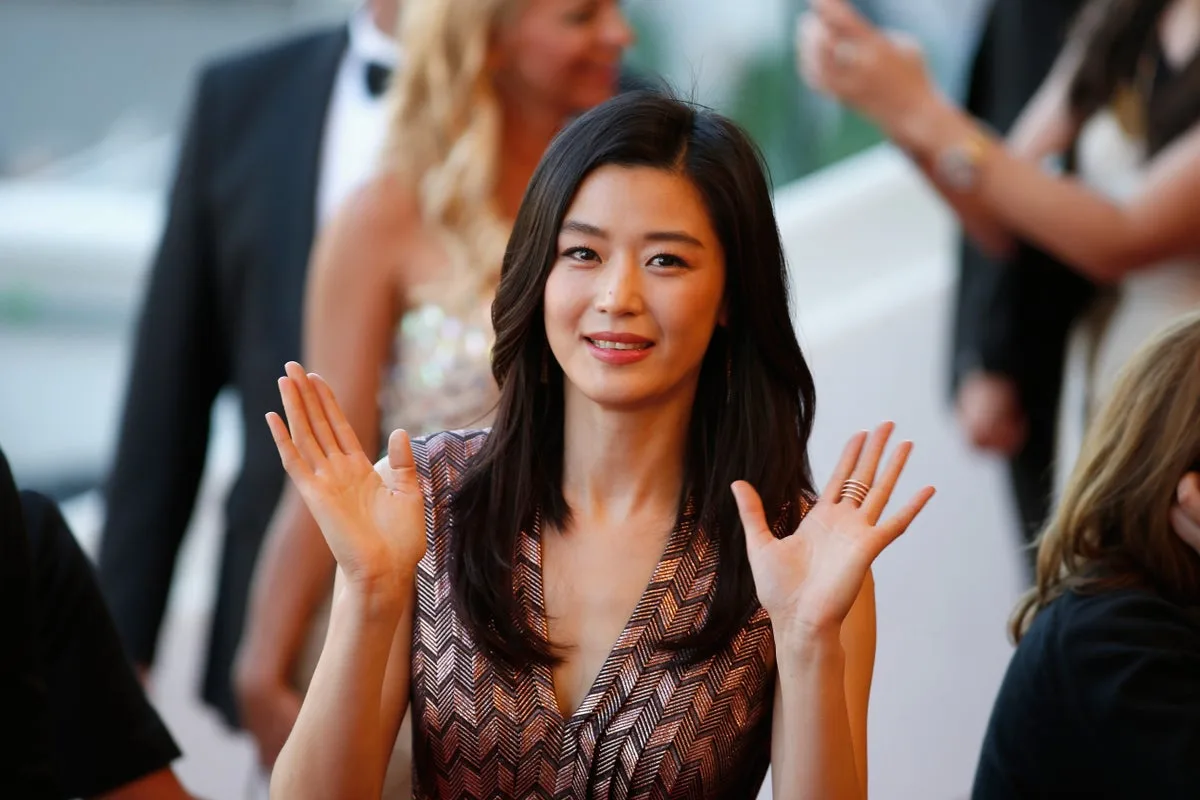
In the high-stakes world of international entertainment, where cultural sensitivities can ignite overnight controversies, South Korean icon Jun Ji-hyun finds herself at the epicenter of a diplomatic firestorm. The actress, revered for her timeless charm and blockbuster roles, has become an unintended casualty in a clash between scripted fiction and real-world nationalism. Her latest project, the Disney+ spy thriller Tempest, has unleashed a torrent of backlash in China over a single, provocative line of dialogue: “Why does China prefer war?” What began as a plot device in a geopolitical drama has escalated into calls for boycotts, the swift removal of her advertisements, and multimillion-dollar repercussions for her endorsement empire.
As of September 26, 2025, the fallout continues to ripple across borders, highlighting the fragile balance Korean stars navigate in one of the world’s largest markets. Jun Ji-hyun, born Wang Ji-hyun in 1981, has long been a household name in Asia and beyond. Her breakthrough came with the 2001 romantic comedy My Sassy Girl, a cultural phenomenon that catapulted her to stardom and introduced Korean cinema to global audiences.
The film’s irreverent humor and her effervescent performance turned it into a pan-Asian hit, spawning remakes in multiple countries. She followed this with a string of successes, blending rom-coms, action, and fantasy. Her role as the alien beauty in the 2013 extraterrestrial romance My Love from the Star was a game-changer, especially in China, where it shattered viewing records and ignited trends in fashion and beauty inspired by her character. The drama’s finale drew over 700 million views in China alone, cementing her as a Hallyu (Korean Wave) ambassador.
Her versatility shone in darker fare too. In the Netflix zombie series Kingdom (2019-2021), she portrayed a cunning queen consort, earning praise for her shift from bubbly leads to morally complex figures. Films like The Thieves (2012), a heist extravaganza, and The Berlin File (2013), a Cold War espionage tale, showcased her action chops, while Legend of the Blue Sea (2016) revived her rom-com magic with supernatural flair.
Off-screen, Jun Ji-hyun married businessman Choi Jun-hyuk in 2012, stepping back briefly for motherhood to two sons before selective comebacks. Her poise and philanthropy—supporting causes like children’s hospitals—have kept her image pristine. Yet, this unblemished reputation now hangs in the balance, threatened by a line she delivered as part of a scripted narrative.
Read : Kim Jong Un Pays Tribute to North Korean Soldiers Killed Fighting for Russia in Ukraine
Tempest, which premiered on Disney+ on September 10, 2025, marks Jun’s return to television after a four-year hiatus. Directed by acclaimed filmmaker Yeon Sang-ho (Train to Busan, Hellbound), the series blends romance, intrigue, and high-tension politics in a narrative about threats to the Korean Peninsula. Jun Ji-hyun stars as Seo Mun-ju, a sharp-witted former UN diplomat turned presidential candidate, who uncovers a conspiracy following a deadly assassination. Her co-lead, Kang Dong-won, plays a shadowy international agent, their chemistry fueling the spy-romance angle amid explosive set pieces and moral dilemmas.
Read : The Secret Behind Korean People Having Glass Skin
The show quickly climbed charts in South Korea and select international markets, praised for its glossy production and star power—also featuring John Cho, Lee Mi-sook, and Park Hae-joon. Early episodes build suspense around shadowy global powers, with Mun-ju’s diplomatic savvy clashing against escalating threats. Critics lauded the writing for its timely exploration of nuclear risks and alliance fractures, drawing parallels to real-world tensions. However, the series’ global reach, even via unofficial streams in restricted regions, set the stage for unintended diplomatic drama.
The Controversial Line That Sparked International Outrage
The powder keg ignited in episode four, aired around September 17, 2025. In a tense confrontation, Seo Mun-ju, grappling with intelligence about a potential border crisis, utters the fateful words: “Why does China prefer war? A nuclear bomb could fall on the border area.” Delivered amid a heated debate on geopolitical maneuvers, the line is contextualized as Mun-ju’s frustrated rhetorical question, probing why a major power might escalate conflicts to the brink of catastrophe. It’s a moment meant to underscore the drama’s themes of miscommunication and brinkmanship, not a literal accusation.
Yet, for Chinese viewers accessing the show via VPNs or pirated platforms—Disney+ remains officially unavailable in mainland China—the dialogue landed like a direct insult. Clips spread virally on Weibo and Douyin, amassing millions of views within hours. Netizens decried it as slanderous, with one viral post quipping, “If China truly loved war, you wouldn’t be here filming TV dramas.” Another fumed, “China doesn’t love war; we pursue peace. This is blatant defamation.” The backlash snowballed, accusing the series of a broader anti-China agenda.

Compounding the fury were visual choices: scenes purporting to depict the Chinese city of Dalian were filmed in a dilapidated Hong Kong shantytown, filtered with dark, gritty tones that painted an unflattering portrait. Additional gripes included a villainous character speaking Mandarin, a five-star carpet (evoking the national flag) being trampled, and an alleged mispronunciation of Tang dynasty poet Li Bai’s verses by Jun Ji-hyun’s character. “This isn’t just one line—it’s a pattern of smearing China,” one Weibo user wrote, garnering over 50,000 likes. The uproar echoed past flare-ups, like the 2016 THAAD missile defense deployment that prompted China’s de facto Hallyu ban, restricting Korean content until recent thaws.
Chinese state media, including the Global Times, amplified the discourse without official endorsement, framing it as cultural overreach by foreign media. Foreign Ministry spokesperson Lin Jian, queried on related K-pop event delays, reiterated support for “beneficial cultural exchanges” but stopped short of addressing Tempest directly. On X (formerly Twitter), global users mirrored the divide: some dismissed it as overreaction to fiction, others highlighted sensitivities in U.S.-China relations influencing the script. The controversy peaked mid-week, with #BoycottJunJihyun trending on Weibo, amassing 200 million views by September 23.
Backlash Escalates: Brands Pull Ads and Boycott Calls Mount
The online storm rapidly breached the digital realm, slamming into Jun Ji-hyun’s lucrative endorsement portfolio. As a global ambassador for luxury heavyweights, her face adorns billboards from Seoul to Shanghai. But Chinese consumers, wielding boycott power honed on brands like H&M and Uniqlo, turned their ire commercial. By September 22, reports surfaced that American skincare titan La Mer had scrubbed all Jun-related imagery from its Chinese Weibo and website, even blocking searches for her name. French powerhouse Louis Vuitton followed suit, deleting promotional posts and facing a deluge of comments demanding, “Terminate her contracts globally, or we’ll boycott LV forever.”
Swiss jeweler Piaget acted swiftly too, yanking campaign visuals from Taobao and its homepage. Ecovacs, the robot vacuum brand that named her ambassador in May 2024, announced their deal had “naturally concluded” earlier in the year, distancing itself amid the noise. A planned shoot for an unnamed Chinese fashion label in Seoul on September 25 was outright canceled, insiders citing “unforeseen pressures.” Estimates pegged the financial hit at over 200 million yuan (about $28 million USD), factoring lost revenue from suspended campaigns and potential long-term deals.
Jun Ji-hyun’s agency, United Artists Agency (formerly YG), issued a firm denial on September 23, labeling reports “baseless.” “The advertisement postponements occurred before Tempest aired and are unrelated to the drama,” a spokesperson told Chosun Biz. “We’ve confirmed with our Chinese partners that no contracts were terminated due to this.” They emphasized the timing as coincidental, tied to local scheduling. Yet, eagle-eyed fans noted the swift ad purges, fueling speculation of preemptive damage control by brands wary of nationalist backlash.

Defenders rallied online, arguing, “Blame the writers, not the actress—she’s just delivering lines.” X users echoed this, with one posting, “Jun Ji-hyun is an actor, not a policymaker. This is scripted fiction.” In South Korea, the response was muted; media focused on the irony of a star once boosted by Chinese fandom now targeted by it. Globally, the saga drew parallels to other cross-cultural misfires, like Netflix’s Culinary Class Wars accused of cultural appropriation last year. As boycotts trended, some Chinese voices urged upholding the Hallyu restrictions, warning against “poisonous” foreign content.
Navigating the Fallout: Implications for Hallyu and Beyond
For Jun Ji-hyun, the scandal is a stark reminder of stardom’s geopolitical tightrope. Once My Love from the Star made her a fashion icon in China—sparking alien-inspired trends and billions in indirect sales—her market there was untouchable. Now, with ad empires crumbling, she faces a potential chill on future projects. Her agency remains optimistic, pointing to her upcoming film Colony with Ji Chang-wook and a robust domestic fanbase. Yet, insiders whisper of reevaluated strategies, perhaps prioritizing non-China ventures to weather the storm.
Broader implications loom for the Korean Wave. China’s Hallyu thaw—easing post-THAAD bans—promised a renaissance, with K-dramas like Squid Game and Moving finding favor despite hurdles. But Tempest‘s misstep risks reversal, emboldening calls to prioritize homegrown content amid Beijing’s push for cultural self-sufficiency. Disney+, navigating U.S.-China frictions, has stayed silent, but the incident underscores streaming’s role in amplifying sensitivities. For Korean talent, it signals caution: scripts must thread needles of artistic freedom and market access.
Supporters urge perspective—fiction isn’t fact—and Jun’s defenders highlight her apolitical track record. As the dust settles, the actress embodies resilience, much like her characters. Whether this dents her legacy or fades into footnote remains unseen, but it spotlights entertainment’s power to bridge—or burn—bridges. In a divided world, one line’s echo proves louder than intended, reminding us that stories, like diplomacy, demand nuance.