
The peaceful streets of Ontario have recently witnessed a case that not only highlights the struggles of private landlords but also brings attention to a broader conversation on housing, political expression, and community tensions.
Raman Kumar, an Ontario-based landlord, has gone public with his plight after a group of tenants he claims to be Khalistan supporters stopped paying rent and created disturbances that have unsettled the local neighborhood. What began as a routine rental agreement with a group of students has evolved into an emotionally draining and financially burdensome ordeal.
Kumar’s experience reveals the vulnerabilities landlords face when tenants exploit legal protections and delays in the system. This incident, which surfaced widely after being shared by journalist Nitin Chopra on social media, also brings into question how political symbolism and local community peace can sometimes clash in residential settings.
As the Khalistan flag continues to fly outside Raman Kumar’s property without his consent, the case stirs debate about tenants’ responsibilities, property rights, and the importance of efficient legal recourse in rental disputes.
Unpaid Rent, Overcrowding, and Legal Delays
The core of the crisis began shortly after five students rented Kumar’s property in October 2024. While the tenants initially paid rent until December, since January 2025, Kumar claims he hasn’t received a single dollar. This means for over five months, the landlord has had to shoulder all financial obligations associated with the property—mortgage payments, property tax, insurance, and utility bills—entirely from his own resources.
The monthly rent agreed upon was C$3,300, a significant amount that most property owners depend on to cover basic costs. Without this stream of income, Kumar is not only struggling financially but also dealing with growing emotional distress. He describes sleepless nights, anxiety over unpaid bills, and increasing concern over the viability of holding on to the property.
Adding to the financial stress are claims of overcrowding and possibly unauthorized subletting. Kumar says he rented the home to five individuals, but has witnessed a much larger number of people coming and going from the premises. “I can’t give the exact number, but there are a lot of people,” he told journalist Nitin Chopra in a viral video interview. This level of overcrowding raises legitimate concerns about fire safety, neighborhood noise disturbances, and the wear and tear on the property, not to mention a breach of the original rental agreement.
Local residents have also complained about noise and nighttime disturbances, indicating that the tenants’ behavior may be affecting more than just the landlord. These disruptions further underline the difficulty landlords face when trying to address tenant issues while maintaining peace in residential neighborhoods.
Another Victim Landlord in #Ontario
— Nitin Chopra (@chopsnitin) May 29, 2025
Tenants have not paid rent since Jan 2025 , not paying Utilities bill either
What a Landlord should do ? When can we fix the system ?
Enough is Enough ! #FixTheLTB #onpoli pic.twitter.com/YKoamANDzO
Kumar has taken the step of initiating legal proceedings against the tenants, but he laments the sluggish pace of the system. “It will take time,” he explained, expressing frustration at the slow movement of justice while he continues to bear the brunt of the situation.
The Khalistan Flag and Political Tensions
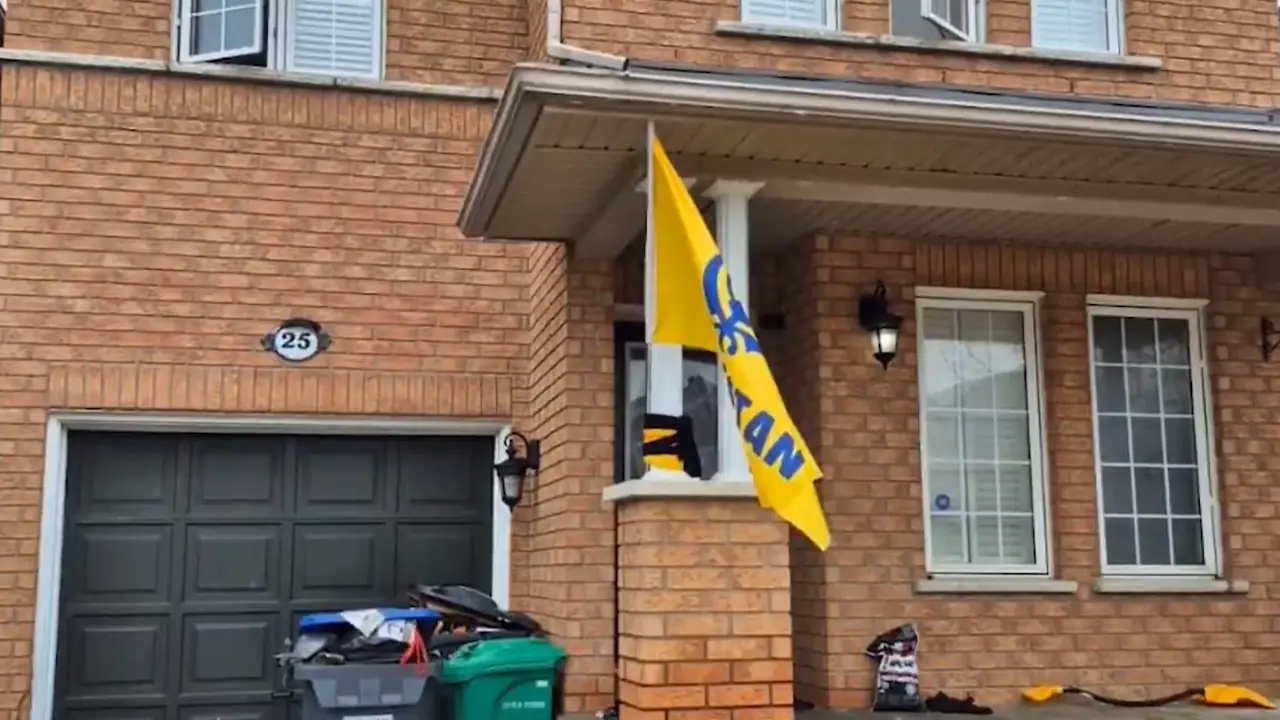
What has intensified the case and made it go viral is the controversial political angle—specifically, the presence of a Khalistan flag displayed outside the property. According to Kumar, the flag was tied to a post without his knowledge or permission. In Canada, political expression is largely protected under free speech, but the presence of such symbols on private property—especially when the property owner does not endorse them—adds a complex layer of discomfort and potential legal grey areas.
The flag has unsettled the community, with several neighbors reportedly expressing concerns about the message it sends. Raman Kumar himself said he is “very scared” by these kinds of activities. “Authorities need to intervene. We’ve always lived peacefully as a community, and this is creating unnecessary tensions,” he told Chopra.
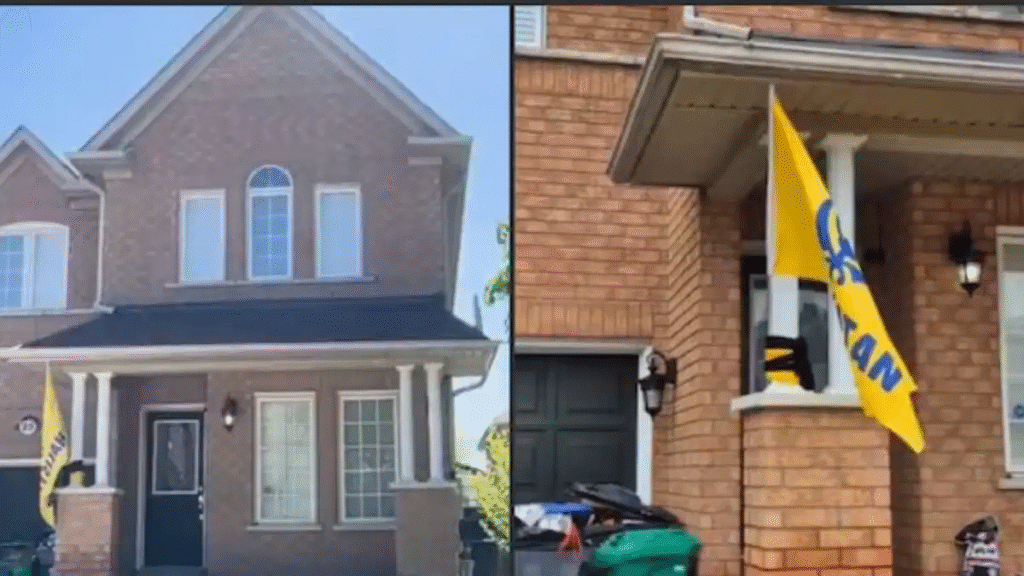
The Khalistan movement, which seeks a separate Sikh homeland, is a controversial topic globally and particularly sensitive in India-Canada relations. The hoisting of its flag on residential properties could be perceived not merely as a statement of identity or belief but as a provocation, especially in quiet neighborhoods not used to overt political symbolism.
In this case, the flag appears to serve not only as a symbol of political belief but as a potential tool of intimidation. Whether or not that was the tenants’ intention, its presence complicates the landlord-tenant dispute by introducing a politically charged element. It also puts local authorities in a difficult position: balancing the right to political expression with the landlord’s right to control what is displayed on their property.
Landlords, Rights, and Community Impact
This story strikes at a broader issue that many small landlords across Canada, and indeed in other countries, routinely face. When tenants stop paying rent or break the terms of a lease, landlords often find themselves with limited and slow legal options. Housing tribunals and courts are frequently backlogged, and the eviction process can take months—especially if tenants know how to use the system to delay action.
In the meantime, landlords like Raman Kumar are left to foot the bills, maintain the property, and manage community relations. Kumar’s case is particularly dire because he doesn’t even live in the house he’s renting out—he lives in a rented home himself and is effectively funding two households now.
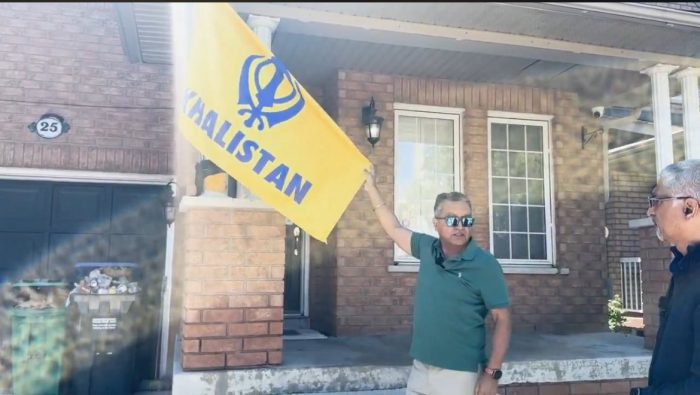
The emotional toll is obvious in his video interviews, where he appears exhausted and mentally strained. “This is putting me under extreme mental stress,” he said. “I myself live in a rented house and have my own expenses.”
Beyond the financial and legal struggles, Kumar also speaks for the silent toll these incidents take on personal dignity and trust in the system. It raises the question: what protections exist for landlords when agreements are violated? And how can the legal system balance tenants’ rights with the very real consequences that landlords face?
The ripple effect of this situation goes beyond one property. The neighbors feel unsettled, the sense of community has been disturbed, and the visibility of political symbols in domestic spaces without consent could spur further debates on whether boundaries need to be drawn. At the heart of the matter is the need for faster resolution mechanisms, better screening practices, and policies that ensure rental agreements are honored by both parties.
This incident is not just about unpaid rent. It’s about the intersection of financial hardship, political expression, and the ability of institutions to protect citizens—landlords and tenants alike. While legal proceedings are underway, and the outcome remains to be seen, one thing is clear: the system needs reforms to prevent such painful, drawn-out battles in the future. Until then, landlords like Raman Kumar are left to navigate a stressful maze of uncertainty with little support.