
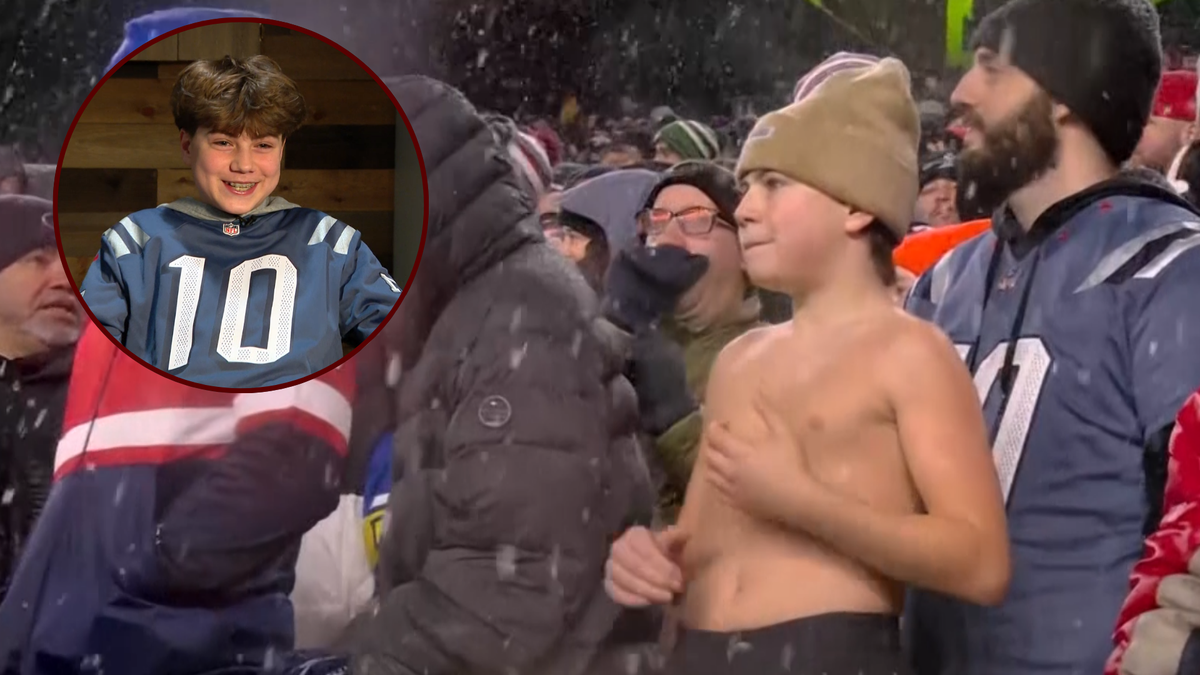
A single spontaneous decision made inside a packed NFL stadium has turned a Massachusetts teenager into an unexpected social media sensation. Fourteen-year-old Landon Silva of Swansea, Massachusetts, captured national attention after appearing shirtless during a Patriots divisional playoff game, a moment that quickly spread across social media platforms and was later aired during an ESPN broadcast.
What began as a lighthearted pledge shared with family members evolved into a viral clip seen by countless viewers, highlighting how modern sports culture, broadcast media, and social sharing can converge in a matter of seconds. For the Silva family, longtime Patriots supporters, the moment added a new chapter to decades of fandom rooted in tradition, loyalty, and game-day rituals. The incident unfolded in the later stages of the game, when the Patriots were comfortably ahead.
Landon, who had spent most of the evening bundled against the cold alongside his older brother Austin, followed through on a promise he had casually made earlier. His decision was not orchestrated for attention, nor was it driven by expectations of fame. Instead, it reflected the spontaneous energy of live sports, where emotion, excitement, and atmosphere often push fans to do things they might never plan in advance. Within hours, however, the clip had spread far beyond the stadium, transforming a fleeting moment into a widely discussed viral phenomenon.
A Spontaneous Moment in the Stands
Landon Silva’s viral moment did not begin with cameras or social media ambitions. According to the teenager, the idea surfaced casually during the game, shared among family members seated nearby. As the Patriots maintained their lead into the fourth quarter, he decided to act on his earlier comment and remove his shirt, despite the cold conditions typical of playoff football. Until that point, he and his brother had been dressed warmly, blending in with the thousands of fans packed into the stands.
What Landon did not anticipate was how quickly his action would draw professional attention. Before the clip aired on ESPN, the moment was filmed twice by an NFL media staff member. The first attempt had to be redone after Landon instinctively looked toward the camera, breaking the candid nature of the shot. On the second attempt, he followed instructions to look away, seated among fellow fans, unaware that the footage would soon reach a national audience.
The brief exchange illustrates how broadcast media operates in live sports environments, capturing fan reactions that reflect the atmosphere of the game without disrupting it. From Landon’s perspective, the moment unfolded quickly and without much thought. He later explained that it “kind of happened,” a phrase that underscores the unplanned nature of the event.
Read : Bahamas’ Breathtaking Selfie Spots: Top Ten Destinations to Capture Paradise
There was no prolonged buildup, no attempt to stand out, and no expectation that the moment would resonate beyond the stadium. Yet the combination of youth, enthusiasm, and the spectacle of a playoff game created an image that viewers found memorable and shareable, fueling its rapid spread online.
Family, Tradition, and Patriots Fandom
Behind the viral clip is a family deeply connected to the New England Patriots through years of consistent support. Landon and Austin Silva were sitting in family seats that have been part of their lives for decades. Their father and grandfather have held Patriots season tickets for 35 years, establishing a long-standing tradition of attending games and passing down fandom through generations. For the Silva family, game days are not isolated events but part of an ongoing relationship with the team and its history.
Read : Teen Hiker Rescued from Heavy Storm in Northern California’s Bald Hills via Garmin SOS Activation
The seating arrangement on the night of the game reflected this family dynamic. While Landon and Austin occupied the traditional family seats roughly 15 rows closer to the field, their parents were seated slightly higher up. This separation meant that Landon’s mother did not immediately notice what was happening when her son removed his shirt. By the time she realized and made her way down to the boys’ seats, the moment had already aired and begun circulating online. Her reaction was measured and practical, instructing Landon to put his shirt back on once the moment had passed.
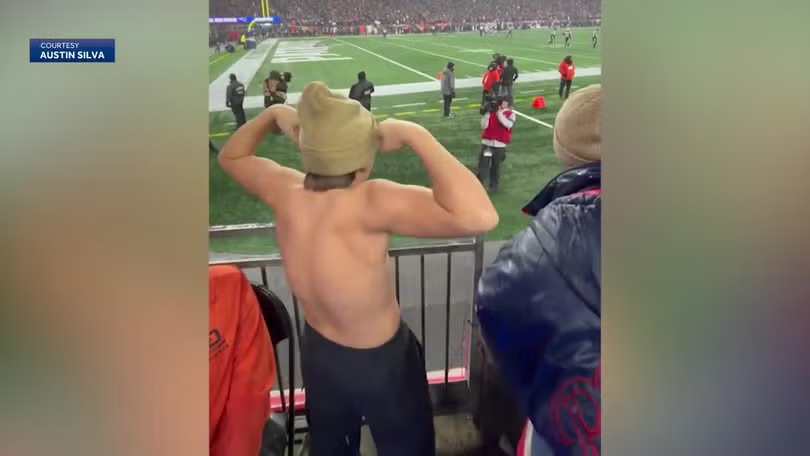
Austin Silva later admitted that he did not believe his younger brother would actually follow through on his plan. Landon had told family members before the game that if the Patriots were winning in the fourth quarter, he would go shirtless. To Austin, it sounded more like playful talk than a serious commitment. When Landon did act, it surprised even those closest to him, reinforcing how unplanned the moment truly was.
For the Silva family, the viral attention did not overshadow their primary reason for being there: supporting the Patriots. Their decades-long association with the team places Landon’s experience within a broader narrative of sports loyalty and shared family traditions. The viral moment, while unique, became another story layered onto years of attending games, celebrating victories, and enduring losses together.
From Stadium Snapshot to Social Media Sensation
Once the clip aired and began circulating online, the scale of attention expanded rapidly. Social media platforms amplified the moment far beyond the initial broadcast, turning a few seconds of footage into a widely shared piece of content. Members of the Silva family reported that their phones began filling with messages, notifications, and reactions as the clip gained traction. Friends, extended family, and even strangers reached out, reflecting how quickly viral content can travel in the digital age.
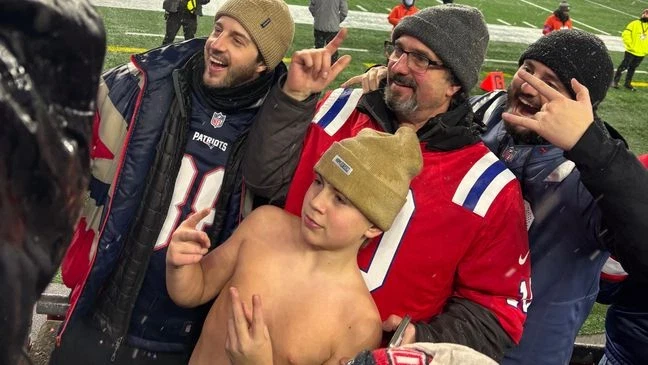
Landon’s own response to the attention has remained straightforward. When asked whether he had any regrets about the moment, his answer was a simple and confident “No.” That response aligns with the circumstances surrounding the event. The action was not reckless, malicious, or intended to provoke controversy. Instead, it represented a brief expression of excitement in a setting where enthusiasm is expected and often celebrated. The absence of regret suggests that Landon views the experience as a positive, if unexpected, outcome of attending a game he already valued.
The incident also highlights the evolving relationship between live sports and digital culture. Stadiums are no longer isolated environments where moments remain confined to those present. With broadcast cameras, smartphones, and social platforms, fan reactions can become part of the broader entertainment narrative surrounding a game. In Landon’s case, a spontaneous decision intersected with professional media coverage, creating content that resonated with viewers well beyond the final whistle.
While viral fame is often fleeting, the experience has left a lasting impression on the Silva family. It serves as a reminder that in modern sports culture, fans are not just spectators but participants in a shared media ecosystem. A single moment, captured at the right time and shared widely, can elevate an ordinary fan into a recognizable figure overnight. For Landon Silva, that moment will likely remain a memorable footnote in his teenage years, tied forever to a Patriots playoff game and a family tradition decades in the making.