
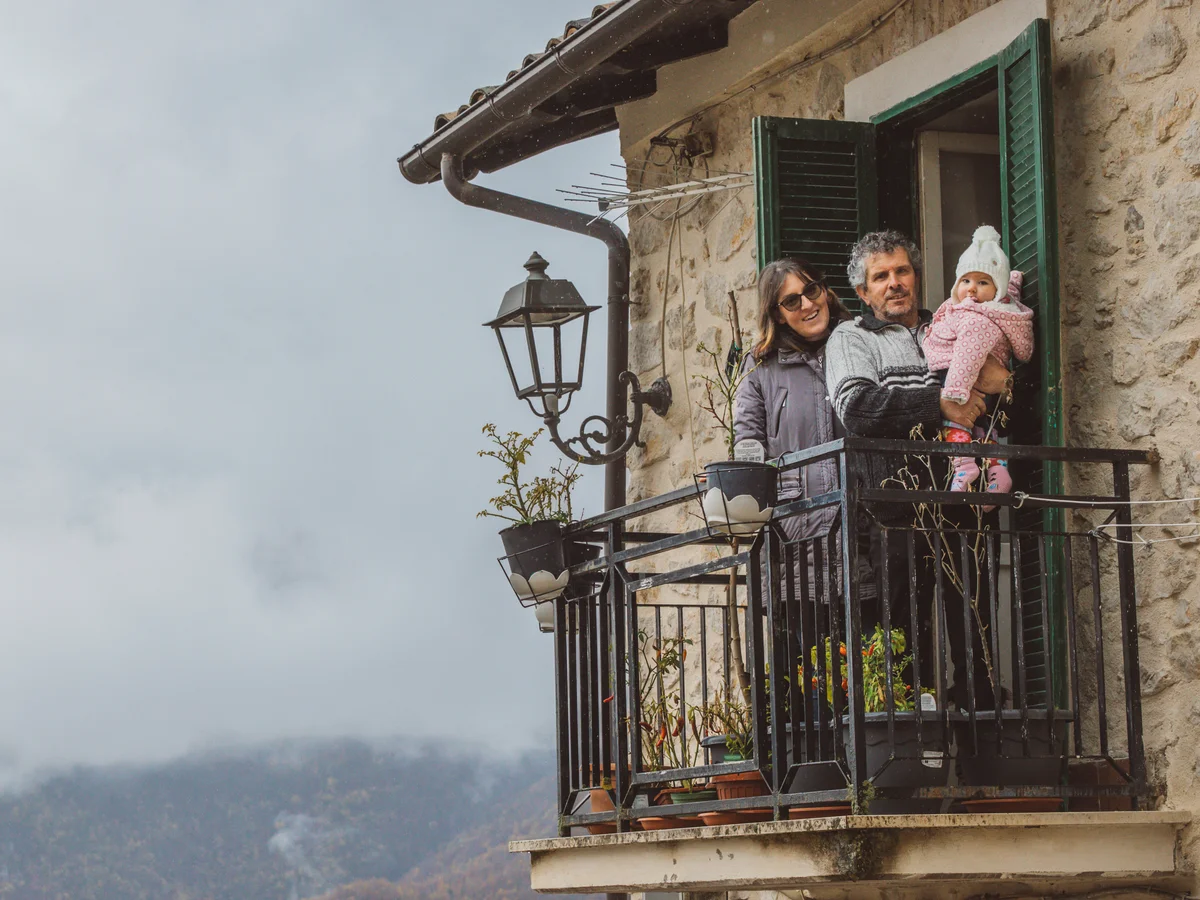
In Pagliara dei Marsi, a secluded rural village clinging to the slopes of Mount Girifalco in Italy’s Abruzzo region, silence has long been more common than celebration. With a population hovering around 20 residents and cats outnumbering humans by a wide margin, the village has for decades embodied the quiet consequences of demographic decline. Narrow stone streets echo with little more than footsteps and feline movement, while shuttered homes stand as reminders of families who left in search of work, education, and modern conveniences.
Against this backdrop, the birth of Lara Bussi Trabucco in March marked an extraordinary and emotional turning point for a community that had not welcomed a newborn in almost 30 years. Lara’s arrival has transformed Pagliara dei Marsi into a symbol of fragile hope amid Italy’s deepening population crisis.
Her christening filled the local church with residents who, for years, had gathered mostly for funerals rather than baptisms. Even the village’s cats, accustomed to ruling the streets uninterrupted, seemed part of the occasion. What might elsewhere be a private family milestone has here become a collective event, celebrated as evidence that life, however tentatively, can still return to places many had written off as destined to fade away.
A Village on the Brink and the Meaning of One Birth
Pagliara dei Marsi is not unique in its struggle, but its scale makes the reality stark. Perched in the mountainous west of Abruzzo, the village has been steadily emptied by a combination of economic stagnation, youth migration, and the ageing of its remaining residents. Over the years, elderly inhabitants passed away without a younger generation to replace them, leaving entire streets sparsely inhabited and public services gradually withdrawn. The local mayor, Giuseppina Perozzi, has described the village as suffering from “drastic depopulation, without any generational turnover,” a situation mirrored in hundreds of small Italian communities.
Within this context, Lara Bussi Trabucco’s birth has taken on symbolic weight far beyond her family. Her mother, Cinzia Trabucco, has noted that people who had never heard of Pagliara dei Marsi are now visiting simply to see the baby. At just nine months old, Lara has become the village’s most prominent resident and, unexpectedly, its main tourist attraction. Visitors come not only out of curiosity but also to witness something increasingly rare in rural Italy: the presence of a young child in a place otherwise defined by old age and decline.
For Trabucco and her partner, Paolo Bussi, the decision to raise a family in Pagliara dei Marsi was deliberate rather than accidental. Trabucco, a music teacher originally from near Rome, spent years working in the capital before choosing to return to the village where her grandfather was born. Her desire to escape urban chaos and raise a child in a quieter, more grounded environment led her back to a place many others had abandoned. Bussi, a construction worker from the area, shared her commitment to staying local. Together, they represent a rare case of adults choosing rural permanence over metropolitan opportunity.
Read : Biggest Strike in Samsung’s History Begins in South Korea as 6,500 Workers Walk Off the Job
Yet their choice also underscores how unusual such decisions have become. In many Italian villages, the infrastructure that once supported family life has eroded. Schools have closed, transport links are limited, and healthcare services are increasingly distant. Pagliara dei Marsi last had a resident teacher decades ago, when one individual taught children in a home that doubled as a classroom. Today, the nearest infant and primary school is in Castellafiume, a nearby town whose own future is uncertain amid nationwide school closures driven by falling birth rates.
Italy’s Demographic Crisis and the Limits of Financial Incentives
Lara Bussi Trabucco’s birth coincides with the most severe phase of Italy’s demographic downturn. According to Istat, the national statistics agency, Italy recorded just 369,944 births in 2024, the lowest figure since national records began. The fertility rate fell to 1.18 children per woman, placing Italy among the lowest in the European Union. Preliminary data from the first seven months of 2025 suggest that the decline is continuing, with Abruzzo experiencing a particularly sharp 10.2% drop in births compared with the same period the previous year.
The causes of this sustained decline are complex and deeply rooted. Economic insecurity remains a major factor, with precarious employment and low wages discouraging young adults from starting families. Italy has also experienced a prolonged wave of youth emigration, as graduates and skilled workers leave for better opportunities abroad. Structural issues, including inadequate childcare provision and limited workplace support for parents, further compound the problem. In parallel, broader social changes have led many people to consciously choose not to have children at all.

In response, the government led by Prime Minister Giorgia Meloni has framed the falling birth rate as a “demographic winter” threatening the nation’s future. Policies introduced since January 2025 include a one-off €1,000 payment for each child born or adopted, along with ongoing monthly child benefits. Trabucco and Bussi benefited from these measures following Lara Bussi Trabucco’s birth, receiving the bonus in addition to approximately €370 per month in child support.
While such incentives offer welcome financial relief, their impact appears limited when weighed against structural shortcomings. Trabucco herself has argued that money alone cannot reverse the trend. High taxation, she notes, does not translate into high-quality public services, leaving families to navigate childcare, education, and healthcare largely on their own. Italy’s childcare system remains chronically underdeveloped, particularly in rural areas, forcing many women out of the workforce during pregnancy or early motherhood and making re-entry difficult later on.
These challenges highlight a disconnect between political rhetoric and lived reality. Despite strong language about national survival, efforts to expand nurseries and childcare facilities have progressed slowly. For families like Lara Bussi Trabucco’s, daily life involves careful coordination around work schedules, limited local services, and uncertainty about the future availability of schools and medical care. The decision to have a child in such circumstances requires not only personal commitment but also a willingness to accept long-term risk.
Healthcare, Education, and the Strain on Rural Communities
The implications of Italy’s demographic decline extend beyond individual villages to the sustainability of essential services. About an hour’s drive from Pagliara dei Marsi lies Sulmona, a once-thriving city now engaged in a struggle to keep its maternity unit open. Located at Annunziata hospital, the unit delivered just 120 babies in 2024, far below the 500 births per year required under national guidelines to maintain funding. Closure would force pregnant women to travel to L’Aquila, the regional capital, a journey that can be dangerous during winter months.
Medical professionals have raised serious concerns about the risks involved. Gianluca Di Luigi, a gynaecologist at the hospital, has recalled cases in which women in labour were delayed for hours due to severe weather, resulting in emergency procedures and lasting trauma. For healthcare workers, the issue is not merely financial efficiency but patient safety in geographically challenging regions. Midwives like Berta Gambina, who has worked in the Sulmona unit for nearly four decades, argue that the 500-birth threshold is outdated and unrealistic for many areas, even during periods of higher fertility.
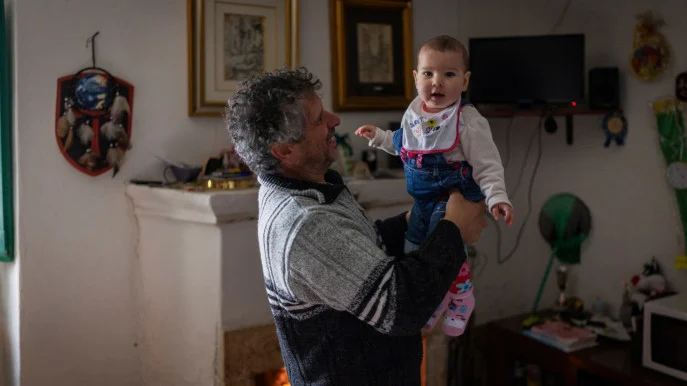
Education faces similar pressures. Declining student numbers have led to widespread school closures, particularly in rural and mountainous regions. Even where schools remain open, their long-term viability is uncertain. For Lara’s parents, the question of where their daughter will be educated is already a concern, despite her infancy. The disappearance of local schools not only affects families but also accelerates depopulation, as the absence of education options discourages young couples from settling or staying.
Political debate around these issues often centres on numbers, but local leaders stress the human dimension. Ornella La Civita, a city councillor in Sulmona, has questioned the logic of offering financial incentives for childbirth without guaranteeing safe and accessible places to give birth. Others point to overlooked aspects of the debate, such as fertility preservation. Di Luigi has argued that ideological resistance has long hindered open discussion about measures like egg freezing, which could help individuals reconcile delayed parenthood with biological realities.
Against this national backdrop, Pagliara dei Marsi stands as both exception and warning. Lara Bussi Trabucco’s presence has injected life and attention into a village that had grown accustomed to decline. Her birth has united residents in celebration and reminded observers that demographic trends are not abstract statistics but lived experiences shaping communities, services, and futures. At the same time, the extraordinary nature of her arrival underscores how rare such moments have become.
Whether Lara Bussi Trabucco’s birth will inspire others to follow her parents’ example remains uncertain. Without broader systemic change, villages like Pagliara dei Marsi may continue to rely on isolated acts of hope rather than sustainable renewal. For now, the sound of a baby in a place long defined by silence offers a powerful, if fragile, counterpoint to Italy’s demographic winter.
Heard about yakcasinoonline from a buddy. Gave it a spin and the selection of slots is HUGE! Plus, they have live dealers which is cool. Take a look for yourself: yakcasinoonline
Good write-up, I?¦m normal visitor of one?¦s blog, maintain up the excellent operate, and It is going to be a regular visitor for a lengthy time.
I have been browsing on-line greater than three hours today, yet I never found any fascinating article like yours. It is beautiful value enough for me. Personally, if all site owners and bloggers made just right content material as you probably did, the web might be much more useful than ever before.
I’ve recently started a website, the information you offer on this website has helped me greatly. Thank you for all of your time & work. “The only winner in the War of 1812 was Tchaikovsky” by Solomon Short.
**mitolyn official**
Mitolyn is a carefully developed, plant-based formula created to help support metabolic efficiency and encourage healthy, lasting weight management.