
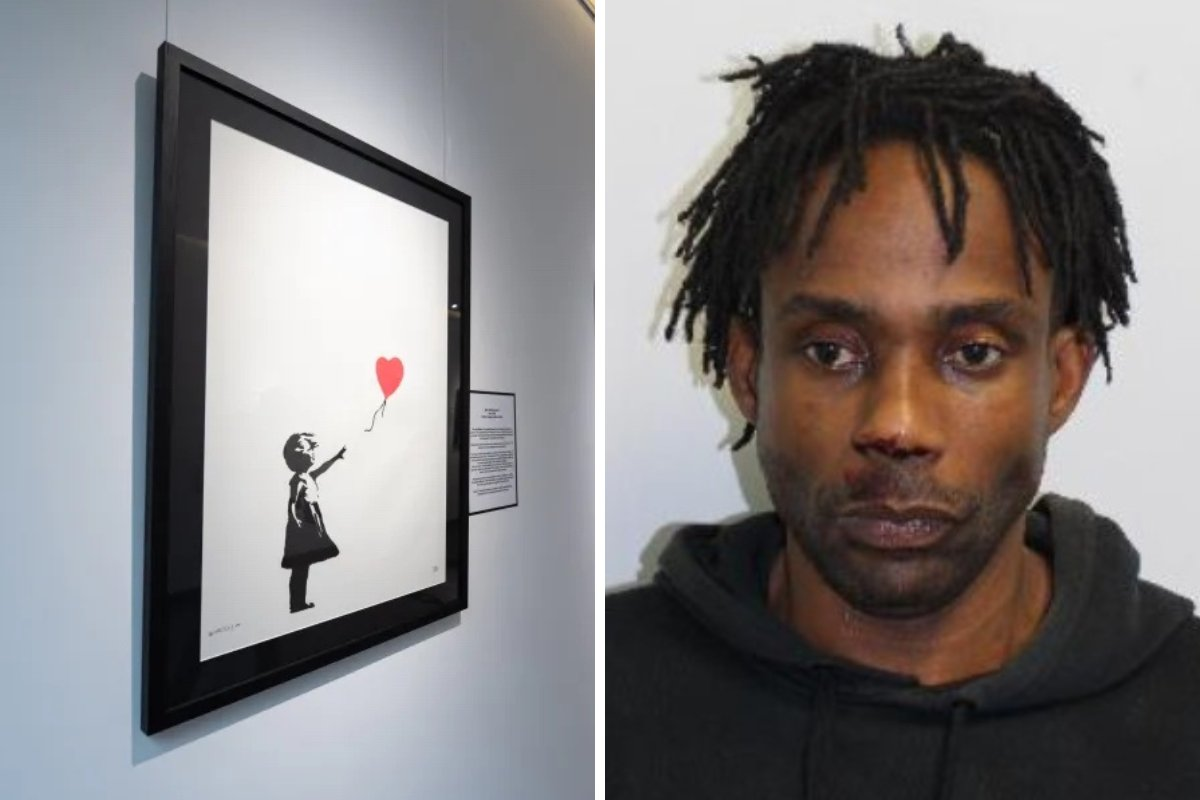
The dramatic theft of a valuable Banksy artwork from a London gallery has drawn widespread attention not only for the high-profile nature of the piece stolen but also for the unusual circumstances surrounding the offender. Larry Fraser, a 49-year-old man from Beckton in east London, received a 13-month prison sentence after admitting to breaking into the Grove gallery in Fitzrovia and taking a limited-edition Girl With Balloon print valued at £270,000.
The crime, executed in September of the previous year, was described by the sentencing judge as a brazen and serious burglary, even as the court acknowledged Fraser’s personal background, including his history of drug addiction and the debt that prompted him to commit the offence. The case has raised questions about art theft, personal coercion, the recovery of stolen artworks, and the challenges individuals with previous addictions face when old liabilities resurface years after they have attempted to rebuild their lives.
A Carefully Executed Break-In and the Immediate Recovery of the Artwork
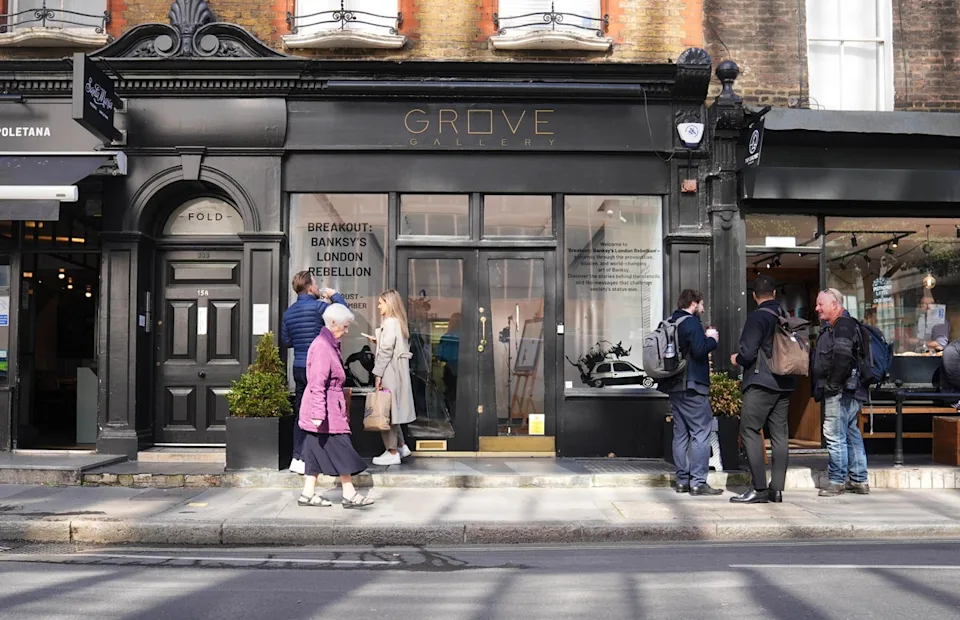
CCTV footage played a central role in reconstructing the events of the night of the burglary. According to the prosecution’s account, Larry Fraser spent around ten minutes outside the Grove gallery shortly before 11 p.m., appearing to survey the site before acting. He was then seen repeatedly striking the glass door with a heavy object until the panel shattered, allowing him to enter the premises.
Once inside, he made his way directly to the signed and numbered Banksy print, suggesting at least some familiarity with its placement or a clear instruction from others about where it would be found. The exhibition from which the print was taken featured thirteen Banksy works valued collectively at more than £1.5 million, making the gallery a notable target for anyone seeking high-value art.
After the theft, the print was transported to a location in London Docklands where it was hidden inside a building. Its recovery took place on 12 September, four days after the burglary, when police acted on information provided by a third party. Officers from the Metropolitan Police’s flying squad were credited with the swift recovery, a point emphasized by DCI Scott Mather, who described the rapid return of the artwork as a testament to the dedication and efficiency of the squad.
Read : Louvre Museum’s Shattered Window from $102M Napoleonic Jewel Heist Steals Spotlight from Mona Lisa
The gallery’s manager expressed relief and gratitude upon seeing the work intact, stressing the significance of its return not only in financial terms but also in preserving the integrity of the exhibition. The value of the print, estimated at around £270,000, underscored the seriousness of the burglary. Although the artwork was recovered without damage, the court noted that such pieces are vulnerable to significant loss of value if harmed or improperly handled.
A man who stole one of British street artist Banksy's best-known paintings, "Girl with Balloon," from a London gallery in September of 2024 was jailed for 13 months on Friday, Nov. 14, 2025.
— GMA Integrated News (@gmanews) November 14, 2025
Larry Fraser, 49, used a hammer to smash his way into the Grove Gallery in the Fitzrovia… pic.twitter.com/82txBWlTI4
Despite the unusual trajectory of this particular print—from a public gallery to a secreted location and back again—its condition remained uncompromised, an outcome that the defence later referenced when discussing the broader impact of the incident. Nonetheless, the gravity of breaking into a gallery and targeting a high-value piece was central to the judge’s assessment of the case.
Larry Fraser’s Motive, Personal Circumstances, and the Court’s Sentencing Decision
During proceedings at Kingston crown court, it emerged that Larry Fraser committed the burglary while under pressure related to a historic drug debt. His plea described a situation in which he owed money to others and feared the consequences of failing to settle the outstanding amount. According to this account, he did not know in advance which item he would be expected to steal, learning the target only on the day the offence was committed.
The judge noted that while Larry Fraser might not have known the precise value of the Banksy print, he was unmistakably aware that he was stealing something of significant worth. Defence counsel emphasized that the plan itself did not originate with Fraser and that his participation stemmed from the combination of old obligations and coercive pressure. His lawyer also highlighted that Fraser had been free from criminal involvement for many years, with his last conviction dating back to 2002.
Following a prison sentence that included terms for robbery and unlawful wounding, Fraser had reportedly broken free from his cycle of addiction and lived quietly, serving as the principal carer for his mother. These elements were presented to the court as evidence of the life he had tried to build after his release in 2008. The judge, however, concluded that the seriousness of the burglary placed it beyond the threshold for a suspended sentence.
The method of the break-in, the value of the artwork, and the deliberate nature of the act all contributed to the decision to impose a custodial term. Nonetheless, because of Fraser’s time spent on electronic curfew prior to sentencing, he may be eligible for immediate release. This detail reflects a broader tension present throughout the case: the offence itself was grave, yet the defendant’s recent record and personal circumstances were markedly different from the individual described in his earlier convictions.
Jeffrey Israel, representing Fraser, acknowledged the peculiarity of the situation by remarking on how unusual it would be to claim that the value of the artwork increased because of the incident, yet noting that such a result might indeed occur given the notoriety of art thefts involving prominent works. While this comment served partly as mitigation, it also spoke to the complex ways in which high-profile artworks can accrue additional layers of public attention through the circumstances surrounding their disappearance and recovery.
Broader Implications for Art Security, Public Trust, and the Pressures Facing Individuals with Past Addictions
The theft of a Banksy print, even for a short period, raises broader concerns about the security of high-value art in gallery environments, especially those displaying pieces that are both financially and culturally significant. The Grove gallery had been exhibiting an impressive collection of works by an artist whose creations are widely recognizable and frequently discussed in both art circles and mainstream media.
That the burglary was carried out with such force—breaking through the glass door of a central London gallery—underscores the risks galleries face when exhibiting valuable works in urban settings accessible to the public. While galleries often balance accessibility with security measures, incidents like this highlight the need for constant vigilance and updated protective strategies.
In addition to the security issues, the case also illuminates the long-term pressures that can persist for individuals who have struggled with addiction. Even after Fraser reportedly overcame his own dependency issues and rebuilt his life over several years, the lingering financial and social consequences of his past resurfaced in a way that contributed to the crime. This aspect of the case is important for understanding the complexity of rehabilitation and the challenges that remain even after someone has made significant personal progress.
It also raises questions about the support systems available to individuals attempting to rebuild stability after periods of addiction and criminal involvement. The court’s handling of Fraser’s background and motive also provides insight into how the justice system balances the severity of an offence with the personal circumstances of an offender. In this instance, the judge acknowledged the pressures Fraser faced and the fact that the plan did not originate with him, yet ultimately determined that the burglary was too serious for a non-custodial sentence.
This assessment reflects the legal system’s responsibility both to address the harm caused by such crimes and to consider the broader context in which they occur. Fraser’s long period without offending was a significant factor but could not outweigh the deliberate nature of breaking into a gallery to steal a work of art worth hundreds of thousands of pounds.
The involvement of a second man, James Love, who was acquitted of acting as a getaway driver, introduced another dimension to the case. His acquittal shows the court’s insistence on clear evidence when attributing responsibility. In contrast to Larry Fraser’s admitted role in the break-in, the accusation against Love did not meet the threshold required for a conviction, demonstrating the independent evaluation of each defendant’s involvement.
The Metropolitan Police’s rapid recovery of the artwork strengthened public confidence in law enforcement’s ability to respond swiftly to crimes involving cultural property. The flying squad’s involvement underscored the seriousness with which police treat art thefts, particularly when they involve globally recognized artists like Banksy. The prompt action also provided timely reassurance to the gallery and its patrons, ensuring that the disruption to the exhibition was minimized.
Finally, the reflections of the Grove gallery’s manager captured the emotional dimension of art theft beyond the monetary value. The shock of discovering that such a prominent piece had been stolen, followed by relief at its safe return, highlighted the deep connection galleries maintain with the works they display. The recovery of the piece not only preserved the integrity of the exhibition but also reaffirmed the importance of coordinated efforts between galleries and law enforcement in protecting cultural assets.
Một ưu điểm hoàn hảo tại nổ hũ Fun 88 đó chính là giao diện vô cùng bắt mắt, đẳng cấp cùng luật chơi rõ ràng. 188V Một số sản phẩm siêu hút chân cộng đồng cược thủ có thể kể đến như ăn khế trả vàng, kho kháu tứ linh, ngọn lửa chibi, long quy chi bảo,… TONY03-11O
888slot com apk – cái tên top đầu trong lĩnh vực cá cược, đã chọn 888slot com apk GAME làm đại lý chính thức để cung cấp link truy cập an toàn. Đây là đại lý được cấp quyền trực tiếp, chịu trách nhiệm cung cấp đường link 888slot com apk ổn định và bảo mật tại Việt Nam. Để không bỏ lỡ 150.000 VNĐ tiền cược trải nghiệm miễn phí; 100% tiền nạp đầu và vô số ưu đãi độc quyền khác, hãy đăng ký tài khoản tại 888slot com apk GAME với thông tin chính chủ ngay hôm nay. TONY03-11O