

Laurent Simons has once again captured international attention by achieving a milestone that places him among the youngest PhD holders in history. At just 15 years old, the Belgian-born prodigy successfully defended his doctoral thesis in quantum physics at the University of Antwerp, marking another extraordinary chapter in a life defined by remarkable academic acceleration.
His journey has been characterized by early intellectual maturity, a relentless drive to explore the boundaries of scientific understanding, and an ambitious long-term objective: unraveling the science behind human immortality.
While many teenagers his age are occupied with secondary school, Laurent Simons continues to push into research that spans some of the most complex frontiers of physics and medical science. His latest accomplishment comes alongside a newly begun second doctoral program in Munich, where he aims to merge artificial intelligence with medical research to pursue what he has described for years as his ultimate mission.
Early Academic Breakthroughs and the Path to an Extraordinary PhD
Laurent Simons’s rapid progression through the educational system began almost as soon as he entered it. Born in Belgium and raised in the Netherlands, he was identified early on as having a uniquely advanced intellectual capacity. By the age of eight, he had already completed high school—an achievement that even among gifted children is virtually unprecedented.
This astonishing pace attracted global media attention, particularly when he attempted to earn an engineering degree before turning ten. Although administrative scheduling conflicts prevented him from completing the electrical engineering curriculum at Eindhoven University of Technology on his own timeline, the setback did little to slow his ambitions.
He soon transitioned to the University of Antwerp, where he embarked on a bachelor’s degree in physics. While the typical program spans three years, Laurent Simons completed all requirements in just eighteen months and graduated with distinction. His interest in the fundamental laws governing the universe, combined with an ability to absorb advanced material at remarkable speed, made physics a fitting domain for his intellectual abilities.
Professors familiar with his work described him as unusually focused, inquisitive, and committed to mastering the conceptual foundation behind complex theories rather than relying solely on memorization or acceleration. Following his bachelor’s degree, Laurent Simons immediately progressed to a master’s program in quantum physics. Once again moving at a pace far beyond conventional expectations, he completed all course work in a single semester.
The second semester was dedicated entirely to research, allowing him to pursue an intensive thesis project and complete an internship in quantum optics at the Max Planck Institute in Germany.
Read : Emerging Nations: Unveiling the World’s Youngest Sovereign State
This experience began shaping his interest in bridging physics with medical sciences, a connection that would later influence the direction of his second doctorate. His master’s work, which involved exploring analogies between ultracold boson states and black holes, placed him directly in the realm of cutting-edge theoretical physics, where extreme states of matter offer insight into both cosmological and quantum-scale phenomena.
The Quantum Physics Thesis: Exploring Bose Polarons and Supersolids
Laurent Simons’s doctoral dissertation, titled “Bose polarons in superfluids and supersolids,” engages with one of the most challenging and active areas of contemporary quantum research. A Bose–Einstein condensate, the conceptual foundation of his topic, forms when particles known as bosons are cooled to temperatures near absolute zero. At this point, they exhibit collective behavior and effectively function as a single quantum object.
This state of matter has long been invaluable to physicists because it provides an adjustable laboratory for studying many-body interactions that are otherwise difficult to observe. Within this environment, impurities introduced into the condensate behave as polarons—entities that become “dressed” by interactions with surrounding particles. These complex interactions offer insight into broader quantum systems and have implications for materials science, superconductivity, and the simulation of exotic phases of matter.
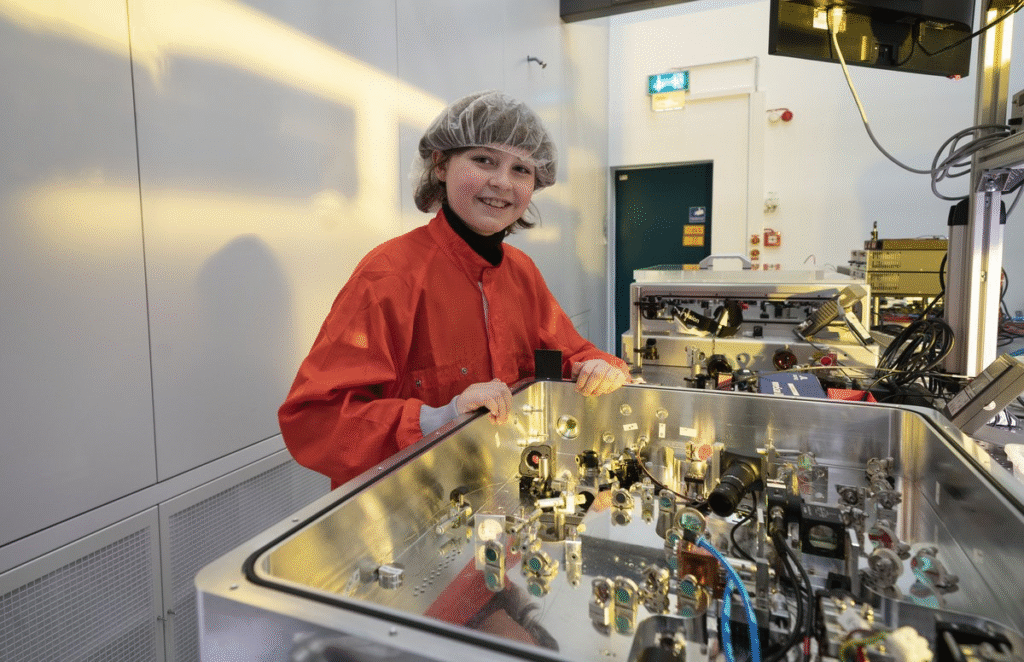
Laurent Simons’s research extends into the study of supersolids, highly unusual states that combine the rigid structural order of a crystal with the frictionless flow of a superfluid. This combination defies conventional distinctions between solid and fluid phases and remains central to ongoing developments in condensed matter physics. The University of Antwerp noted that Laurent’s work contributes to the theoretical understanding of these systems and helps refine models that researchers use to explore them.
His successful defense of this dissertation highlights not only his command of mathematical physics but also his capacity to participate meaningfully in scientific discussions that often require years of advanced study to comprehend. Professors involved in the evaluation emphasized the quality of his reasoning and his ability to connect theoretical constructs with underlying physical principles. This accomplishment is particularly extraordinary when considered in the broader context of his age.
While prodigies occasionally appear in mathematics or classical fields such as philosophy, it is extremely rare for someone so young to contribute to an area as technically demanding as quantum physics. Laurent Simons’s IQ of 145, classified as highly gifted by standardized measures such as the Wechsler and Stanford–Binet scales, undoubtedly supports this aptitude, but his trajectory also reflects discipline, curiosity, and an intrinsic motivation to challenge himself.
New Research Horizons and the Pursuit of Human Immortality
Laurent Simons has been open for years about his long-term goal: achieving a form of human immortality through scientific innovation. He first described this aspiration at age eleven, stating that his ultimate interest lay in helping humans live indefinitely. While visions of “super-humans” might seem speculative or futuristic, Laurent views them through a scientific lens, linking the problem to biological repair, regenerative medicine, and computational modeling of human systems. His recent decision to enroll in a second doctoral program reflects this shift toward interdisciplinary research.
Read : Who Is George Finch Who Becomes the Youngest Leader of Warwickshire County Council
Immediately after defending his thesis in Antwerp, Laurent Simons returned to Munich to begin his new PhD in medical science with a specialization in artificial intelligence. This program positions him at the intersection of computational methods, biological modeling, and medical innovation. The integration of AI with medicine has become an increasingly powerful approach in fields such as genomics, drug discovery, diagnostic imaging, and personalized therapies. For someone with Laurent’s physics training, AI offers a computational extension of the analytical frameworks he has already mastered.
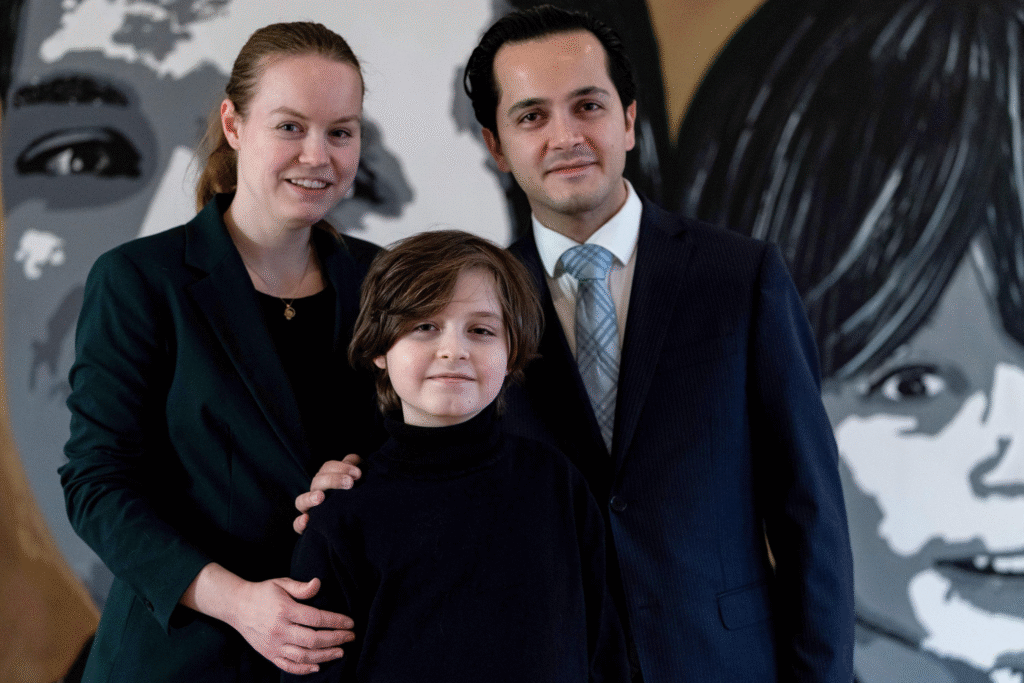
While the concept of immortality remains scientifically complex and ethically multifaceted, Laurent Simons approaches it as a long-term research ambition rather than a metaphor or philosophical idea. His exposure to quantum systems, many-body interactions, and ultracold phenomena offers a scientific thinking style suited to dissecting biological and medical challenges. At the Max Planck Institute, his introduction to quantum optics provided a glimpse of how physics-based techniques can illuminate biological processes, and he has since described the connection between physical sciences and medicine as essential to his future work.
His aspirations align with broader scientific efforts in longevity research, where advances in cellular repair, genetic engineering, and regenerative systems are continually expanding our understanding of human aging. Although the goal of eliminating aging entirely remains beyond current scientific capability, researchers are increasingly focused on extending healthy lifespan, postponing age-related decline, and modulating cellular deterioration. Laurent Simons’s long-term vision places him within this evolving field, though he approaches it with the ambition characteristic of his academic history: pushing boundaries rather than simply contributing incrementally.
Academic institutions involved in his development have responded with a combination of caution and encouragement. On one hand, educators acknowledge the importance of ensuring that young prodigies experience a balanced progression that supports their development beyond academics. On the other, they recognize Laurent Simons’s extraordinary capability to grasp and contribute to sophisticated research problems. His family has played an active role in guiding these decisions, ensuring that he remains challenged without being overwhelmed.
The coming years will likely reveal how his interests evolve and how his dual expertise in physics and medical science shapes his research direction. His second doctorate may signal a transition toward areas such as computational biology, biomedical engineering, or neurotechnology. Alternatively, he may pursue a hybrid path, applying quantum principles to biological modeling or leveraging AI to simulate physical systems that inform medical applications. For now, what is clear is that Laurent Simons remains focused, motivated, and determined to continue pushing his intellectual boundaries well beyond conventional expectations for any age.
Laurent Simons’ achievement at fifteen stands as one of the most striking examples of young academic accomplishment in recent decades. His PhD in quantum physics, coupled with an unwavering ambition to explore the limits of human potential, positions him as a unique figure in both scientific and public spheres. With a second doctorate underway and a long-term research vision that spans disciplines, Laurent continues to expand the possibilities of what an exceptionally gifted young scientist can accomplish.
Having trouble getting into Bong88? The linkbong8899 site actually works! It’s a good alternate way to access the platform. Happy betting bro! Visit the link here: linkbong8899