

A legal dispute involving a globally recognized piece of music and a comedian’s interpretation of it has sparked widespread debate about artistic ownership, cultural meaning, and the limits of humor. South African composer Lebohang Morake, widely known as Lebo M, has filed a lawsuit seeking more than $27 million in damages against Zimbabwean comedian Learnmore Jonasi.
The case centers on a joke Jonasi made during a podcast appearance, in which he humorously translated the iconic opening chant from the 1994 film The Lion King. What may have begun as a lighthearted remark has now escalated into a high-stakes legal battle with broader implications for creative expression and cultural sensitivity. The controversy highlights the enduring significance of the song “Circle of Life,” whose opening chant has become one of the most recognizable musical moments in cinematic history.
Lebo M, credited as the voice behind that powerful introduction, has argued that the comedian’s remarks misrepresented the meaning of the chant and potentially harmed the cultural and artistic value associated with it. Meanwhile, Jonasi has defended his statement as a joke intended to entertain and spark conversation, not to misinform or offend.
The Disputed Joke and Its Cultural Context
The dispute originated from Jonasi’s appearance on the One54 Africa podcast, where he joked that the Zulu phrase “Nants’ingonyama bagithi Baba” translates to “Look! There’s a lion! Oh my god!” While the remark was clearly framed in a comedic context, Lebo M took issue with what he described as a false statement of fact about the meaning of the composition. According to the composer, the phrase actually translates to “All hail the king, we all bow in the presence of the king,” reflecting a deeper cultural and symbolic message tied to themes of leadership, reverence, and tradition.
For Lebo M, the issue extends beyond a simple mistranslation. The opening chant of “Circle of Life” is rooted in African language and musical heritage, and it plays a crucial role in setting the tone for the film’s narrative about the cycle of life, authority, and responsibility. By presenting an alternative and humorous interpretation, the comedian’s remark was seen by the composer as diminishing the artistic and cultural integrity of the work.
The significance of the chant lies not only in its lyrical meaning but also in its emotional resonance. It serves as the gateway to a story that has captivated audiences worldwide for decades. As such, Lebo M’s concerns appear to stem from a desire to preserve the authenticity and intended message of a composition that has become emblematic of African musical influence in global cinema.
Read : Why Everyone is Walking Barefoot in Australia Nowadays
Jonasi, however, has maintained that his comment was never intended to be taken literally. In comedy, exaggeration and playful reinterpretation are common tools used to engage audiences. His joke, as he later explained, was part of a broader effort to entertain listeners while also drawing attention to a familiar cultural reference point.
Escalation to Legal Action and Public Reactions
The situation intensified after an alleged confrontation between the two individuals. Jonasi later shared that when Lebo M approached him about the joke, the interaction quickly turned tense. According to the comedian, he attempted to clarify that he admired the composer’s work and that his statement was purely comedic in nature. He also suggested that the moment could serve as an opportunity for education, allowing the composer to explain the true meaning of the chant to a wider audience.
Read : 11-Year-Old Being Sued Over Fatal E-Bike Crash That Killed 4-Year-Old Ayden Fang
Despite this, the disagreement did not resolve amicably. Jonasi claimed that he was subjected to personal criticism during the exchange, including being labeled negatively. He described the interaction as less about addressing the joke itself and more about questioning his character, which further strained the situation.
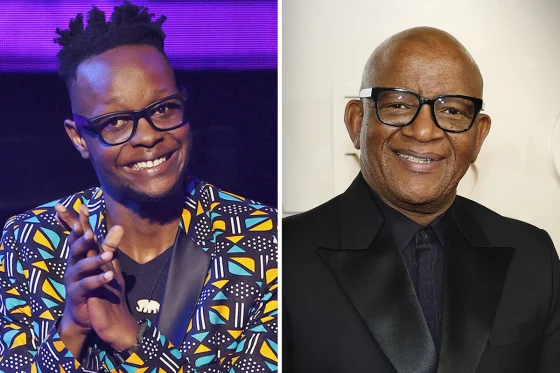
Shortly thereafter, legal action was initiated. Lebo M filed a lawsuit on March 16, seeking substantial financial damages on the grounds that the comedian’s statement could harm his reputation and the value of his work. The claim suggests that misrepresenting the meaning of such a widely recognized piece of music could have lasting consequences, particularly given its association with a globally successful film and its continued cultural relevance.
Jonasi later revealed that he was formally served with the lawsuit during one of his comedy performances at the Laugh Factory in Los Angeles. The moment became part of his act, as he humorously recounted the experience to his audience, blending the real-life legal development into his comedic narrative. This response reflects his ongoing approach to the situation, treating it as both a serious matter and a subject for humor.
Public reaction to the case has been mixed. Some observers have expressed support for Lebo M’s stance, emphasizing the importance of respecting cultural works and accurately representing their meaning. Others have defended Jonasi, arguing that comedy often involves creative liberties and that jokes should not be interpreted as factual claims. The divide in opinion underscores the complexity of balancing artistic protection with freedom of expression.
Broader Implications for Comedy, Culture, and Creativity
Beyond the individuals involved, the lawsuit raises important questions about the boundaries of comedy and the responsibilities that come with engaging with culturally significant material. Comedy has long been a medium through which societal norms, traditions, and ideas are explored and sometimes challenged. However, when humor intersects with cultural heritage, the potential for misunderstanding or offense increases.
Read : Croft School Parent Sues Founder Scott Given for Running Classic Ponzi Scheme with School Bonds
In this case, the tension lies in whether a comedic reinterpretation can be considered harmful if it alters the perceived meaning of a culturally rooted expression. Lebo M’s position suggests that such reinterpretations, even when intended as jokes, can undermine the authenticity and value of artistic works. From this perspective, protecting the integrity of cultural expressions becomes a priority, particularly when they hold deep symbolic significance.

On the other hand, Jonasi’s defense highlights the role of comedy in fostering dialogue. By presenting an alternative interpretation, even a humorous one, he argues that he has contributed to renewed interest in the song and the film. According to his account, some audience members were inspired to revisit The Lion King after hearing the joke, suggesting that humor can also serve as a gateway to rediscovery and engagement.
The legal aspect of the case adds another layer of complexity. Defamation claims typically require proof that a false statement presented as fact caused harm. In the context of a comedy routine, distinguishing between factual assertion and humorous exaggeration can be challenging. Courts often consider the intent, context, and audience perception when evaluating such cases, making the outcome uncertain.
The financial scale of the lawsuit also reflects the high stakes involved. Seeking more than $27 million in damages signals the seriousness with which Lebo M views the issue, as well as the perceived impact on his reputation and legacy. At the same time, the figure has drawn attention to the broader question of how damages are assessed in cases involving artistic and cultural disputes.
This case may ultimately influence how comedians approach material related to culturally significant works. It could encourage greater caution and awareness, particularly when dealing with languages, traditions, or artistic expressions that carry deep meaning. Conversely, it may also prompt discussions about the need to protect creative freedom and ensure that humor remains a space for exploration and expression.
As the legal proceedings unfold, the dispute continues to capture public interest, not only because of the individuals involved but also because of the themes it represents. It sits at the intersection of art, culture, law, and entertainment, illustrating how a single joke can evolve into a complex and far-reaching controversy.