
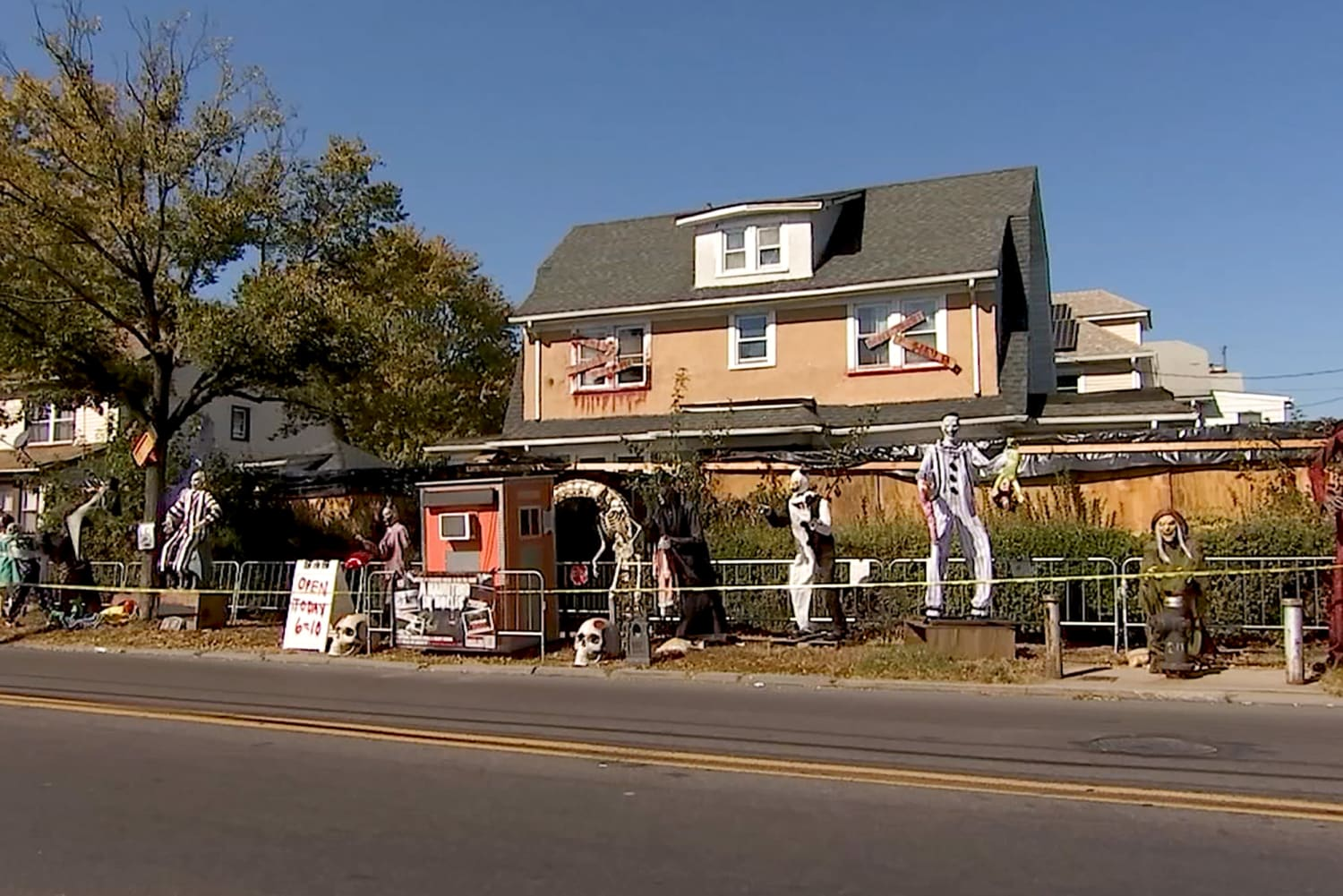
In a renewed legal battle highlighting safety concerns at seasonal attractions, Leslie Blake, a resident of Lincoln, Nebraska, has filed a lawsuit against Full Moon Productions, the operator of the renowned ‘The Beast Haunted House’ in Kansas City’s West Bottoms neighborhood. The suit, lodged last Tuesday in Jackson County Circuit Court, alleges negligence and recklessness stemming from a 2021 incident where Blake suffered severe ankle injuries during a featured stunt known as the “Beast Jump.” This marks the second time Blake has pursued legal action against the company, following a dismissed case in 2023. As Halloween approaches, the filing underscores ongoing debates about liability waivers and risk management in the haunted entertainment industry.
The Beast, a sprawling 20,000-square-foot attraction that draws tens of thousands of visitors annually, is celebrated for its intense, multi-level scares, including live actors, pyrotechnics, and interactive elements. Full Moon Productions, which also runs The Edge of Hell and Macabre Cinema in the same district, has built a reputation for pushing boundaries in horror experiences. However, Leslie Blake’s complaint centers on what she describes as preventable hazards in one of its signature features, raising questions about participant safety amid the thrill-seeking appeal of such venues.
The Incident: A Night of Terror Turns to Trauma
On October 30, 2021—Halloween eve—Leslie Blake, then 42, arrived at The Beast with a group of friends eager for an adrenaline-fueled evening. The attraction, which spans multiple stories of a former warehouse, is designed to immerse visitors in a labyrinth of darkness, sudden drops, and simulated horrors. Midway through the tour, participants encounter the “Beast Jump,” an optional stunt where guests leap from a second-story window onto an inflatable landing pad below, mimicking a dramatic escape from pursuing “monsters.”
According to the lawsuit, Leslie Blake was explicitly instructed by attraction staff on how to execute the jump safely. She claims to have followed these directions precisely: aiming for the center of the pad, keeping her body straight, and landing feet-first. However, upon impact, the pad—allegedly under-inflated and improperly positioned—failed to cushion her fall adequately. Blake shattered bones in both ankles, requiring immediate medical attention and subsequent surgeries.
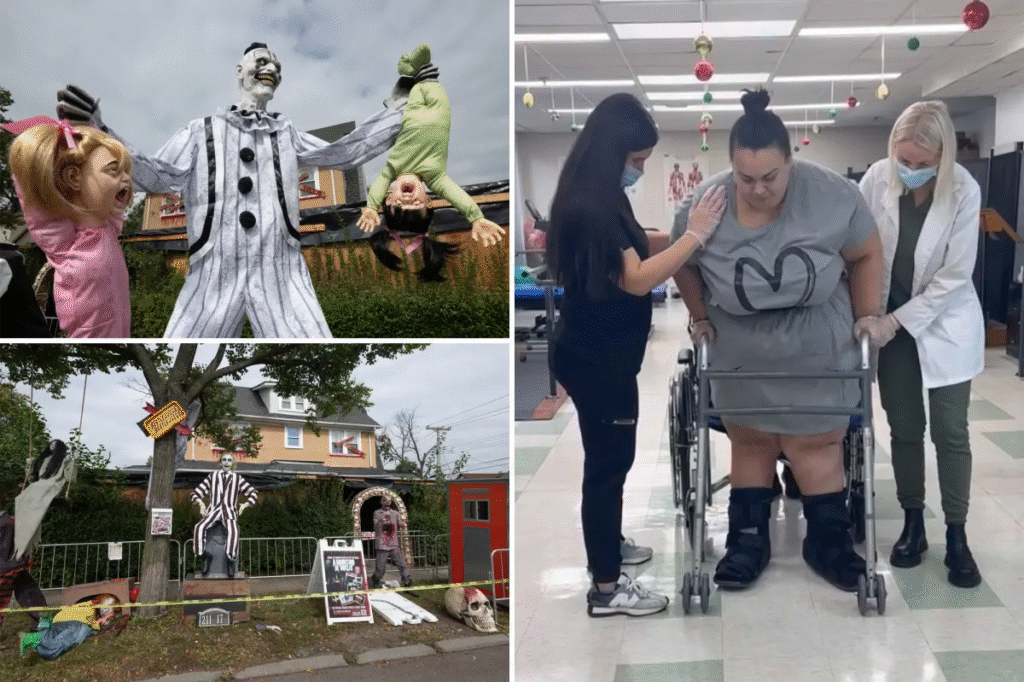
Court documents detail the immediate aftermath: Blake was unable to walk and was transported to a nearby hospital, where X-rays revealed multiple fractures in her left and right ankles, including compound breaks that necessitated the insertion of plates and screws. She underwent two separate surgical procedures over the following months, followed by extensive physical therapy sessions that extended into 2022. The suit estimates her medical costs alone at over $75,000, not including lost wages from her job as an administrative assistant, where she was sidelined for nearly six months.
Leslie Blake’s attorney, Maria Gonzalez of the Lincoln-based firm Hargrove & Ellis, emphasized in the filing that the jump was promoted as a “safe thrill” without adequate warnings about the pad’s condition. “Ms. Blake trusted the operators to maintain equipment that could make or break—literally—her experience,” Gonzalez stated in a press release accompanying the suit. “This wasn’t just an accident; it was a foreseeable failure in basic safety protocols.”
Read : Discovering Wildlife Wonders: A Journey Through Toronto Zoo
Eyewitness accounts from Leslie Blake’s companions, included as exhibits in the lawsuit, corroborate her version. One friend described the pad as “sagging noticeably” before the jump, while another noted that no staff member checked its inflation level in the hour leading up to the incident. The group had paid $30 per ticket, standard for general admission, with the jump presented as an upsell for extra excitement.
This event occurred during peak season, when The Beast reportedly hosted over 1,000 visitors per night. Fire marshals and local inspectors had cleared the venue earlier that week, but the suit argues that daily equipment checks were insufficient, particularly for high-impact features like the air pad, which relies on continuous electric blowers for proper inflation.
Legal Background: Dismissal, Refiling, and Broader Implications
Leslie Blake’s pursuit of justice began in earnest in early 2023, when she first sued Full Moon Productions in Jackson County for negligence, seeking $250,000 in damages. That initial complaint mirrored the current one, citing the same injuries and equipment failures. However, the case was dismissed in October 2024 after Blake’s legal team failed to respond to a summary judgment motion filed by the defense.
Full Moon’s 2023 motion hinged on a digital liability waiver Blake signed via iPad upon entry. The waiver, a standard requirement for all Full Moon attractions, explicitly outlines “inherent risks” including falls, impacts, and potential for “serious physical injury or even death.” It requires visitors to acknowledge that they are participating at their own peril and waive rights to sue for related harms. Defense attorneys argued Blake had ample time to review the document—”no issues with reading or reviewing,” as they phrased it—and that the jump’s risks were “obvious and assumed.”
The dismissal was without prejudice, allowing Leslie Blake to refile within the statute of limitations. Her team did so promptly last week, bolstering the new suit with additional evidence: expert testimony from a biomechanical engineer who analyzed similar air pad systems and concluded that proper inflation should absorb falls from 12-15 feet with minimal injury risk. The engineer, Dr. Elena Vasquez, opined that the pad in question was at least 30% underinflated, based on post-incident photos and staff deposition transcripts from the prior case.
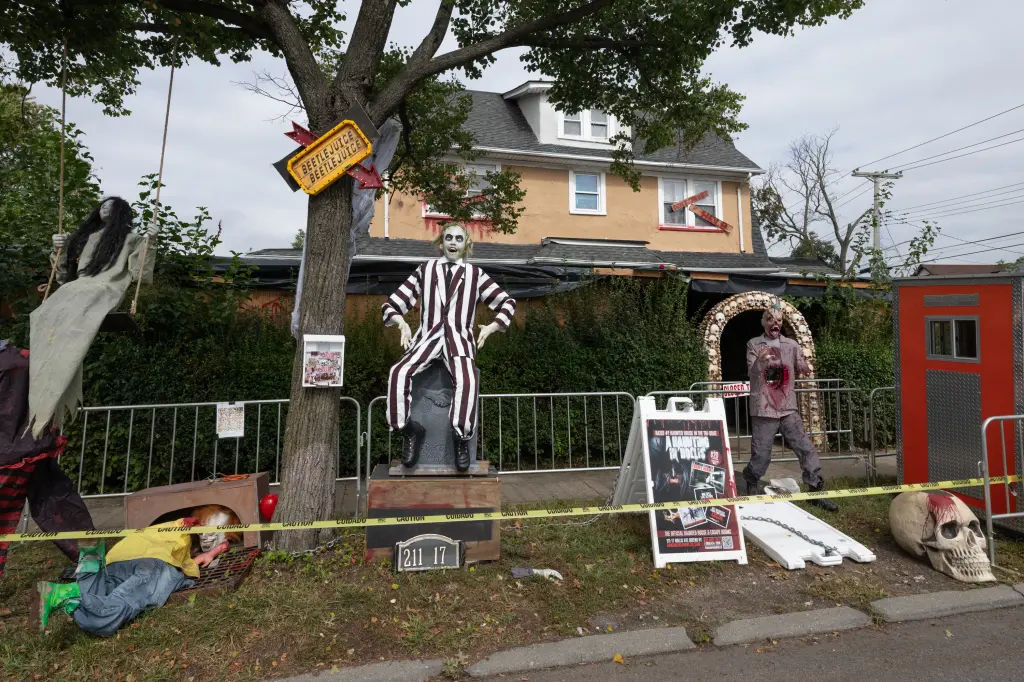
This refiling arrives amid a surge in haunted house litigation nationwide. In 2024 alone, at least a dozen suits were filed against seasonal attractions, from slip-and-fall claims in corn mazes to prop-related injuries in escape rooms. Industry experts attribute this to post-pandemic inflation in operational costs, leading some operators to cut corners on maintenance. The International Association of Amusement Parks and Attractions (IAAPA) reported a 15% uptick in injury claims last year, though fatalities remain rare.
For Full Moon, the stakes extend beyond Blake’s case. The company faces two other pending suits from 2022 and 2024 incidents at The Edge of Hell: one involving a tripped visitor with a concussion, and another alleging improper restraint during a drop ride. These cases collectively seek over $500,000, pressuring the small business—which employs 150 seasonal workers—to bolster insurance premiums already strained by rising claims.
Missouri law favors operators with robust waivers, but courts have invalidated them in instances of “gross negligence,” such as willful disregard for safety. Blake’s suit aims to prove exactly that, arguing the underinflated pad constituted reckless endangerment. A hearing on preliminary motions is scheduled for December 15, 2025.
Response from Full Moon Productions: Defending the Thrill
Full Moon Productions responded swiftly to the refiled suit, issuing a statement to local media outlets like The Kansas City Star. “We are saddened by Ms. Blake’s injuries but stand by our commitment to safety,” said spokesperson Tyler Harlan. “The Beast Jump was a voluntary element with clear instructions, and all participants sign waivers acknowledging the risks. Ms. Blake did not follow directions as provided, per our records.”
The company confirmed the jump feature has been permanently discontinued following the 2021 season, citing “evolving guest preferences” rather than safety issues. Instead, The Beast now emphasizes walkthrough scares and virtual reality enhancements. Harlan highlighted the attraction’s accolades: voted America’s best haunted house in 2019 by HauntWorld and named a “legendary haunt” in 2023 by America Haunts, the trade group for professional haunters.
Safety protocols remain a cornerstone of Full Moon’s operations, per the statement. Each night, venues undergo inspections by on-duty fire guards, with security personnel and emergency medical technicians on site. Visitors receive verbal and posted briefings on navigation rules: no running, stay in marked paths, and report concerns immediately. The waiver process, digitized for efficiency, includes a mandatory scroll-through of terms, with staff available to answer questions.
In anticipation of dismissal, Full Moon plans to file another motion for summary judgment, echoing the successful 2024 strategy. “We anticipate the court will again recognize the enforceability of our waiver and the assumed risks of immersive entertainment,” Harlan added. The company has not commented on settlement discussions, though sources close to the matter indicate none are underway.
Leslie Blake’s attorney dismissed the response as “defensive posturing.” “Discontinuing the jump after one lawsuit doesn’t absolve prior negligence,” Gonzalez said. “Full Moon profits from fear, but fear shouldn’t mean broken bones without recourse.”
As the case unfolds, it spotlights the delicate balance in the $10 billion haunted attractions industry: delivering heart-pounding fun without crossing into peril. For visitors planning Halloween outings, experts recommend scrutinizing waivers, heeding instructions, and opting out of high-risk stunts. Blake, now fully recovered but with lingering arthritis, hopes her suit prompts stricter standards. “I wanted a scare, not a lifetime limp,” she told reporters outside the courthouse. “No one should leave a haunt in an ambulance.”