
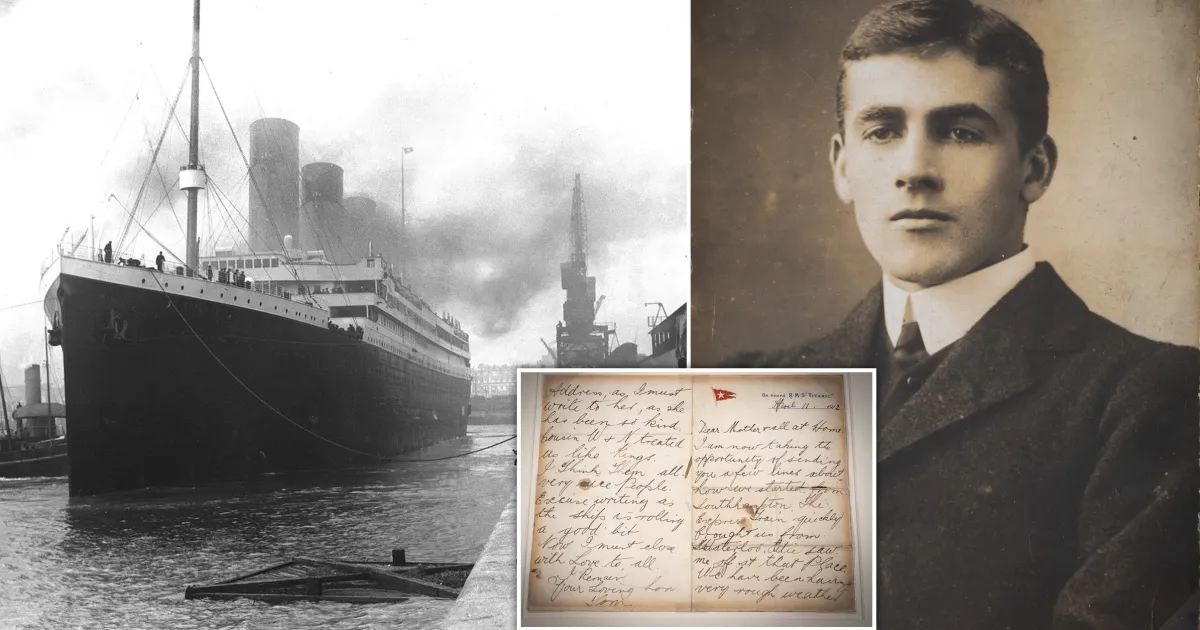
Letter written by 16-year-old victim of Titanic accident has been put up for auction at London’s Forum Auctions, expected to fetch up to £30,000. This letter, penned by Thomas Cupper Mudd, one of the youngest passengers who perished in the 1912 tragedy, is a haunting reminder of the human stories behind the disaster.
Sent to his mother from the Titanic’s last port of call, Queenstown, now known as Cobh, the letter provides an intimate glimpse into the life of a young boy embarking on what he thought would be the journey of a lifetime. It is written on Titanic’s official stationery, adding to its historical significance.
The Titanic remains one of the most infamous maritime disasters in history, with over 1,500 passengers losing their lives when the ship struck an iceberg on April 14, 1912.
Among them was young Thomas Mudd, a bookkeeper from Suffolk, who had dreams of a new life in the United States, where his brothers had already settled. His letter, filled with admiration for the ship’s grandeur but also describing rough seas, stands as a poignant testament to the human experiences aboard the ill-fated voyage.
Thomas Cupper Mudd and His Journey Aboard the Titanic
Thomas Cupper Mudd was born in 1895 to Thomas and Elizabeth Coe Mudd, a couple from Suffolk, England. He was one of thirteen children in the family, growing up in a time of economic hardship when many young men sought better opportunities abroad.
By 1912, two of his older siblings had already emigrated to the United States in search of a better life. His brother James had moved to Radnor, Pennsylvania, in 1907, where he worked as a gardener. Another brother, George, followed in 1911.
Like his brothers, Thomas Cupper Mudd aspired to build a future in America. He secured a second-class ticket for £10 to travel to New York aboard the Titanic. At 16, he was a bookkeeper, a respectable profession, but one that did not offer many opportunities for upward mobility in England at the time. The promise of a new life across the Atlantic was an enticing prospect.
Read : Gold Watch Gifted to Titanic Captain Who Saved 700 Lives Sells for Record £1.5 Million
When he boarded the Titanic on April 10, 1912, he was filled with excitement. His letter to his mother reflects this sentiment, as he described the ship as a “magnificent palace” with “stunning” interiors and “delicious” food.
Read : Irish Whispers: Must-Visit Destinations Across the Emerald Isle
However, he also noted the rough weather and the ship rolling significantly, though he reassured his mother that it was steady due to its massive size and power.
His last letter was posted from Queenstown, Ireland, on April 11, 1912, as the Titanic made its final stop before heading toward its fateful encounter with the iceberg. In the letter, Thomas Cupper Mudd described the voyage up to that point, mentioning a young English gentleman he had befriended. He signed off lovingly, writing, “With love to all. I remain, your loving son Tom.”
The Tragedy of the Titanic and Thomas’ Fate
On the night of April 14, 1912, the Titanic struck an iceberg at around 11:40 PM. Within hours, the “unsinkable” ship was plunging into the icy waters of the North Atlantic. Panic and chaos ensued as lifeboats were lowered, many of them half-empty due to confusion and lack of preparation.
As a second-class passenger, Thomas would have had a slightly better chance of survival than those in third class, but the reality was that the limited number of lifeboats meant that most male passengers were not prioritized for rescue.
Given his young age, it is unclear whether he attempted to secure a place on a lifeboat or if he remained on the ship until the end. Tragically, Thomas Cupper Mudd perished along with more than 1,500 others.
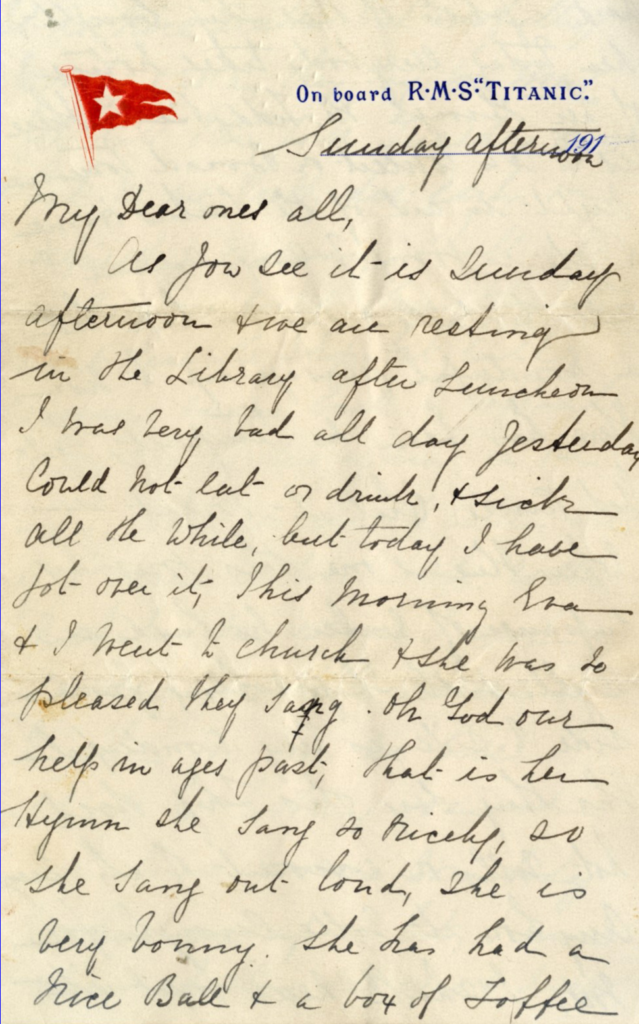
His body was never identified, leaving his family with only his last letter as a final connection to their beloved son and brother. The Titanic disaster not only claimed lives but also shattered families, many of whom, like the Mudds, had looked to America as a beacon of hope. In the aftermath, Thomas’ parents received financial assistance from the Titanic relief fund, but no compensation could ever replace the loss of their young son.
His two brothers in America, James and George, continued their lives in the United States. George lived until 1966 and honored his late brother by naming his firstborn son Thomas, ensuring that his memory endured within the family.
The Auction of a Haunting Historical Artifact
More than a century after the Titanic sank, artifacts from the ill-fated voyage continue to captivate historians, collectors, and the general public. Letters written by passengers are especially valuable, as they provide firsthand accounts of what it was like aboard the ship before tragedy struck.
The auction of Thomas Cupper Mudd’s letter is being handled by Forum Auctions in London, with estimates suggesting it could fetch up to £30,000. Rupert Powell, a representative of the auction house, described the letter as “very touching” and emphasized its rarity. Given Thomas’ young age and his tragic fate, the letter is particularly poignant.
Letters from Titanic passengers are highly sought after, with some fetching even higher sums at auctions. For example, a letter written by first-class passenger Esther Hart, who survived the disaster, was sold for £119,000 in 2014. Similarly, a letter from second officer Charles Lightoller, one of the senior surviving officers, was sold for £32,000.
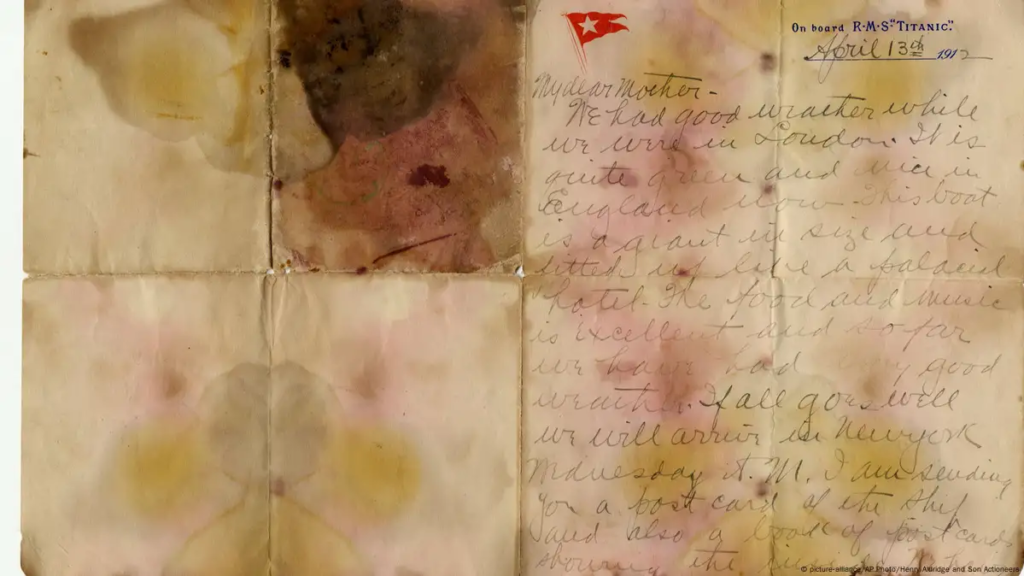
What makes Thomas’ letter stand out is the innocence and excitement it captures. Unlike letters from older passengers or crew members, which sometimes contained technical observations about the ship, Thomas Cupper Mudd’ words reflect the awe of a young man embarking on a grand adventure. His descriptions of the ship as a “gorgeous palace” and his comments on the luxurious dining and social atmosphere contrast with the grim fate that awaited him just days later.
For Titanic enthusiasts, historians, and collectors, owning a piece of history like this letter is an opportunity to connect with the human side of the disaster. It is not just about the ship itself but about the lives that were lost, the dreams that were shattered, and the families that were left behind.
The story of Thomas Cupper Mudd is just one of many from the Titanic, but it resonates because of his youth and the hopeful tone of his final letter. More than a century later, the Titanic continues to capture the world’s imagination, serving as a reminder of both human ambition and human vulnerability.
As the auction approaches, it remains to be seen who will become the custodian of this extraordinary piece of history. Whether it ends up in a museum, a private collection, or another institution, Thomas’ letter will continue to serve as a poignant reminder of the tragedy that unfolded on that fateful April night in 1912.