

In a striking victory against retail crime, Liam Hutchinson, a 32-year-old man with no fixed address, has been sentenced to 12 months in prison and issued a nationwide ban from all Boots stores for a decade. This ruling came after he confessed to a staggering 99 shoplifting offences that drained over £107,000 from the popular high-street pharmacy chain. The spree, which unfolded over just four months in 2025, targeted multiple Boots locations in London’s affluent Chelsea and Kensington areas, leaving staff and security teams on high alert.
Liam Hutchinson’s brazen thefts, often involving high-value electrical items and razors, highlight the escalating challenges faced by retailers amid a surge in opportunistic crime. As the Metropolitan Police celebrate this takedown as part of their intensified crackdown, the case serves as a stark reminder of the human and financial toll of shoplifting on everyday businesses. The sentencing at Westminster Magistrates’ Court on September 24, 2025, underscores a zero-tolerance approach to prolific offenders.
Liam Hutchinson, who pleaded guilty to the charges, now faces not only incarceration but also a Criminal Behaviour Order that prohibits him from setting foot in any Boots outlet across the United Kingdom for the next 10 years. Additionally, he has been barred from entering the entire Royal Borough of Kensington and Chelsea for five years, effectively cordoning off the hotspots where his crimes were concentrated. This multi-layered restriction aims to prevent recidivism and restore a sense of security to the communities and commerce affected by his actions. With the court’s decision, authorities hope to deter others tempted by similar schemes, signaling that such persistent criminality will not go unpunished.
The Relentless Spree: A Four-Month Rampage Across London Stores
Hutchinson’s criminal escapade began in May 2025 and escalated rapidly through August, transforming routine shopping trips into high-stakes heists for unsuspecting Boots employees. Over this period, he struck 99 times, each incident meticulously documented by the chain’s surveillance systems. His targets were primarily compact yet lucrative: electrical gadgets like chargers and headphones, alongside stacks of premium razors that could be quickly concealed and resold. These items, staples in Boots’ diverse inventory of health, beauty, and tech products, were plucked from shelves in broad daylight, often in plain view of helpless staff members who were powerless to intervene without risking confrontation.
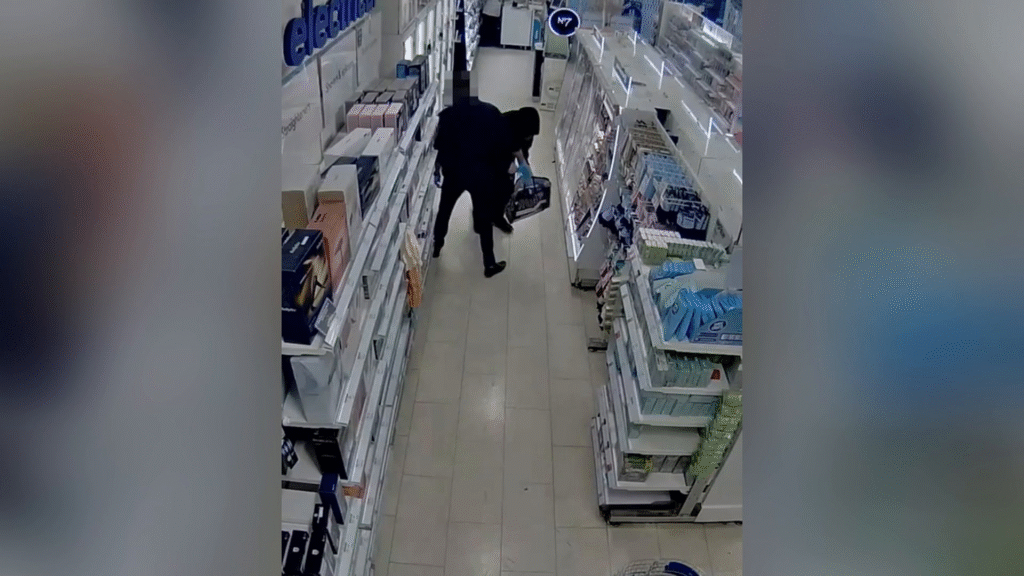
The spree’s audacity was unmatched. In one particularly vivid episode captured on bodycam footage released by the Met Police, Liam Hutchinson, clad in a nondescript black hoodie, methodically fills a large bag with merchandise while a store associate attempts to block his path. Ignoring the pleas and physical barriers, he shoulders past the worker and bolts for the exit, vanishing into the bustling streets of Kensington. Such scenes repeated across at least a dozen Boots branches in the borough, from the flagship stores on high streets lined with luxury boutiques to smaller outlets tucked into residential neighborhoods.
The total haul’s value—£107,000—represents not just lost stock but evaporated revenue that could have funded community initiatives or staff training programs. What made Hutchinson’s operations so effective, at least initially, was their sheer volume and predictability. He frequented the same cluster of stores, exploiting familiarity with layouts and peak-hour crowds. Eyewitness accounts from Boots personnel paint a picture of frustration and fear: cashiers watching from afar, security guards arriving too late, and managers tallying daily shortfalls that chipped away at morale.
Boots shoplifter jailed for £107,000 crime spree.
— CourtNewsUK (@CourtNewsUK) September 25, 2025
CCTV shows Liam Hutchinson, with his hood up, brazenly pinching goods in front of shocked workers and casually strolling out. https://t.co/wmuzexHjOb pic.twitter.com/0ljT39zjBw
One anonymous staff member, quoted in police statements, described the atmosphere as “like living under siege,” with employees second-guessing every customer interaction. By August, the cumulative impact had turned these once-welcoming pharmacies into fortresses of suspicion, where simple transactions were overshadowed by the shadow of theft. Hutchinson’s no-fixed-address status likely aided his mobility, allowing him to slip between locations undetected until the weight of evidence caught up.
Unraveling the Case: Met Police’s Tireless Investigation
Bringing Hutchinson to justice required a Herculean effort from the Metropolitan Police’s Volume Crime Team, led by Sergeant Jack Vine in central London. The breakthrough came not from a single dramatic arrest but from a painstaking forensic sift through digital archives. Officers collaborated intimately with Boots’ loss prevention specialists, poring over hundreds of hours of CCTV footage that captured Hutchinson’s face, gait, and modus operandi in crystalline detail. This wasn’t a casual review; it involved cross-referencing timestamps, witness interviews, and even still images from store cameras to map out his 99 incursions with chronological precision.
The investigation’s scope was immense. Vine’s team interviewed dozens of Boots employees, many of whom provided firsthand statements corroborating the footage. “We built a watertight case by connecting the dots—every theft had his signature,” Vine later reflected, emphasizing the role of intelligence-led policing. Bodycam recordings from the eventual apprehension added irrefutable proof, showing Liam Hutchinson’s calm demeanor cracking only when cornered.

This multi-agency partnership exemplifies a shift in how retail crimes are prosecuted: no longer dismissed as minor “five-finger discounts,” but treated as organized assaults on economic stability. The Met’s broader strategy against shoplifting played a pivotal role here. In 2025 alone, the force reported solving 163% more cases across London than the previous year, thanks to bolstered patrols, dedicated retail crime units, and proactive operations targeting repeat offenders.
Chief Inspector Rav Pathania, the Met’s lead on such matters, hailed the Liam Hutchinson bust as a “shining example” of this momentum. By prioritizing high-impact thieves like him, police aim to reclaim public spaces from the grip of fear. The operation’s success also underscores the value of technology in modern law enforcement—AI-assisted video analysis and shared databases between retailers and cops are turning the tide, one frame at a time.
Justice Served: Sentencing, Bans, and the Road to Recovery
At Westminster Magistrates’ Court, the gavel fell decisively on September 24, 2025, capping Liam Hutchinson’s spree with a 12-month custodial sentence. The judge, weighing the sheer scale of the offences—99 counts over four months—deemed immediate incarceration essential to reflect the “prolific and premeditated” nature of the crimes. But the punishment extended far beyond bars: the Criminal Behaviour Order (CBO) imposes a 10-year exile from every Boots store in the UK, a nationwide injunction enforceable by any law enforcement officer. Breaching it could add years to his sentence, ensuring long-term compliance.
Compounding this, a five-year exclusion from Kensington and Chelsea boroughs severs Liam Hutchinson from the very turf where he thrived. This geographic lockdown, rare for shoplifting cases, acknowledges the localized trauma inflicted on the community. Retailers like Boots, embedded in daily life, suffer ripple effects: higher prices for honest shoppers, strained budgets for expansions, and a pervasive unease among workers. The CBO’s dual bans represent restorative justice in action—protecting victims while rehabilitating the offender through enforced distance from temptation.
Boots’ response has been equally resolute. Nicky Harrop, the company’s head of security, fraud, and contract management, praised the collaboration: “We’ve invested significantly in anti-theft measures to deter criminals, protect our teams, and support police with top-tier evidence.” These include advanced tagging systems, AI-monitored entrances, and staff training programs that empower employees without endangering them.
For the chain, which operates over 2,500 stores nationwide, the £107,000 loss is a drop in the ocean financially but a wake-up call ethically. Harrop emphasized creating “safe and respectful environments,” a commitment echoed in their post-verdict statements. Looking ahead, Liam Hutchinson’s case ripples outward. It bolsters the Met’s narrative of aggressive enforcement, with Pathania vowing to “come down hard” on prolific shoplifters through targeted ops and community orders.
For retailers, it’s a blueprint: partner early, document rigorously, and leverage tech. And for the public, it’s reassurance that the high street isn’t fair game. As Liam Hutchinson serves his time, the streets of Chelsea and Kensington breathe easier, their Boots aisles reclaiming the hum of normalcy. This isn’t just a conviction; it’s a cornerstone in the fight to safeguard commerce from chaos, proving that persistence pays—for the good guys, at least.