

In a shocking and tragic incident that has sent ripples through the global wildlife community, a veteran zookeeper, Jian Rangkharasamee at Bangkok’s Safari World zoo was brutally mauled to death by a pack of lions right in front of horrified visitors. The event, which unfolded on September 10, 2025, has not only claimed the life of a dedicated animal handler but also ignited fierce debates about animal welfare, safety protocols in zoos, and the ethics of safari-style attractions. As news of this horrifying attack spreads, it serves as a stark reminder of the unpredictable dangers inherent in working with wild animals, even in controlled environments.
Safari World, one of Asia’s largest open-air zoos, is a sprawling complex in Bangkok, Thailand, that attracts thousands of tourists annually with its drive-through exhibits and interactive animal shows. Visitors can navigate through enclosures teeming with lions, tigers, elephants, and other wildlife, offering an up-close experience that mimics a natural safari.
However, this very design, which allows animals to roam more freely, has long been a point of contention among animal rights advocates. The zoo promotes itself as a place where families can “get up close and personal with wild animals such as tigers, lions, bears, and zebras wandering freely in their natural habitats.” Yet, beneath this allure lies a history of controversies, including allegations of animal mistreatment and exploitative performances like kickboxing orangutans and hula-hooping elephants.
The incident occurred around 11 a.m. local time in the lion exhibit zone, a drive-through area where visitors observe the predators from their vehicles. The zookeeper, identified as Jian Rangkharasamee, a 58-year-old supervisor with over 20 years of experience at the zoo, was performing his routine duties. According to official reports from the Department of National Parks, Wildlife and Plant Conservation, Jian was driving a pickup truck to guide the lions within their designated areas, a task he had handled for nearly two decades.
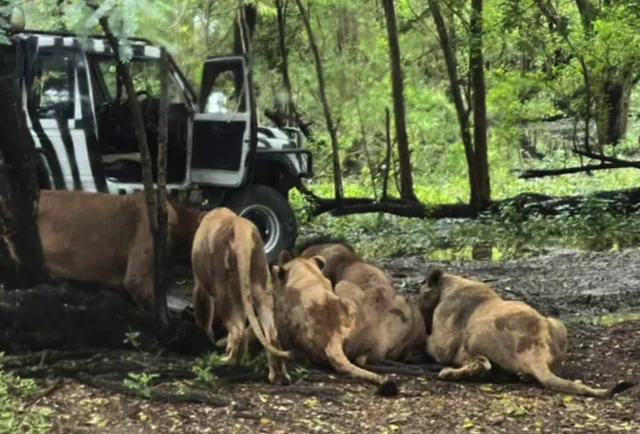
In a fatal lapse, he stepped out of the vehicle, leaving the door open, which violated established safety regulations that strictly prohibit exiting vehicles in the predator zones. Eyewitness accounts and footage that circulated on social media paint a gruesome picture. Jian was suddenly pounced upon from behind by a lion, approximately 32 feet away, dragging him to the ground in an instant. What began as an attack by one lion quickly escalated as six or seven others joined in, mauling him ferociously for about 15 agonizing minutes.
Read : LingLong Wei Sues Michigan State University for $100 Million Over Thyroid Cancer Diagnosis
Visitors in nearby cars watched in sheer terror, some screaming, honking their horns, and shouting in desperate attempts to distract the animals. One witness, Dr. Tavatchai Kanchanarin, who was present at the scene, described to local media how the zookeeper stood with his back to the enclosure, unaware of the impending danger. “It was horrifying; the lions were tearing at him, and we could only watch helplessly,” he recounted. Colleagues eventually intervened, with one zookeeper, Phanom Sitsaeng, bravely reaching the victim and pulling him away from the pride.
Read : 8-Year-Old Pekingese Wild Thang Wins 2024 World’s Ugliest Dog Contest
Jian Rangkharasamee was rushed to Intrarat Hospital, but he succumbed to his severe injuries en route or upon arrival, with reports confirming that the lions had gnawed his body until bones were exposed. The attack reportedly happened during feeding time, which officials speculate may have heightened the lions’ aggression. Attapol Charoenchansa, the director-general of the Department of Wildlife, noted that “it is assumed that one of them was not in a good mood and started the attack,” leading the others to follow suit. This predatory behavior is instinctual for lions, apex predators known for their pack hunting tactics, but it underscores the razor-thin margin for error in human-animal interactions.
Lions Mauls Zookeeper To Death
Jian Rangkharasamee was more than just a zookeeper; he was a pillar of Safari World’s operations, embodying decades of commitment to wildlife care. At 58 years old, Jian had dedicated nearly 20 to 30 years of his life to the zoo, working primarily in the lion and tiger zones. His role involved supervising the animals, feeding them, and ensuring they remained within safe boundaries during visitor hours. Described by a senior zoo official as “a kind man,” Jian Rangkharasamee was known among his peers for his gentle demeanor and deep knowledge of big cats. His brother, Surachai Rangkharasamee, shared in interviews that Jian had a profound passion for his work, often speaking fondly of the animals he cared for as if they were family.
Born and raised in Thailand, Jian’s career trajectory likely began in his younger years, drawn to the world of zoology amid a country rich in biodiversity. Safari World, established in 1988, provided him with a platform to channel this interest, but it also exposed him to inherent risks. Over the years, he would have witnessed countless feedings, trained new staff on protocols, and perhaps even participated in the zoo’s educational programs. Friends and family remember him as reliable and compassionate, someone who prioritized animal welfare despite the demanding nature of the job. “He loved those lions like they were his own,” Surachai said, reflecting on Jian’s unwavering dedication.
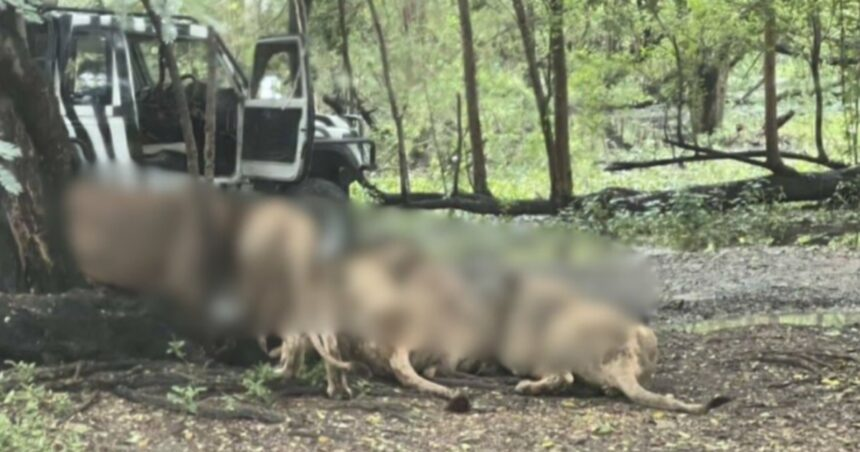
Tragically, this loyalty may have contributed to the oversight that led to his death. Reports indicate that Jian was tasked with driving through the exhibit to manage the lions’ movements, a routine that he performed flawlessly for years. However, on that fateful day, something prompted him to exit the vehicle—perhaps to adjust equipment or check on an animal—breaking the cardinal rule emphasized in daily briefings: never leave the safety of the truck in the wild animal zone. Police investigations from Khannayao station confirmed that the door was left open, allowing the lions easy access. Jian’s long tenure might have bred a sense of overconfidence, a common psychological factor in such accidents where familiarity breeds complacency.
Beyond his professional life, Jian Rangkharasamee leaves behind a grieving family, including his brother and possibly other relatives who now face the unimaginable loss. Safari World issued a statement expressing “deepest condolences” and pledging full support, including financial care, to his loved ones. In a nation where zoo work is often underpaid and undervalued, Jian’s story highlights the sacrifices made by those on the front lines of conservation and entertainment. His death is not just a personal tragedy but a call to honor the unsung heroes who risk their lives daily for our fascination with wildlife.
Immediate Aftermath and Official Response
The moments following the attack were chaotic, with emergency services scrambling to respond amid the distress of onlookers. As the lions scattered—prompted by arriving officials armed with guns—Jian’s body was extracted and transported to the hospital, where his death was officially pronounced. The scene at Safari World turned somber as the lion zone was immediately cordoned off, and visitors were ushered away from the area. Social media erupted with videos and photos of the incident, drawing widespread condemnation and amplifying the horror on a global scale.
Authorities acted swiftly. The Department of National Parks, Wildlife and Plant Conservation ordered a temporary closure of the predator zone and dispatched teams to investigate the zoo’s compliance with safety standards. Sadudee Punpugdee, the wildlife protection director, confirmed that the lions involved were part of the zoo’s licensed collection of 45 animals, though 13 had died in recent years. Questions arose about the legitimacy of the zoo’s permits; reports surfaced that Safari World’s license had expired in October 2024 and was still pending renewal, raising red flags about oversight. Police launched a formal inquiry, focusing on whether negligence played a role and reviewing footage to reconstruct the events.
Safari World, in its official statement, acknowledged the “serious accident” and committed to an internal review. “The company places the highest importance on the safety of all tourists and employees,” the park emphasized, reiterating rules against exiting vehicles. The zoo, which has operated for over 40 years without a similar incident, vowed to strengthen measures, including enhanced training and monitoring. However, the closure of the facility’s wild animal sections has disrupted operations, affecting not just staff but also the local economy reliant on tourism.
Public reaction was immediate and visceral. Tourists who witnessed the event shared accounts of trauma, with some vowing never to return to such attractions. Animal rights groups, like Wildlife Friends Foundation Thailand and World Animal Protection Thailand, seized the opportunity to criticize the zoo. They called for the relocation of the lions to sanctuaries, arguing that the animals were merely exhibiting natural behaviors in response to human encroachment. Concerns about private lion ownership in Thailand, which has surged by over 1,300%, were highlighted, linking it to illegal wildlife trade and welfare risks. Nonprofits urged a ban on uncontrolled breeding and private keeping of dangerous species in public venues.
On online forums like Reddit’s r/ThailandTourism, discussions ranged from sympathy for the victim to broader critiques of the zoo’s practices. Users pointed out visible signs of malnourishment in the animals, with rib cages protruding, and questioned the ethics of drive-through exhibits where safety latches on gates seemed inadequate. One commenter noted, “I’m surprised it didn’t happen sooner,” referencing lax security observed during visits. As investigations continue, the focus remains on preventing future tragedies while addressing systemic issues in Thailand’s zoo industry.
Implications for Zoo Safety and Animal Welfare
This devastating event at Safari World has far-reaching implications, thrusting zoo safety and animal welfare into the spotlight. Fatal lion attacks in captivity are exceedingly rare, yet this marks the second such incident in less than a year—the previous one occurring in Crimea in October 2024 when a zookeeper was mauled due to an unlocked door. In Thailand, where tourism drives much of the economy, safari parks like Safari World balance entertainment with conservation, but at what cost? The drive-through model, while thrilling, inherently increases risks for both humans and animals by simulating wild conditions in a semi-contained space.
Safety protocols in zoos worldwide emphasize barriers, training, and emergency responses, but lapses like Jian Rangkharasamee’s highlight human error as a persistent vulnerability. Experts recommend mandatory double-checks, psychological assessments for long-term staff, and technological aids like remote monitoring or drones for feeding. The zoo’s expired permit underscores regulatory gaps; Thai authorities must expedite renewals and enforce stricter audits to ensure enclosures meet international standards. Wildlife officials have already begun evaluating the lion habitats, checking for escape risks and stress factors that could provoke aggression.
From an animal welfare perspective, the incident exposes deeper problems. Lions, as social predators, thrive in vast savannas, not confined exhibits where feeding times can trigger territorial disputes. Critics argue that Safari World’s shows exploit animals for profit, leading to stress and poor health. Reports of malnourished carnivores suggest inadequate diets, potentially making them more prone to attacks out of hunger or frustration. Organizations like PETA have long decried such practices, advocating for sanctuaries over commercial zoos. The surge in private lion ownership in Thailand, often for selfies or entertainment, amplifies these concerns, fueling black market trades that endanger both species and public safety.
Globally, this tragedy could prompt reforms. Zoos might adopt more ethical models, prioritizing education over spectacle, and invest in non-invasive interactions. For Thailand’s tourism sector, it serves as a wake-up call: balancing visitor thrills with genuine conservation is essential to maintain credibility. As investigations unfold, the hope is that Jian’s death catalyzes positive change, ensuring that the majesty of lions is appreciated from a safe distance, without further loss of life. Ultimately, this incident reminds us that wild animals, no matter how captivating, are not domesticated pets but forces of nature deserving respect and protection.
9pfbya
For those into the world of matka and satta, 777dpboss143 Seems ok. Standard site and pretty much the same as the others. Worth a spin: 777dpboss143
Yo, anyone checked out pak804? Heard they got some pretty sweet deals. Gotta go see for myself though, ya know? Always gotta verify! Click here to check it out pak804
Hi, Neat post. There’s a problem with your website in internet explorer, would test this… IE still is the market leader and a good portion of people will miss your great writing because of this problem.
I believe this web site has some rattling good info for everyone. “The expert at anything was once a beginner.” by Hayes.
Недропользование — это комплекс работ, связанный с разработкой подземных богатств.
Оно включает добычу природных ресурсов и их промышленное освоение.
Данная сфера регулируется установленными правилами, направленными на сохранение природного баланса.
Грамотный подход в недропользовании обеспечивает устойчивое развитие.
оэрн
Система iQOS представляет собой технологичной системой для работы с табачными изделиями.
В отличие от обычных методов, устройство нагревает табак.
Такой подход позволяет снизить образование дыма.
Система отличается компактным дизайном.
https://terea777.shop/category/delia/
Комфорт в применении делает устройство удобным вариантом для многих пользователей.
Также iQOS обеспечивает предсказуемый результат.
Наличие разных вкусов помогает найти подходящий формат.
В итоге, система iQOS стала частью современной культуры среди взрослых пользователей.
Good day! I just want to give an enormous thumbs up for the nice information you’ve gotten here on this post. I will likely be coming back to your blog for more soon.
There is apparently a lot to identify about this. I feel you made some nice points in features also.