

Lisa Cook’s rise to the uppermost ranks of the United States’ economic policymaking establishment has been defined by historic firsts, deep academic credentials, and a career that bridges scholarship and public service. Her appointment to the Federal Reserve Board of Governors in 2022 marked a milestone in the institution’s 112-year history, reflecting both a diversification of leadership and a broadening of intellectual perspectives within the central bank.
Today, however, her name is linked not only to monetary policy debates but also to an unprecedented constitutional and legal confrontation. As former President Donald Trump seeks to remove her from office, Cook has become central to a Supreme Court case that could redefine the balance of power between the White House and independent federal institutions. Understanding who Lisa Cook is requires examining her professional background, her role at the Federal Reserve, and the legal and political stakes of the dispute that has placed her in the national spotlight.
From Academia to the Federal Reserve Board
Lisa Cook’s professional journey is rooted firmly in academia, where she built a reputation as a rigorous economist with interdisciplinary depth. A graduate of Spelman College, one of the most prominent historically Black colleges in the United States, Cook went on to pursue advanced studies at the University of California, Berkeley, and later at the University of Oxford. Her academic training equipped her with a global outlook on economic history, development, and financial systems, areas that would later inform both her research and policy work.
Before her appointment to the Federal Reserve, Cook held faculty positions at some of the world’s leading universities, including Harvard University and Michigan State University. Her research has often focused on the links between innovation, economic growth, and financial development, with particular attention to historical patterns and structural barriers that shape long-term economic outcomes.
Colleagues have described her as an economist who combines technical expertise with a historian’s sensibility, allowing her to situate contemporary economic challenges within broader social and historical contexts. Cook’s career also includes significant experience in government service. She served as a senior economist on President Barack Obama’s Council of Economic Advisers from 2011 to 2012, a role that placed her at the heart of economic policymaking during the recovery from the global financial crisis.
Read : Cody Balmer Arrested for Setting Fire to Pennsylvania Governor’s Home
In that capacity, she contributed to analysis on growth, employment, and financial stability at a time when the U.S. economy was navigating persistent uncertainty. Prior to that, she worked as a senior adviser on finance and development in the U.S. Treasury Department’s Office of International Affairs, gaining firsthand exposure to global financial coordination and development policy.
Read : 8 Global Getaways Evoking the Spirit of Switzerland Without Setting Foot There
Her academic and policy credentials culminated in her nomination to the Federal Reserve Board of Governors by President Joe Biden in 2022. When she joined the board in May of that year, Cook became the first Black woman to serve as a Fed governor, a symbolic and substantive milestone for an institution that wields immense influence over the U.S. and global economies. Her appointment was widely seen as reflecting a commitment to broadening representation while maintaining high technical standards within the central bank.
Role and Influence Within the Federal Reserve
As a member of the seven-person Federal Reserve Board of Governors, Lisa Cook plays a critical role in shaping U.S. monetary policy and overseeing the nation’s banking system. The board is responsible for setting interest rates, guiding regulatory policy, and safeguarding financial stability, making it one of the most powerful economic bodies in the world. Governors serve long, staggered terms designed to insulate them from short-term political pressures and preserve the Fed’s independence.
Cook’s term, which was reappointed in September 2023, is scheduled to run through January 2038. Such lengthy tenures are intended to ensure continuity and independence, allowing governors to make decisions based on economic data rather than political cycles. Within the board, Cook has participated in deliberations on inflation, employment, and financial regulation during a period marked by global economic volatility, post-pandemic recovery challenges, and heightened scrutiny of central bank actions.
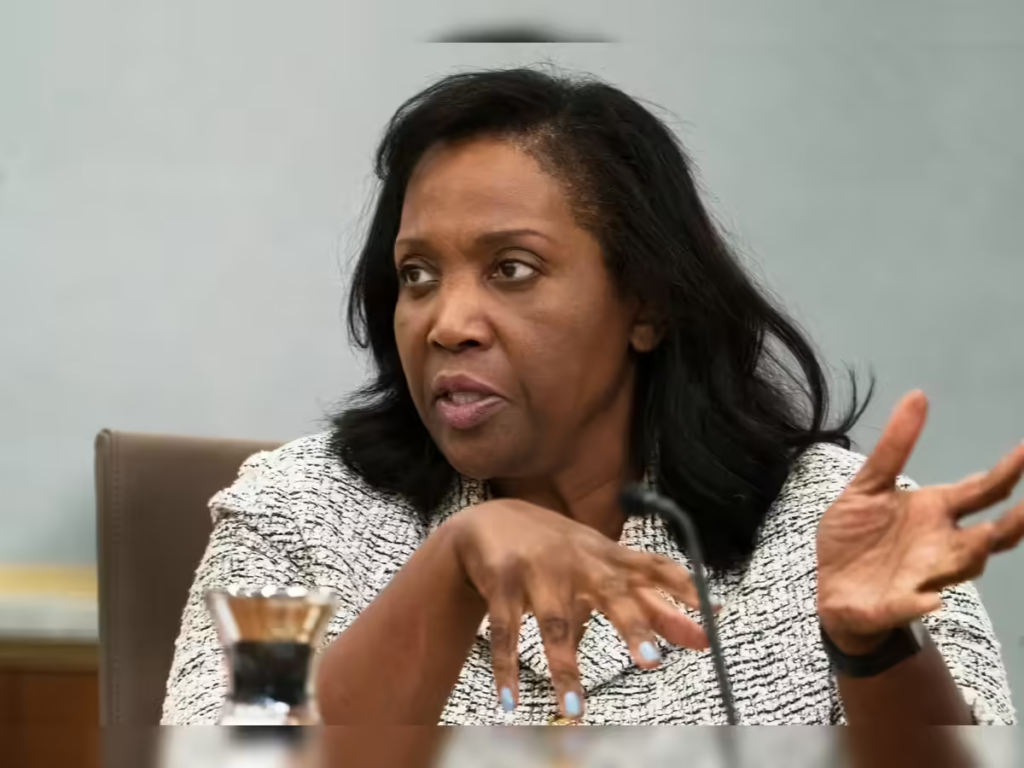
Her presence on the board has also carried symbolic significance. As the first Black woman in the role, Cook’s appointment has been viewed as part of a broader effort to reflect the diversity of the country within its most influential institutions. At the same time, her contributions have been grounded in her academic expertise rather than identity alone. Observers note that her background in economic history and development provides a perspective that complements the more traditional macroeconomic and financial market expertise often found within the Fed.
Cook’s linguistic abilities further underscore her global orientation. She is fluent in several languages, including French, Russian, Spanish, and Wolof, a widely spoken language in Senegal. This skill set reflects her engagement with international economic issues and her capacity to navigate cross-border policy discussions, an increasingly important dimension of central banking in a globalized financial system.
Within the Federal Reserve, Cook has worked alongside Chair Jerome Powell and other governors during some of the most challenging economic conditions in recent decades. Rising inflation, shifting labor markets, and geopolitical uncertainty have placed extraordinary demands on the institution. Her role has been that of a policymaker operating within a consensus-driven body, balancing data-driven analysis with the Fed’s dual mandate of price stability and maximum employment.
The Legal Battle and Its Constitutional Stakes
Lisa Cook’s prominence has expanded beyond monetary policy into the legal and constitutional arena due to former President Donald Trump’s attempt to remove her from the Federal Reserve Board. In late August, Trump announced that he was firing Cook, alleging that she had misrepresented information related to three mortgages she obtained prior to joining the Fed. Cook has denied any wrongdoing, and no criminal charges have been filed against her.
The move triggered an immediate legal response. Cook filed suit in federal court in Washington, D.C., seeking to block her removal and arguing that the president lacked the authority to dismiss a Fed governor without cause. In September, a district court judge barred Trump from firing her while the case proceeds, a decision that was later upheld by a federal appeals court. The dispute has now escalated to the Supreme Court, which is expected to hear oral arguments and issue a ruling by the summer.
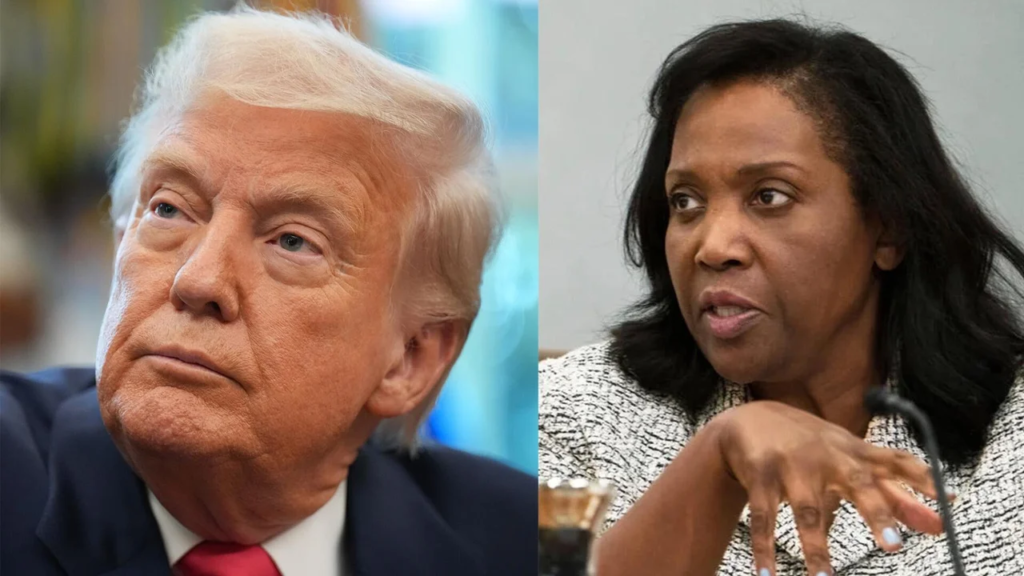
At the heart of the case lies a fundamental question about the independence of the Federal Reserve and other regulatory agencies. For more than a century, the Fed has operated with a degree of insulation from direct political control, a structure designed to ensure that monetary policy decisions are guided by economic considerations rather than partisan interests. Governors can traditionally be removed only for cause, such as misconduct or incapacity, rather than at the president’s discretion.
Trump’s effort to fire Cook represents uncharted territory for the central bank. No previous president has successfully attempted to remove a sitting Fed governor, and the case has drawn intense attention from legal scholars, economists, and policymakers. A ruling in Trump’s favor could expand presidential power over independent agencies, potentially allowing future administrations to exert greater influence over institutions like the Federal Reserve. Conversely, a ruling that upholds Cook’s position would reinforce long-standing protections for agency independence.
The case has also placed Cook personally at the center of a broader political debate. While she maintains that the allegations against her are unfounded, the legal fight has transformed her from a relatively low-profile policymaker into a focal point of national controversy. Supporters argue that the case is less about individual conduct and more about preserving institutional norms, while critics frame it as a test of accountability within powerful federal bodies.
As the Supreme Court prepares to weigh in, the implications extend far beyond Cook’s individual tenure. The decision could reshape the relationship between the executive branch and independent regulators, with consequences for monetary policy, financial regulation, and the broader administrative state. For Lisa Cook, the outcome will determine not only her future on the Federal Reserve Board but also her place in the history of U.S. economic governance.
Through her academic achievements, policy experience, and now her role in a landmark legal battle, Lisa Cook’s career reflects the complex intersection of economics, law, and politics in modern America. Whether remembered primarily as a pioneering economist, a central bank governor, or a central figure in a Supreme Court case, her story underscores the enduring importance of institutional independence in the nation’s economic system.