

The Indonesian island of Bali, famed for its tranquil beaches and spiritual retreats, is currently hosting a high-profile courtroom drama that has made headlines in the UK and beyond. Lisa Ellen Stocker, a 39-year-old British woman, is facing the stark prospect of spending the next two decades behind bars after being accused of smuggling nearly a kilogram of cocaine into the country—hidden inside sachets of Angel Delight, a popular British dessert mix.
Alongside her partner Jonathan Christopher Collyer and another Briton named Phineas Ambrose Float, Stocker has denied knowledge of the concealed drugs, instead claiming she was framed by a friend in the UK.
Stocker and Collyer were arrested upon their arrival in Bali on February 1, after customs officials flagged suspicious packages concealed within their luggage. The sweet-flavored sachets, which bore the recognizable branding of Angel Delight, were tested and found to contain 993 grams of cocaine, a quantity worth approximately £272,000 on the street.
The couple was immediately detained, triggering an investigation that would eventually implicate Float, who was later caught in a sting operation receiving the drugs.
The Arrest and Discovery
Upon arriving at Ngurah Rai International Airport in Bali, Lisa Ellen Stocker and her partner Jonathan Collyer were stopped by Indonesian customs officers after a routine inspection revealed the suspicious contents in their luggage. The packages looked like ordinary powdered dessert sachets, yet officials became suspicious of their unusually heavy weight and decided to run further checks.
Subsequent laboratory testing confirmed their fears: the contents were not sugary dessert powder, but high-grade cocaine. In total, authorities discovered seven sachets in Stocker’s bags and ten in Collyer’s. The haul, close to a full kilogram of cocaine, was enough to warrant severe drug trafficking charges under Indonesian law, which treats such offenses with utmost severity.
Read : At Least 13 People Die in Explosion While Disposal of Expired Ammunition In Indonesia
The arrest sent shockwaves through the British expatriate and travel community in Indonesia, where tourists often underestimate the rigid and unforgiving nature of the country’s anti-drug policies. Both Stocker and Collyer were taken into custody and interrogated by narcotics police in Denpasar, Bali’s capital.
Read : Top Ten Must Visit Places in Indonesia
Their initial accounts appeared murky, but both maintained that they had no knowledge of the true contents of the packages they were carrying. According to Stocker’s testimony in court, the sachets were given to her by a man she described as a “friend” in the UK, who asked her to deliver them to someone in Bali. She claimed she was unaware of what they actually contained, believing they were simple snacks and puddings.
Courtroom Drama and Claims of a Set-Up
The trial has captivated public attention in both Indonesia and the UK. Lisa Stocker has repeatedly claimed that she is innocent, stating in court, “The packages were not mine, but someone else’s. I was framed.” Her partner Collyer echoed this sentiment, testifying that they had been asked by Stocker’s friend to bring what they believed were snacks and treats to Bali. He added that no monetary payment was given in exchange, although the prosecution alleges he was paid £2,130 to cover their travel and accommodation expenses.
Stocker further testified that this was not the first time she and Collyer had brought items on behalf of this friend. They had, according to her, made two prior trips to Bali with similar packages. She admitted to being “shocked” when she discovered that the contents were cocaine, indicating that it was only after their arrest that she realized what they had been carrying.
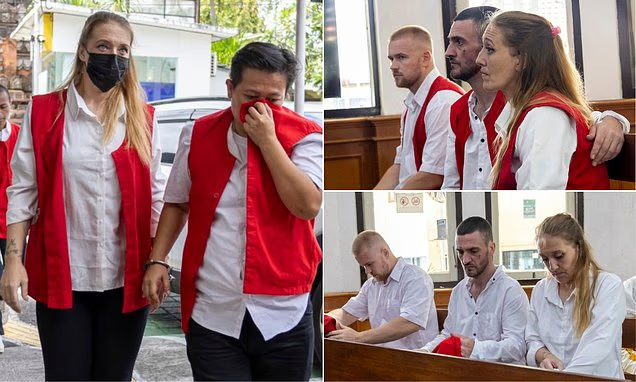
The prosecution, however, remains unconvinced by the pair’s defense. During a press conference held by Bali Police Narcotics Unit, Deputy Director Ponco Indriyo stated that the group had successfully smuggled drugs into Bali on two previous occasions, and only failed on their third attempt. This admission has raised serious doubts about the couple’s alleged ignorance of their role in the operation.
The third accused, Phineas Ambrose Float, was arrested separately during a sting operation after being observed collecting the drugs from Stocker and Collyer in the parking lot of a Denpasar hotel. He is facing a separate trial, but prosecutors assert that all three individuals were knowingly involved in a coordinated smuggling effort. If convicted, they each face a sentence ranging from 15 to 20 years in an Indonesian prison—a system known for its harsh conditions and strict treatment of drug offenders.
Indonesia’s Zero Tolerance for Narcotics
Indonesia’s drug laws are among the strictest in the world. Possession of even small quantities of narcotics can result in years of imprisonment, while trafficking large amounts often leads to the death penalty. Although no executions have taken place in the country since 2017, death sentences remain on the books, and many convicted drug traffickers remain on death row.
As of the most recent figures from the Ministry of Immigration and Corrections, around 530 people, including 96 foreign nationals, are on death row in Indonesia—mostly for drug-related crimes. The memory of the 2015 executions of Andrew Chan and Myuran Sukumaran, two members of the Australian “Bali Nine” who were caught attempting to smuggle heroin, still looms large in public consciousness. The two were executed by firing squad, sparking international outrage and renewed attention on Indonesia’s capital punishment laws.

While it’s unlikely that Stocker or her co-accused will face execution, the severity of the charges against them—nearly a full kilogram of cocaine—means they are almost certain to receive long prison terms if convicted. Their lawyers have continued to argue that they were unaware of the nature of the goods they were carrying, but the evidence against them, particularly the consistent packaging and the statements made by authorities, present a significant legal challenge.
Earlier this year, another British citizen, Thomas Parker, was sentenced to 10 months in a Bali prison for attempting to collect a package containing 1kg of MDMA. While his case involved a smaller quantity and less direct involvement in trafficking, it highlights how even minor drug offenses are treated with utmost seriousness in Indonesia.
As Stocker and her co-defendants await the court’s final decision, their fate remains uncertain. With the evidence pointing to repeated trips and the organized nature of their alleged smuggling operation, the possibility of a lengthy prison sentence looms large. The case also serves as a stark warning to other foreign visitors about the perils of getting involved, knowingly or unknowingly, in drug-related activities in Southeast Asia—a region where leniency is rarely an option.
The trial continues in Denpasar District Court, where all eyes remain fixed on the British trio and the unfolding narrative of innocence, betrayal, and harsh justice under Indonesia’s unforgiving legal system.