

A prominent Chinese internet influencer known as Liu Ergou has been banned from live-streaming after broadcasting what authorities and platform moderators described as “vulgar” content from a hot spring pool party. The incident has reignited debate in China over the responsibility of digital platforms, the effectiveness of content moderation, and the broader social impact of online celebrities with massive followings.
Liu Ergou, who had amassed approximately 44 million followers on a major short-video platform, streamed the event for nearly three hours, drawing more than one million viewers at its peak. Despite complaints and reports from users, the live-stream remained accessible during the broadcast, and clips continued to circulate online long after it ended. The controversy surrounding the livestream underscores the tension between platform-driven traffic incentives and regulatory efforts to maintain what authorities term a “clean and bright” online environment.
It also highlights growing public frustration with what many perceive as inconsistent enforcement of platform rules, especially when high-profile influencers are involved. While Liu Ergou’s account was eventually banned from posting new content for violating platform regulations, critics argue that the punishment falls short of addressing the wider problem of sensationalism and vulgarity in online entertainment ecosystems.
The Livestream That Sparked the Backlash
The livestream that led to Liu Ergou’s ban reportedly took place at a hot spring venue and involved around 20 participants. Over the course of nearly three hours, Liu Ergou broadcast scenes that many viewers described as overtly sexualised and inappropriate. The stream included repeated close-up shots of women wearing revealing swimwear, focusing on their bodies rather than the setting or any structured activity. Male participants, including Liu himself, were shown physically interacting with the women, playfully throwing them into the pool and engaging in behaviour that viewers later characterised as objectifying.
Adding to the controversy was the commercial aspect of the broadcast. During the livestream, Liu Ergou was seen applying body lotion to one of the women as part of a product promotion, blurring the line between entertainment and advertising in a way that many viewers found exploitative. The combination of sexualised imagery, physical contact, and live product sales drew widespread criticism and prompted some viewers to report the content directly to the platform for violating community standards.
Despite these reports, the livestream continued uninterrupted, and recordings of the event began circulating on other social media channels soon after. This delay in moderation became a central point of criticism, with users questioning why a broadcast attracting over a million viewers was not swiftly halted. For many observers, the incident illustrated how controversial or sensational content can remain online long enough to generate significant traffic and revenue before any enforcement action is taken.
Read : Top 10 Fruits for Weight Loss: Elevate Your Wellness with Nature’s Bounty
Liu Ergou’s history further fuelled the backlash. He is widely known in mainland China for producing provocative content, often incorporating profanity, shock value, and confrontational behaviour into his streams. Past broadcasts reportedly included stories about gambling, aggressive language, and encouragement of extreme challenges among other streamers, such as consuming large quantities of spicy oil or engaging in staged confrontations. This reputation led many critics to argue that the hot spring livestream was not an isolated lapse but part of a broader pattern of behaviour designed to attract attention at any cost.
Platform Response and Public Criticism
More than ten days after the livestream, the short-video platform confirmed to mainland media outlet Jimu News that Liu Ergou’s account had been banned for “violating rules.” The ban, however, was limited in scope. Liu Ergou was prohibited from posting new content, but his account remained visible on the platform and continued to accept new followers. This partial restriction quickly became a focal point of public anger, with many users arguing that it allowed Liu to retain his influence and fan base despite the violation.
Read : Influencer Couple Carlo Longo and Sarah Mollica Expecting Rainbow Baby
Online commentators expressed shock at both the delay in enforcement and the perceived leniency of the punishment. Some suggested that the platform had little incentive to act swiftly against a creator who generated enormous traffic. In their view, sensational livestreams, even when controversial, drive engagement metrics that benefit platforms through advertising and e-commerce revenues. The fact that clips of the livestream continued to circulate long after the ban was announced further reinforced the perception that enforcement mechanisms were insufficient.
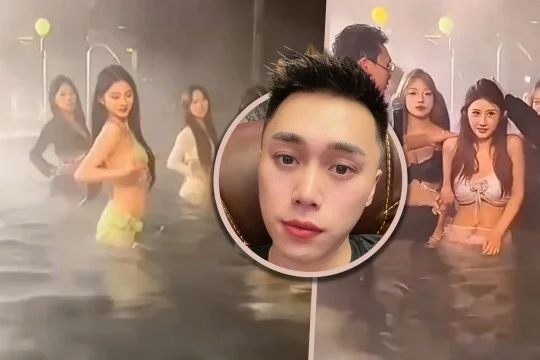
Criticism intensified when another live-streamer affiliated with Liu Ergou’s company appeared to downplay the ban during a separate broadcast. According to reports, this individual reassured fans that Liu was merely selecting products to sell in future events, implying that the suspension would have little long-term impact. To many observers, this response suggested a lack of genuine accountability and reinforced the belief that influential streamers can weather regulatory actions with minimal consequences.
Public reactions reflected broader concerns about the social influence of high-profile internet personalities. Commenters argued that Liu Ergou’s content set a poor example for young viewers, normalising vulgar behaviour and reinforcing gender stereotypes. Some called for the platform to permanently block his account, while others urged authorities to strengthen oversight and impose stricter penalties not only on offending influencers but also on the platforms that host them.
The platform involved in Liu Ergou’s case is among the most widely used in mainland China, with hundreds of millions of active users. Its past record has also come under scrutiny. Reports indicate that it was previously punished by Beijing law enforcement agencies in 2018 and 2019, in part for failing to adequately address vulgar content. This history has led critics to argue that repeated violations point to systemic issues rather than isolated lapses.
Regulation, Qinglang Campaigns, and the Wider Context
The case of Liu Ergou unfolds against the backdrop of China’s ongoing efforts to regulate online content and curb what authorities describe as unhealthy internet culture. Since 2016, the Cyberspace Administration of China has launched a series of initiatives under the banner of Qinglang, meaning “clean and bright.” These campaigns aim to reduce vulgarity, misinformation, and other forms of content deemed harmful to social values, particularly content that could negatively influence minors.
Read : Dog Influencer Raffie Dies of Heart Attack on Christmas Eve While Owner Was Out of Town
Under Qinglang regulations, platforms are held jointly liable for content violations that occur on their services. This framework is intended to encourage proactive moderation and swift responses to reported issues. In practice, however, enforcement often raises questions about consistency, especially when popular influencers are involved. High-profile cases like Liu’s highlight the challenge regulators face in balancing the economic importance of the digital entertainment industry with social and cultural objectives.
The livestream economy in China has grown rapidly over the past decade, becoming a major driver of e-commerce and online advertising. Influencers with large followings can generate substantial revenue through product endorsements, virtual gifts, and brand partnerships. This commercial success has elevated top streamers to celebrity status, sometimes giving them leverage over platforms eager to retain user engagement. Critics argue that this dynamic can undermine regulatory goals if platforms hesitate to take decisive action against profitable creators.
At the same time, public expectations around online conduct are evolving. Many internet users increasingly demand higher standards of accountability, not only from influencers but also from the companies that profit from their content. The backlash against Liu Ergou suggests growing intolerance for what viewers perceive as exploitation and sensationalism masquerading as entertainment. Calls for stronger supervision reflect a desire for clearer boundaries and more transparent enforcement.
The authorities’ emphasis on youth protection adds another layer to the debate. With millions of young people consuming livestream content daily, regulators have repeatedly warned against material that promotes vulgarity, excessive consumerism, or harmful behaviour. Cases like Liu’s are often cited as examples of why stricter controls are necessary, both to deter similar conduct and to signal that popularity does not place individuals above the rules.
As of now, Liu Ergou’s future as a livestreamer remains uncertain. While his ability to post new content has been restricted, his existing online presence continues to draw attention, and discussions about his case persist across social media. For platforms, regulators, and audiences alike, the incident serves as a test of how effectively China’s digital governance framework can respond to the challenges posed by influencer culture in an increasingly competitive and commercialised online environment.
Plataformasbet.net has a lot going on, lots of different betting options. Can be a little overwhelming at first, but once you get used to the layout, it’s pretty user-friendly. Worth checking out if you like variety. plataformasbet