
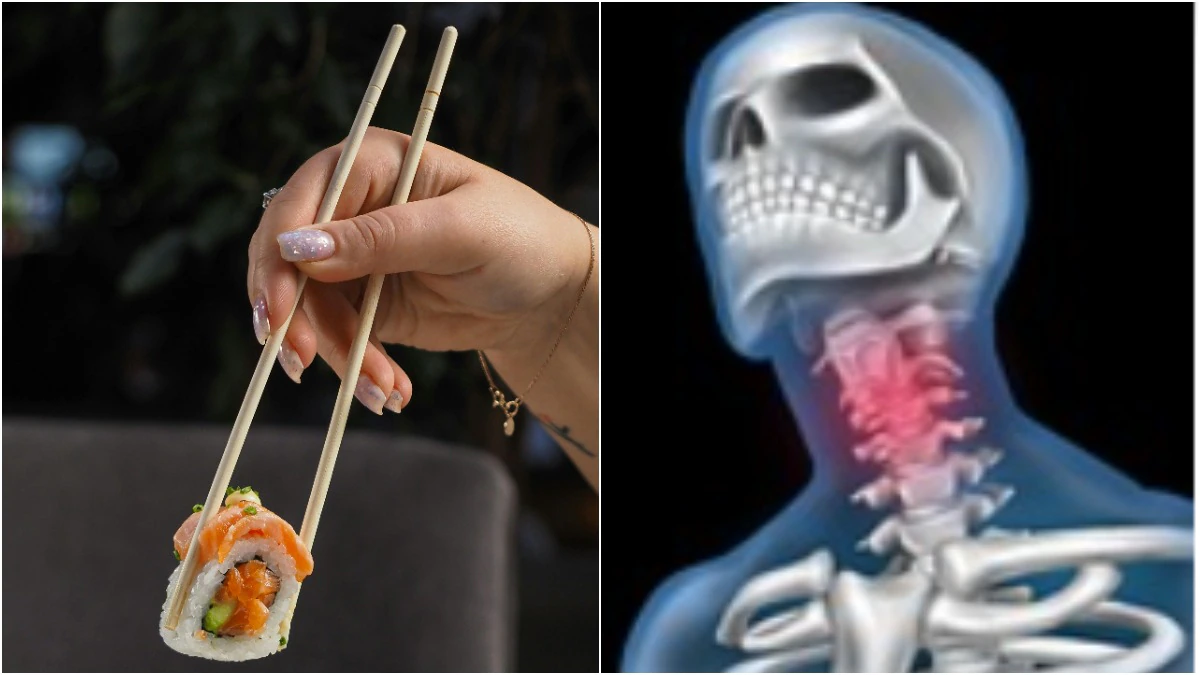
The story of a man living for nearly a decade with a metal chopstick lodged in throat has stunned audiences and raised serious questions about fear, denial, and the limits of human endurance. The case, which emerged from northeastern China, centers on a man surnamed Wang who accidentally swallowed a 12-centimeter metal chopstick while eating and drinking.
Despite experiencing discomfort, he chose not to undergo surgery at the time, primarily due to fear of an invasive procedure that would have required doctors to cut into his neck. What followed was an extraordinary eight-year period during which he lived with a foreign object embedded in his body, ignoring or rationalizing the symptoms until they became too severe to overlook.
The case is both medically unusual and psychologically revealing. It highlights how individuals sometimes prioritize immediate fear over long-term health, even in situations that appear objectively dangerous. It also sheds light on how the human body can, in rare circumstances, tolerate foreign objects without immediate catastrophic consequences. Yet, while Wang’s survival without severe complications may seem remarkable, the underlying risks were significant and potentially life-threatening.
A Startling Medical Discovery Years in the Making
Eight years before finally seeking treatment, Wang reportedly swallowed the Metal Chopstick accidentally during a moment involving both eating and alcohol consumption. The exact circumstances remain unclear, particularly how such a long and rigid object could be ingested without causing immediate severe injury. At the time, he experienced pain but did not suffer from breathing difficulties or other acute symptoms that would have forced emergency intervention. This absence of dramatic symptoms likely contributed to his decision to delay treatment.
When he initially visited a hospital following the incident, doctors recommended a surgical procedure that involved making an incision in his neck to safely remove the object. Understandably, such a procedure can appear intimidating, especially to someone already in discomfort or distress. Faced with this option, Wang chose to decline surgery, opting instead to live with the chopstick lodged in his throat. This decision set the stage for years of intermittent discomfort and gradual normalization of an abnormal condition.
Over the following years, Wang reportedly felt occasional sensations from the object but attributed them to other factors, particularly his alcohol consumption. This rationalization allowed him to continue avoiding medical intervention. It is a common human tendency to downplay persistent but non-acute symptoms, especially when addressing them would require confronting a feared procedure or diagnosis. In Wang’s case, this tendency extended over nearly a decade.
The turning point came when his symptoms worsened noticeably. He began experiencing pain upon waking, along with increased discomfort when swallowing. These symptoms, though still not immediately life-threatening, were persistent enough to disrupt his daily routine and compel him to seek medical help again. When he finally returned to the hospital, even the attending doctor initially assumed the incident was recent. The revelation that the chopstick had been lodged in his throat for eight years was both surprising and alarming.
Medical Risks and the Body’s Unusual Resilience
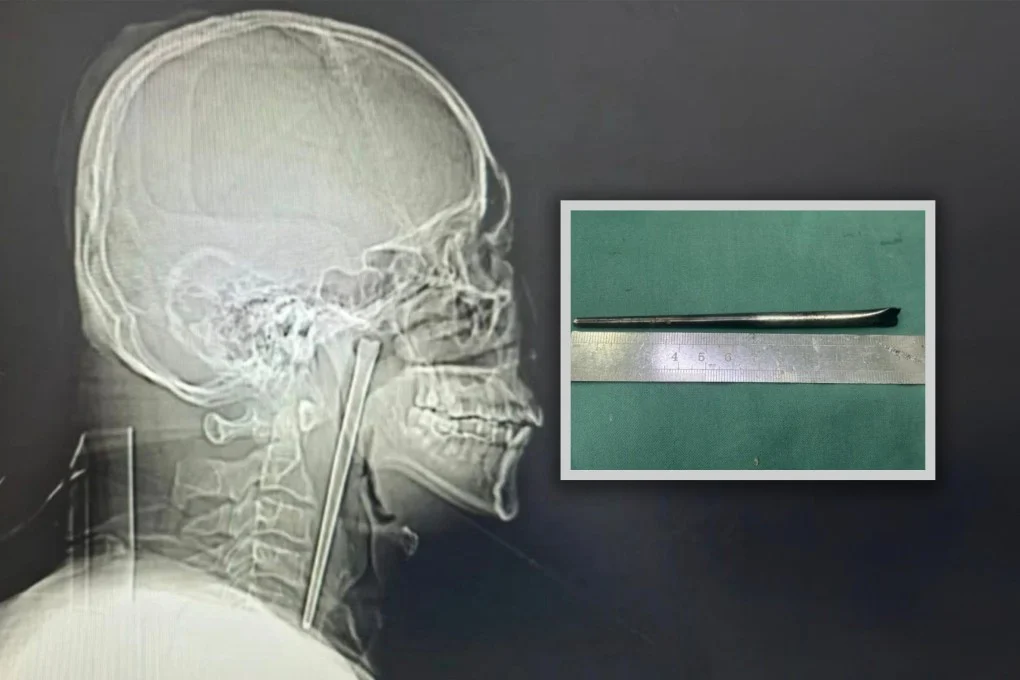
Upon examination, doctors discovered that the metal chopstick was embedded in the soft palate area of Wang’s throat. Remarkably, despite the long duration, the surrounding tissues had not suffered severe damage. The mucous membranes remained largely intact, and critical structures such as the vocal cords were functioning normally. Additionally, there was no evidence of major organ displacement, which would have significantly complicated the situation.
This outcome is highly unusual. In most cases, foreign objects lodged in the body—especially in sensitive areas like the throat—can lead to infections, tissue damage, or even life-threatening complications. The throat contains vital structures responsible for breathing, swallowing, and speech, and any obstruction or injury in this area can have serious consequences. The fact that Wang avoided these complications for such an extended period suggests a combination of luck and the body’s ability to adapt to certain foreign presences under specific conditions.
However, medical professionals emphasize that such cases should not be viewed as evidence that it is safe to ignore similar situations. The risks associated with leaving foreign objects in the body are significant and unpredictable. Over time, such objects can shift position, cause internal injuries, or lead to infections that may spread rapidly. In Wang’s case, the absence of severe complications does not diminish the potential danger he faced.
When it came time for removal, doctors had to carefully consider the safest approach. Given Wang’s continued reluctance to undergo a neck incision, they opted for a minimally invasive procedure through the mouth. This approach required precision and careful handling to avoid damaging surrounding tissues. The surgery was ultimately successful, with only minimal bleeding reported. The chopstick was removed intact, and Wang recovered quickly, being discharged from the hospital within a few days.
Read : Indonesian Man’s Wife Turns Out to Be a Man After 12 Days of Marriage
This outcome underscores the advancements in medical techniques that allow for less invasive procedures, even in complex cases. It also highlights the importance of patient cooperation and trust in medical professionals. Had Wang continued to refuse treatment, the risks would likely have increased over time, potentially leading to a far more dangerous situation.
Fear, Denial, and the Human Response to Medical Intervention
Beyond the medical aspects, Wang’s story offers insight into the psychological factors that influence health-related decisions. Fear of surgery is not uncommon, particularly when procedures involve visible incisions or sensitive areas of the body. For many individuals, the idea of undergoing an operation can evoke anxiety about pain, complications, or long-term effects. In some cases, this fear can be strong enough to outweigh concerns about the underlying condition.
Read : Who Is Zifan Wang, the Meta AI Scientist Denied US Re-Entry Following Visit to China?
In Wang’s situation, this fear led to a prolonged period of avoidance. Even as he experienced discomfort, he chose to endure it rather than confront the possibility of surgery. This behavior reflects a broader pattern seen in healthcare, where patients delay or avoid treatment due to fear, denial, or misunderstanding of the risks involved. Such delays can lead to worsening conditions and more complicated interventions later on.
Alcohol consumption may also have played a role in Wang’s decision-making. As someone described as a heavy drinker, he may have been more inclined to dismiss or misinterpret his symptoms. Alcohol can dull pain and alter perception, making it easier to ignore physical discomfort. At the same time, it can impair judgment, leading individuals to make choices that prioritize short-term avoidance over long-term well-being.
The reaction to Wang’s story on social media reflects a mix of disbelief and concern. Many people expressed shock at how he managed to live with such a condition for so long, while others questioned how the initial incident could have occurred. These reactions highlight the gap between what is medically possible and what people perceive as plausible in everyday life. Cases like this capture public attention precisely because they challenge common assumptions about the body and human behavior.
At a deeper level, the story serves as a reminder of the importance of addressing medical issues promptly and seeking professional advice when unusual symptoms arise. While fear is a natural response, it should not prevent individuals from making decisions that protect their health. Advances in medical technology have made many procedures safer and less invasive than in the past, reducing the risks that often contribute to such fears.
Wang’s eventual recovery is a positive outcome, but it does not negate the years of unnecessary risk he endured. His experience illustrates both the resilience of the human body and the consequences of delaying treatment. It also underscores the role of education and communication in helping patients understand their options and make informed decisions.
In the end, the case stands as an extraordinary example of how far the human body can be pushed under unusual circumstances, as well as a cautionary tale about the dangers of ignoring medical advice. It highlights the need for a balanced approach to healthcare—one that acknowledges fear but prioritizes timely intervention and trust in medical expertise.