

Viewers watching a routine scientific livestream were stunned when an unexpected human drama unfolded against one of nature’s most volatile backdrops. During a live broadcast of Kīlauea’s latest eruption, two men were spotted walking casually through a strictly prohibited zone near the volcano’s summit, with fountains of glowing lava erupting behind them. The sighting, captured by a US Geological Survey camera intended solely for volcanic monitoring, immediately sparked widespread shock, concern, and debate online.
Beyond the viral spectacle, the incident has raised serious questions about safety, access control, and the growing trend of individuals risking their lives for dramatic footage or personal notoriety. Kīlauea, one of the world’s most active volcanoes, is located within Hawaiʻi Volcanoes National Park and has long been monitored closely due to its frequent eruptions and rapidly changing conditions.
The current eruptive episode, which began on December 23 and unfolded in a rare episodic pattern, drew global attention through official USGS livestreams that allow scientists and the public to observe volcanic activity from a safe distance. What viewers did not expect was to see two unauthorized individuals appearing directly in front of one of these cameras, standing in a location explicitly deemed too dangerous even for trained professionals during active eruptions. The moment occurred during Episode 39 of the eruption on Tuesday evening, when lava fountains were actively erupting from the Halemaʻumaʻu crater.
For nearly two minutes, the two men could be seen walking back and forth across the frame, seemingly unfazed by the hazards surrounding them. One paused to take photographs, later turning toward the camera and flashing a shaka sign, while the other moved through the scene wearing a backpack with a visible glowstick. Their presence, calm demeanor, and apparent awareness of the camera only deepened the alarm among viewers, scientists, and park observers who understand the extreme risks of being in such an environment.
A Shocking Discovery on a Scientific Livestream
The livestream in question is operated by the US Geological Survey’s Hawaiian Volcano Observatory, which maintains a network of cameras across Kīlauea to track lava movement, gas emissions, and changes in the crater. The specific camera, known as V1cam, is positioned on the northwest rim of the Halemaʻumaʻu crater within Kīlauea’s summit caldera. According to official observatory information, this camera is not located in a publicly accessible area and can only be reached by traversing terrain closed to all visitors due to ongoing volcanic hazards.
As lava fountains surged in the background, viewers tuning in from around the world began noticing movement in the foreground that did not align with the expected natural activity. Within moments, it became clear that the figures were not USGS staff or emergency responders but two unidentified men moving casually through the restricted zone. The realization spread quickly across social media, where clips and screenshots circulated alongside expressions of disbelief.
One viewer from Waikōloa Village captured the mood succinctly in a Facebook comment that went viral, jokingly asking who the men were and likening one of them to an “eruption manager.” While the remark was humorous, it underscored a deeper sense of unease shared by many who understood how dangerous the location truly is. The area around Halemaʻumaʻu is known for unstable ground, sudden collapses, extreme heat, and the constant release of volcanic gases, including sulfur dioxide, which can be deadly at high concentrations.
Geologist Katie Mulliken later confirmed that no USGS personnel were present in the closed area during that eruptive episode. This statement ruled out the possibility that the men were authorized scientists or technicians and intensified concerns about how they managed to reach such a tightly controlled zone. Access points to the summit caldera are monitored, and closures are enforced precisely to prevent accidents during periods of heightened activity. The incident therefore raised immediate questions about potential security breaches, ignored warnings, or deliberate trespassing.
Two men were spotted walking dangerously close to Hawaii's Kilauea volcano. In the video captured on Dec. 23, one can be seen gesturing to the webcam operated by the U.S. Geological Survey.
— ABC News (@ABC) December 29, 2025
Locals say they have seen an uptick in people trespassing in areas closed to the public. pic.twitter.com/L7LJ6SRD2p
The timing of the appearance also added to the shock. Episode 39 of the eruption lasted less than six hours, meaning the men entered the restricted zone during a narrow window of active and unpredictable volcanic behavior. Lava fountains can intensify or shift rapidly, and sudden explosions caused by gas buildup or collapsing rock are not uncommon. That the men appeared relaxed enough to stop, observe, and take photographs struck many viewers as a profound underestimation of the risks involved.
Extreme Risks Inside Kīlauea’s Restricted Zones
Volcanic exclusion zones exist for reasons rooted in decades of scientific observation and tragic precedent. Kīlauea’s summit area, particularly around Halemaʻumaʻu crater, is considered one of the most hazardous locations in the park during an eruption. Even when lava is not visibly flowing, the ground can be dangerously unstable, with thin crusts forming over molten rock or voids created by past collapses. A single misstep can lead to catastrophic injury or death.
In addition to the risk of falling into lava or superheated fissures, volcanic gases pose a silent and often underestimated threat. Sulfur dioxide, carbon dioxide, and other toxic emissions can accumulate in low-lying areas or be released suddenly during eruptive bursts. Exposure can cause severe respiratory distress, loss of consciousness, and, in extreme cases, fatal outcomes within minutes. These dangers are precisely why the USGS restricts access even for experienced volcanologists unless conditions are deemed stable enough for brief, carefully planned fieldwork.
Read : 26-Year-Old Brazilian Tourist Slips and Falls Into Active Volcano After Local Guide Abandons Her
Thermal hazards are another critical concern. Lava fountains can eject molten rock fragments, known as spatter, over considerable distances. Even if lava does not reach a person directly, radiant heat alone can cause serious burns. Protective gear used by scientists includes heat-resistant clothing, gas masks, and constant communication with monitoring teams, none of which were visible on the two men captured by the camera.
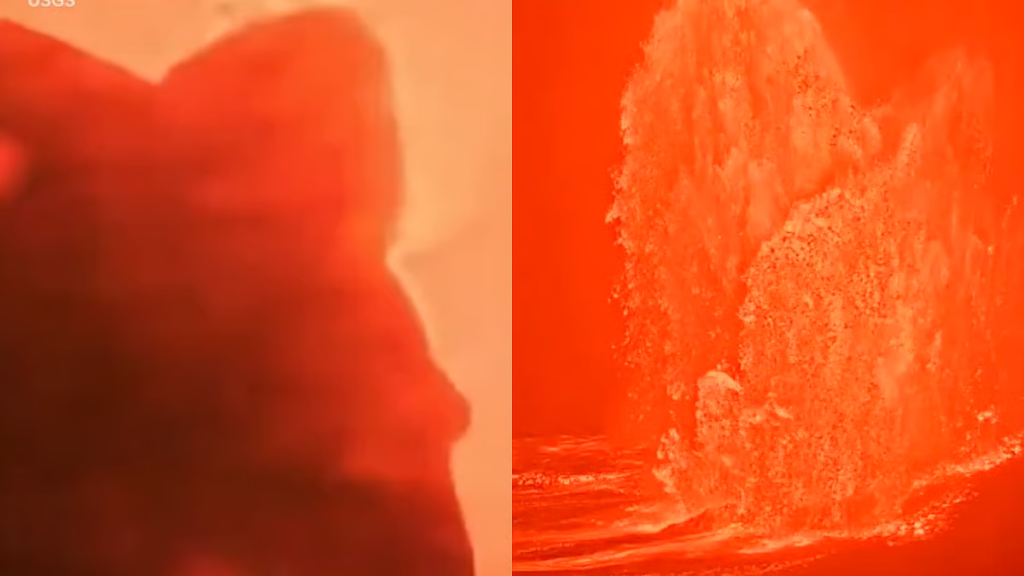
The unpredictability of Kīlauea’s episodic eruption pattern further amplifies these risks. Unlike steady effusive eruptions, episodic events can intensify suddenly after periods of relative calm. Lava fountains can grow taller, vents can open without warning, and crater walls can collapse due to internal pressure changes. Being present in such an environment without real-time scientific oversight places individuals at extreme risk.
Authorities have long emphasized that approaching erupting volcanoes is not only illegal in restricted zones but also inherently life-threatening. Hawaiʻi Volcanoes National Park regularly issues warnings reminding visitors that closures are enforced to protect lives, not to limit experiences. Despite this, incidents of trespassing have occurred in the past, often driven by the desire to capture dramatic images or videos. The livestream appearance of these two men represents a particularly stark example, given the global visibility of their actions and the active eruptive conditions at the time.
Public Reaction and Unanswered Questions
The reaction to the incident was swift and widespread, fueled by the surreal contrast between the calm behavior of the men and the violent natural forces behind them. Clips from the livestream were shared across platforms, prompting thousands of comments expressing disbelief, anger, and concern. Many viewers questioned how the men had managed to bypass closures and whether similar breaches could put others at risk.
Read : Dozens of Bali Flights Cancelled After Lewotobi Laki Laki Volcano Eruption
Experts and observers also noted the troubling message such actions can send when seen by a global audience. The normalization of extreme risk-taking, especially when broadcast live, can encourage copycat behavior or diminish public understanding of genuine danger. In the context of volcanic activity, this is particularly problematic, as underestimating hazards has historically led to fatal consequences.
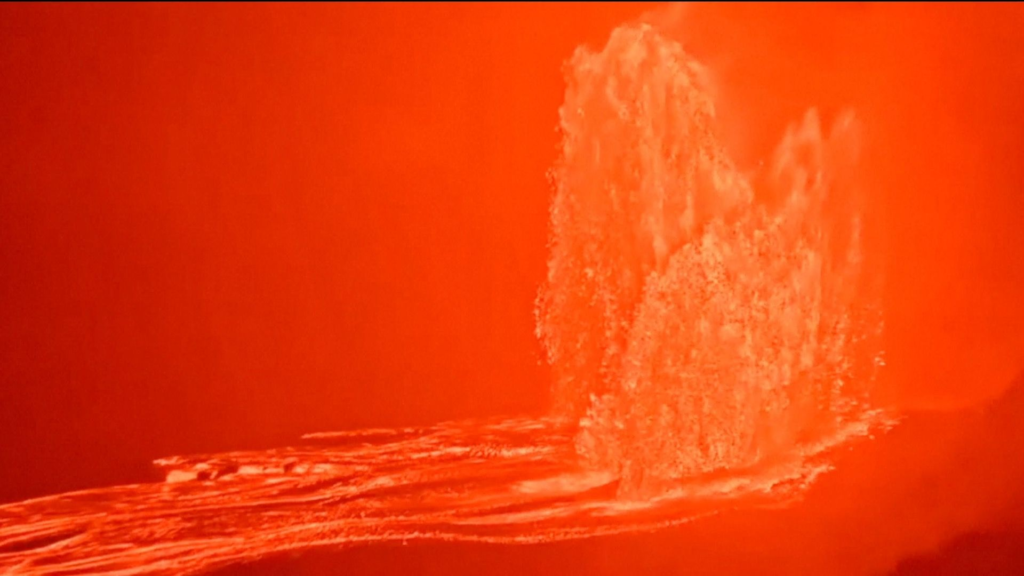
As of now, no official confirmation has been made regarding the identities of the two men or whether they will face legal consequences. Trespassing in closed areas of a national park can carry significant penalties, including fines and potential criminal charges, especially if the actions endanger lives or interfere with scientific operations. Investigations into how the men accessed the restricted zone are likely to focus on entry points, monitoring protocols, and whether warnings or barriers were deliberately ignored.
The USGS and park authorities have not indicated that the incident disrupted monitoring operations, but the mere presence of unauthorized individuals in such a sensitive area introduces additional risks. In emergency situations, rescuing trespassers can place first responders and scientists in danger, diverting resources from essential monitoring and public safety efforts.
Beyond enforcement, the incident has reignited broader discussions about the balance between public access, digital visibility, and safety in an era where livestreams bring extreme natural events into homes worldwide. While such broadcasts serve valuable educational and scientific purposes, they also reveal locations that some may attempt to reach, despite clear restrictions and warnings.
For now, the images of two men strolling casually in front of erupting lava remain a striking and unsettling moment from Kīlauea’s latest episode. Captured unintentionally by a camera designed for science, the scene has become a reminder of how thin the line can be between observation and intrusion, and how quickly awe can turn into alarm when human behavior intersects recklessly with powerful natural forces.
Hiya very nice website!! Man .. Beautiful .. Amazing .. I’ll bookmark your website and take the feeds additionallyKI’m happy to seek out so many helpful information right here within the submit, we need work out extra strategies in this regard, thanks for sharing. . . . . .
**mitolyn official**
Mitolyn is a carefully developed, plant-based formula created to help support metabolic efficiency and encourage healthy, lasting weight management.